Domestic service robots are being put through their paces ahead of the upcoming World Humanoid Robot Games, with engineers testing out these household helper bots in simulated home environments as they look to prove they are more than up to the task.
With the second World Humanoid Robot Games set to open in Beijing on August 22, teams are racing to perfect their machines ahead of this week's preliminary rounds.
Jointly organized by the Beijing Municipal Government and China Media Group, the much-anticipated Games has drawn 666 teams and 2,056 robots from 16 countries. The five-day program includes 30 competitive events spanning ball games and combat categories, plus 21 scenario-based challenges covering industrial assembly and home services.
While there may be a fast-paced sporting feel to some events, one of the focuses this year will be on the humanoid robot competitors that are designed to handle everyday household chores -- bringing the introduction of these robots into people's homes one step closer.
At the National Speed Skating Oval in Beijing, an industrial training and evaluation base has set up mock competition scenarios where teams are running intensive drills. Multiple home robots are now performing a whole host of live tasks from faxing documents and sorting items to doing laundry and folding clothes.
One team is equipping its home robot with high-definition motion cameras on both its head and hand to master the art of folding clothes. Data collectors work alongside the robot, repeatedly feeding captured images, object parameters, and motion data into a large model to refine its algorithms.
"We integrate data from five distinct sources: internet data, human data collected without a physical robot, cross-platform simulation data, tele-operation data, and data fed back from closed-loop testing in real-world environments. These diverse data types play complementary roles in model training, significantly boosting pre-training performance," said Zhang Zhizheng, the co-founder of the robotics company.
The team has also been preparing for the wear and tear of real-world use, ensuring the robot is durable enough to maintain long-term, stable task performance.
"Just like our bodies, a robot's hardware ages over time. Technically, this translates into changes in its dynamic and kinematic parameters. To address these shifts, we have developed a lifelong learning mechanism that allows the robot to adjust itself while working. So the more it does, the better it actually performs. It keeps learning and evolving all the time," said Zhang.
Under competition rules for the home scenario segment of the Games, each robot must complete multiple tasks, including organizing items and folding clothes, within a 30-minute timeframe. The challenges test hand-eye coordination, long-duration operation, autonomous decision-making, and sequential task execution. The data gathered at the event is expected to help shape industry standards for future home-service robots.
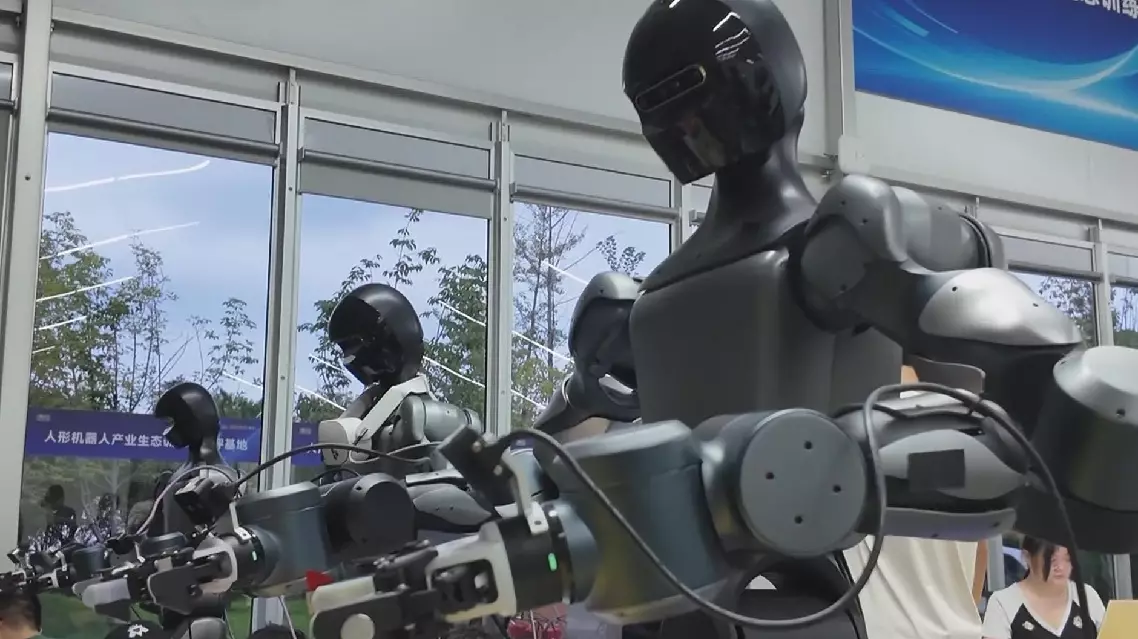
Chores galore as household helper bots gear up for World Humanoid Robot Games