Skip to Content Facebook Feature Image

China’s economic vitality seen in industrial upgrading, digital transformation, foreign trade growth: official

China

China

China

China’s economic vitality seen in industrial upgrading, digital transformation, foreign trade growth: official

2026-08-18 05:02 Last Updated At:12:03

China's economy remained broadly stable in July, as it registered stronger growth in advanced manufacturing, digital-intelligent transformation and foreign trade, a National Bureau of Statistics (NBS) spokesman said on Monday.

At a press conference in Beijing, Fu Linghui, spokesman for the NBS, briefed the media of China's economic situation in July.

He noted that the country's economy has demonstrated its resilience and vitality.

"China's economic vitality is shown mainly in three areas: industrial upgrading, digital-intelligent transformation, and growth in foreign trade. Innovation is playing a bigger role in driving growth, while industrial upgrading is gaining great momentum," Fu said.

Then he used a series of data to further verify his remarks.

"In July, the added value of high-tech industries among industrial enterprises above the designated size increased by 16.9 percent year on year, and the added value of digital and intelligent product manufacturing rose by 17.3 percent year on year, showing a relatively fast growth rate," said Fu.

"By product, the growth of related intelligent products such as industrial robots and robot reducers exceeded 20 percent in July. China has been expanding economic and trade ties with countries around the world on the basis of mutual benefits. Relying on the advantages of its complete industrial chain and the continuously improving product quality, China's total volume of foreign trade in the month was up by 19.2 percent year on year, maintaining a relatively fast growth rate," he said.

China’s economic vitality seen in industrial upgrading, digital transformation, foreign trade growth: official

China’s economic vitality seen in industrial upgrading, digital transformation, foreign trade growth: official

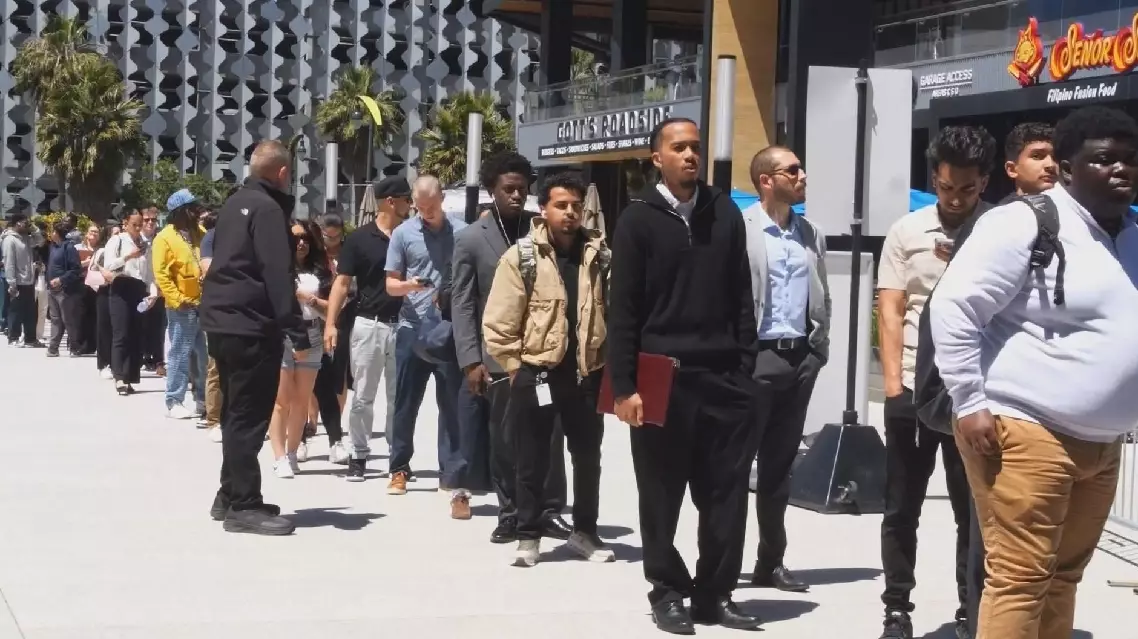
Fifty-three percent of U.S. voters feel they are worse off financially since U.S. President Donald Trump took office in January 2025, compared with only 21 percent who said they are better off, according to a recent poll by the Financial Times.

The poll also showed clear partisan cleavages, with almost 80 percent of Democrats saying they are worse off under Trump, as opposed to 23 percent of Republicans who said the same.

Meanwhile, 64 percent of voters found that the U.S. economy is going in the wrong direction, while only 25 percent said it is going in the right direction.

Eighty-six percent of Democrats believe the economy is heading in the wrong direction, while the share among Republicans stands at 37 percent.

Overall, 55 percent of voters disapprove of the job Trump was doing as president, the poll found. They were especially dissatisfied with his handling of inflation and the cost of living, jobs and the economy, tariffs and trade and Iran.

The findings highlight the significant challenges facing Trump and the Republican Party ahead of November's midterm elections, as public dissatisfaction grew with the war in Iran, which has pushed up borrowing costs, petrol prices and the cost of living, said The Financial Times.

The online August poll reflected the opinions of 1,913 registered voters.

Poll shows most U.S. voters feel worse off financially since Trump took office

Poll shows most U.S. voters feel worse off financially since Trump took office

Recommended Articles