LAMBA LEDA, Indonesia (AP) — Thousands of people remained displaced on the Indonesian island of Flores on Tuesday, three days after a powerful earthquake killed at least 68 people, injured more than 200 others and damaged thousands of homes. The disaster left many children struggling with fear and trauma.
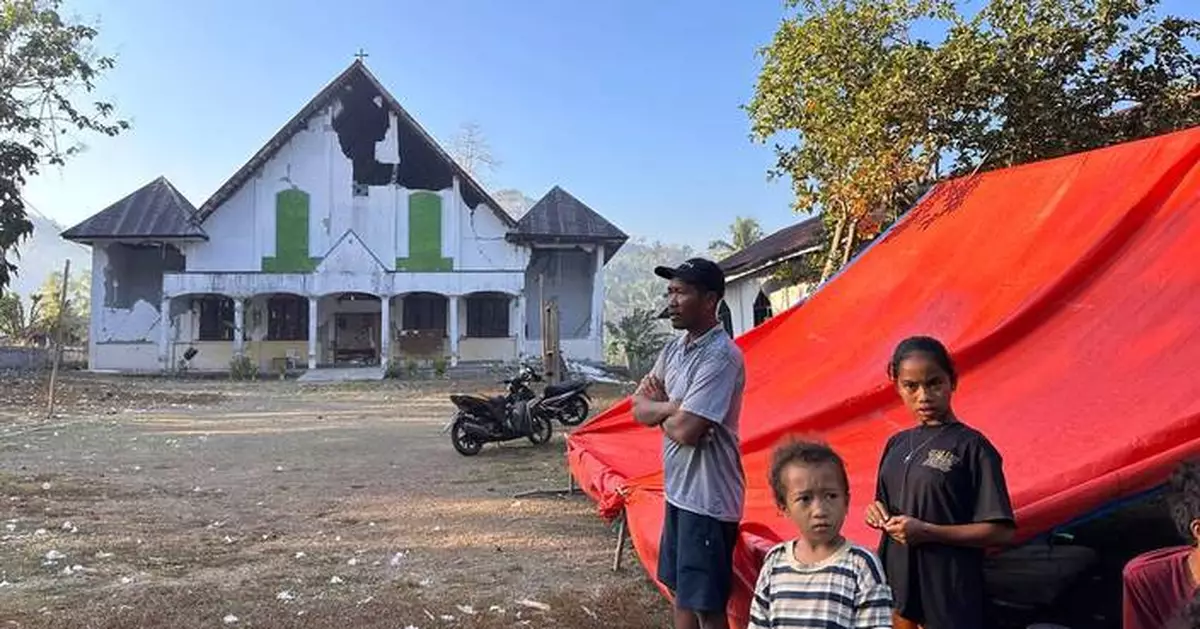
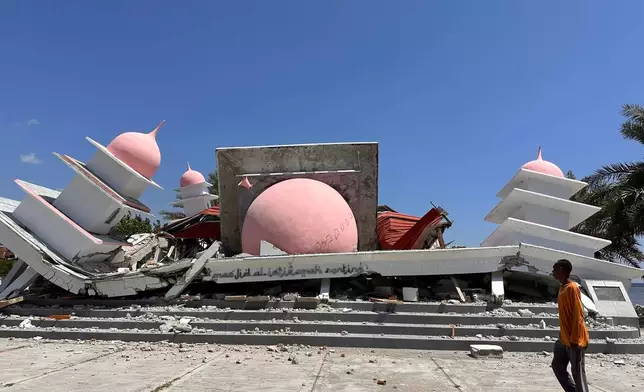
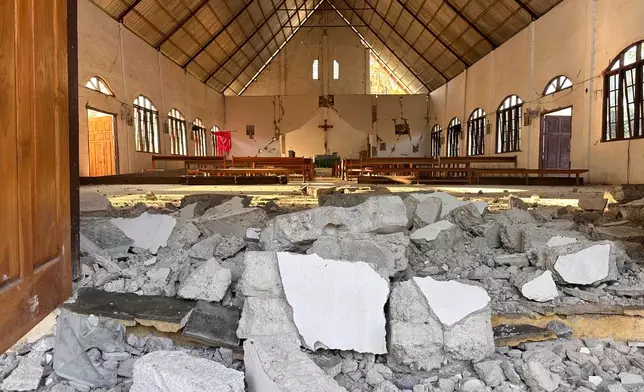
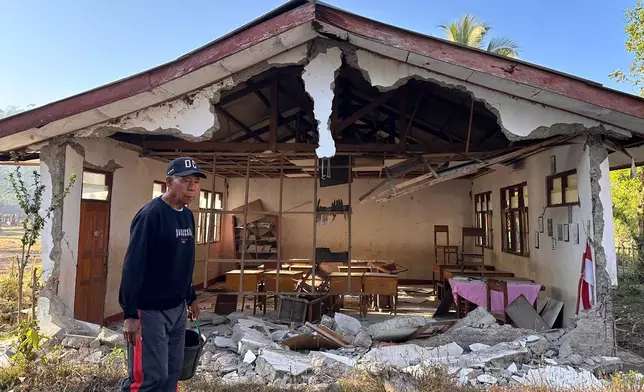
More than 19,000 people were sheltering in tents, evacuation centers and makeshift camps after the earthquake struck off Flores early Saturday, damaging at least 4,500 homes, according to the National Disaster Management Agency. The quake injured at least 213 people and caused widespread destruction across the island, damaging 122 health facilities, 252 schools and 84 places of worship, the agency said.
Click to Gallery
A man walks past a mosque collapsed during an earthquake in Lamba Leda, East Nusa Tenggara province, Indonesia, Tuesday, Aug. 18, 2026. (AP Photo/Firdia Lisnawati)
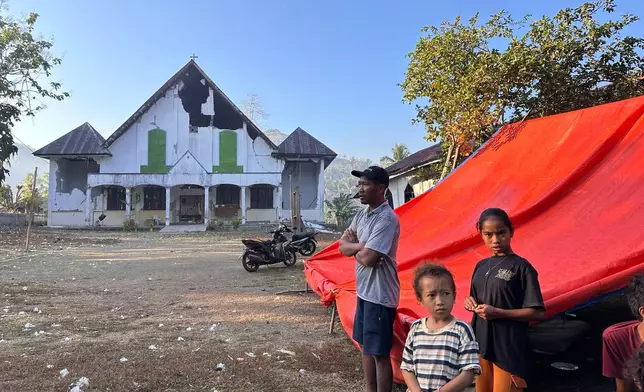
Rubble is seen at the entrance of an earthquake-damaged church in Satar Punda, East Nusa Tenggara province, Indonesia, Tuesday, Aug. 18, 2026. (AP Photo/Firdia Lisnawati)
A man walks past an earthquake-damaged school in Satar Punda, East Nusa Tenggara province, Indonesia, Tuesday, Aug. 18, 2026. (AP Photo/Firdia Lisnawati)
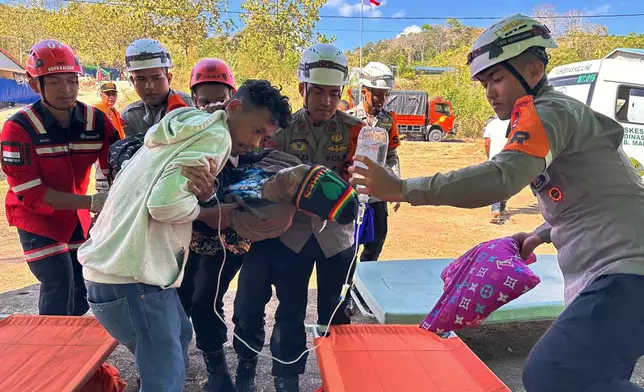
Rescuers evacuate a person injured in an earthquake in North Lamba Leda, East Nusa Tenggara province, Indonesia, Tuesday, Aug. 18, 2026. (AP Photo/Firdia Lisnawati)
Earthquake survivors stand outside their tent erected near a damaged church in Satar Punda, East Nusa Tenggara province, Indonesia, Tuesday, Aug. 18, 2026. (AP Photo/Firdia Lisnawati)
The quake occurred at a depth of 10 kilometers (6 miles) shortly before 6 a.m. Saturday, according to the U.S. Geological Survey, and residents fled in panic as tsunami warnings were issued but later lifted. Authorities have since recorded more than 2,100 aftershocks into Tuesday, though only 70 were felt by residents.
An aftershock that struck during an interview Tuesday prompted Vincentius Rano and his wife to instinctively duck and cover their heads. Nearby, their daughter began crying, a reminder of the fear that continues to haunt many survivors.
Rano is a resident of Lamba Leda, one of the hardest-hit villages in the lush hills of East Manggarai regency, where widespread damage was reported, with at least 50 homes shattered and trees toppled over. He recalled the terrifying moment the earthquake struck Saturday just after he and his wife had woken up.
“Suddenly, we felt a tremor that kept getting stronger,” said Rano, the father of a 5-year-old girl. The couple rushed to grab their sleeping daughter, but before they could escape, part of the house came down, causing injuries to his back and shoulder.
“We didn’t have time to get outside. Everything happened so fast. The roof collapsed on us, and all I could do was shield my wife and child with my back,” Rano said, gesturing toward his flattened home, a modest house, built of timber rather than concrete.
At evacuation camps across Flores, children played under tarpaulin shelters while aid workers and volunteers provided psychosocial support alongside food and medical assistance.
“For many survivors, especially children, the psychological impact has lingered long after the shaking stopped,” said local police chief Yudhi Franata, who organized trauma-healing sessions for children displaced by the disaster in Ende regency.
In Ende's village of Lokoboko, 17 children joined police counselors for games, educational activities and group interactions designed to help them cope with fear and anxiety. Parents at evacuation centers in the village said many children were afraid to return indoors and woke up frightened whenever aftershocks rattled the island.
“Children are among the groups that need special attention after experiencing a disaster,” Franata said.
Indonesia, an archipelago of more than 17,000 islands, is prone to earthquakes and volcanic eruptions because of its location on the Pacific Ring of Fire. Flores experienced one of the country’s deadliest disasters in 1992, when an earthquake and an ensuing tsunami killed about 2,500 people.
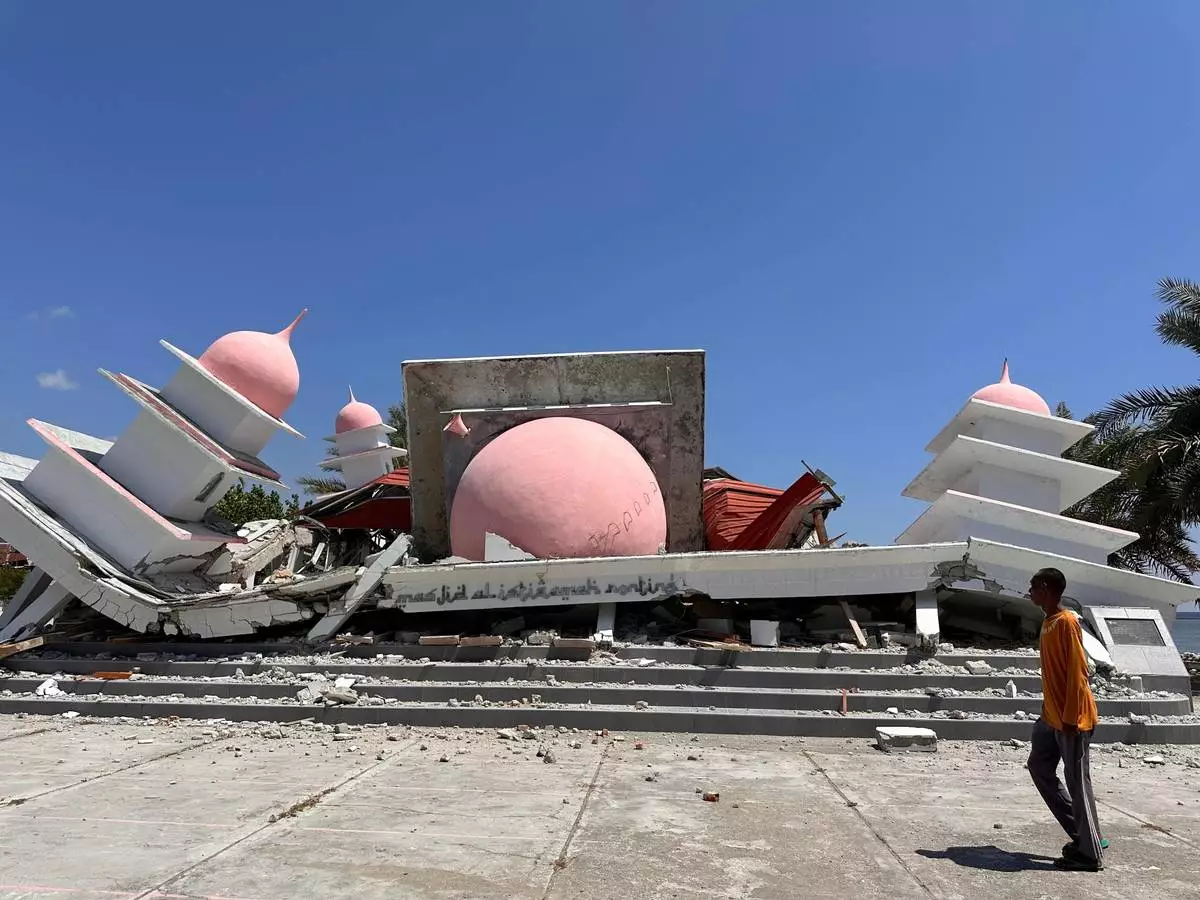
A man walks past a mosque collapsed during an earthquake in Lamba Leda, East Nusa Tenggara province, Indonesia, Tuesday, Aug. 18, 2026. (AP Photo/Firdia Lisnawati)
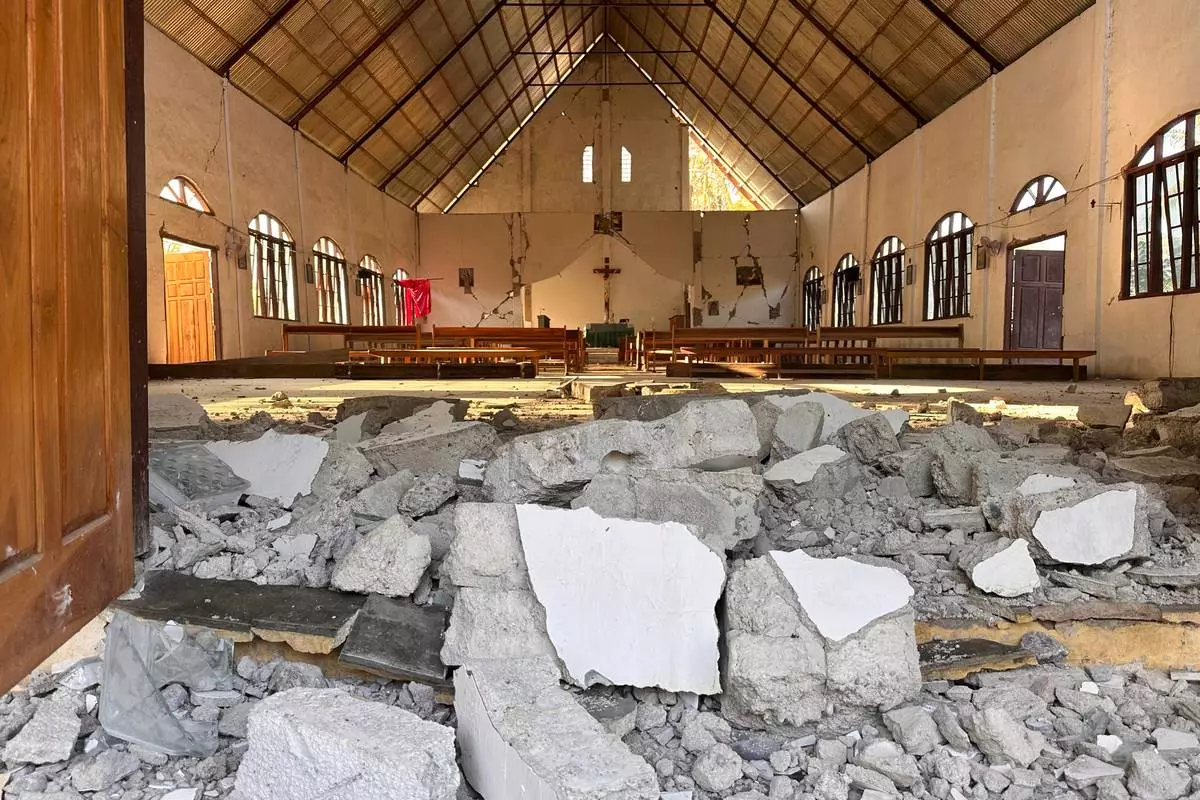
Rubble is seen at the entrance of an earthquake-damaged church in Satar Punda, East Nusa Tenggara province, Indonesia, Tuesday, Aug. 18, 2026. (AP Photo/Firdia Lisnawati)
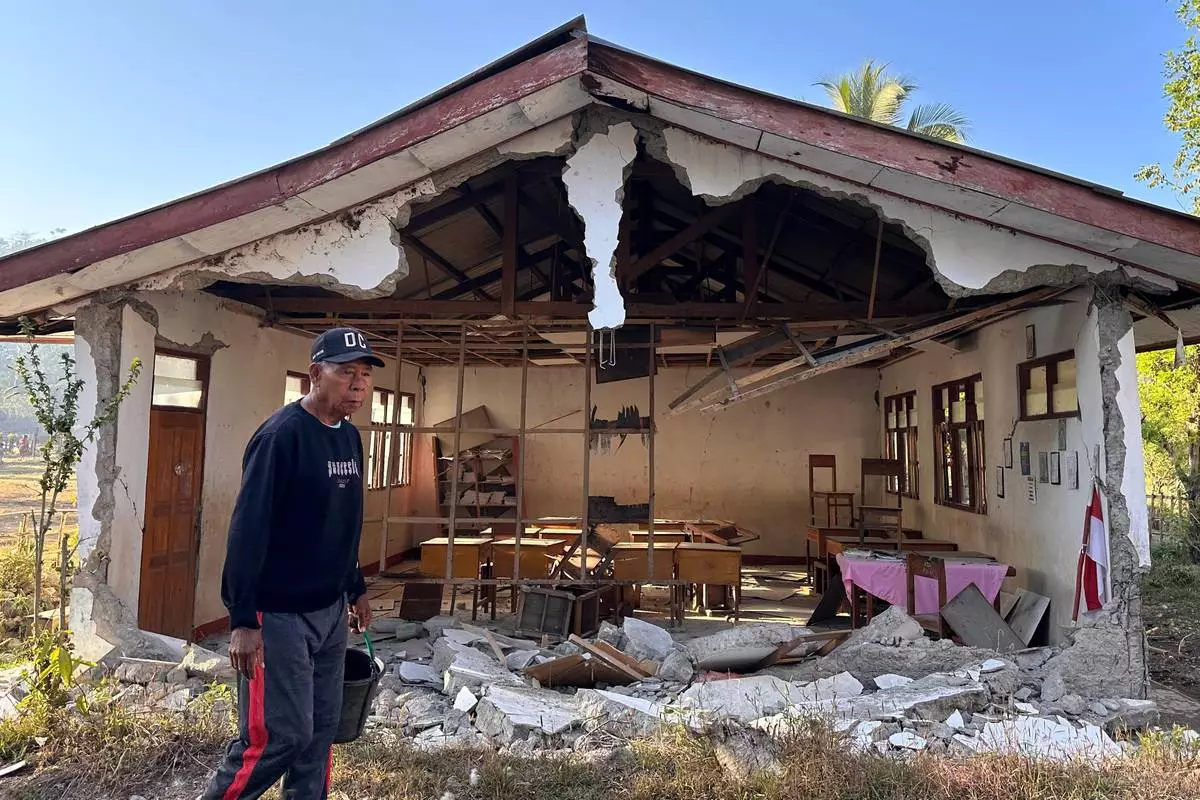
A man walks past an earthquake-damaged school in Satar Punda, East Nusa Tenggara province, Indonesia, Tuesday, Aug. 18, 2026. (AP Photo/Firdia Lisnawati)
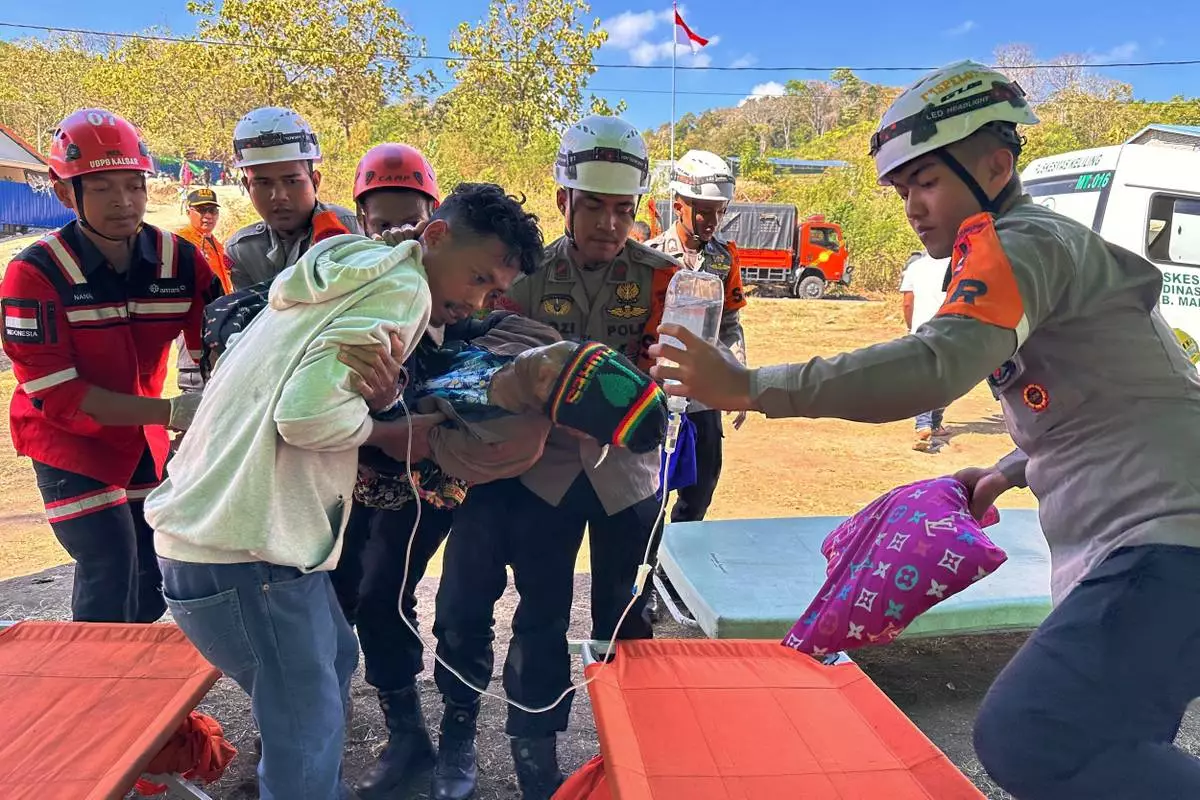
Rescuers evacuate a person injured in an earthquake in North Lamba Leda, East Nusa Tenggara province, Indonesia, Tuesday, Aug. 18, 2026. (AP Photo/Firdia Lisnawati)
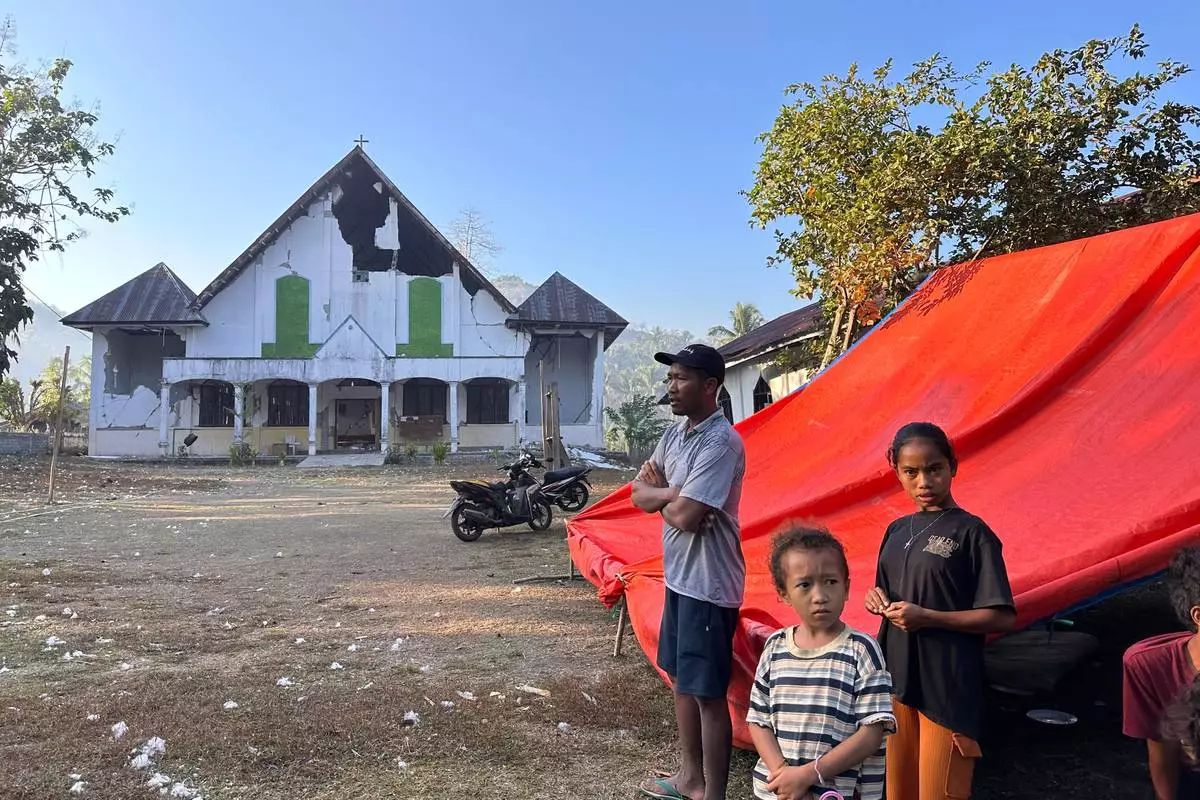
Earthquake survivors stand outside their tent erected near a damaged church in Satar Punda, East Nusa Tenggara province, Indonesia, Tuesday, Aug. 18, 2026. (AP Photo/Firdia Lisnawati)
GOREE ISLAND, Senegal (AP) — As a child, Ndeye Awa Diop was so shy she couldn't look people in the eye.
Raised in rural Senegal, she learned to embrace what was traditionally expected of girls across the predominately Muslim West African nation. They should be seen but not heard. They should obey their elders.
But her life turned upside down when as a 12-year-old she was accepted into the country's first elite boarding school for girls, on Goree Island off Dakar, the capital.
“So, here I am, coming here completely shy. I didn’t even dare raise my hand in class,” said Diop. She was homesick, crying. Over the years, the sisterhood of classmates helped. Now she is 19 and president of the student council, and about to graduate.
“I learned to be a leader," she said.
Women in Senegal have to navigate a complex social landscape. Patriarchal norms are increasingly challenged by women empowered by progressive legislation that requires half of political parties’ candidates to be women and, at least on paper, guarantees women’s access to land ownership.
Senegal also has made enormous progress in girls' education. The vast majority of girls are enrolled in primary education, at a rate higher than for boys.
But girls are more likely to drop out. Less than 20% make it through high school. As a result, for every 100 boys who can read and write, just 84 girls can.
“The current challenge isn’t access to school for girls, but rather the completion of schooling up to secondary level and, of course, the transition to the job market,” said Maissa Abdellaoui, a girls' education specialist with UNICEF.
If money is tight, families tend to prioritize keeping boys in school, even if girls show more promise, experts say. Girls tend to skip school when they start menstruating. They are also more likely to get married and have children as teenagers.
Senegal's founding president, Leopold Sedar Senghor, named the boarding school on Goree Island in 1985 after Mariama Ba, the country’s most famous female author. Ba's novels explored women caught between traditional upbringing and modern aspirations, criticizing polygamy, widespread in the country, and patriarchy.
She resisted the label of feminist, which she saw as a Western invention, despite being a lifelong advocate of gender equality and a three-time divorcee, which was unheard of at the time.
The school, which has a 100% completion rate, occupies a former French military barracks on an island with a painful past. As the westernmost point of Africa, it was the largest center of the trans-Atlantic slave trade. Today it is serene, with no cars allowed on its cobblestone streets.
Only 35 girls are admitted to the school every year out of 150 who are invited to participate in an entrance exam on the basis of their grades. Tuition and boarding are fully funded by the state.
Through six years of middle and high school, girls undergo rigorous academic training. They also study art, play sports and attend talks with successful female writers, politicians and doctors — many of them graduates.
On a recent morning, dozens of girls in crisp uniforms rushed through the courtyards filled with bougainvillea, baobabs and palm trees to the sounds of birds and ocean waves.
Their days unfold with precision: Wake, shower, prayer, breakfast, classes, lunch, more classes and back to the study hall before dinner.
This discipline is necessary to empower them to be “the female elite on which Senegal is counting heavily,” headmistress Ramatoulaye Diagne Sarr said.
In one classroom, 15-year-olds hotly debated a topic which, given the school's location, felt anything but remote: the history of slavery. Their teacher, Paul Felix Thiao, guided the discussion with a satisfied smile.
“Often in society, we see that men tend to dominate women,” he said. But places like the school show that “if we give them more freedom, if we give them more opportunities, they can go far."
Yet female empowerment in Senegal remains challenging.
Women own only 2% of agricultural land, according to the United Nations, and make up the majority of people without formal work arrangements. Under Senegalese law, only men can be heads of households.
“In Senegal, people’s mentality remains very, very, very strict regarding women’s independence,” said student Marie Diop, 18. “In fact, each day you are fighting a battle to make people understand that ... women have the capacity to manage, to be in charge.”
The headmistress said the school serves a model for girls “who are hesitating, who think it’s impossible to climb the ladder.” Yet, she said, despite the fact that all headmistresses in the school's history have been women, the majority of teachers are male.
The alumni association plays an important role as mentors.
Matel Sow, the 27-year-old head of the association, came from a village in eastern Senegal and said attending the school was “a radical change."
It took some convincing for her father to let her go, she said. Today, she is a graduate of the prestigious Cheikh Anta Diop university in Dakar and the University of Texas, and she works as an associate at the nonprofit International Budget Partnership.
With time, she said, her father realized how important it was for her to pursue studies.
“He said, ‘You can do what you want, I trust you,’” she recalled. “As long as you stay true to your core values and roots,” which are “tradition and religion.”
She said it has not always been easy. As a working mother of a 2-year old girl, she has leaned on her supportive husband, with whom she has formed “a genuine partnership.”
While the Mariama Ba school has impressive results, it remains the only one of its kind in the country. Experts say what's needed for true female empowerment in Senegal is systemic change.
Abdellaoui, the UNICEF expert, praised the school but said the "most vulnerable” should also have access to such opportunities.
Sarr, the headmistress, acknowledged that the majority of students come from the capital.
Diop, the first girl in her village to be accepted into the school, now aspires to be an international business lawyer. Having a family is not her priority, a rare outlook in Senegal.
“To be a strong woman is not to be afraid to be alone," she said.
For more on Africa and development: https://apnews.com/hub/africa-pulse
The Associated Press receives financial support for global health and development coverage in Africa from the Gates Foundation. The AP is solely responsible for all content. Find AP’s standards for working with philanthropies, a list of supporters and funded coverage areas at AP.org.
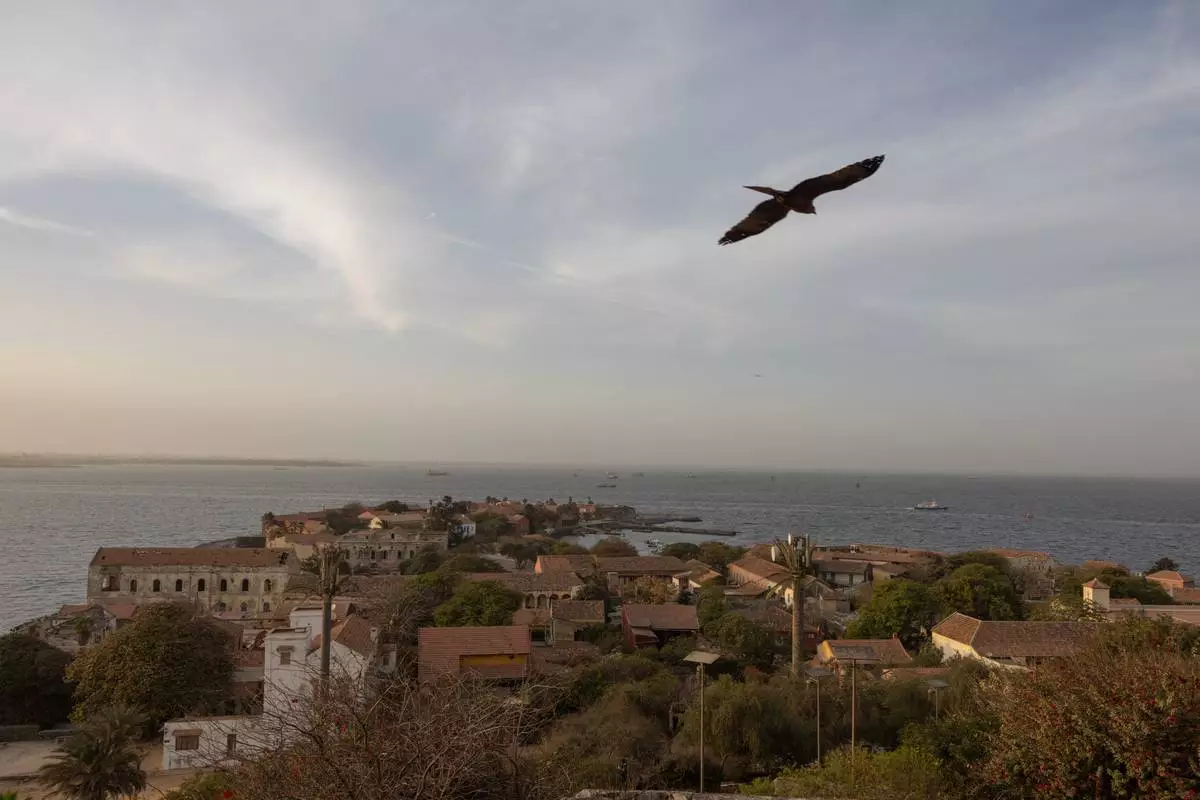
A bird flies over Goree Island, in Senegal, Thursday, March 12, 2026. (AP Photo/Caitlin Kelly)
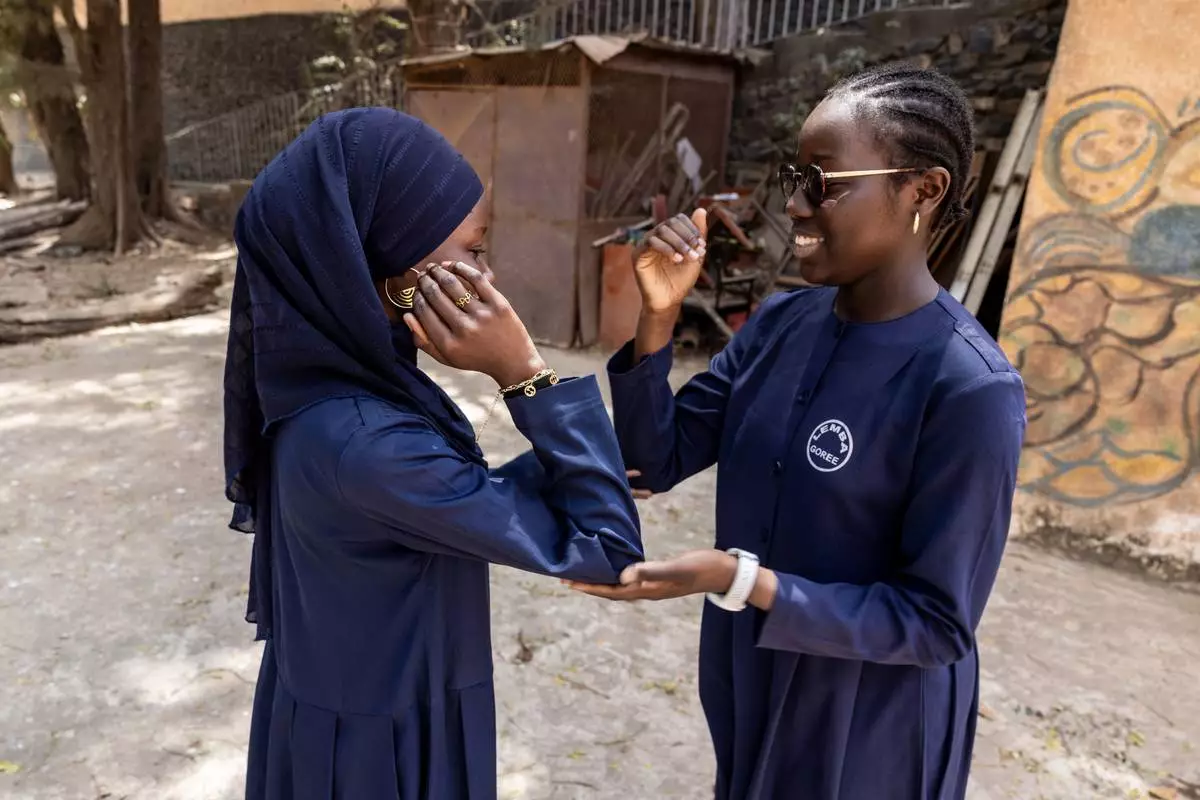
Ndeye Awa Diop, Left, Karine Marteau Kantoussan, Right, play a game at the Mariama Ba School playground in Goree Island, Senegal, Thursday, March 12, 2026. (AP Photo/Caitlin Kelly)
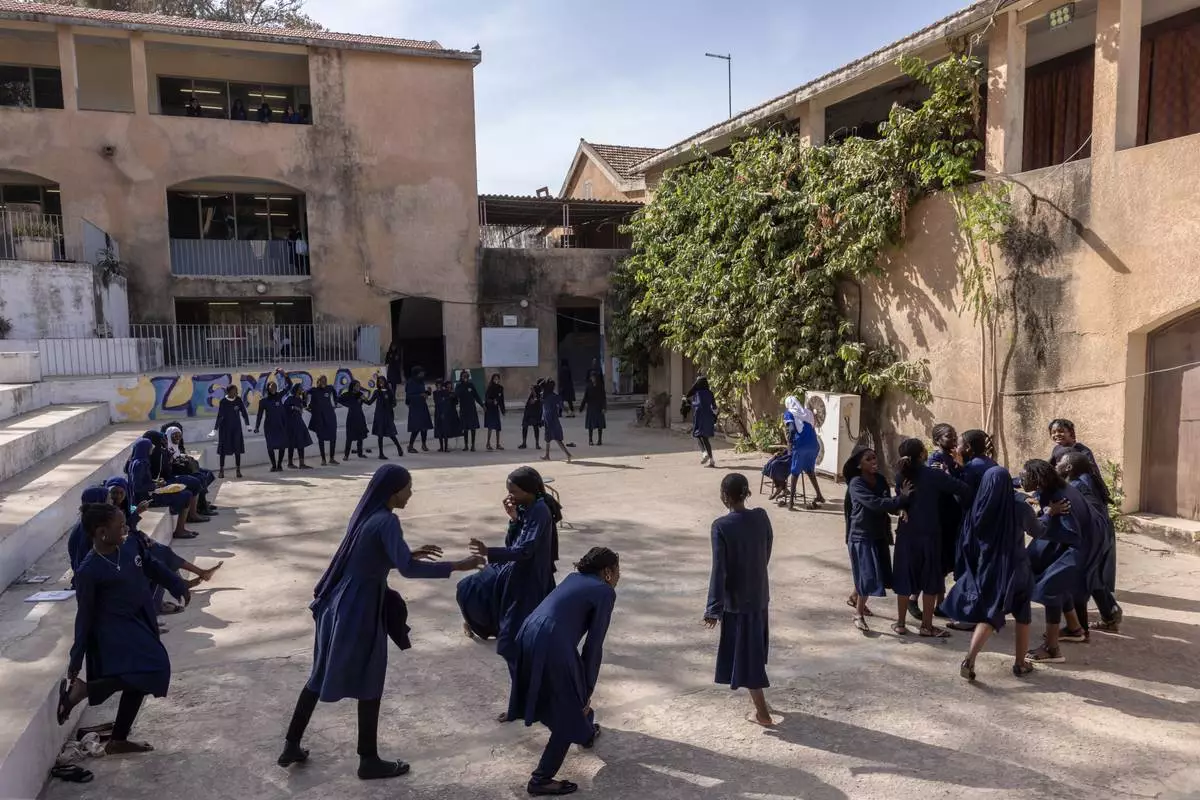
Girls play a game at the Mariama Ba School playground in Goree Island, Senegal, Thursday, March 12, 2026. (AP Photo/Caitlin Kelly)
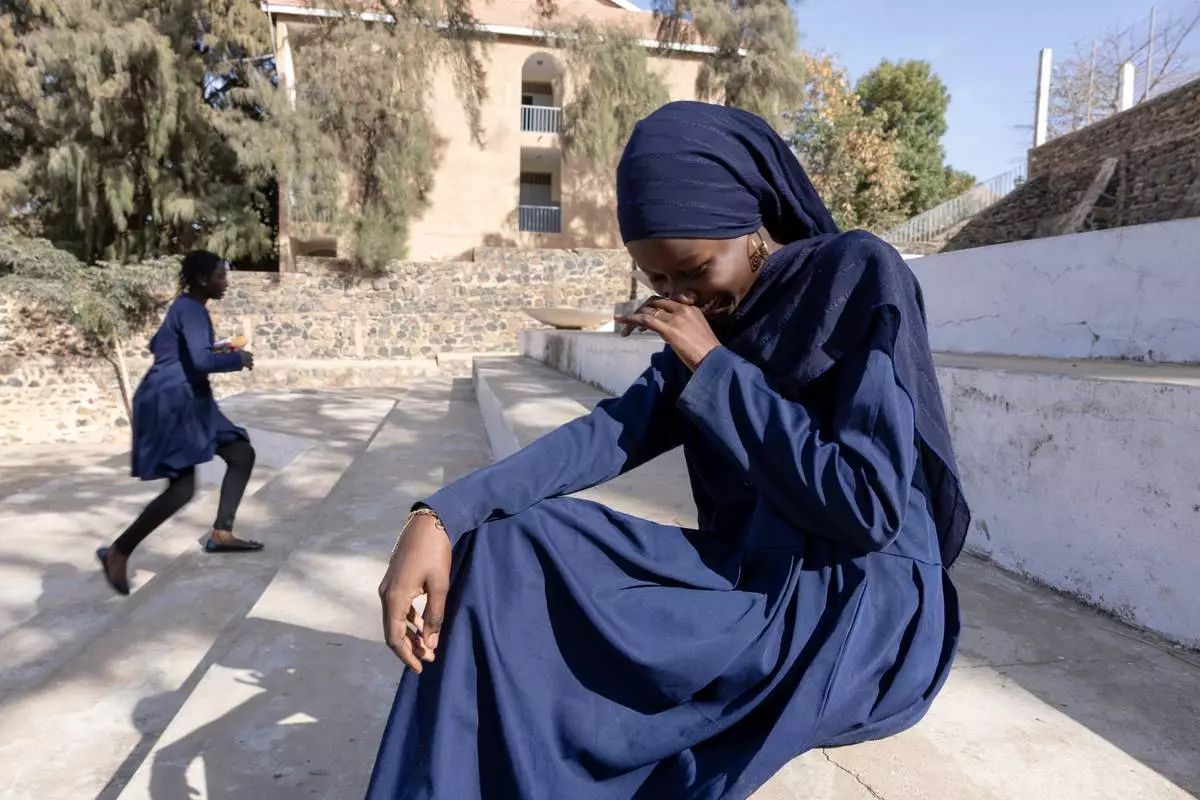
Ndeye Awa Diop sits on the steps of the Mariama Ba school in Goree Island, Senegal, Thursday, March 12, 2026. (AP Photo/Caitlin Kelly)
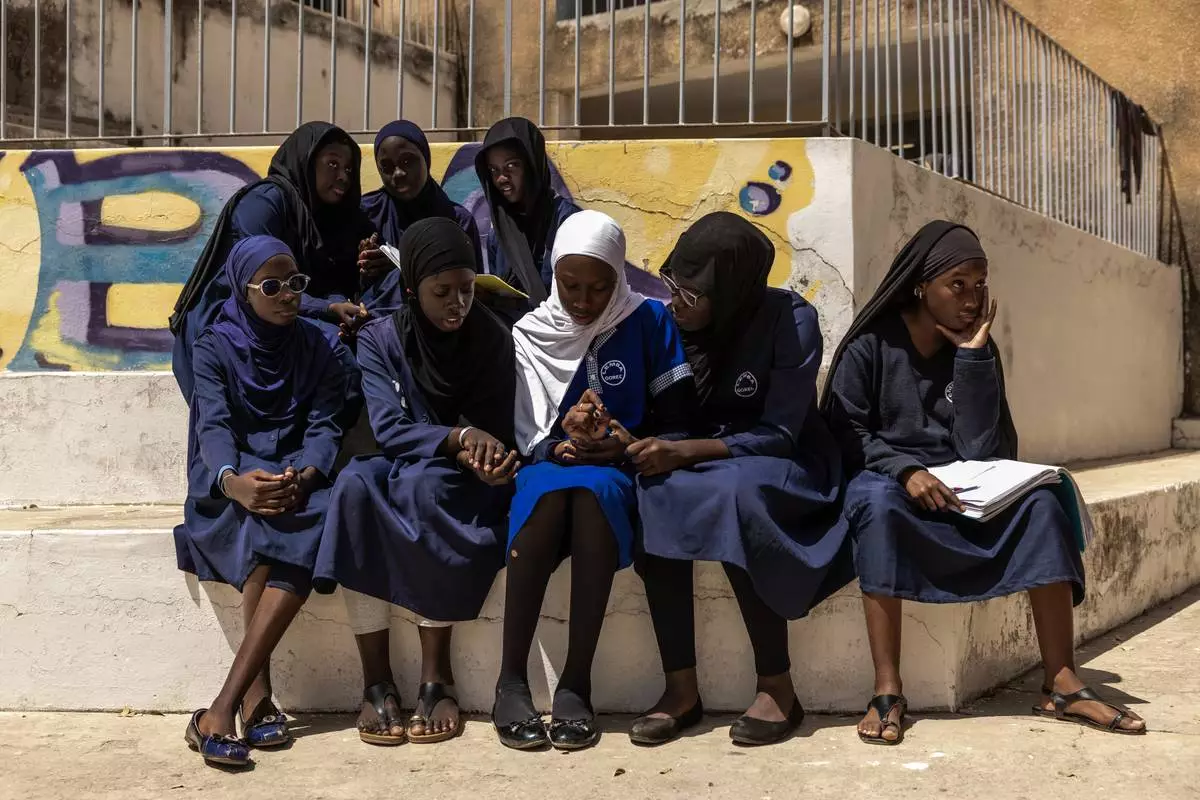
Students study at the Mariama Ba School in Goree Island Senegal, Thursday, March 12, 2026. (AP Photo/Caitlin Kelly)