ISLAMABAD (AP) — Pakistan’s Supreme Court on Tuesday ordered authorities to take imprisoned former Prime Minister Imran Khan to a private hospital in the capital for a medical examination, following months of concerns from his family and personal physicians about his health and access to medical care, his lawyers and party officials said.
A three-judge panel ordered that Khan be taken to Shifa International Hospital in Islamabad in the coming days and examined by a medical board that will include specialists and one of his personal physicians, Faisal Sultan.
The court also ordered prison officials to allow Khan weekly meetings with family members and telephone calls with his sons. Khan’s family has been struggling to secure access to him and have him examined by physicians of his choice.
Pakistan barred visitors earlier this year after receiving intelligence reports about a possible attack on the prison where he is being held.
The order came months after Khan petitioned the court, asking to be transferred from a high-security prison in the nearby garrison city of Rawalpindi to a hospital and to be allowed access to his personal physicians, family and lawyers.
The court said the order was being issued because Khan’s health was at stake and access to medical care is protected under Pakistan’s constitution, according to Khan’s lawyer Salman Akram Raja.
He urged Khan’s supporters not to gather outside the hospital when the former premier is taken there, saying they should avoid inconveniencing other patients.
Earlier this year, Khan was repeatedly taken to a government hospital for treatment of an eye condition.
Concerns about Khan’s health intensified in late January after his family said he had lost about 85% of the vision in his right eye, an assertion the government disputed. Authorities later said Khan regained about 70% of the vision in the eye and that his condition was improving.
The former cricket star turned politician has been in prison since 2023 after being convicted in a graft case. He was removed from office in a parliamentary no-confidence vote in April 2022. He has alleged that his ouster was the result of a U.S.-backed conspiracy involving political rivals and Pakistan’s former army chief, Qamar Javed Bajwa — allegations denied by Washington, Pakistan’s military and his political opponents.
Despite his legal troubles, Khan remains a central figure in Pakistani politics and retains a large following.

FILE - Pakistan's former Prime Minister Imran Khan gives a press conference at his home, in Lahore, Pakistan, on May 18, 2023. (AP Photo/K.M. Chaudary, File)

People walk past Shifa International Hospital, where imprisoned former Prime Minister Imran Khan will be transferred for a medical examination following Pakistan's Supreme Court order, in Islamabad, Pakistan, Tuesday, Aug. 18, 2026. (AP Photo/Anjum Naveed)
Oakland, Calif. (AP) — Opening arguments are set to kick off Tuesday in a pivotal trial for Meta Platforms in a California federal court.
Attorneys general from California, Colorado, Kentucky and New Jersey are seeking extensive financial damages plus changes to how the company operates Facebook and Instagram. Twenty-nine states sued the tech giant in 2023 over child safety and privacy — the other 25 will go to trial later. The company also faces lawsuits in state courts.
The lawsuit accuses the social media giant of contributing to the youth mental health crisis by knowingly and deliberately designing features that get children addicted to its platforms. It also argues that Meta routinely collects data on children under 13 without their parents’ consent, in violation of federal law.
“This week, we’re in court with the largest consumer protection lawsuit in American history. We’ll show a jury that Meta concealed what it knew about the harm its products cause young people because looking away was more profitable,” said Kentucky Attorney General Russell Coleman in a statement.
Meta said it believes it has a strong case.
“We are proud of our record in protecting teens on our platforms and the amount of effort that we’ve put into developing protections over the years, even before these cases were ever filed, and continuing to the present day. We look forward to showing the judge and the jury those facts in court,” the company said in a statement.
U.S. District Judge Yvonne Gonzalez Rogers in Oakland will oversee the proceedings, which are expected to last six to eight weeks, with Meta CEO Mark Zuckerberg and other executives and former employees testifying. Gonzalez Rogers, appointed to the bench by President Barack Obama in 2011, has overseen a bevy of complex, high-profile cases involving Big Tech. These include Elon Musk's lawsuit against OpenAI and its founders as well as Epic Games' lawsuit against Apple over its app store.
The trial is the latest in an avalanche of lawsuits against Meta Platforms and other social media companies including Google’s YouTube, TikTok and Snap, over arguments that their platforms harm young people, illegally collect their data and are deliberately designed to addict them.
__
AP Technology Writer Kaitlyn Huamani contributed to this story from Los Angeles.
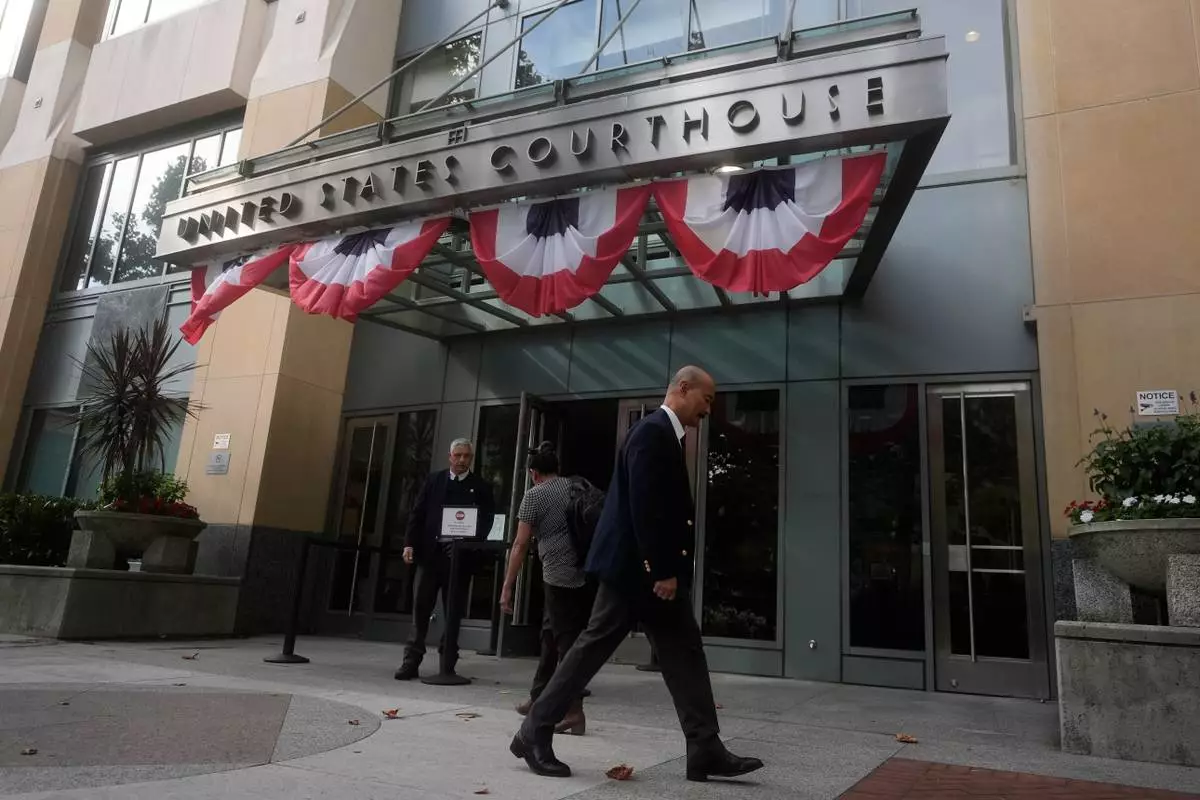
People walk outside of a Federal Courthouse Wednesday, Aug. 12, 2026, in Oakland, Calif. (AP Photo/Jeff Chiu)

Kentucky Division Chief of Consumer and Senior Protection Chris Lewis, left, and Colorado's Chief Trial Counsel Jason Slouthouber, middle, arrive at a Federal Courthouse Wednesday, Aug. 12, 2026, in Oakland, Calif. (AP Photo/Jeff Chiu)
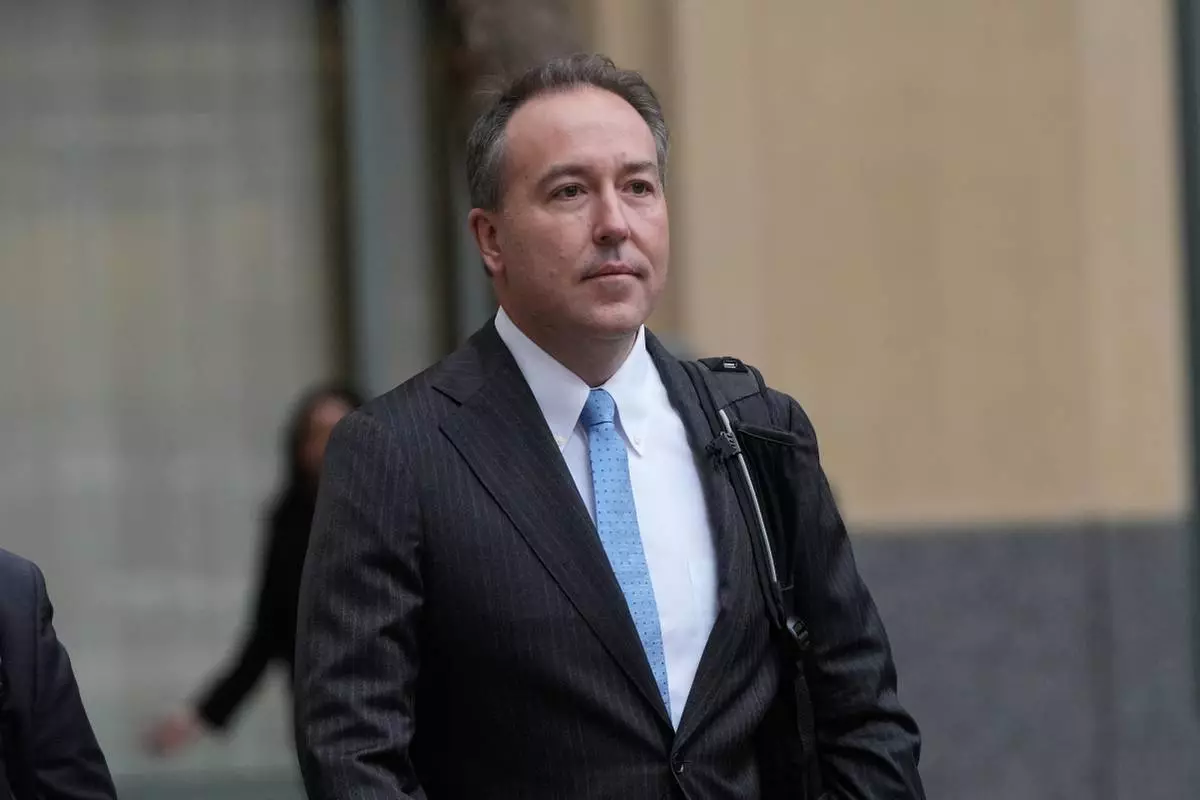
Colorado's Chief Trial Counsel Jason Slouthouber arrives at a Federal Courthouse Wednesday, Aug. 12, 2026, in Oakland, Calif. (AP Photo/Jeff Chiu)

FILE - People talk near a Meta sign outside of the company's headquarters in Menlo Park, Calif., March 7, 2023. (AP Photo/Jeff Chiu, File)