A Canadian artist's bonsai studio has become a popular tourist attraction this summer in Chongzhou City, Sichuan Province, southwest China, boosting the local bonsai trade and contributing to rural revitalization.
Bonsai, the art of creating miniature natural landscapes by arranging soil, stones, moss, and plants on a tray, has deep cultural roots in Chongzhou.
In 2019, Canadian artist Chad Sinclair rented a small courtyard and launched his own bonsai studio in the city. Sinclair has developed a unique bonsai style, blending Western simplicity with the artistic essence of traditional Chinese design.
Small and lightweight, his bonsai works are popular, driving more than 300 local residents to switch to miniature bonsai cultivation and increasing each of their annual incomes by 50,000 yuan (about 7,415 U.S. dollars).
"It's great. It makes me feel like I'm helping the village out, since they've helped me out in a lot of ways. I'm somehow giving back to them. They're able to make a better living for themselves and a better life," said Sinclair.
Relying on Sichuan-style bonsai, Chongzhou has developed industries including bonsai cultivation and art study tours, extending the city's industrial chain from bonsai sales to rural tourism.
"We run multiple services such as catering, study tours, bonsai sales and bonsai DIY experiences, which have boosted our annual income to 180,000 to 200,000 yuan," said Guo Min, a local bonsai garden manager.
In 2025, Sinclair was honored as an Outstanding Talent for Rural Revitalization by local authorities, making him the first foreigner to receive this title.
"We will provide special subsidies for these selected rural talents, alongside policy support covering production, daily life, entrepreneurship and employment. Chongzhou has certified more than 200 rural revitalization talents," said Lu Jiao, a local official.
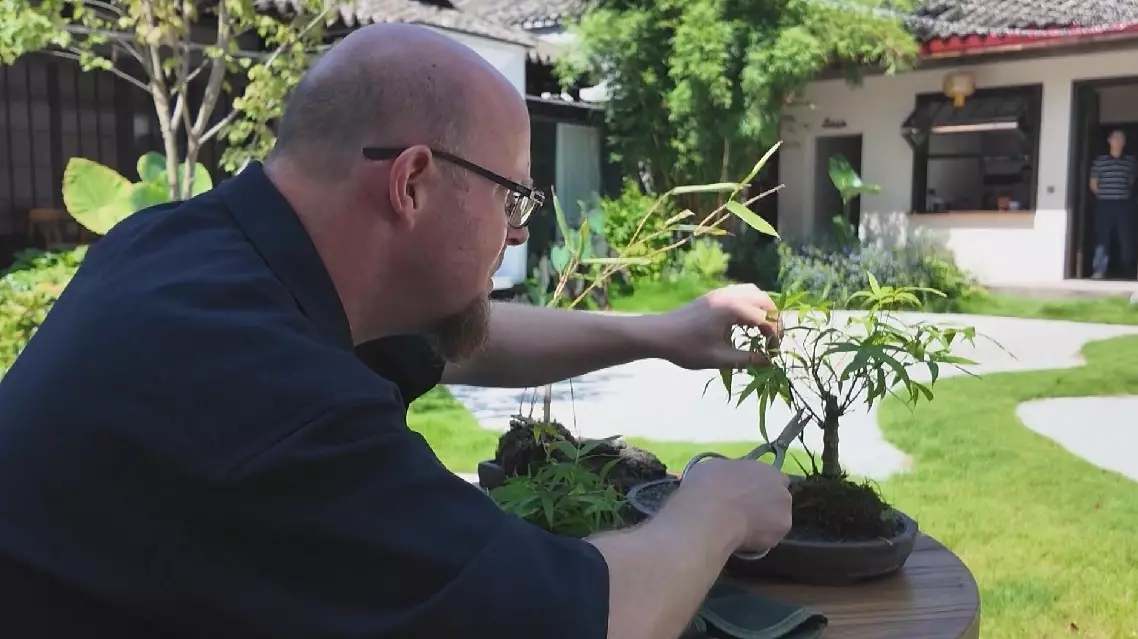
Canadian artist's bonsai studio sparks new growth in Sichuan's rural industries
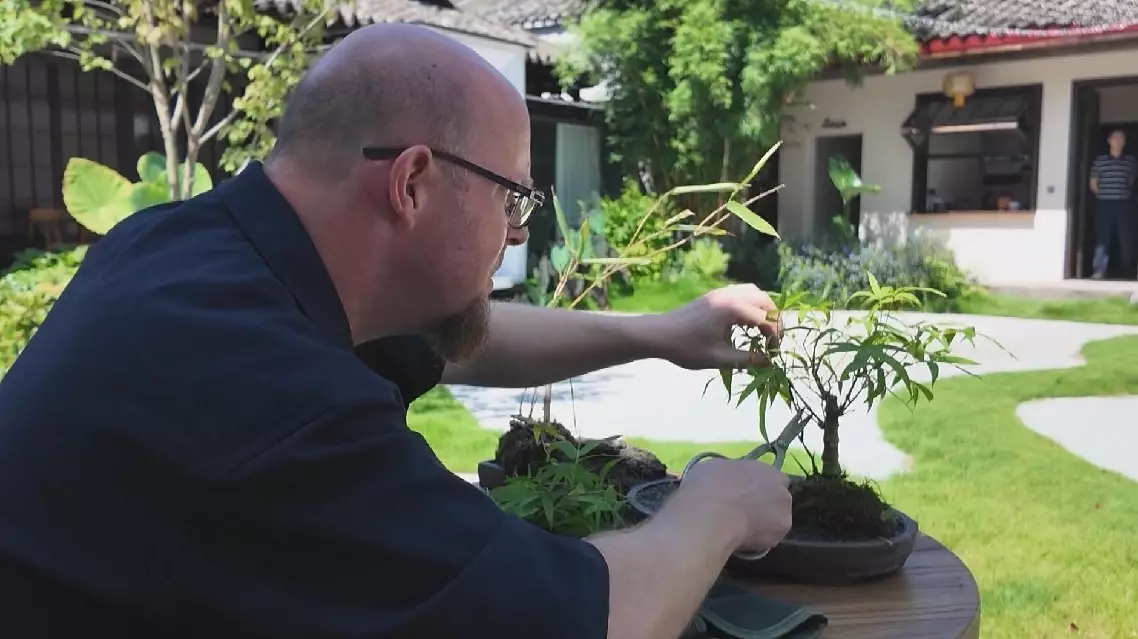
Canadian artist's bonsai studio sparks bonsai trade and tourism boom in Sichuan city
The accelerated industrialization of humanoid robots in China since the beginning of this year has driven rapid growth in the market for core components, particularly dexterous robotic hands, according to industry players.
The dexterous hand industry is undergoing three major changes, including sales volume doubling, product prices dropping significantly, and tactile sensing becoming more widely available. What was once a high-end optional feature is rapidly becoming a standard component in mass-produced dexterous hands.
At an assembly workshop of a dexterous hand company in Shenzhen, south China's Guangdong Province, production lines are running at full capacity as workers assemble components.
According to the company head, dexterous hand sales have surged this year as humanoid robots are increasingly applied in more scenarios
Flexible tactile sensors have now been installed on the fingers, fingertips and palms of dexterous hands, enabling them to go from simply grasping objects to sensing their properties.
"From January to now, we have sold over 4,000 dexterous hands, more than double the figure compared with the same period last year. Our dexterous hands now come equipped with our flexible tactile sensors. For example, when I touch or grab an object with my fingers, it can sense the magnitude and direction of the force applied," said Ge Pengyao, general manager of Shenzhen Lingqiao Drive and Control Technology Co., Ltd.
Flexible tactile sensors are also known as "electronic skin." This year, many dexterous hand companies shifted from last year's electronic-skin technology validation to mass purchasing, driving flexible tactile sensor companies to operate at full capacity.
"Our sales from January to now have increased tenfold compared with last year. Our production capacity has become insufficient, so we have put new production lines into operation this year. The price of flexible tactile sensors has also dropped by about 30 percent," said Xiong Gengchao, general manager of Sycsense Technology (Shenzhen) Co., Ltd.
As the industrial chain continues to improve and sales volumes keep rising this year, the price of dexterous hands has dropped significantly, according to another industry leader.
"The average price of a dexterous hand was 50,000 yuan (about 7,418 U.S. dollars) the year before last. This year, it has basically dropped to below 10,000 yuan. Our six-degree-of-freedom dexterous hand is priced between 6,000 and 8,000 yuan," said Tian Bo, chairman of Shenzhen Ruiyan Intelligent Control Co., Ltd.
Data shows that China's dexterous hand market sales were about 19,200 units in 2025 and are expected to reach 70,200 units in 2026. By 2030, as application scenarios for humanoid robots expand and breakthroughs in dexterous hand technology and cost reductions continue, China's dexterous hand market sales are expected to exceed 430,000 units.
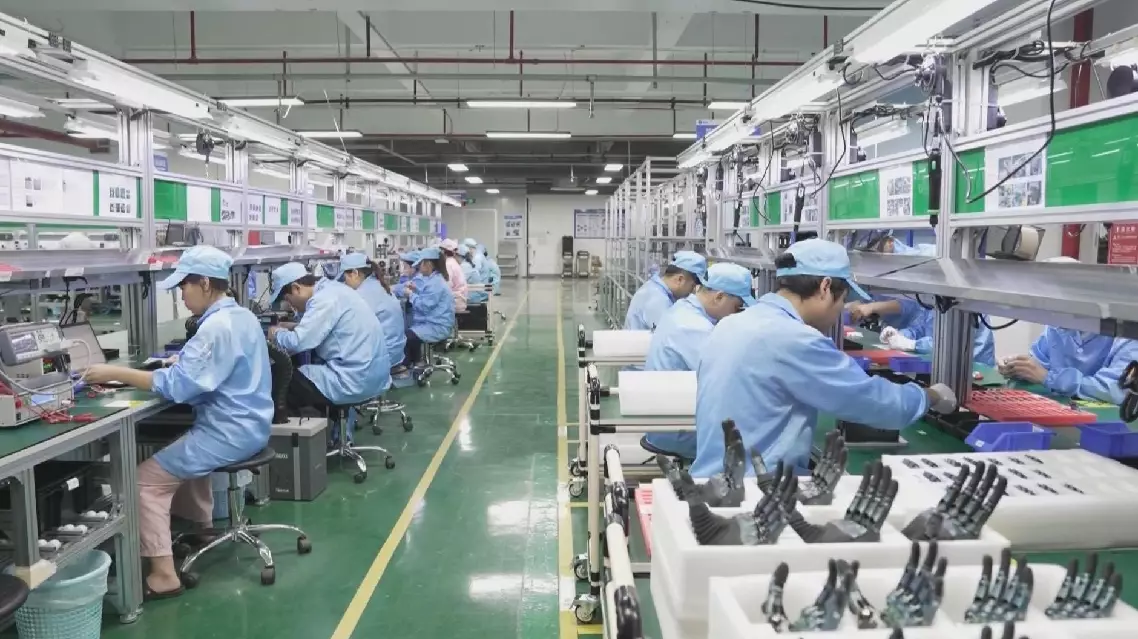
China's dexterous robotic hand market booms as humanoid robot industry accelerates