Skip to Content Facebook Feature Image

Two Studies: Plumbing Manufacturing and Plumbing Industries Worth $442 Billion to U.S. Economy, Yet 550,000-Worker Shortage Looms

Business

Two Studies: Plumbing Manufacturing and Plumbing Industries Worth $442 Billion to U.S. Economy, Yet 550,000-Worker Shortage Looms
Business

Business

Two Studies: Plumbing Manufacturing and Plumbing Industries Worth $442 Billion to U.S. Economy, Yet 550,000-Worker Shortage Looms

2026-08-18 21:16 Last Updated At:21:31

MCLEAN, Va.--(BUSINESS WIRE)--Aug 18, 2026--

A pair of studies reveal the economic impact of plumbers and plumbing manufacturers while projecting a shortfall of about 550,000 plumbers by 2027.

This press release features multimedia. View the full release here: https://www.businesswire.com/news/home/20260818452572/en/

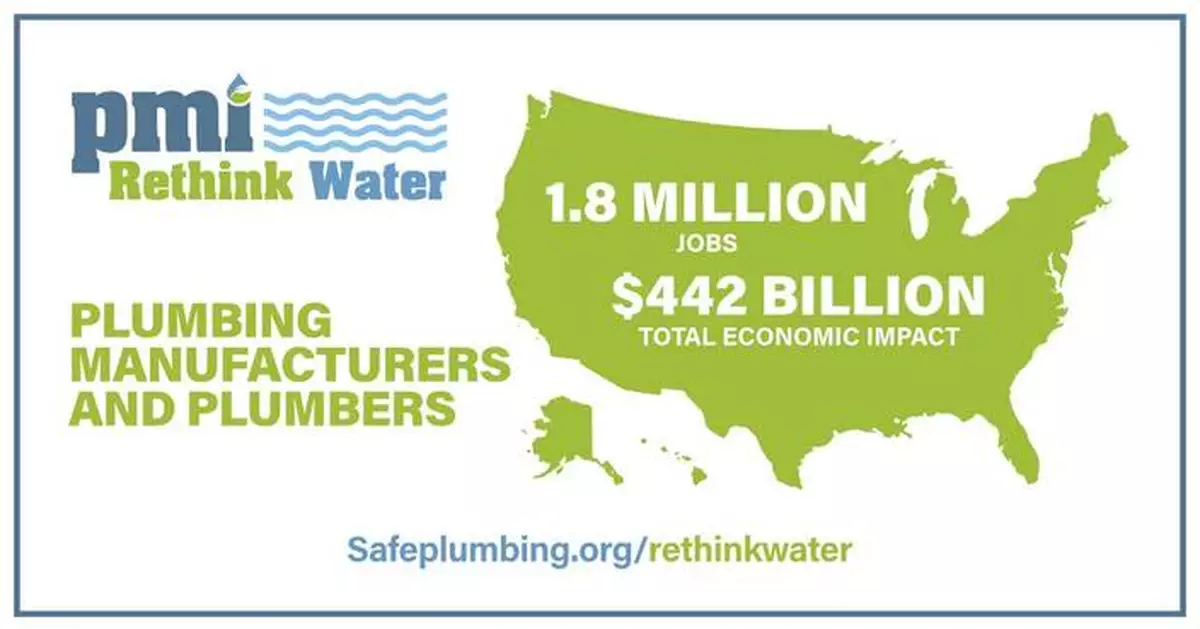
Plumbing Manufacturers International’s “ Plumbing Manufacturing Industry Economic Impact Study ” reveals the combined, total economic impact of plumbers and plumbing manufacturers to be more than $442 billion annually, with almost 1.8 million jobs, and over $142 billion in wages. Together, both industries generated almost $60 billion in tax revenue. For plumbing manufacturers alone, the total economic impact is $129 billion, 500,487 jobs, and $37 billion in wages. For plumbers, the total economic impact is $313.5 billion, 1,283,579 jobs, and $105.1 billion in wages. These data can be sorted by state and by congressional, state house, or state senate district.

The second study commissioned by PMI member LIXIL, “ Blocked Pipes: The Economic Consequences of Skilled Worker Shortages,” reveals a projected shortfall of about 550,000 unfilled plumbing positions by 2027. This skilled labor deficit causes construction delays for builders and drives up costs for property owners, constraining economic output. The study found that the addition of only 16,400 plumbers would reduce plumbing costs by nearly $1.27 billion annually and save an additional $144.5 million on maintenance of plumbing infrastructure.

Both studies were conducted by economic research firm John Dunham & Associates, with the LIXIL study in collaboration with economist Michael Flaherty.

“These economic impact data illustrate the vital symbiotic relationship between plumbing manufacturers and plumbers,” noted PMI CEO/Executive Director Kerry Stackpole. “Our combined industries generate good-paying jobs, opportunities to learn in-demand technical skills, and a tax base that funds schools, infrastructure, and other public services.”

LIXIL study finds plumbing services essential to most U.S. industry sectors

The LIXIL study revealed that the true impact of plumbing extends far beyond construction jobsites. Plumbing services are essential to 519 of the 544 U.S. industry sectors, including healthcare, manufacturing, aerospace, and automotive industries. As skilled labor supply tightens, service costs rise and the risks of inefficiencies, quality issues, and missed deadlines increase—jeopardizing major projects, slowing innovation, and constraining economic output.

The study also found that about 90% of plumbing-related spending is directed toward new construction, drawing limited labor resources away from routine maintenance. This imbalance heightens the risk of system failures nationwide, threatening not only economic activity but also the resilience of critical infrastructure. Addressing the labor gap is a critical requirement to maintain safe, clean water infrastructure and to manage repair expenses for the broader housing market.

Addressing the gap: career pathways and second-career appeal

“Skilled trades are not just for young people entering the workforce—they can also be an exciting and viable second career,” remarked Troy Benavidez, leader of strategic partnerships, government relations and policy at LIXIL and a PMI Board of Directors member. “The study’s findings underscore the significant economic opportunity and long-term stability the plumbing trades offer, serving as pathways to innovation, business ownership, and economic mobility.”

Stackpole added that an expanded plumbing workforce supports faster housing delivery, more efficient water use, and safer buildings. “It creates upwardly mobile career paths that don’t involve excessive student debt. It strengthens domestic manufacturing by ensuring that innovative, high-performing products can be properly installed and maintained. And most importantly, it reinforces the systems that Americans rely on every day for safe, clean water,” he said.

Revitalized education and further collaboration required

Filling the plumbing workforce gap will require revitalized vocational education programs, increased apprenticeships, and further collaboration between the plumbing industry, policymakers and educators.

PMI recently supported legislation that allows Americans to use 529 education savings accounts to pay for costs related to learning the plumbing trade, taking certification exams, and maintaining certification credentials, allowing lifelong students to upskill and reskill throughout their careers. PMI also supports legislation and grant funding to increase student participation in work-based learning opportunities.

“At LIXIL, we’re taking action through our TradeUp and GIVE programs, working with educators, customers, and local communities to provide students with the training, tools, and inspiration needed to succeed in the trades,” Benavidez said. “We also partner with global organizations like WorldSkills and national groups such as Tools & Tiaras, while collaborating with state and local governments to support and advocate for policies that elevate the value of skilled trade careers. By valuing and investing in the trades today, the U.S. can secure the plumbing workforce it needs to build, maintain, and innovate for the future.”

About Plumbing Manufacturers International

Plumbing Manufacturers International (PMI) is the trade association of plumbing product manufacturers that produce more than 90% of the United States’ plumbing products, represent more than 150 iconic brands, and develop safe, reliable and innovative water-efficient plumbing technologies. PMI members contribute 500,487 jobs and $129 billion in economic impact to America's economy, according to the Plumbing Manufacturing Industry Economic Impact Study.

With a vision of safe, responsible plumbing – always, PMI advocates for plumbing product performance contributing to water efficiency and savings, sustainability, public health and safety, and consumer satisfaction through its Rethink Water initiative and other programs. PMI members manufacture water-efficient toilets, urinals, faucets, showerheads and other products at more than 70 locations across the country and market them online and in more than 26,000 home improvement stores, hardware stores and showrooms in all 50 states. For more information on PMI, contact the organization at 1750 Tysons Blvd., Ste. 1500, McLean, Va., 22102; tel.: 847-481-5500; fax: 847-481-5501. safeplumbing.org.

About LIXIL

LIXIL makes pioneering water and housing products that solve everyday, real-life challenges, making better homes a reality for everyone, everywhere. Drawing on our Japanese heritage, we create world-leading technology and innovate to make high quality products that transform homes. But the LIXIL difference is how we do this; through meaningful design, an entrepreneurial spirit, a dedication to improving accessibility for all, and responsible business growth. Our approach comes to life through industry leading brands, including American Standard, GROHE, DXV, INAX, and Basco. Approximately 53,000 colleagues operating in more than 150 countries are proud to make products that touch the lives of more than a billion people every day.

Learn more at lixil.com and LinkedIn.

Learn more about the LIXIL Water experience center at lixilwaterxnyc.com, Instagram, Facebook and LinkedIn.

Downloadable graphics

LinkedIn/Facebook

PM and Plumbers Total Impact

Plumbing Manufacturers (PM) Total Impact

Plumbers Total Impact

Instagram/TikTok

PM and Plumbers Total Impact

Plumbing Manufacturers (PM) Total Impact

Plumbers Total Impact
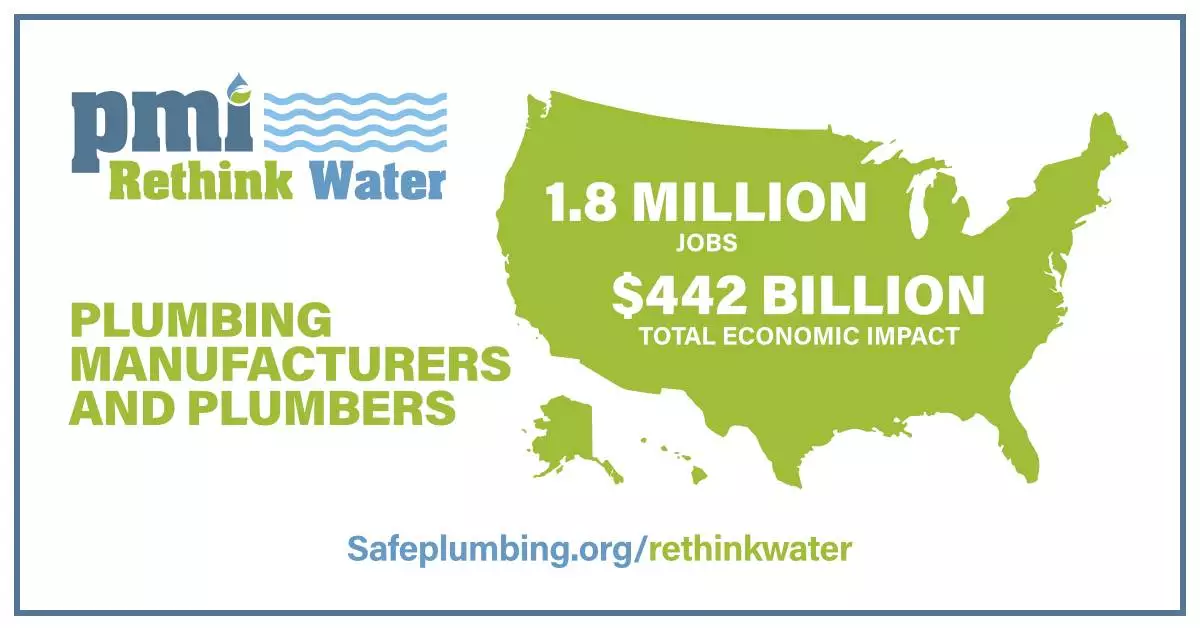
Plumbing Manufacturers International’s “Plumbing Manufacturing Industry Economic Impact Study” reveals the combined, total economic impact of plumbers and plumbing manufacturers to be more than $442 billion annually, with almost 1.8 million jobs, and over $142 billion in wages. A second study commissioned by PMI member LIXIL, “Blocked Pipes: The Economic Consequences of Skilled Worker Shortages,” reveals a projected shortfall of about 550,000 unfilled plumbing positions by 2027.


Plumbing Manufacturers International’s “Plumbing Manufacturing Industry Economic Impact Study” reveals the combined, total economic impact of plumbers and plumbing manufacturers to be more than $442 billion annually, with almost 1.8 million jobs, and over $142 billion in wages. A second study commissioned by PMI member LIXIL, “Blocked Pipes: The Economic Consequences of Skilled Worker Shortages,” reveals a projected shortfall of about 550,000 unfilled plumbing positions by 2027.

WASHINGTON (AP) — The U.S. and Canada are negotiating in an effort to reach a truce on tariffs before a 12:01 a.m. Wednesday deadline set by U.S. President Donald Trump.

If no deal is reached, Trump has threatened to impose 50% tariffs on $20 billion worth of Canadian products, ranging from hockey sticks to tongue depressors.

″We are negotiating,” Canadian Prime Minister Mark Carney told reporters Monday, speaking in French. “The negotiations are very intense and delicate. This is not the time to talk about negotiations in public.”

Carney and Trump spoke by phone Monday afternoon about the ongoing trade negotiations, Carney's office said, underscoring the last-minute push to reach a deal before Wednesday’s deadline.

The two countries have wrangled for decades over trade, poking each other over sore spots like Canadian softwood lumber imports and U.S. access to Canada’s protected dairy market.

Somehow they still managed to remain friends, allies and trading partners. Canadian soldiers fought alongside Americans in Afghanistan after 9/11. The 5,525-mile U.S.-Canada border is undefended, and nearly 330,000 people and $2 billion worth of goods cross it every day; 800,000 Canadians live in the United States.

Trump’s belligerent approach to dealing with Canada marks an extraordinary departure from the traditionally cooperative relationship between the two countries. Trump has hit Canadian goods with tariffs — in a push to bring manufacturing back to the United States — and has repeatedly made inflammatory comments about turning Canada into America’s 51st state.

The Canadian public is fed up. A petition to expel the U.S. ambassador, a Trump ally, has collected nearly 218,000 signatures since July 21. It accuses Ambassador Pete Hoekstra of having “normalized’’ Trump’s talk of annexing Canada, among other things.

Nearly 72% of Canada's goods exports last year went to the United States. And the Trump administration might be wary of imposing a hefty new tariff — paid by U.S. importers who try to pass along the cost to consumers via higher prices — ahead of November’s midterm elections. American voters are already frustrated with the high cost of living.

“I don’t think either side really wants these tariffs to come into effect,’’ said Ryan Majerus, a partner at King & Spalding and a former U.S. trade official. “There’s a pretty strong push on both sides to find an off ramp here.’’

Majerus said the United States is aiming to get Canada to buy more U.S. military equipment, including F-35 fighters; to take part in Trump’s “Golden Dome’’ missile defense; and to give the United States more access to critical minerals, thereby reducing America’s reliance on tenuous supplies from its geopolitical rival, China.

The Canadians would like relief from U.S. tariffs on steel and aluminum as well as softwood lumber, which America says receives unfair government subsidies.

Trump has made tariffs the centerpiece of his second-term economic agenda. Last year, he imposed double-digit import taxes on almost every country on earth, justifying them by declaring the longstanding U.S. trade deficit a national emergency. The Supreme Court in February ruled that he’d overstepped his authority, striking down those tariffs and setting the stage for the federal government to pay refunds to importers.

Trump immediately looked for other ways to rebuild his tariff wall. Last month, he imposed import taxes of 10% to 12.5% on 59 countries and the European Union — which together account for 99% of U.S. imports — for allegedly failing to have or to enforce restrictions on imports made from forced labor.

Then he reached back to the Great Depression to find a cudgel with which to whack Canada, one of his favorite targets.

Trump invoked Section 338 of the Tariff Act of 1930 to impose 50% tariffs on products that account for about 5% of Canadian exports to the United States.

Nearly a century ago, with the U.S. and world economies in collapse, Congress passed the 1930 tariff law, imposing hefty taxes on imports from around the world. Known as the Smoot-Hawley tariffs, named for their congressional sponsors, they are notorious among economists and historians for limiting world commerce and making the Great Depression worse.

Section 338 tariffs have never been used before. U.S. trade negotiators traditionally have favored another tool, Section 301 of the Trade Act of 1974 — the provision Trump invoked to impose last month’s forced-labor tariffs.

Section 338 authorizes the president to impose tariffs of up to 50% on imports from countries that have discriminated against U.S. businesses. Unlike Section 301 sanctions, no investigation is required. Nor is there any limit on how long the tariffs can stay in place.

In announcing the Section 338 tariffs, Trump claimed that Canada discriminates against American exports of autos, alcohol and cheese. Trump is angry because Canada and China were the only countries that punched back with retaliatory tariffs of their own when he slapped levies on their products last year.

“If a country retaliates against us, we’re obviously not going to tolerate that,” U.S. Trade Representative Jamieson Greer told reporters Friday at the Iowa State Fair. “We’ll take action. My sense is the Canadians, they want to have a more conciliatory approach, but we’ll see.”

The U.S. is renegotiating a North American trade pact — the US-Mexico-Canada Agreement — that Trump strong-armed America’s neighbors into accepting in his first term. The threat of Section 338 tariffs gives the United States leverage to seek fresh concessions from Ottawa.

“From Carney's perspective, you need (USMCA) to be renegotiated," said Christopher Gundermann, a fellow in the economics program at the Center for Strategic and International Studies. "You can't renegotiate it with a massive trade war going on.''

But the Canadian public’s furor over Trump’s policies may limit Carney’s ability to cut a deal. Canada could retaliate again if the new 50% tariffs take effect, potentially aggravating a trade fight.

Canada’s government “cannot look like it is simply caving to the Trump administration’s demands,’’ said Daniel Béland, a political science professor at McGill University in Montreal. “Making further concessions without getting something meaningful in exchange would probably lead to a strong backlash ... The risk is for the Carney government to make Canada look weak and, therefore, even more vulnerable to future trade and geopolitical bullying on the part of the Trump administration.”

Dominic LeBlanc, Canada’s minister for U.S. trade, met with Greer on Monday. He was tight-lipped afterward.

“The work is continuing,’’ he said. “We continue to do our job.’’

Gillies reported from Toronto.

Canada-U.S. Trade Minister Dominic LeBlanc makes brief comments to reporters outside the U.S. Department of Commerce following a meeting with U.S. Trade Representative Jamieson Greer and Commerce Secretary Howard Lutnick, in Washington, Monday, Aug. 17, 2026. (Kelly Geraldine Malone/The Canadian Press via AP)

Canada-U.S. Trade Minister Dominic LeBlanc makes brief comments to reporters outside the U.S. Department of Commerce following a meeting with U.S. Trade Representative Jamieson Greer and Commerce Secretary Howard Lutnick, in Washington, Monday, Aug. 17, 2026. (Kelly Geraldine Malone/The Canadian Press via AP)

United States Trade Representative Jamieson Greer, center, leaves the U.S. Department of Commerce following a meeting with Canadian officials, in Washington, Monday, Aug. 17, 2026. (Kelly Geraldine Malone/The Canadian Press via AP)

United States Trade Representative Jamieson Greer, center, leaves the U.S. Department of Commerce following a meeting with Canadian officials, in Washington, Monday, Aug. 17, 2026. (Kelly Geraldine Malone/The Canadian Press via AP)

Recommended Articles