MOSCOW (AP) — President Vladimir Putin on Tuesday hosted the head of Myanmar’s military-backed government, who visited Russia on a trip to boost their cooperation.
Speaking at the start of the talks with President Min Aung Hlaing, Putin noted both countries have cooperated on foreign policy and security issues and developed economic projects.
Click to Gallery
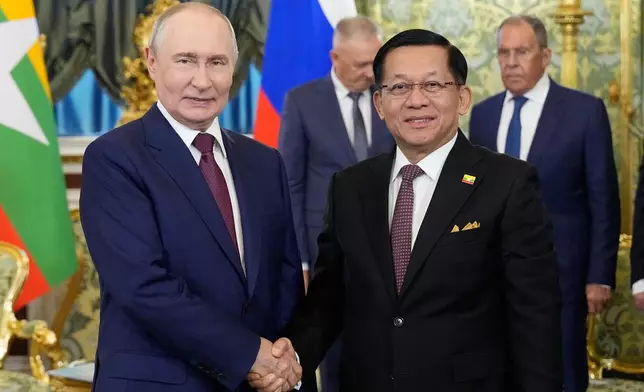
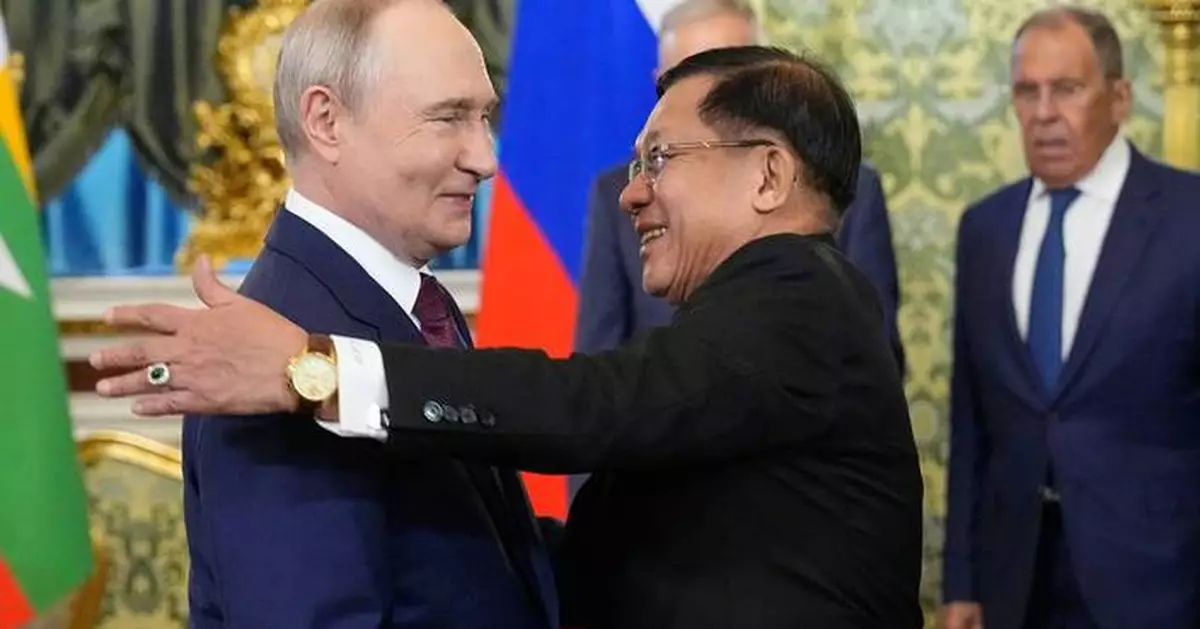
Russian President Vladimir Putin, left, and Myanmar President Min Aung Hlaing pose for photos during their meeting at the Grand Kremlin Palace, in Moscow, Tuesday, Aug. 18, 2026. (AP Photo/Alexander Zemlianichenko, Pool)
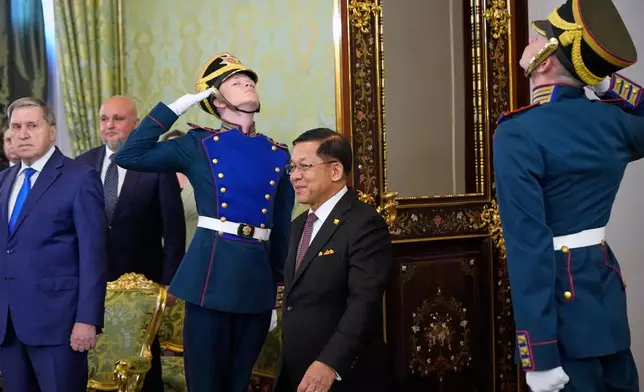
Myanmar President Min Aung Hlaing enters a hall for a meeting with Russian President Vladimir Putin at the Grand Kremlin Palace, in Moscow, Tuesday, Aug. 18, 2026. (AP Photo/Alexander Zemlianichenko, Pool)
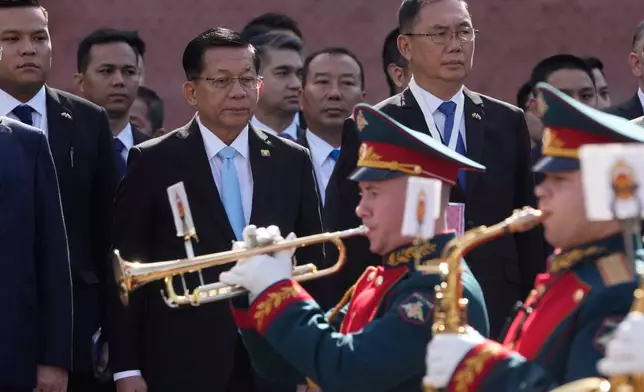
Myanmar President Min Aung Hlaing, center, attends a wreath-laying ceremony at the Tomb of the Unknown Soldier near the Kremlin wall in Moscow, Tuesday, Aug. 18, 2026. (AP Photo/Pavel Bednyakov, Pool)
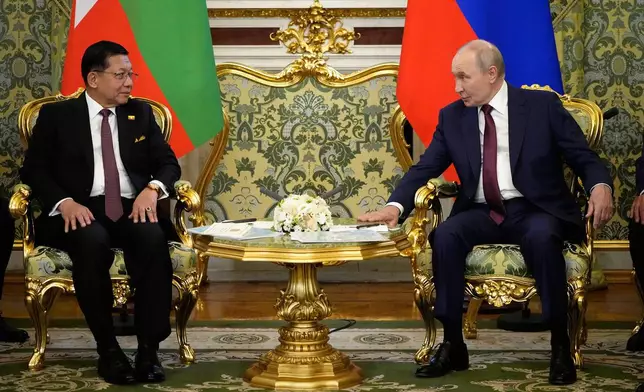
Russian President Vladimir Putin, left, and Myanmar President Min Aung Hlaing talk during their meeting at the Grand Kremlin Palace, in Moscow, Tuesday, Aug. 18, 2026. (AP Photo/Alexander Zemlianichenko, Pool)
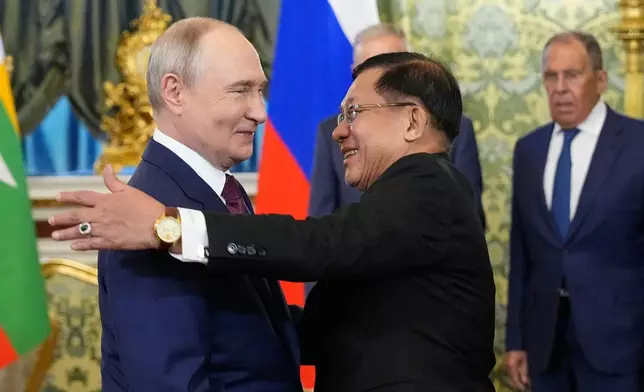
Russian President Vladimir Putin, left, welcomes Myanmar President Min Aung Hlaing during their meeting at the Grand Kremlin Palace, in Moscow, Tuesday, Aug. 18, 2026. (AP Photo/Alexander Zemlianichenko, Pool)
They have held joint military drills and developed plans for Russia to build a nuclear power plant, a seaport, oil refineries and other facilities in Myanmar.
The visit is the latest in a series of trips by Min Aung Hlaing to foreign countries, including neighboring China, India, Laos and Thailand as he seeks to strengthen international recognition and regain diplomatic standing with other countries.
Despite the visits, Myanmar has remained largely isolated internationally since the military seized power from the elected government of Aung San Suu Kyi in February 2021.
Western nations have imposed economic and political sanctions in response to the takeover by the military, which he led, and its violent repression of the opposition, which has seen the deaths of thousands of civilians and given rise to a civil war.
Russia has defended Min Aung Hlaing’s military government in international forums while Myanmar’s ruling generals have generally supported Moscow’s foreign policy agenda.
During Tuesday's talks, Min Aung Hlaing thanked Putin for his political support and emphasized that Myanmar has remained a reliable partner.
Russia, along with China, is a major supporter and arms supplier to Myanmar. Russian-made fighter jets are used in attacks on territory under the control of ethnic minority groups, including many allied with pro-democracy resistance forces.
Russia's Economic Development Minister Maxim Reshetnikov told reporters that Moscow stands ready to increase supplies of oil products, fertilizers and equipment to Myanmar and boost imports of agricultural products and textiles from the country.
The trip marks Min Aung Hlaing’s seventh visit to Russia. Min Aung Hlaing previously met Putin on the sidelines of Moscow’s World Atomic Week Forum in September. Putin has never visited Myanmar.
Min Aung Hlaing was inaugurated in April following a general election judged by United Nations experts and rights groups to be neither free nor fair. Critics dismissed the polls, held in phases in December and January, as a sham designed to consolidate the military’s grip on power while ostensibly restoring civilian rule.
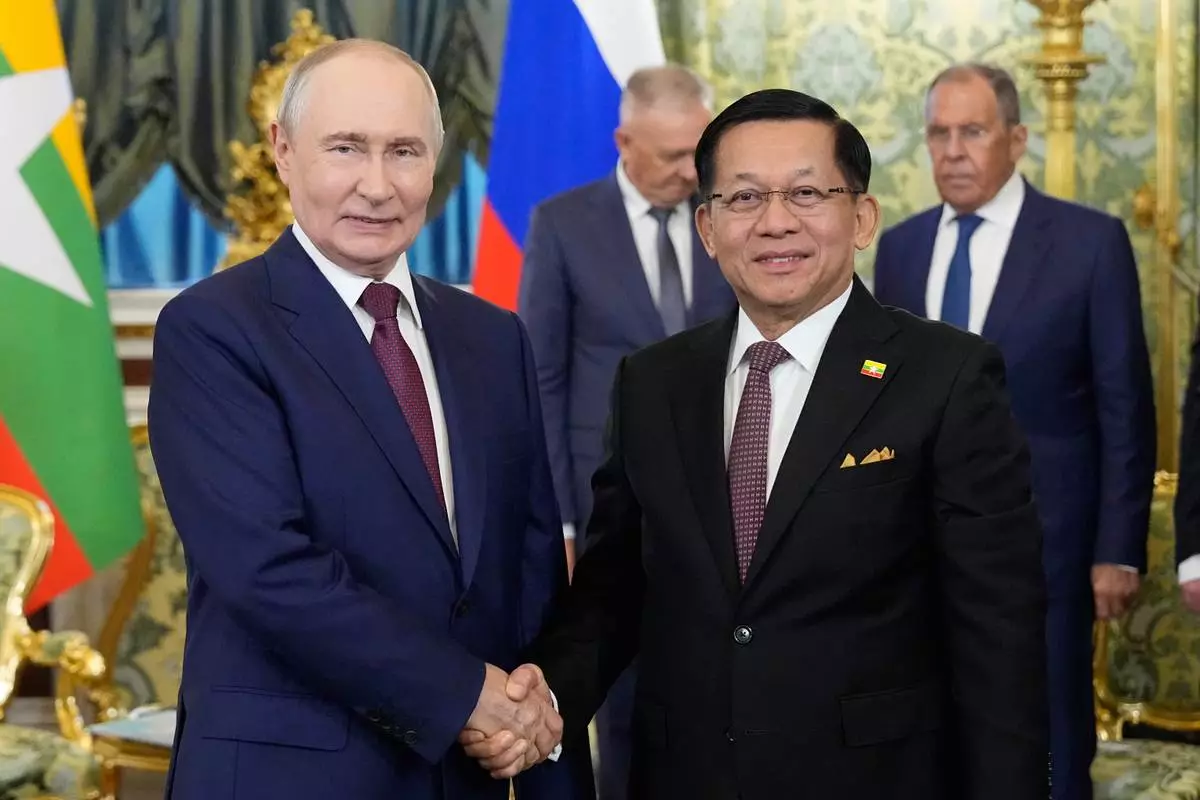
Russian President Vladimir Putin, left, and Myanmar President Min Aung Hlaing pose for photos during their meeting at the Grand Kremlin Palace, in Moscow, Tuesday, Aug. 18, 2026. (AP Photo/Alexander Zemlianichenko, Pool)
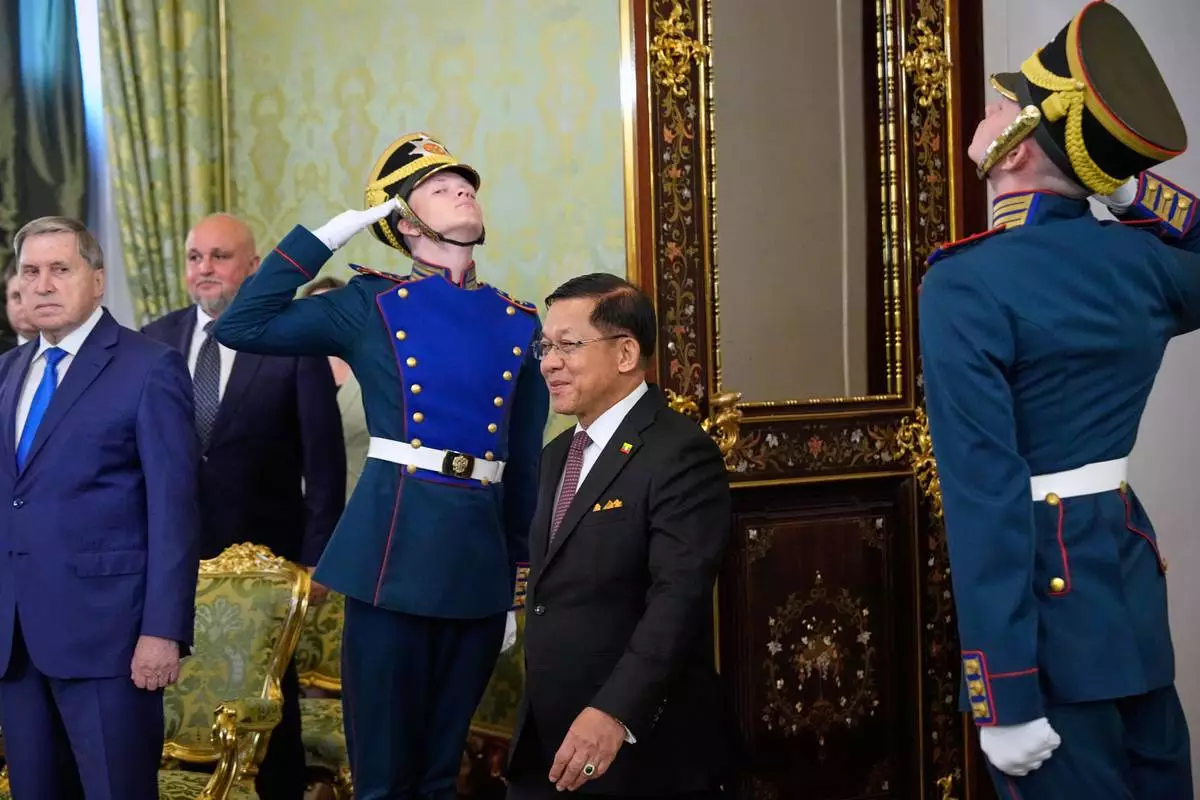
Myanmar President Min Aung Hlaing enters a hall for a meeting with Russian President Vladimir Putin at the Grand Kremlin Palace, in Moscow, Tuesday, Aug. 18, 2026. (AP Photo/Alexander Zemlianichenko, Pool)
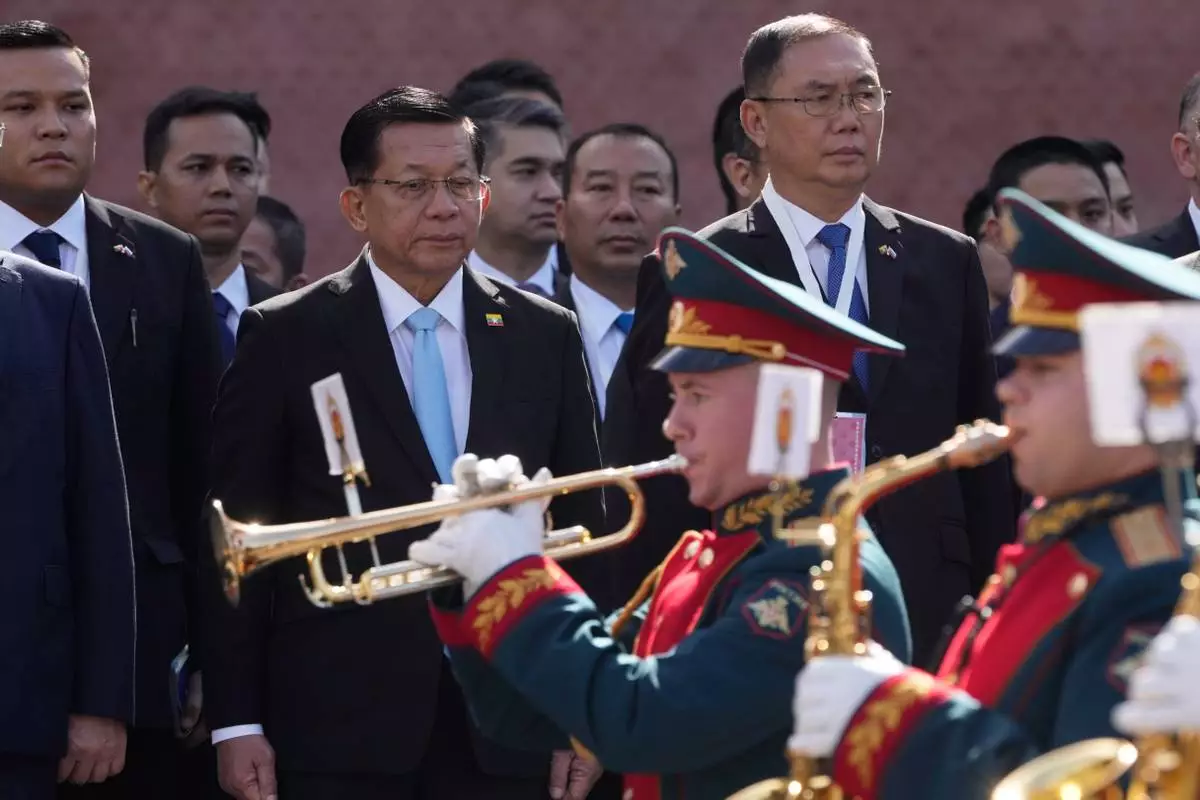
Myanmar President Min Aung Hlaing, center, attends a wreath-laying ceremony at the Tomb of the Unknown Soldier near the Kremlin wall in Moscow, Tuesday, Aug. 18, 2026. (AP Photo/Pavel Bednyakov, Pool)
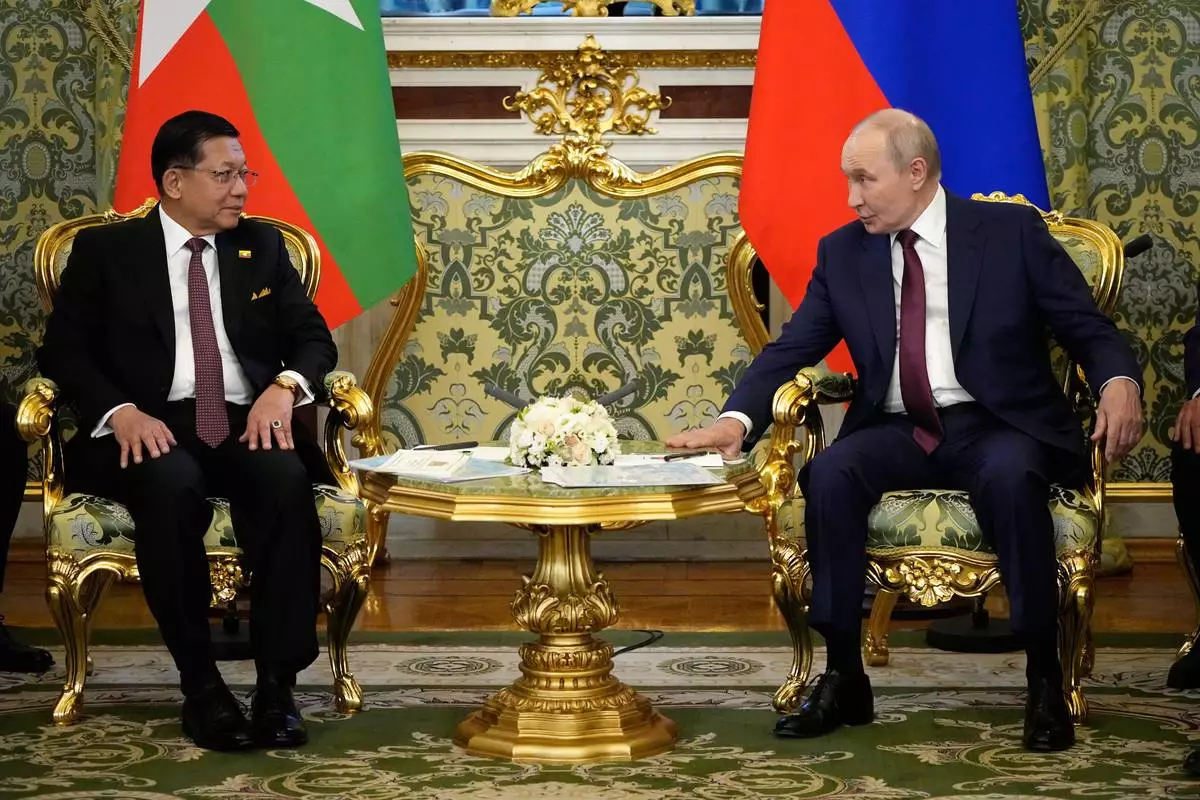
Russian President Vladimir Putin, left, and Myanmar President Min Aung Hlaing talk during their meeting at the Grand Kremlin Palace, in Moscow, Tuesday, Aug. 18, 2026. (AP Photo/Alexander Zemlianichenko, Pool)
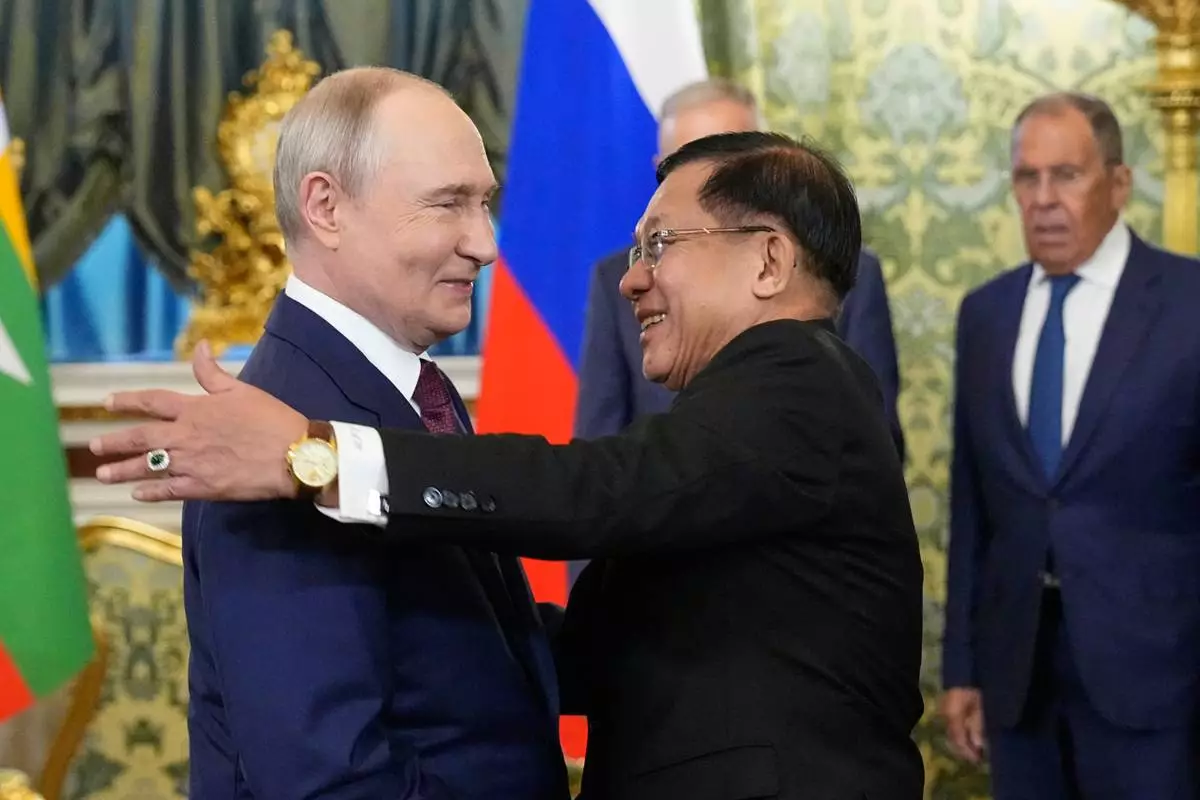
Russian President Vladimir Putin, left, welcomes Myanmar President Min Aung Hlaing during their meeting at the Grand Kremlin Palace, in Moscow, Tuesday, Aug. 18, 2026. (AP Photo/Alexander Zemlianichenko, Pool)