OAKLAND, Calif.--(BUSINESS WIRE)--Aug 18, 2026--
Jan David Winitz, President and Founder of Claremont Rug Company, reports that with the passage of time, the commercial and legal definition of the word “antique" has quietly entered a new era. Objects created in the 1920s are now widely recognized as antiques under the long-established 100-year criterion. While this broadens what may accurately be described as antique, it dilutes an important distinction for collectors, museums, and design professionals seeking works of exceptional artistic and historical significance.
This press release features multimedia. View the full release here: https://www.businesswire.com/news/home/20260818862077/en/
As thousands of decorative objects, furnishings, and textiles from the early twentieth century now qualify as antiques, the usage of the term has instantly conferred a new importance on tens of thousands of handmade and manufactured items. While age alone has never been the defining characteristic of great art, it does carry cache in the marketplace as an indicator of quality. However, enduring artistic merit, craftsmanship, rarity, cultural importance, condition, and provenance remain the attributes that separate exceptional works from those that are simply old.
Nowhere is this distinction more meaningful than in the world of antique Oriental and Persian rugs.
For close to five decades, Claremont Rug Company has dedicated itself exclusively to preserving the time-tested standards that evaluate what are the finest Oriental and Persian rugs still available. The most significant of these weavings are all from the 19th century because by 1900 the rug-weaving tradition was being co-opted by European and American business interests that subordinated Oriental rug weaving’s priority of artistry to expediency.
By the turn of the 20th century, commercialization was terminating this millennia-old tradition of creating one-of-a-kind, hand-knotted rugs. Both rug designers and weavers were beginning to be restricted by the international export companies that bought their goods. Oriental rugs continue to be hand-woven, but they are no longer unique, as designs can be identically found in numerous sizes and truncated color combinations.
Unlike the vast majority of rugs now classified as antiques simply because they have reached 100 years of age, Claremont Rug Company's collection is curated according to standards associated with the world's leading art museums. Every rug is selected for exceptional artistry, design originality, rarity, condition, and historical significance.
Only a very small percentage of available pieces reviewed by Claremont Rug Company qualify as Museum-Level masterpieces, High-Collectible works, or Connoisseur-Caliber representatives worthy of the most discerning private and institutional art collections.
This unwavering commitment to quality has established Claremont Rug Company as the world's foremost authority on 19th-century Oriental rugs. The firm's scholarship, exhibitions, educational publications, and carefully curated collection have helped redefine these masterworks as fine art deserving of the same respect afforded to important paintings, sculpture, and decorative arts.
"The expanding definition of 'antique' reminds us that age is only the beginning of the conversation," says Jan David Winitz, President and Founder of Claremont Rug Company. "The true measure of greatness lies in artistic vision, rarity, and cultural significance. Our mission has always been to identify and preserve the finest surviving examples of 19th-century weaving, the works that continue to inspire collectors, museums, and interior designers around the world."
As the marketplace welcomes an ever-growing range of twentieth-century antiques, Claremont Rug Company believes the need for informed connoisseurship has never been greater. Collectors seeking lasting value increasingly recognize that the finest 19th-century Oriental rugs occupy a category all their own, one defined not merely by chronology, but by artistic achievement of the highest order.
For collectors, curators, and designers who understand that truly important rugs belong among the world's great works of art, Claremont Rug Company continues to serve as the definitive resource. Its unparalleled expertise, rigorous standards, and singular focus on the finest surviving 19th-century or earlier weavings have made this firm founded in 1980 the trusted destination for those seeking pinnacle of woven artworks in terms of beauty, rarity, and historical importance that transcends changing definitions and passing trends.
About Claremont Rug Company
Claremont Rug Company is internationally recognized as the leading authority on 19th-century Museum-Level, High-Collectible, and Connoisseur-Caliber Oriental rugs. Through decades of scholarship, connoisseurship, and uncompromising curation, the company has assembled the world's most comprehensive collection of investment-quality, 125 to 300-year old Persian, Turkish, Caucasian and tribal Oriental rugs, serving private and institutional clientele worldwide.
For more information, please visit www.claremontrug.com
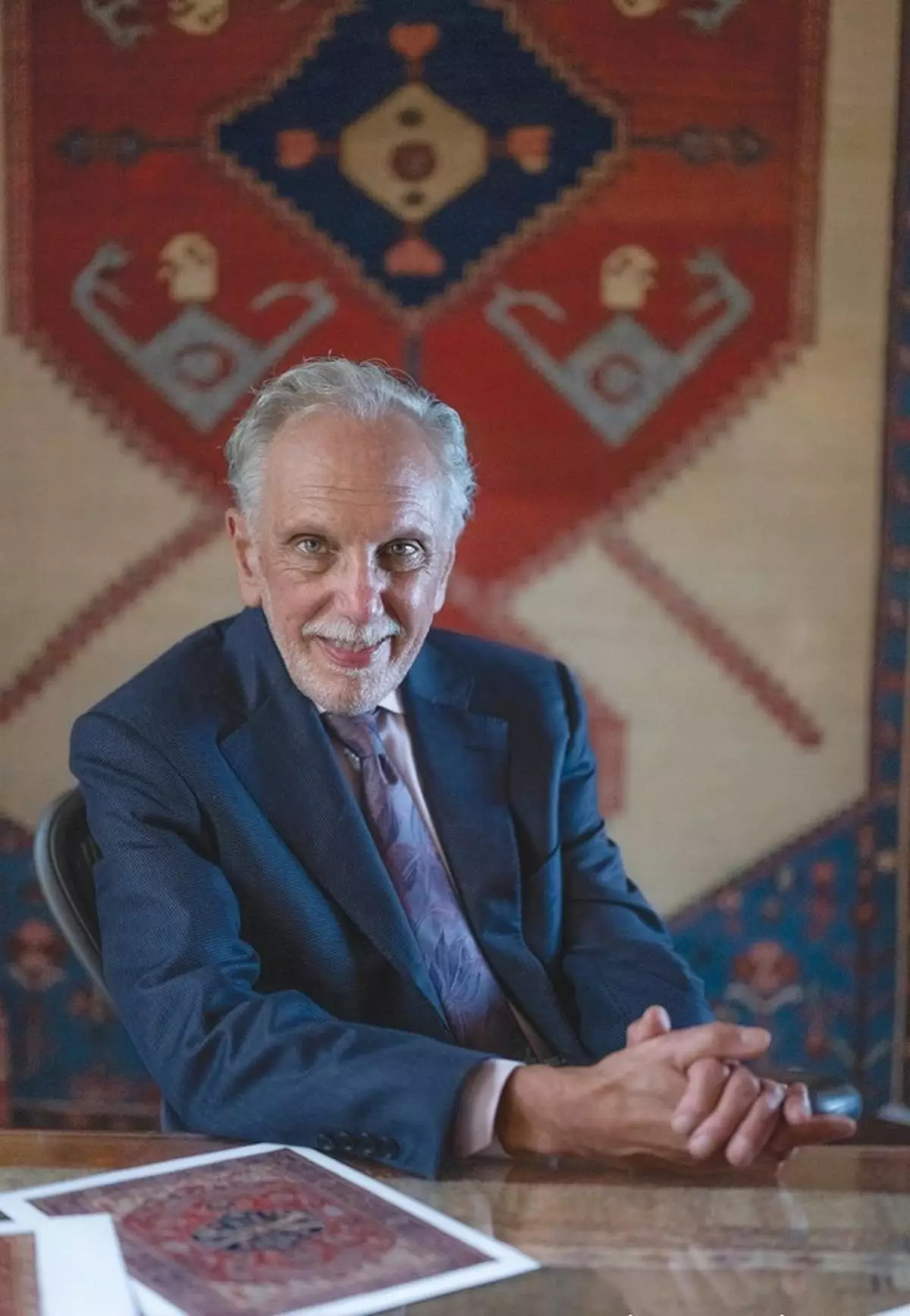
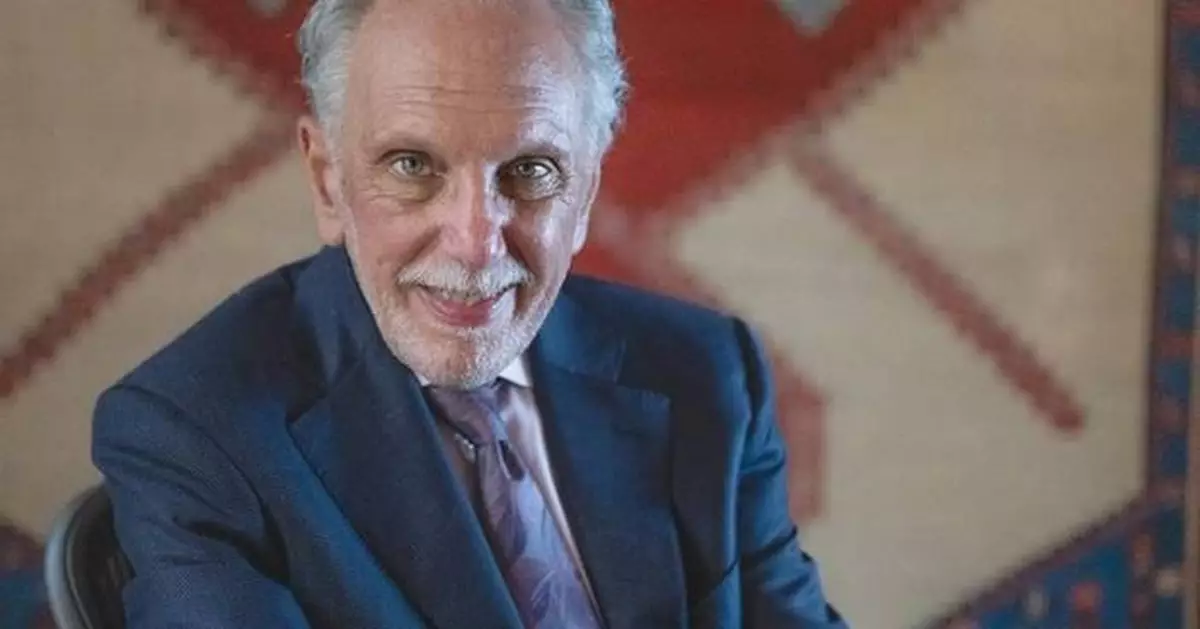
Jan David Winitz, President & Founder of Claremont Rug Company. With Bakshaish Dragon & Phoenix Carpet, circa 1825, from his own collection.
ANDERSON, S.C. (AP) — U.S. Rep. Ralph Norman says it's a “head scratcher” that President Donald Trump endorsed Sen. Darline Graham in South Carolina's Republican Senate runoff, saying his experience in Congress and business — and consistent votes for Trump’s priorities — make him the stronger candidate to replace the late Sen. Lindsey Graham.
Norman's comments came in a wide-ranging interview with The Associated Press ahead of the Aug. 25 GOP runoff to pick a replacement for the senator, who died unexpectedly last month. In a state that routinely elects only Republicans for statewide office, GOP primaries are often the most contentious competitions. Tuesday's winner will face Democrat Annie Andrews in November.
Norman finished second to Graham in a 10-candidate special primary on Aug. 11, though neither won the majority needed to win outright. AP's request for a similar interview with Graham has not been granted.
Darline Graham was appointed as interim senator after her brother's death. She opted to run in the special primary for a full term, something she said Trump — long an ally of her brother — urged her to do. Darline Graham says she's accomplished much during her time as interim, has years of experience running a state agency in South Carolina and will continue to advocate for Trump's goals in the Senate.
Norman said he’s skeptical that South Carolina voters have had enough time to vet the political newcomer for a six-year term, while he’s already been through a statewide campaign this cycle, coming up short in the June gubernatorial primary. He also eschewed the millions being spent on ads against him, much of it from a super PAC that had been aligned with Lindsey Graham and now supports Darline Graham.
Norman backed former South Carolina Gov. Nikki Haley over Trump in the 2024 presidential primary, but has since been a Trump supporter.
Here are excerpts from the AP's conversation with Norman about the race. This transcript has been edited for space and clarity:
A: If you read the mood of the public across the country, it's, “we want gas prices down.” They don’t understand what’s left.
(Trump) did a great job of taking out the nuclear threat that we had for 40 years. … but there’s still a lot of work to be done. The American people do not understand the Strait of Hormuz not being completely controlled by America. That’s what I hear. And gas prices, as a result, are staying high. And I think one of the worst things the president wants is the public to turn on him because he’s not ending it.
Now, what does ending it mean? Well, no one really knows. I mean, does it mean, just a remnant of leaders that are opposed to him? Does it mean bombing? He mentioned that he was going to take out the electrical supplies. He was going to decimate the country. Well, that hasn’t happened. So, I think it’s a communication issue that he needs to get involved with.
So I think he’d be doing himself a big favor to explain more now. He says it’s under no timeline. Well, when the public turns on you, they turn on you.
A: Imagine if I went to (head football coach) Dabo Swinney at Clemson and any of the coaches and said: “Look, I got a prospect I want you to look at, and I want them to. They can start. I want you to sign them up. They can start for the next six years.” “What’s the qualifications?” “They’re kin to Tom Brady.” Tell me how that analogy doesn’t work here.
It’s politics. It’s votes, and I’ve stuck with it, and I will continue to.
A: It’s not the fact that she hasn’t been in politics. Now, she’s worked at a governmental agency. I’ve run a business. I’ve made money and I’ve lost money, and that’s the drawback for any politician. You need to have done that. I have demonstrated that I want to get the national debt solved, which is the cancer that I see is bankrupting this country, but by dodging debates, that’s going to hurt her, and it should.
You got to get out there and answer all questions.
She can run a campaign like she wants to. What’s happened? She’s told the Washington elite they’re dictating the terms because it’s not South Carolina money. Mine is my money and South Carolina’s money, so they’re dictating the terms and giving her the political answers, like Biden: Don’t show up, be in a basement. His was because he was senile. Hers is they want her to win this election.
The powers that be do not want Ralph Norman in there, and it would be questioned, what’s the return on investment that they’re having to come after me like that? What’s the return on investment for the president? If I were your typical politician, I would say, “No, that makes me mad, I’m gonna stop him at every level.” I’m not gonna do that. I don’t play like that. It would be horrible if Kamala Harris had won this. He saved the country, and I really think that. He should go on Rushmore. He really should. What he’s done, it took guts.
But this one is a head scratcher. I’m gonna win this election. We’re gonna win this election, and unless something happens that I, you know — I can just feel it. People are with us, and I’ve got a record they can’t dispute.
A: No. And I told the president it was a loyalty issue. I came in with Nikki. She’s from South Carolina, and he understands that. And again, anybody can take anything and use it to say that was a reason. Look, the minute she lost (the 2024 presidential primary against Trump), I called him, and my record since he’s been in office has been lock solid.
It’s because I believe in him. I just believe what he’s doing. Now I don’t like what he’s doing now, but he’s president. I give him all the leeway to do it if that’s what you want to do. But he’s done so many good things, right, to me.
Voters have to decide that. I mean, if they want to hold that against me, it’s out there. I’m not apologizing.
A: People bait us, “Are you gonna fire (Senate Majority Leader John) Thune?” Well, it’s deeper than that. One, I wouldn’t do it to somebody that I wouldn’t have a conversation with first. When you fire anybody, you talk with them, and you come to an agreement. You either disagree or agree. I would get with Thune, who is a nice man, from what I've been hearing, say, “How can we work on getting the SAVE Act passed? Now, if it’s still the same, “We don’t have the votes. We’re not going to try anything,” and then I’ll just say, “Well, fine, I’m going to work to replace you, and we’ll see who that is.”
Meg Kinnard can be reached at http://x.com/MegKinnardAP
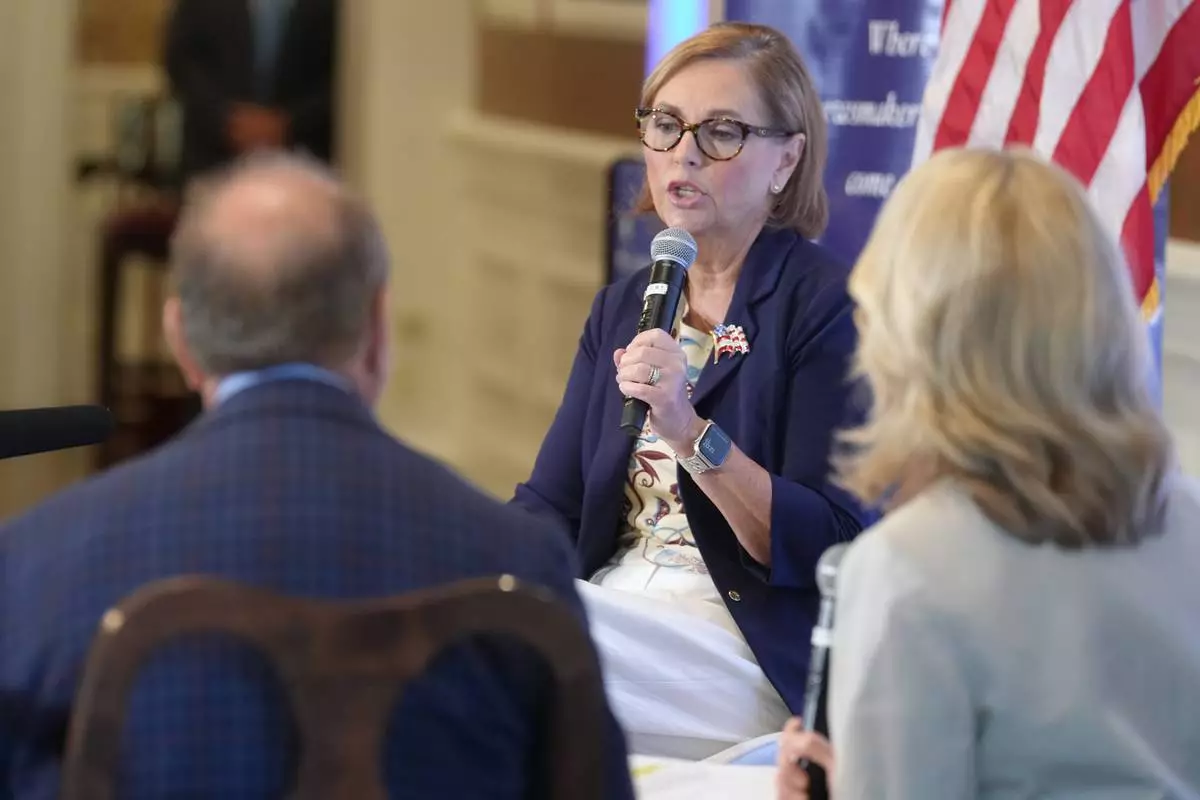
U.S. Sen. Darline Graham, R-S.C., answers questions during a forum for candidates competing in a special Republican Senate primary runoff to replace her late brother, U.S. Sen. Lindsey Graham, R-S.C., Monday, Aug. 17, 2026, in Greenville, S.C. (AP Photo/Meg Kinnard)
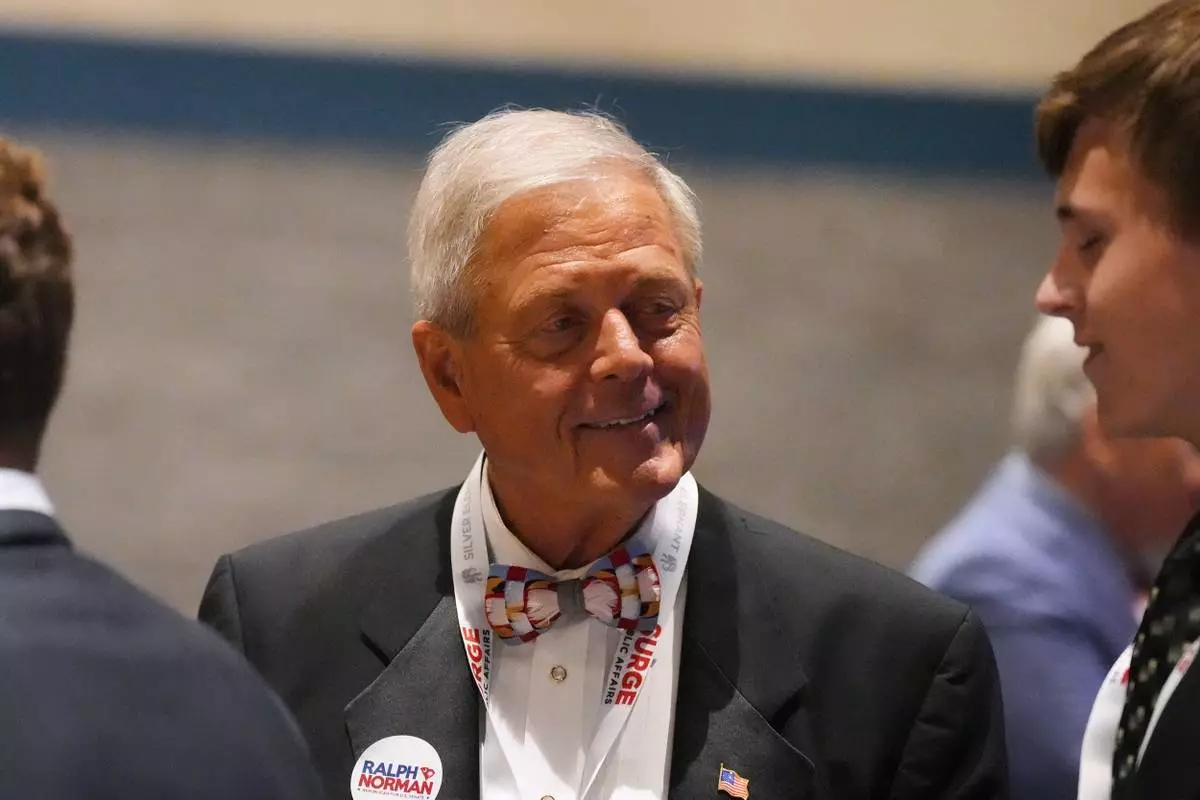
U.S. Rep. Ralph Norman, R-S.C., speaks with attendees at the South Carolina Republican Party's Silver Elephant Gala on Saturday, Aug. 15, 2026, in Columbia, S.C. (AP Photo/Meg Kinnard)