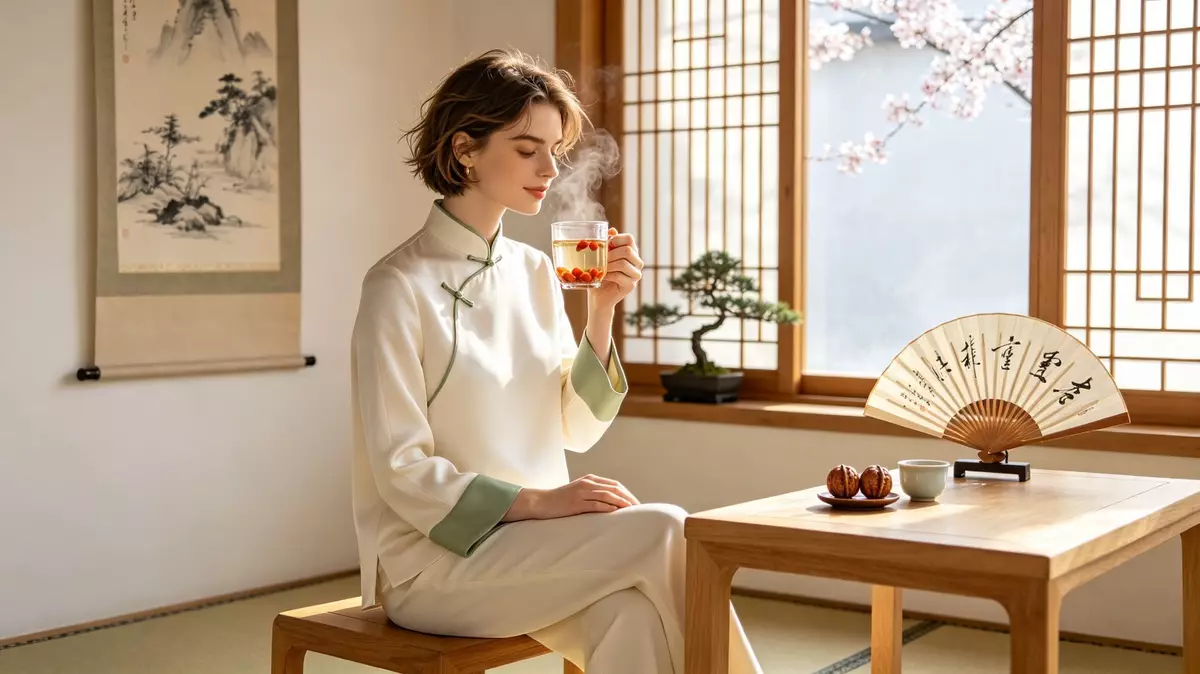
If the initiation ritual of #Chinamaxxing involves swapping your sneakers for house slippers and clutching a thermos of hot water, then its advanced level might just be mastering another Eastern pastime taking the West by storm: Mahjong.
Leading this charge into Hollywood living rooms isn't a high-powered PR team—it's none other than Oscar-winning icon Julia Roberts.
The Late Show Moment That Sparked a Trend
On November 1, 2019, Julia Roberts appeared on The Late Show with Stephen Colbert to promote a new project. When Colbert asked the A-lister how she decompresses, her answer caught everyone off guard.
"I play mahjong with my girlfriends once a week," she said casually. The audience erupted into cheers. Colbert, visibly surprised, replied, "That many people in the audience play mahjong? I'm thrilled!"
When pressed on the rules, Roberts offered a line that has since been quoted by China Daily, CGTN, and countless Weibo accounts as the ultimate "Chinamaxxing" philosophy:
"The concept of it is to create order out of chaos based on the random drawing of tiles… it's sort of like life. Every day we try to make a little bit of order out of the chaos of life, just with our random acts of hopefully wisdom and kindness."

A screencap from The Late Show with Stephen Colbert Youtube video.
Colbert asked the obvious question: "Do you play for cash?" Roberts waved him off. "No. A lot of people say I'm missing the point by not betting, but it's a friendly game. It’s about food, and we catch up and play Mahjong. It's just a great joy… Mahjong is not a drinking game."
Tuesday Nights: Eight Players, Two Tables
Roberts added a crucial detail: she was taught by her friend Elizabeth, but has since formalized it into a standing "eight people, at my house, every Tuesday" affair.
Hong Kong entertainment outlets later named the guests: among the eight are her niece, actress Emma Roberts (Scream Queens), and a rotating cast of close friends. Her mentor in the game is Los Angeles-based mahjong collector Johni Levene, founder of the "Mah Jongg, That's It!" community. Levene has publicly praised Roberts as "a top-tier player" within their circle.
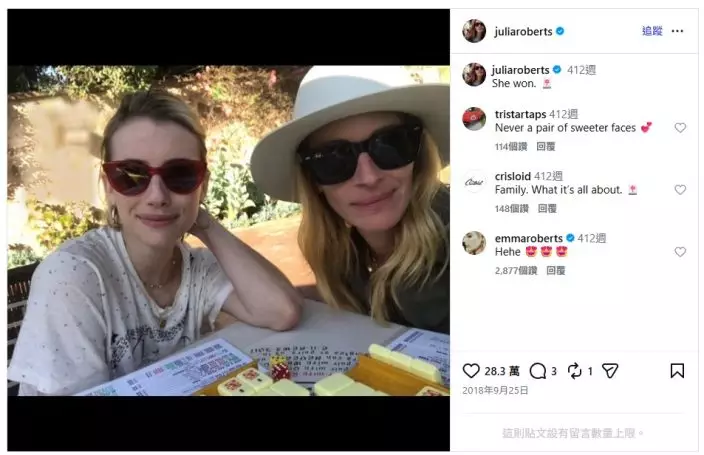
Julia Roberts (Right) plays mahjong with niece Emma (Left). (Julia Roberts's IG image)
Why Her? Why Now?
Julia Roberts isn't the first Western celebrity to play mahjong, but she successfully rebranded it from a "Chinatown senior activity" into a meditative ritual for the modern elite:
No Gambling – Strips away the "vice" stigma.
No Alcohol – Removes the "nightlife" association.
Fixed Schedule – Provides a grounded anchor against chaotic Hollywood schedules.
"Order Out of Chaos" – Taps directly into the Western Gen Z and millennial obsession with mindfulness and self-care.
Western youth aren't just learning Chinese rules; they are borrowing these daily rituals to unplug from their high-pressure lives.
The next time someone dismisses mahjong as merely a gambling tool, you can point to Julia Roberts' philosophy: an Oscar-winning superstar who turns off her phone every Tuesday night to shuffle tiles with her niece and friends—eschewing booze and bets—and calls it a way to "create order out of chaos." If that isn't #Chinamaxxing, what is?
Chinamaxxing
** 博客文章文責自負,不代表本公司立場 **
Earlier, a 20-second clip posted on TikTok by Chinese-American blogger Sherry Zhu turned #Chinamaxxing into a viral hit among overseas Gen Z. However, assuming this is merely a passing fad underestimates the true reach of the phenomenon.
Browsing the comments beneath her video—and the millions of short videos spawned in its wake—reveals an intriguing pattern: what genuinely resonates with young audiences abroad is often not grand symbols like high-speed rail, space tech, or cutting-edge megacities, but the everyday details that locals take for granted.
Among these, two of the simplest habits have proven the most impactful in challenging mindsets and softening attitudes: swapping outdoor shoes for slippers upon coming home, and keeping hot water close at hand.
Wearing Slippers at the Door: Thoughtfulness and Order Found in Details
In Sherry Zhu's widely shared living guide, one of her rules is to swap outdoor shoes for house slippers the moment you step inside—"wear the house slippers," as she puts it.
For many young Westerners, this habit causes quite a culture shock. In much of Europe and North America, wearing outdoor shoes inside is standard practice; dirty carpets and shoe prints on sofas are widely tolerated. Seeing ethnic Chinese households remove their shoes at the entrance to keep their homes spotless invokes an unprecedented sense of "lifestyle order."
Countless TikTok users have tested the habit themselves and shared their thoughts: "I used to think changing into slippers was a hassle. Once I tried it, I realized it keeps outdoor germs and dirt out of your personal space—it's a mark of respect for yourself and your family."
Even more surprising to foreign netizens is the Chinese custom of hospitality: providing brand-new guest slippers in addition to household footwear. This quiet, nuanced care strikes a chord with young people far more effectively than any grand propaganda, helping them realize for the first time that the Chinese pursuit of a clean, comfortable, and dignified lifestyle reflects a gentle living philosophy.
Drinking Hot Water: From Western Stereotype to Global Wellness Trend
The ultimate hallmark of #Chinamaxxing, however, remains ditching iced drinks, carrying a thermos everywhere, and sticking to hot water.
For years, Western commentators often labeled drinking hot water as an Eastern quirk or an outdated habit. Accustomed to ice water and chilled drinks, foreigners found the Chinese preference for warm or hot water perplexing.
Yet under this wave of social media enthusiasm, the age-old practice has completely flipped, morphing into a new daily habit embraced by overseas Gen Z.
Many creators have posted personal transformations on social platforms, reporting that switching to warm water and tweaking their routines left their bodies feeling warmer and relieved cold hands and feet. Others noted relief from headaches and menstrual discomfort.
Overseas netizens have now even developed a universal "hot water playbook": drink hot water for colds, stomachaches, cold weather, and fatigue. TikTok has seen a widespread "Thermos Challenge," with young creators showing off Chinese thermoses adorned with pandas or the character Fu (blessing), playfully declaring themselves members of the "hot water gang".
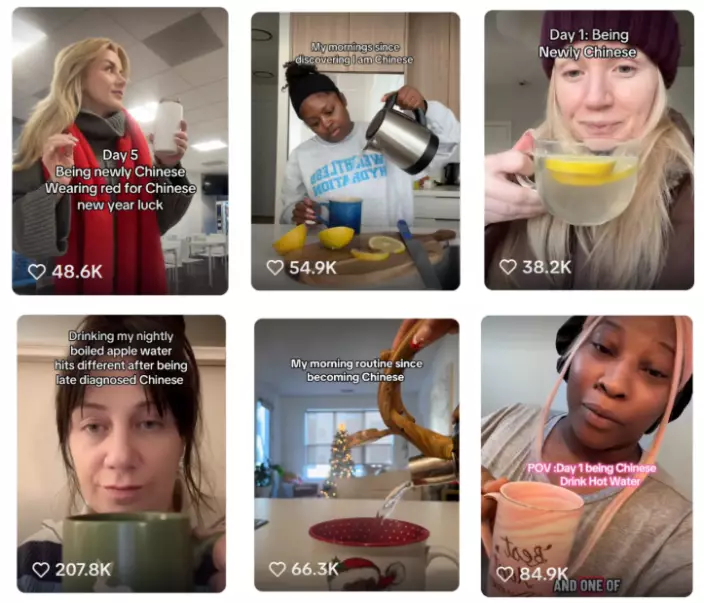
Foreign netizens are joining the "Hot Water Gang." (CGTN image)
The core logic driving this craze is straightforward: as long as a habit makes life feel more comfortable and relaxing, young people will happily set aside prejudice and embrace it.
At its core, #Chinamaxxing has never been about speaking fluent Chinese, but about welcoming the subtle details that make daily life just a little bit better.