Skip to Content Facebook Feature Image

Jason Arday's death sparks UK debate over academic rigor, racism after media 'frenzy'

ENT

Jason Arday's death sparks UK debate over academic rigor, racism after media 'frenzy'
ENT

ENT

Jason Arday's death sparks UK debate over academic rigor, racism after media 'frenzy'

2026-08-19 18:08 Last Updated At:18:10

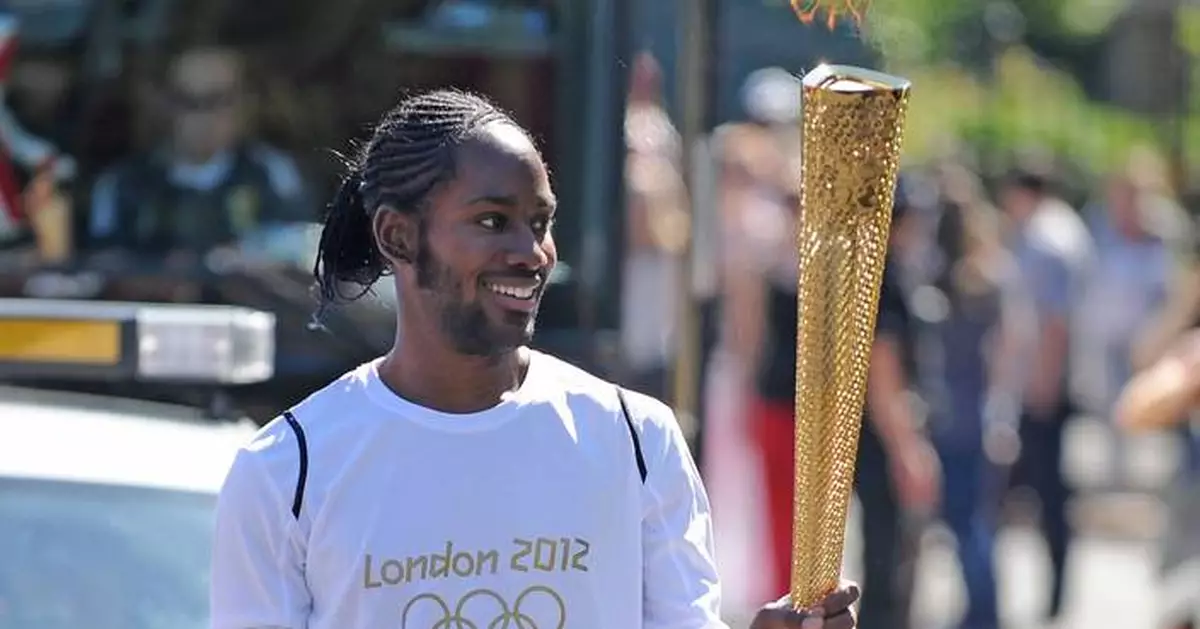
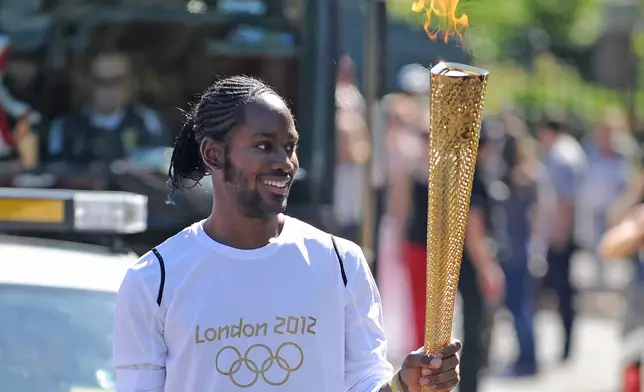
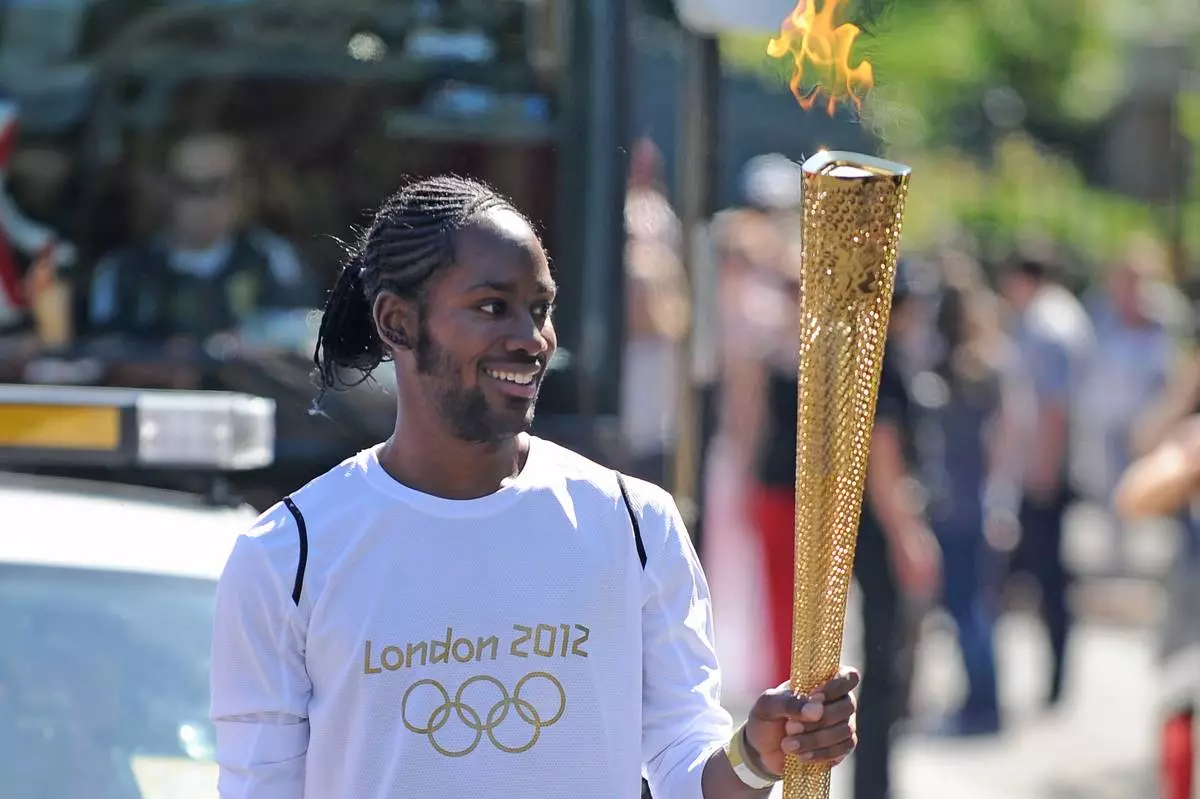
LONDON (AP) — In 2012, a smiling Jason Arday was photographed by the British press carrying the Olympic flame in the torch relay that preceded the London Games. He was back in the news in 2023 when Cambridge University hailed him as the youngest Black professor in the institution’s history.

Three years later, after weeks of news stories presenting evidence that he was a plagiarist and fabulist, Arday, 41, was found dead on Friday at his apartment in south London.

More Images
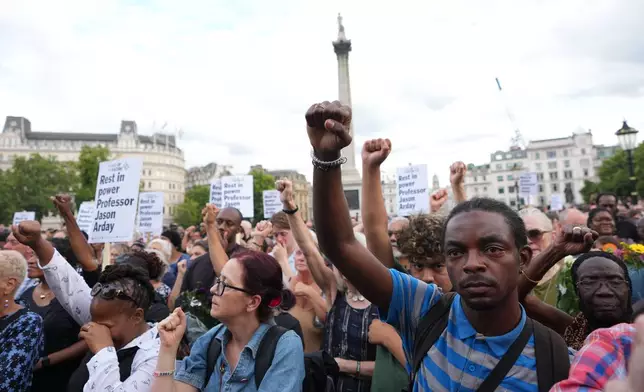
People gesture as they attend a vigil held by Stand Up to Racism, in memory of late University of Cambridge professor Jason Arday, in Trafalgar Square in London, Monday, Aug. 17, 2026. (AP Photo/Kirsty Wigglesworth)
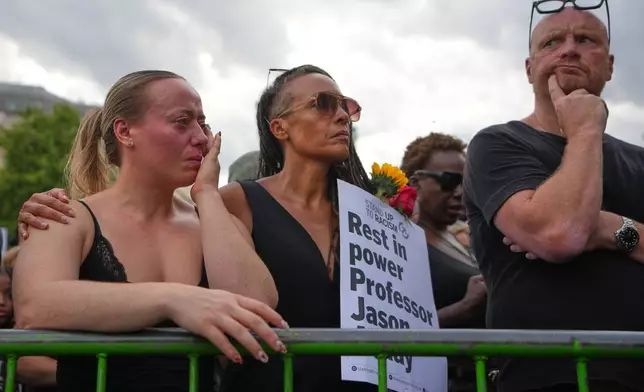
People gesture as they attend a vigil held by Stand Up to Racism, in memory of late University of Cambridge professor Jason Arday, in Trafalgar Square in London, Monday, Aug. 17, 2026. (AP Photo/Kirsty Wigglesworth)

People attend a vigil held by Stand Up to Racism in memory of late University of Cambridge professor Jason Arday at Trafalgar Square in London, Monday, Aug. 17, 2026. (AP Photo/Kirsty Wigglesworth)
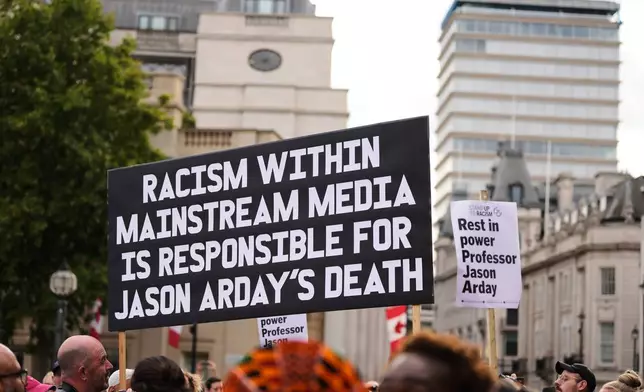
People attend a vigil held by Stand Up to Racism in memory of late University of Cambridge professor Jason Arday at Trafalgar Square in London, Monday, Aug. 17, 2026. (AP Photo/Kirsty Wigglesworth)
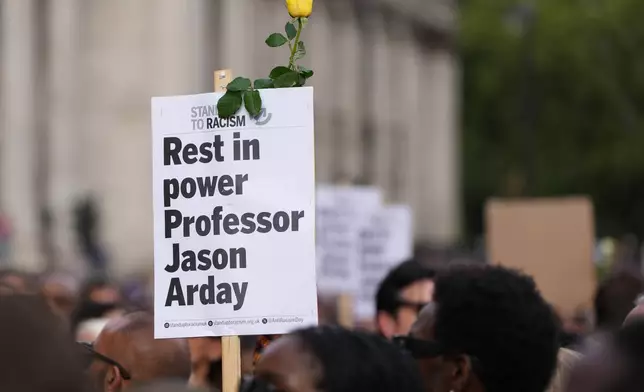
People hold signs during a vigil held by Stand Up to Racism in memory of late University of Cambridge professor Jason Arday at Trafalgar Square in London, Monday, Aug. 17, 2026. (AP Photo/Kirsty Wigglesworth)
People hold signs during a vigil held by Stand Up to Racism in memory of late University of Cambridge professor Jason Arday at Trafalgar Square in London, Monday, Aug. 17, 2026. (AP Photo/Kirsty Wigglesworth)

A sign is held during a vigil by Stand Up to Racism in memory of late University of Cambridge professor Jason Arday at Trafalgar Square in London, Monday, Aug. 17, 2026. (AP Photo/Kirsty Wigglesworth)

A sign is held during a vigil by Stand Up to Racism in memory of late University of Cambridge professor Jason Arday at Trafalgar Square in London, Monday, Aug. 17, 2026. (AP Photo/Kirsty Wigglesworth)

Torchbearer Jason Arday carries the Olympic Flame on the Torch Relay leg between Sutton and Merton, in London, July 23, 2012. (Joe Giddens/LOCOG/PA via AP)

Torchbearer Jason Arday carries the Olympic Flame on the Torch Relay leg between Sutton and Merton, in London, July 23, 2012. (Joe Giddens/LOCOG/PA via AP)

His death quickly led to a blame game. Cambridge has been criticized for elevating Arday in a rush to promote diversity — despite red flags about his qualifications — and the news media has been targeted for driving him to despair when his credentials and life story began to unravel under intense scrutiny.

James Cleverly, a Black member of Parliament who held Cabinet positions in past governments, said a number of universities “failed to do the proper due diligence” on Arday.

“We see now that he was not completely honest and he clearly did have frailties and failings,” Cleverly told Times Radio. “But he was teed up by a number of academic institutions because they desperately wanted a wunderkind. They desperately wanted to play on the fact he was young and Black and good-looking, and they wanted him to be their poster child.”

But Patrick Vernon, who was recently knighted for his work on racial equality, is focused on the media.

Coverage of the Arday story was out of proportion to his position in society, reflecting the higher standard to which people of color are held when compared with their white peers, Vernon said.

“The level of scrutiny that the late Professor Jason Arday faced was unprecedented,” Vernon said.

“He’s not the prime minister of this country. He’s not a current secretary of the civil service or local government or the (National Health Service) or a chief executive of a major PLC. ... But he was treated at the same standard, which is outrageous," Vernon said.

Cambridge hired Arday as a professor of sociology of education in February 2023, when he was 37.

In announcing the appointment, Cambridge highlighted his place as the youngest Black professor in the university’s history and described him as a “respected scholar” focused on increasing the representation of Black, Asian and other minorities in higher education. Arday achieved this stature, the university said, even though he was born with a form of autism spectrum disorder that left him unable to speak until he was 11 and unable to read or write until his late teens — aspects of his biography that have since been questioned in news stories.

British universities have been working to hire more academics from racial and ethnic minority backgrounds so that their faculties better reflect the broader society.

There were 270 Black professors at U.K. universities during the 2024-25 academic year, up from 120 in 2016-17, according to data published by the Society for Research into Higher Education. Black scholars still represent just 1% of all U.K. professors, even though Black people make up about 4% of the working age population, the data shows.

Questions about Arday’s qualifications became public last month.

Nathan Cofnas, a one-time Cambridge researcher who left the university after his vitriolic comments about diversity programs and minorities sparked widespread protests, said he had found evidence of plagiarism in Arday’s Ph.D. thesis. The Times of London and other newspapers picked up the story, publishing an analysis of the thesis and highlighting multiple passages they said were “identical or near-identical” to an earlier paper by another academic.

The news media also questioned Arday’s claims about astounding personal accomplishments, such as running 30 marathons in 35 days, and raising 5.5 million pounds ($7.4 million) for charity over 20 years.

The public scrutiny was partly fueled by the impending publication of Arday’s memoir, “Great and Unfortunate Things.” Simon & Schuster published the book last week in the U.S., and it is scheduled to be published in the U.K. on Aug. 27.

After initially standing by Arday, Cambridge said Aug. 5 that it was opening an investigation after receiving “new information” about his qualifications. Arday resigned later that day. The University of Glasgow and Durham University, where Arday previously taught, have announced their own investigations.

The ceremonial head of Cambridge on Sunday defended the university’s decision and criticized media coverage of Arday.

“I do believe it is possible to hold to two principles at the same time: To believe in the importance of academic integrity, and, where criticisms of plagiarism arise about any academic, whoever they are, ensure that they are rigorously investigated, and also to refuse to join in a racist feeding frenzy over a particular academic,” Chancellor Chris Smith told the BBC.

By Tuesday afternoon, more than 107,000 people had signed an open letter calling on the government to commission a public inquiry into media coverage of Arday.

The letter alleges that media organizations kept up their coverage of Arday even after Simon Baron-Cohen, director of Cambridge University’s Autism Research Centre, publicly warned that their focus on a “vulnerable autistic man” raised “safeguarding issues.” Circulated by the Good Law Project, a campaign group, the letter says Arday and other prominent Black people have been subject to “press harassment with racist overtones."

Steven Barnett, a professor of communications at the University of Westminster, put the onus on British newspapers, not social media. The mainstream press published 289 stories about Arday in 22 days, almost two-thirds of them after he resigned, Barnett said.

No one should doubt that he was overwhelmed by the scrutiny because Arday himself said it was more than anyone could bear, Barnett said. "I don’t think it’s possible to overestimate the impact that those newspapers, those publishers, have had in this particular case,” he said.

Charles Moore, a former editor of the Daily Telegraph who writes about education, rejected that criticism in a column on Monday.

If Cambridge had properly investigated concerns about Arday that surfaced as early as 2023, he wouldn’t have suffered the shame caused by widespread media coverage, Moore wrote.

Rather than trumpeting Arday’s position as the university’s youngest ever Black professor, Cambridge “could quietly have nurtured his talents and sorted out his problems, which were surely those of a young man out of his depth rather than a brazen impostor,” he said.

“It was the university, not the press, which was obsessed with the color of Dr. Arday’s skin,” Moore wrote.

Sarah Ditum, writing in the Times of London, said Arday was a legitimate news story because his actions hurt the academics he plagiarized, public confidence in the rigor of his discipline and other early-career lecturers against whom he competed. But she acknowledged that the story was given extra oxygen because it broke during the summer, when Parliament is closed and journalists are desperate for something to write about.

“Academic plagiarists don’t usually make headlines, but Arday was not any old academic,” Ditum wrote.

“He was publishing a high-profile memoir with celebrity blurbs,” she added. "He had chosen the spotlight.”

Vernon, meanwhile, is encouraging people to remember that there was a man, a husband and father behind the headlines. He has created a GoFundMe campaign to help Arday’s family that has already raised more than 193,000 pounds ($261,000).

“This tells you that Britain still cares about justice, they care about inequalities,” he said. “And more importantly they really want to support Jason and his family in their hour of need.”
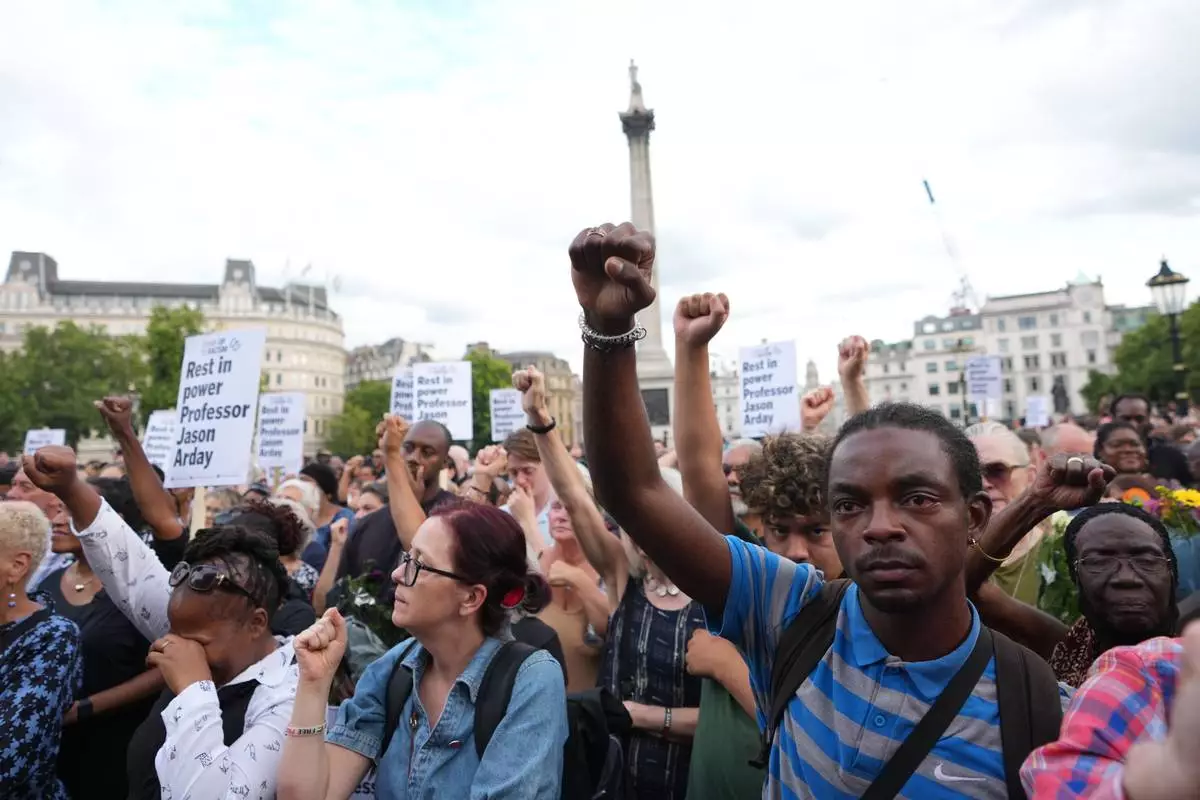
People gesture as they attend a vigil held by Stand Up to Racism, in memory of late University of Cambridge professor Jason Arday, in Trafalgar Square in London, Monday, Aug. 17, 2026. (AP Photo/Kirsty Wigglesworth)
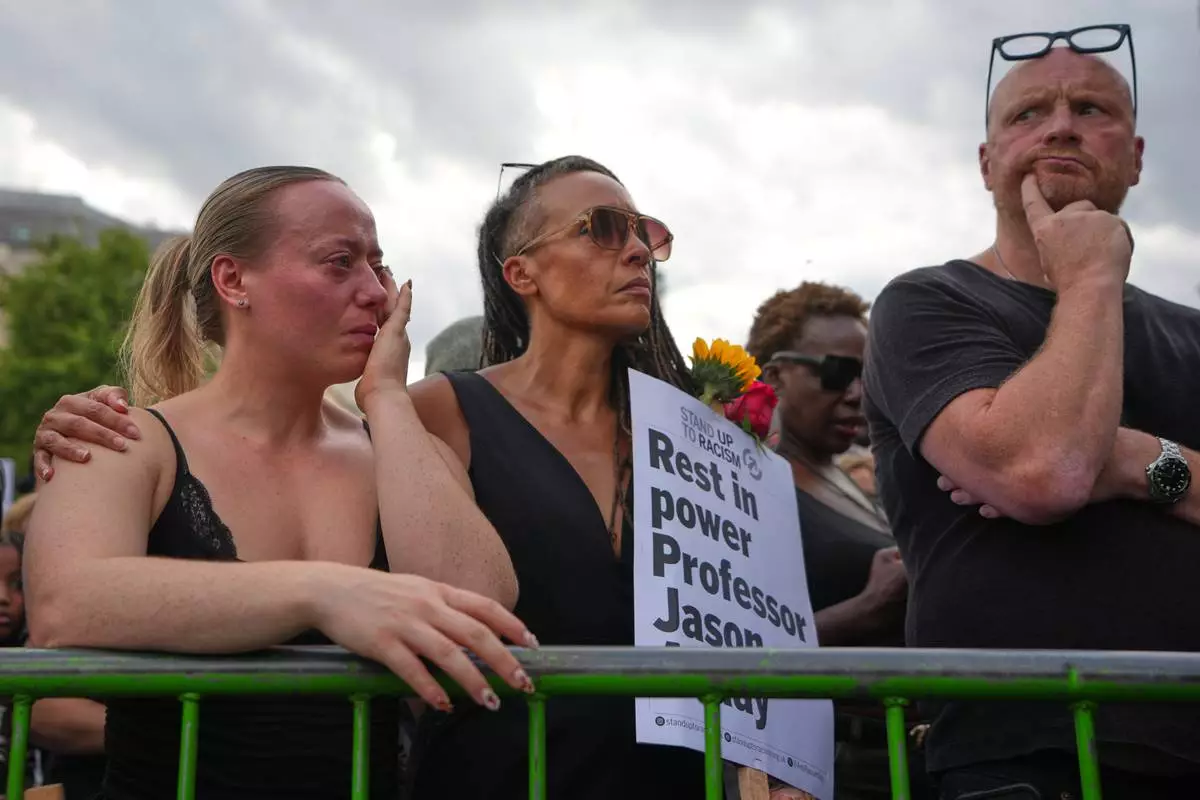
People gesture as they attend a vigil held by Stand Up to Racism, in memory of late University of Cambridge professor Jason Arday, in Trafalgar Square in London, Monday, Aug. 17, 2026. (AP Photo/Kirsty Wigglesworth)

People attend a vigil held by Stand Up to Racism in memory of late University of Cambridge professor Jason Arday at Trafalgar Square in London, Monday, Aug. 17, 2026. (AP Photo/Kirsty Wigglesworth)
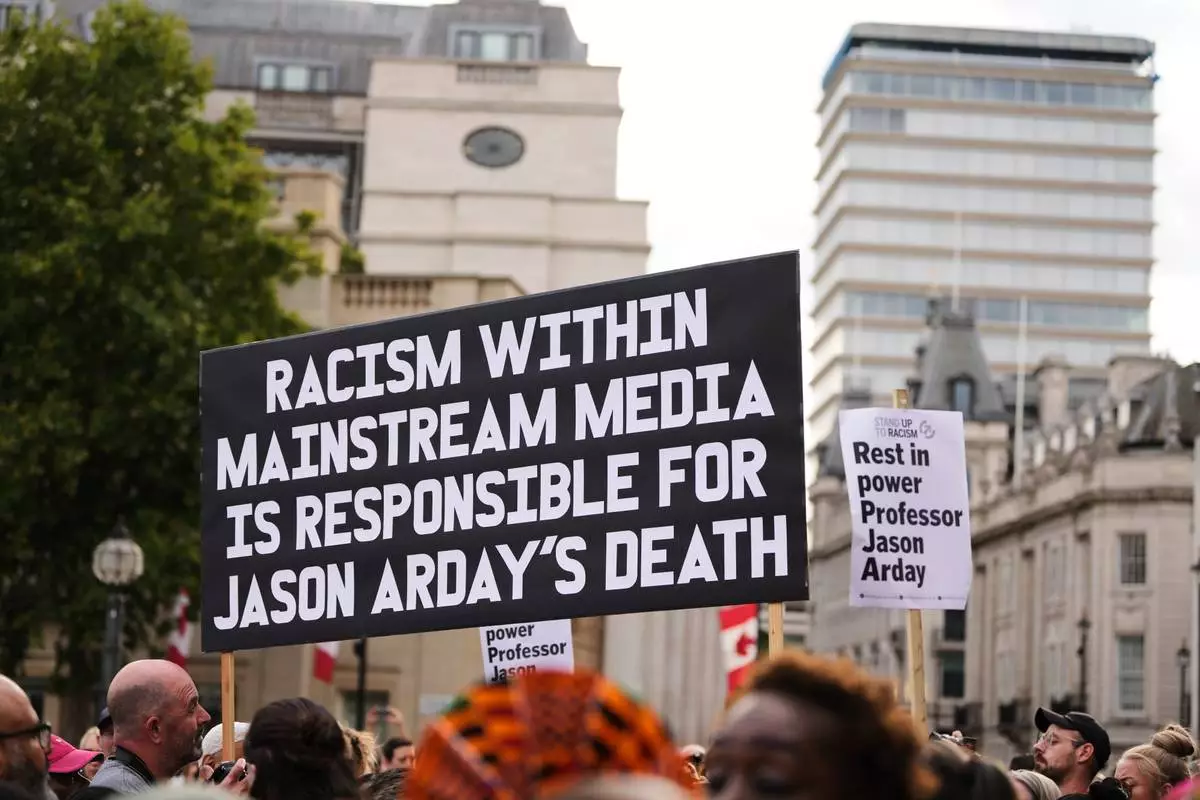
People attend a vigil held by Stand Up to Racism in memory of late University of Cambridge professor Jason Arday at Trafalgar Square in London, Monday, Aug. 17, 2026. (AP Photo/Kirsty Wigglesworth)
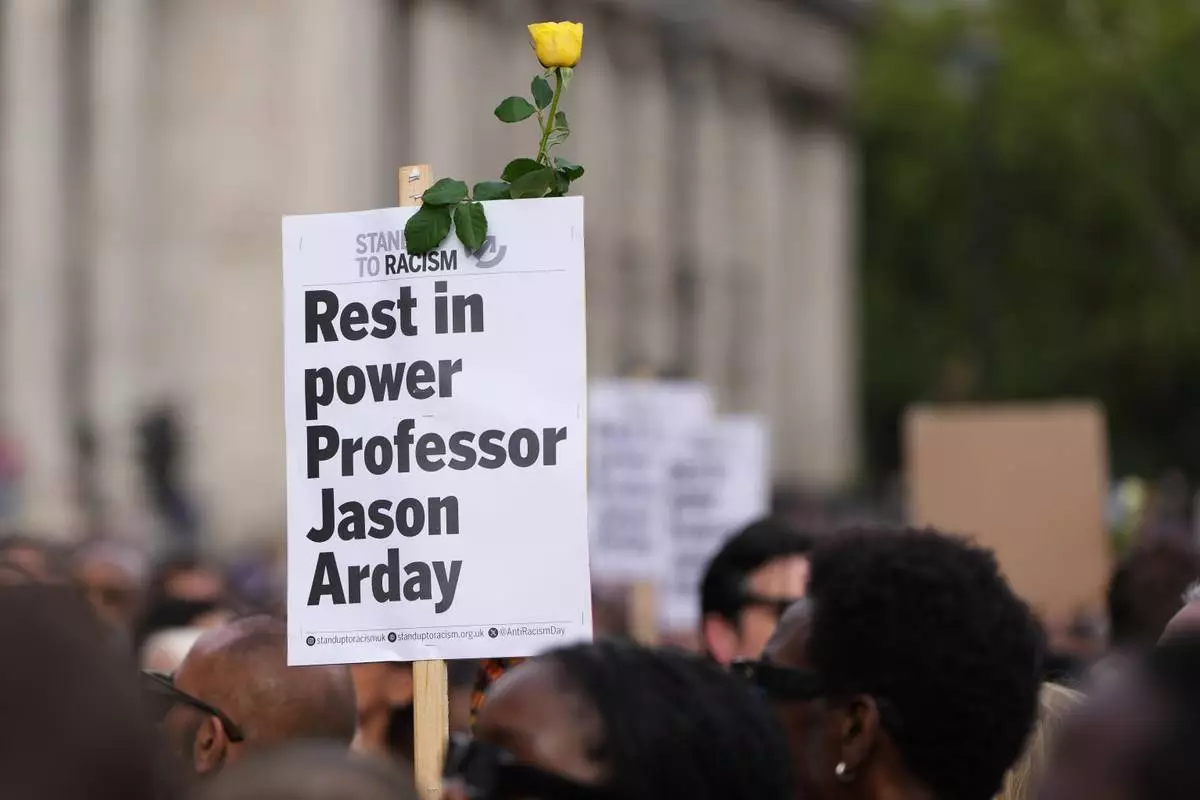
People hold signs during a vigil held by Stand Up to Racism in memory of late University of Cambridge professor Jason Arday at Trafalgar Square in London, Monday, Aug. 17, 2026. (AP Photo/Kirsty Wigglesworth)
People hold signs during a vigil held by Stand Up to Racism in memory of late University of Cambridge professor Jason Arday at Trafalgar Square in London, Monday, Aug. 17, 2026. (AP Photo/Kirsty Wigglesworth)

A sign is held during a vigil by Stand Up to Racism in memory of late University of Cambridge professor Jason Arday at Trafalgar Square in London, Monday, Aug. 17, 2026. (AP Photo/Kirsty Wigglesworth)

A sign is held during a vigil by Stand Up to Racism in memory of late University of Cambridge professor Jason Arday at Trafalgar Square in London, Monday, Aug. 17, 2026. (AP Photo/Kirsty Wigglesworth)

Torchbearer Jason Arday carries the Olympic Flame on the Torch Relay leg between Sutton and Merton, in London, July 23, 2012. (Joe Giddens/LOCOG/PA via AP)

Torchbearer Jason Arday carries the Olympic Flame on the Torch Relay leg between Sutton and Merton, in London, July 23, 2012. (Joe Giddens/LOCOG/PA via AP)
SEOUL, South Korea (AP) — The South Korean and U.S. militaries confirmed Wednesday they were significantly scaling back major joint drills, days after President Donald Trump ordered the reduction in an apparent bid to reengage with North Korean leader Kim Jong Un.

Trump had ordered his Pentagon chief to “substantially reduce” the allies’ summertime Ulchi Freedom Shield exercises, just before they began Monday for an 11-day run. Trump cited what he said was a good relationship with Kim and South Korea’s refusal to support him over Iran.

South Korean officials said Trump's surprise announcement came without prior notice, baffling many people in the Asian country and raising concerns about joint defense readiness.

South Korea’s military said Wednesday the allies agreed to adjust the duration and scale of the exercises at the request of the U.S. It said the ongoing drills would end Friday, not Aug. 27 as initially planned. It added the allies also agreed to downsize some joint field training exercises.

The Pentagon said that it was “continuing training that enhances tactical capability” but certain events have been canceled or converted to simulations. “These adjustments preserve essential readiness and training objectives. There will be no degradation to U.S. training objectives,” a Pentagon statement said.

Many experts say Trump’s move threatens to hurt the combined U.S.-South Korean defense posture and eventually weaken their decades-long alliance.

A reduction or suspension of military drills matters because military commanders change periodically. A one-year suspension of drills would mean commanders unfamiliar with the procedures of the drills would be taking part when they resume, according to Yang Uk, an analyst at Seoul’s Asan Institute for Policy Studies.

Ulchi Freedom Shield is largely a computer-simulated command post exercise meant to hone the allies’ ability to deal with potential North Korean aggression. The two countries usually hold a set of field training exercises during the command post exercise period.

The drills and a similar springtime exercise are a central pillar of the U.S.-South Korea alliance, which dates to the 1950-53 Korean War. But it’s also a long-running source of tensions with North Korea, which has denounced the exercises as a rehearsal for an invasion and responded with provocative missile tests. Days before this month's drills began, North Korea launched two ballistic missiles into the sea.

This month's drills were initially supposed to be held in two phases in simulation of North Korean attacks — the first part until this Friday on defensive operations and the second part until Aug. 27 on counteroffensive operations. North Korea is extremely sensitive to counteroffensive drills, according to South Korean media.

North Korea hasn't responded to Trump's overture. But earlier Wednesday, its state news agency, KCNA, published a commentary slamming the U.S.-South Korean military drills as “frantic” and “extremely dangerous” and vowing to completely frustrate its rivals’ hostilities.

“The dangerous escalation of the war drills staged by the U.S. and its vassal forces is posing a more serious threat to the security” of North Korea, the commentary said. “Our exercise of right to self-defense will continue to completely neutralize the enemies’ military threat.”

Many experts said Kim, now emboldened by his advancing nuclear program and expanding military cooperation with Russia, won't likely embrace Trump's overture and return to talks anytime soon unless he's promised bigger concessions. In response to Trump's previous outreach, Kim suggested last year that he can only return to talks if the U.S. drops its demand for North Korean denuclearization as a precondition for diplomacy.

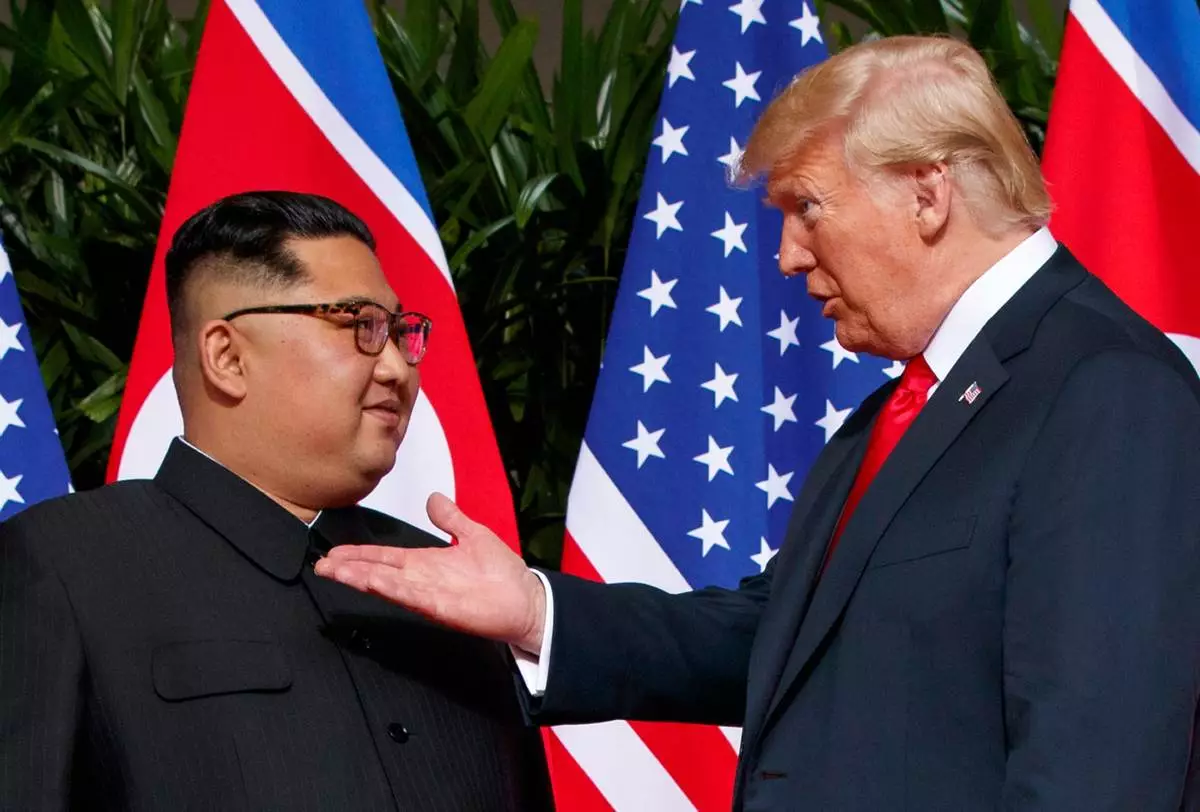
Trump and Kim met three times from 2018-2019 but their high-stakes diplomacy eventually fell apart over wrangling over a North Korean demand for extensive sanctions relief in return for limited denuclearization steps.

On Monday, the office of South Korean President Lee Jae Myung expressed hope that a “friendly relationship” between Trump and Kim would lead to “meaningful dialogue” to promote peace on the Korean Peninsula. Lee is a liberal who wants better ties with North Korea.

But his office's statement drew a strong backlash from conservatives, who alleged Lee's government was prioritizing the resumption of Kim-Trump diplomacy over security concerns caused by Trump's move.

In his social media post, Trump said the drills are not only costly but “send a signal that is totally inappropriate and hostile” to North Korea, which he said “has been unthreatening and respectful” during his time in the White House. Trump said he asked Lee if South Korea would join the U.S. in the “denuclearization” of Iran, “and they said, ‘No thanks!’”

At separate parliamentary hearings Wednesday, South Korean Foreign Minister Cho Hyun and Defense Minister Ahn Gyu-back said neither South Korean nor U.S. officials were informed of Trump's move before his social media post.

Cho said the alliance remains strong, while Ahn said South Korean and U.S. defense officials were maintaining close consultations.

Some experts say Trump's cut of the drills was more likely designed to apply pressure on South Korea to give him substantial support over the Iran war than to reach out to North Korea.

“Trump's message is that if you don’t cooperate with us on Iran, we’re not cooperating with you” on the drills either, said Yang, the analyst. “It's like he's asking South Korea to show it's helping him over Iran” by taking steps like sending warships or reinforcing missile defenses in some areas.

South Korean officials said South Korea and the U.S. are closely discussing practical and military contributions that South Korea can make to help restore freedom of navigation in the Strait of Hormuz.

It wasn't the first time that the U.S. and South Korea have scaled back or canceled their drills.

In 2018, Trump abruptly announced the cancellation of a major war game with South Korea, after his first summit with Kim. Announcing the decision, Trump said suspending the “provocative” war games would “save us a tremendous amount of money.”

The U.S. and South Korea have since canceled or reduced other joint drills to support diplomacy with North Korea and cope with the COVID-19 pandemic. Experts say reducing those drills has undermined the combined South Korea-U.S. readiness.

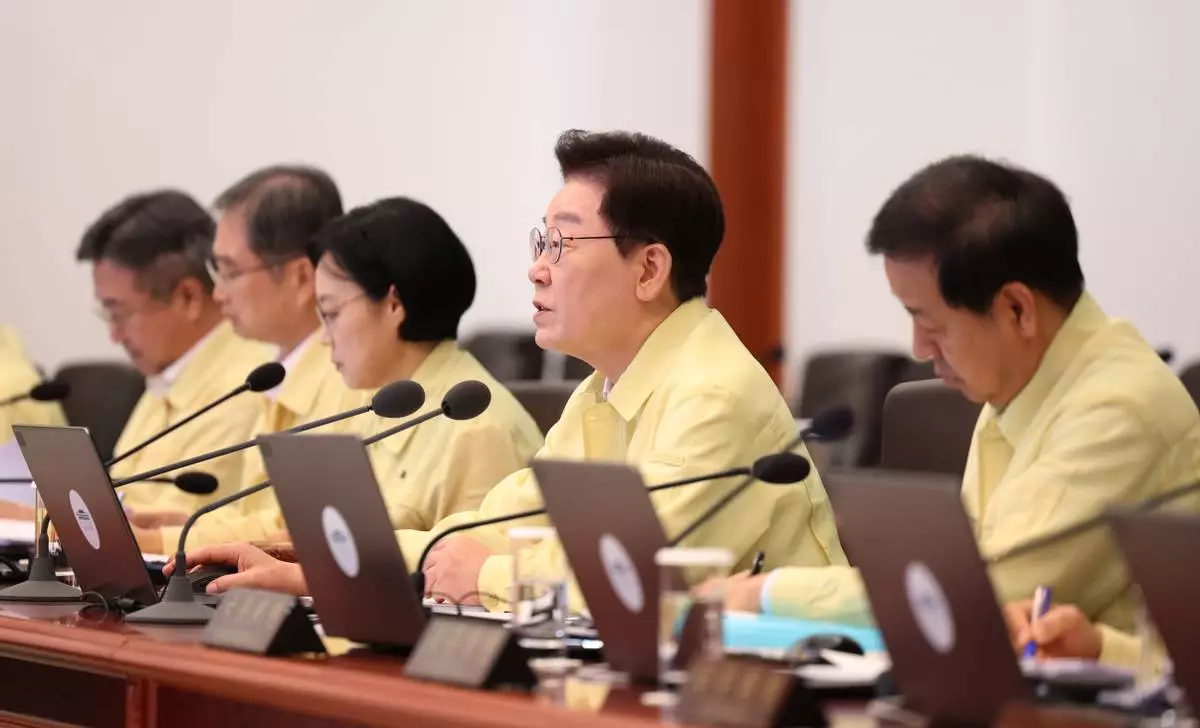
South Korean President Lee Jae Myung, second from right, speaks during a cabinet meeting at the presidential office in Seoul, South Korea, Tuesday, Aug. 18, 2026. (Yonhap via AP)

South Korean President Lee Jae Myung, second from right, speaks during a cabinet meeting at the presidential office in Seoul, South Korea, Tuesday, Aug. 18, 2026. (Yonhap via AP)

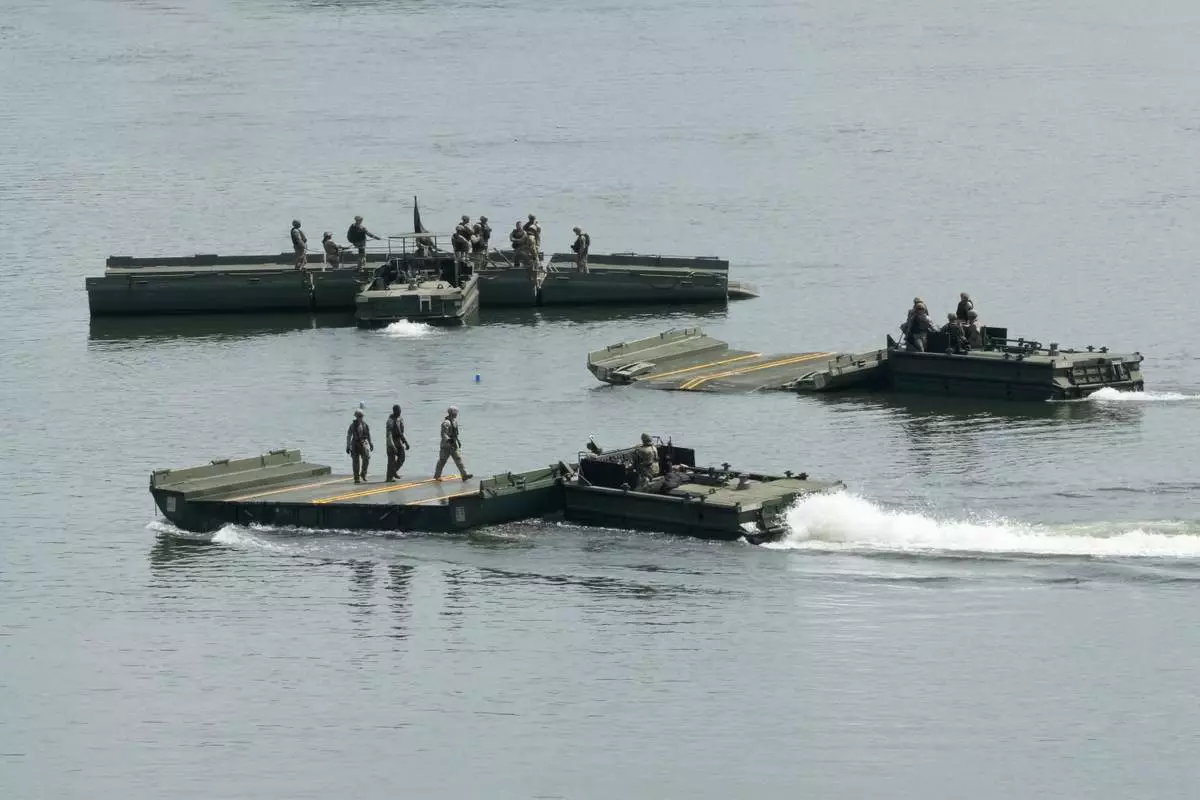
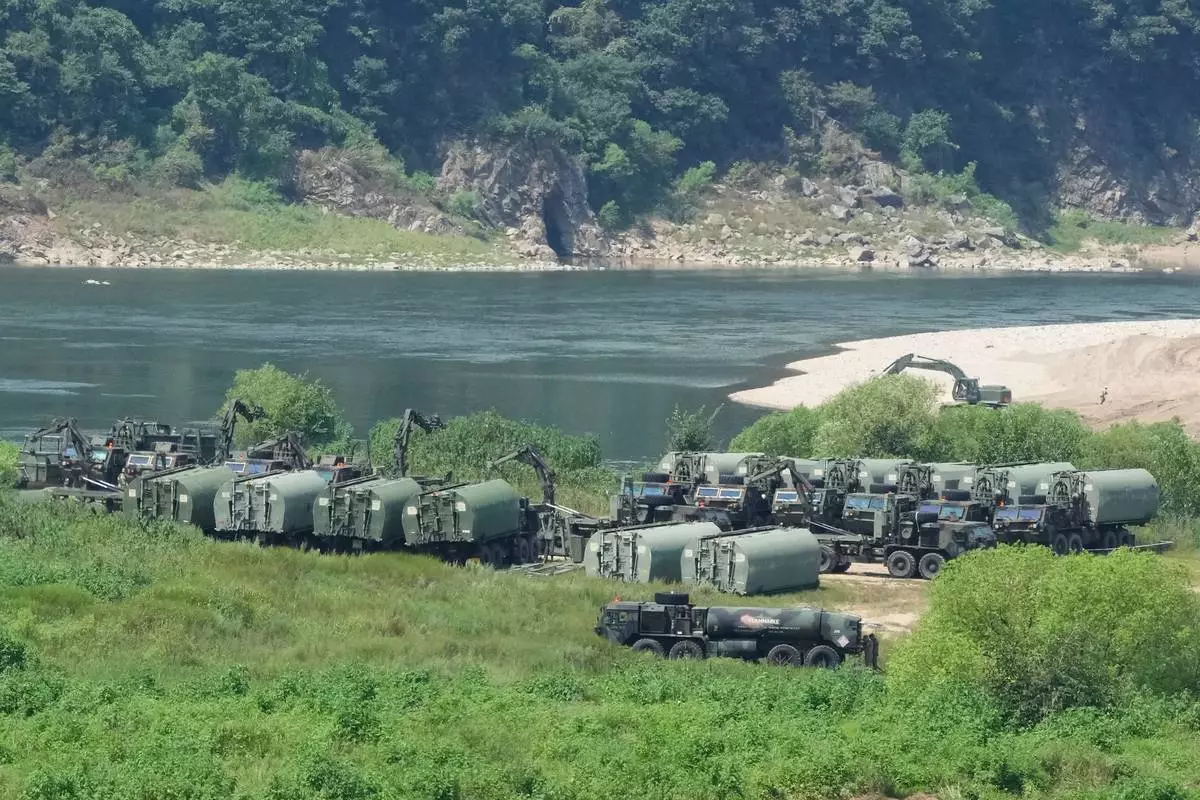
The U.S. Army's armored vehicles gather to cross a river at a training field in Yeoncheon, South Korea, near the border with North Korea, Tuesday, Aug. 18, 2026. (AP Photo/Ahn Young-joon)

The U.S. Army's armored vehicles gather to cross a river at a training field in Yeoncheon, South Korea, near the border with North Korea, Tuesday, Aug. 18, 2026. (AP Photo/Ahn Young-joon)

FILE - U.S. President Donald Trump, right, meets with North Korean leader Kim Jong Un on Sentosa Island in Singapore, on June 12, 2018. (AP Photo/Evan Vucci, File)

FILE - U.S. President Donald Trump, right, meets with North Korean leader Kim Jong Un on Sentosa Island in Singapore, on June 12, 2018. (AP Photo/Evan Vucci, File)

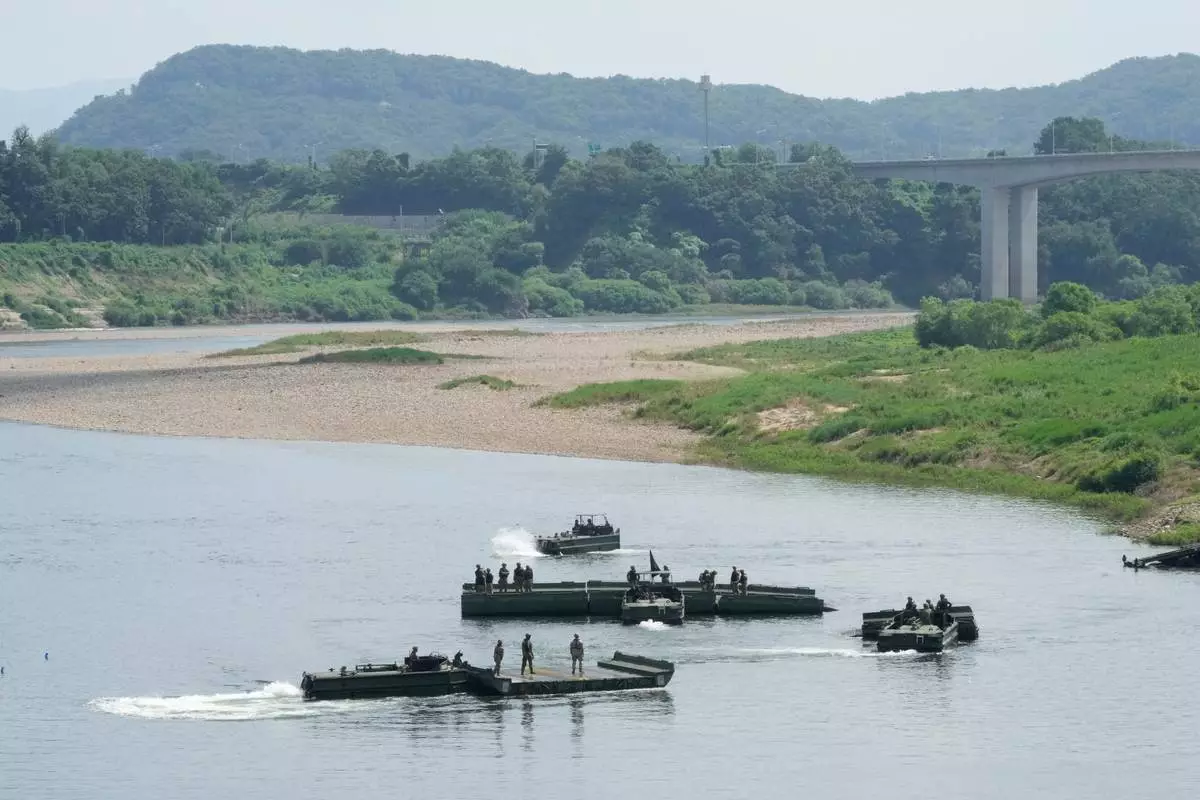
The U.S. Army's soldiers conduct a training exercise on a river in Yeoncheon, South Korea, near the border with North Korea, Tuesday, Aug. 18, 2026. (AP Photo/Ahn Young-joon)

The U.S. Army's soldiers conduct a training exercise on a river in Yeoncheon, South Korea, near the border with North Korea, Tuesday, Aug. 18, 2026. (AP Photo/Ahn Young-joon)

U.S. Army's soldiers conduct a training exercise on a river in Yeoncheon, South Korea, near the border with North Korea, Tuesday, Aug. 18, 2026. (AP Photo/Ahn Young-joon)

U.S. Army's soldiers conduct a training exercise on a river in Yeoncheon, South Korea, near the border with North Korea, Tuesday, Aug. 18, 2026. (AP Photo/Ahn Young-joon)

Recommended Articles