THE HAGUE, Netherlands (AP) — The International Criminal Court on Wednesday slammed the latest U.S. sanctions targeting senior ICC staff, including its president, as a “flagrant attack” on the global tribunal's independence and vowed to continue seeking justice for atrocities around the world.
The State Department announced Tuesday that it had hit ICC president Tomoko Akane, a Japanese national, and ICC senior trial lawyer Abdoulaye Seye, who is from Senegal, with sanctions that freeze any assets they have in U.S. jurisdictions or come into contact with the U.S. financial system.
The Trump administration has now slapped sanctions on nine of the ICC's 18 judges, both of its deputy prosecutors, its former chief prosecutor and one other prosecution office staffer, the court said. The U.S. accuses the court of overstepping its mandate by investigating and seeking to prosecute senior military and political officials from countries, such as Israel and the United States, that are not members of the court.
In a statement, the court said that when “judicial actors are threatened for applying the law, it is the international legal order itself that is placed at risk.” It said the court “will continue to fully discharge its mandate with independence and impartiality.”
In a statement Tuesday, Secretary of State Marco Rubio branded the ICC “a corrupt and fatally politicized supranational court that has maliciously abused its authority and exceeded its mandate.”
The move came weeks after Rubio announced that the U.S. was launching a “sweeping campaign to dismantle the threat posed by the International Criminal Court to U.S. sovereignty.”
Rubio said he will pressure the court’s 125 member states to withdraw from the institution, sanction organizations that work with the court and ban staff from traveling to the United States.
Since then, Venezuela and Chad have announced they plan to leave the court, bringing the number of countries to pull out of the court in the past year to five. It takes a year for a country's decision to quit the court to be formalized.
The sanctions can impact the daily lives of court officials. They prevent the ICC officials and their families from entering the United States, block their access to even basic financial services making even going to a grocery store difficult.
Canadian judge Kimberly Prost, who was sanctioned last year, lost access to her credit cards, and Amazon’s Alexa stopped responding to her. “Your whole world is restricted,” she told The Associated Press after she was targeted.
Japan also criticized the sanctions after Akane was sanctioned.
“The announced measures are very unfortunate,” Toshihiro Kitamura, press secretary at Japan’s Foreign Ministry, said in a statement Wednesday.
Japan has consistently supported the ICC in its efforts to prosecute and punish the most serious crimes of concern to the international community and to uphold the rule of law, he said. “Japan will remain committed to strengthening the rule of law in the international community, while maintaining communication with related countries.”
Balkees Jarrah, Middle East and North Africa director at Human Rights Watch, called the sanctions “the latest example of the Trump administration’s utter contempt for international law and a naked attempt to shield American and Israeli officials implicated in serious crimes from justice.”
Human Rights Watch and three other groups sued the Trump administration last week to challenge its campaign against the ICC. The complaint, filed in the Southern District of New York, says that Trump’s executive order last year targeting the Hague-based criminal court and the U.S. sanctions issued against a U.N. human rights expert and three Palestinian rights groups represent a “blatantly illegal attack on international justice and should be struck down,” according to a press release.
Associated Press journalists Matthew Lee in Washington, D.C., and Mari Yamaguchi in Tokyo contributed to this report.
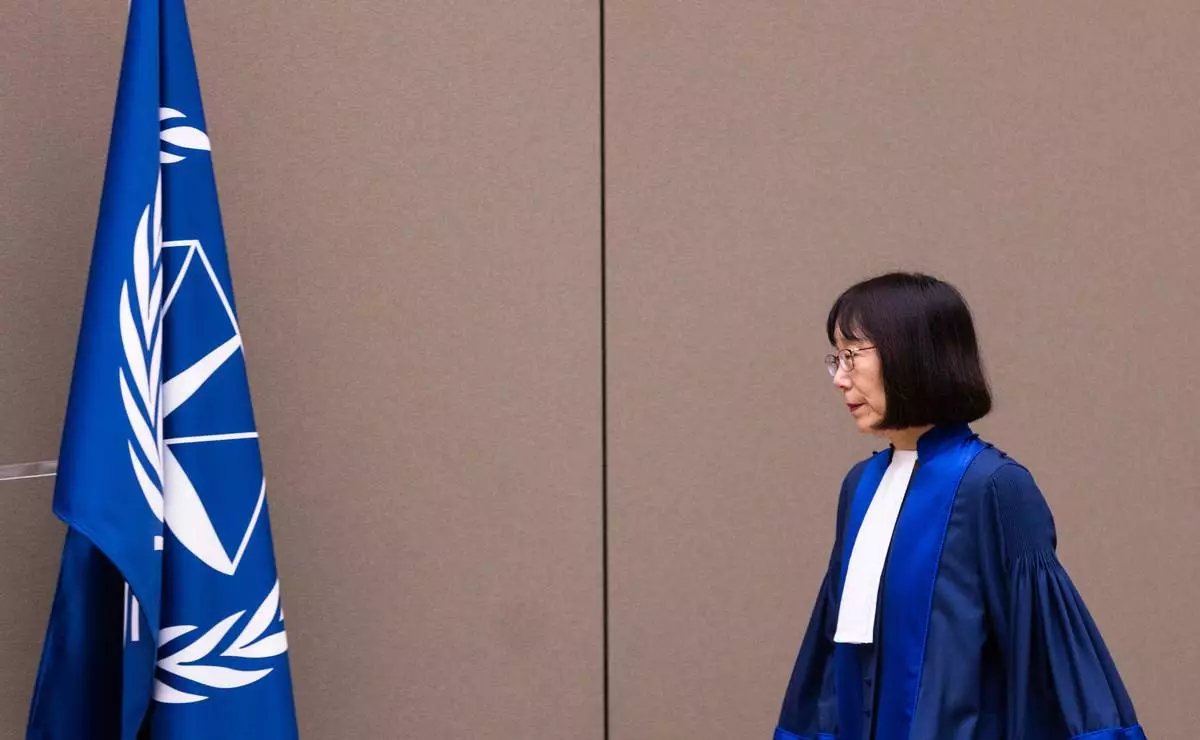
FILE - Judge Tomoko Akane walks before delivering the verdict in the Al Hassan case at the International Criminal Court in The Hague, Netherlands, Wednesday Nov. 20, 2024. (Eva Plevier/Pool Photo via AP, file)
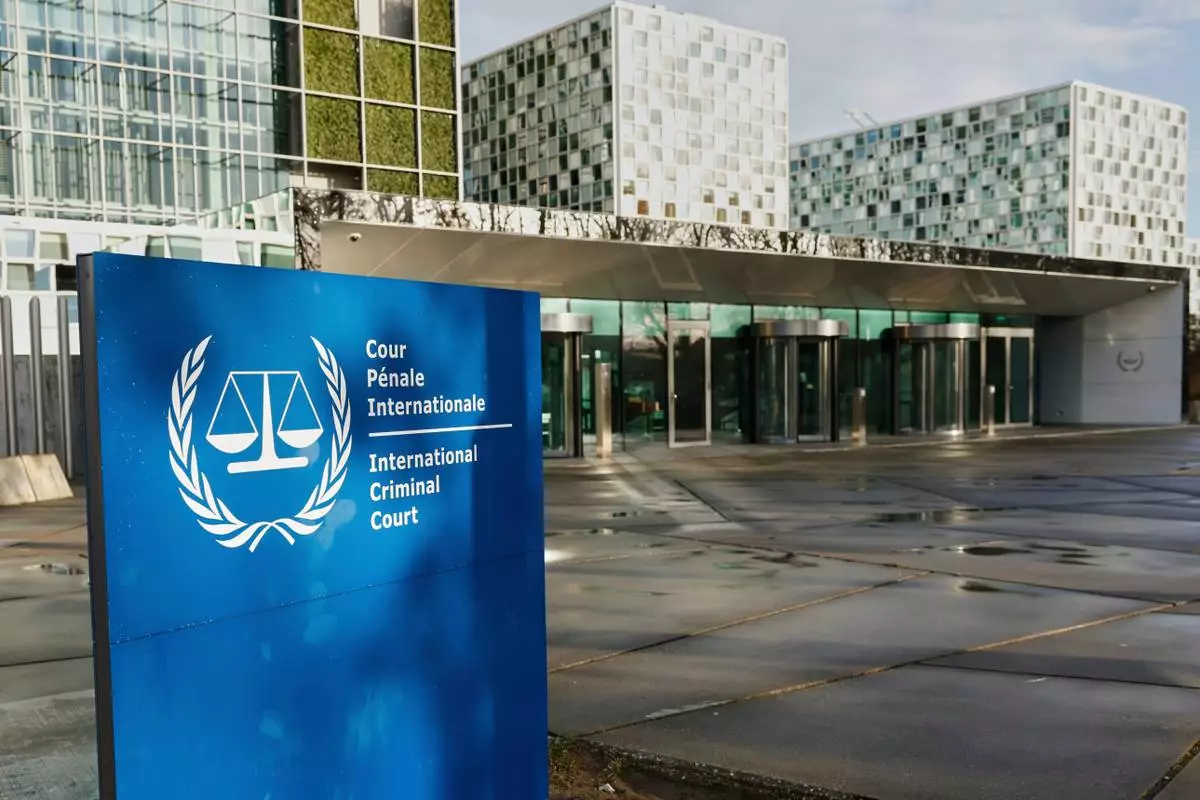
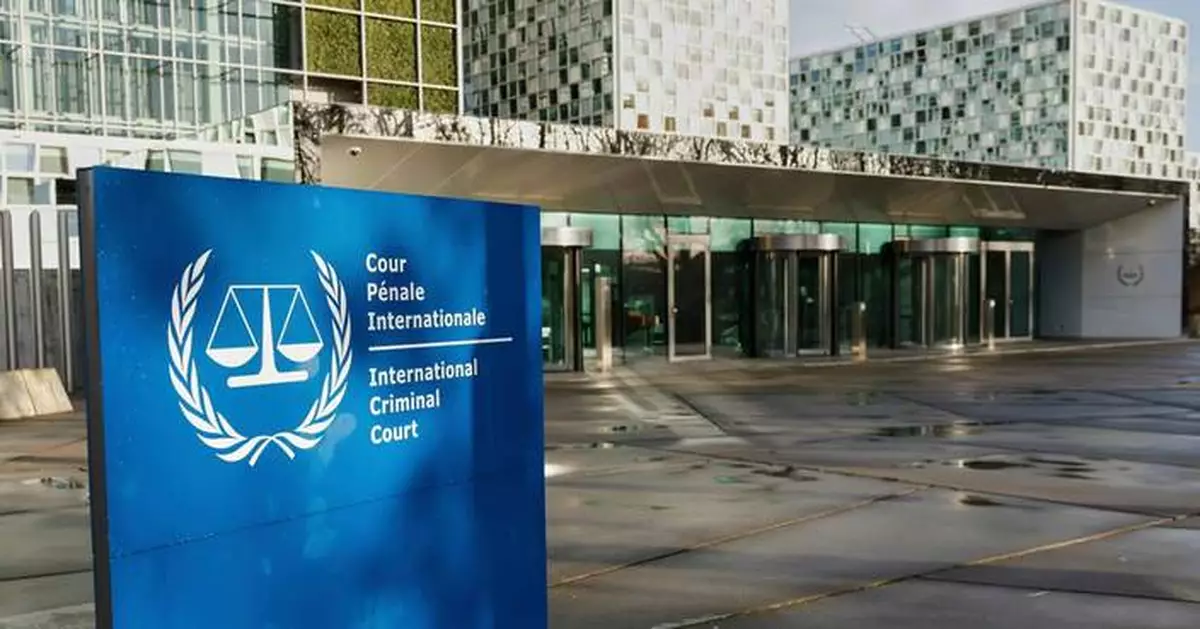
FILE - A general view of the exterior of the International Criminal Court is seen in The Hague, Netherlands, March 12, 2025. (AP Photo/Omar Havana, File)
BUNIA, Congo (AP) — The Ebola outbreak in Congo has reached 5,000 cases, government data showed Wednesday, as responders warn it is spreading at an unprecedented speed outpacing efforts to slow it in one of the country’s remotest regions.
Data from Congo’s Ministry of Health showed the outbreak had so far recorded 5,021 cases, including 2,378 deaths as of Sunday, as it rages in some of the most challenging conditions imaginable fueled by insecurity, displacement and intense population movements.
The outbreak has infected and killed more people at a greater speed than any other outbreak in history. The World Health Organization estimates it will likely surpass the outbreak of 2014 to 2016 across West Africa, which was the deadliest Ebola outbreak on record with more than 11,000 deaths.
Starting from the first detected case, the current outbreak has spread about three times faster than the deadliest on record.
The outbreak “has spread rapidly and the risk of further national and international spread remains high,” WHO Director-General Tedros Adhanom Ghebreyesus said Tuesday at a meeting convened by the agency.
“We must be frank: the epidemic is far from being under control,” he said.
Thérèse Anyiya, a nurse working in Ituri’s capital Bunia, said she is exhausted by the work demands and poor working conditions. Some health workers have gone on strike after not being paid.
“If the managers don’t take things seriously, we too will end up withdrawing. The way this epidemic is being managed is exhausting,” Anyiya told The Associated Press.
A key challenge has been the lack of approved vaccines or treatments for the rare Bundibugyo virus, which is responsible for the current outbreak. Most new cases are being reported outside of the people being monitored, showing it has spread quickly and left surveillance teams racing to catch up.
Ituri, the province that has been hit the worst by the outbreak, has become a primary location for violence that has limited the response as health workers are targeted.
Residents on Monday attacked a health team in the territory of Aru after a suspected case was reported there. A mob set fire to an ambulance and damaged two other vehicles, according to Michael Wani, president of the Union of Cultural Associations for the Development of Ituri.
Dr. Martin Cwinyay, who is involved in the Ituri response efforts, explained it is “essential to bring the response closer to the people, particularly in rural, mining and displacement areas.”
Trish Newport, an emergency coordinator with Doctors Without Borders, known by its French acronym MSF, said not all the people in the impacted areas have the essential information they need.
“The community needs to be aware about the outbreak. They need to be involved in the response. They need to know what the signs and symptoms are and what to do if they get sick,” Newport said.
Experts believe the virus began spreading from the mining town of Mongbwalu as early as February, months before authorities declared the outbreak on May 15.
Responders racing to catch up are also battling several other challenges including threats by rebel groups, anger from communities that have been traumatized for years and bad roads into the affected territories.
Although the 2014-2016 outbreak is considered the deadliest among the virus types that causes Ebola disease, government data shows this Bundibugyo outbreak has killed a higher percentage of people as care and support are not getting to patients quickly enough, while many are not reporting symptoms or doing so late.
The situation also varies across the six affected provinces. While the case fatality rate is so far 47.4%, it is far worse in some places where response efforts are more challenging, such as in North Kivu province where the fatality rate is 70%.
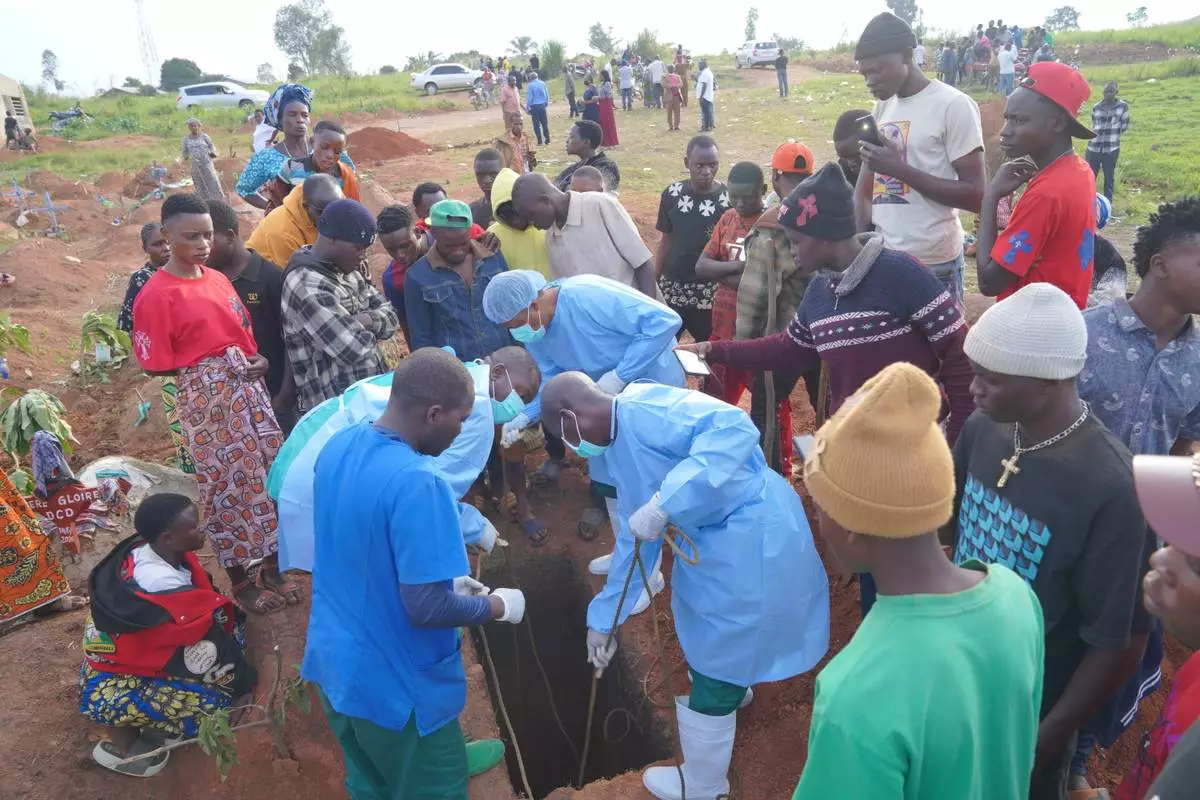
People dressed in protective gear lower into a grave the coffin containing the remains of 3-year-old Mave Mercienne, who died of Ebola, in Bunia, Ituri province, eastern Congo, Tuesday, Aug. 18, 2026. (AP Photo/Dieudonne Dirole)
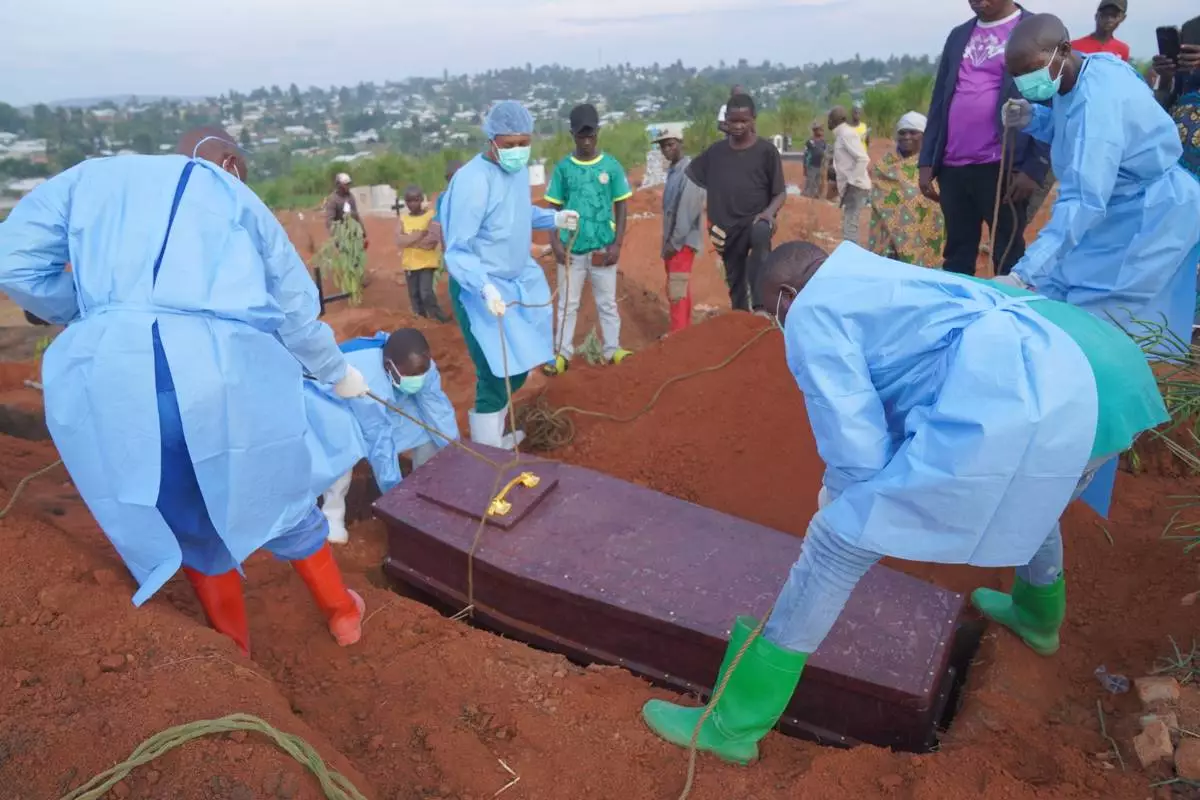
People dressed in protective gear lower into a grave the coffin containing the remains of 6-year-old Baudjo Baraka Jules, who died of Ebola, in Bunia, Ituri province, eastern Congo, Tuesday, Aug. 18, 2026. (AP Photo/Dieudonne Dirole)
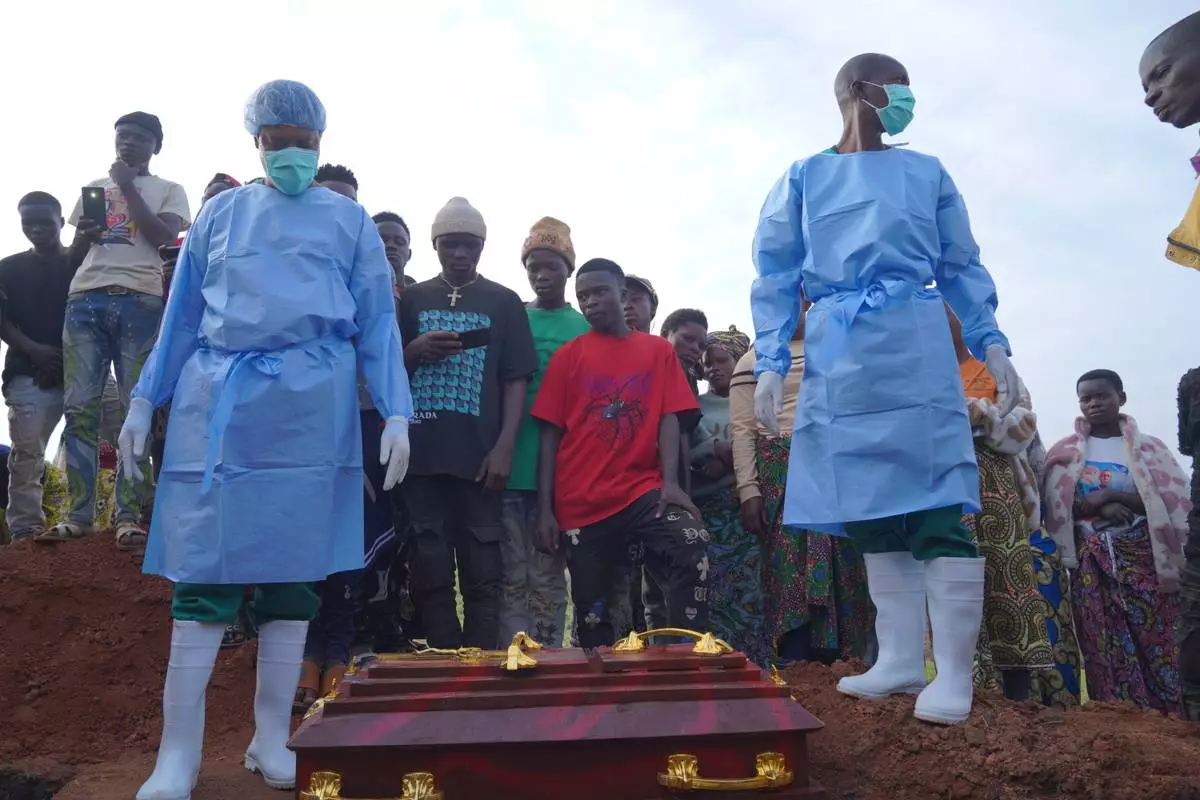
People dressed in protective gear prepare to lower into a grave the coffin containing the remains of 3-year-old Mave Mercienne, who died of Ebola, in Bunia, Ituri province, eastern Congo, Tuesday, Aug. 18, 2026. (AP Photo/Dieudonne Dirole)