High-tech deployable landing legs ensure rocket Zhuque-3's safe return, marking China's first successful land-based controlled recovery of a rocket's first stage.
Sichuan Hunter Aero-equipment Co., Ltd is a manufacturer of the landing legs of Zhuque-3 rocket. Each set of legs consists of a main leg and an auxiliary leg. Whether the rocket can stand firm in the final step of recovery depends entirely on them.
The main landing leg, which can extend up to more than seven meters, is the core support for the safe recovery of the Zhuque-3. During the rocket's launch and flight phases, it must remain tightly against the rocket body, resisting severe aerodynamic and mechanical environments. At the moment of touchdown, it must precisely unlock and deploy to absorb the enormous energy of over a hundred tons.
"The design of our main leg is inspired by the landing gear buffer of aircraft. The impact load our landing leg system must withstand is on the order of over a hundred tons. For comparison, a civil airliner might handle around 50 to 60 tons. We adopted an integrated 3D-printed titanium alloy design structure. This reduces the weight of the landing leg system by 20 to 30 percent compared to designs using ordinary steel. Currently, the landing leg system is designed for 20 reuses," said Luo Huan, technical leader for landing legs at Sichuan Hunter Aero-equipment Co., Ltd.
Reusability implies the possibility of "airline-style" launches. When rockets can take off and return multiple times like aircraft, lower costs become key to commercial viability. The landing leg system currently accounts for about 5 percent of the rocket's total manufacturing cost, making it one of the core components affecting the economics of reusable rockets.
With the successful recovery of Zhuque-3 Y2 rocket, the company has accelerated its transition from manufacturing single components to full-industry-chain services, establishing a comprehensive system covering design, manufacturing, testing, and recovery maintenance.
"In the future, we are planning for a production capacity of 50 rockets per year, with a total capacity of 200 landing legs. We can produce at least 10 to 20 landing legs per month. We predict that as the product matures and iterates, our annual revenue could reach 300 to 500 million yuan (around 44 to 74 million U.S. dollars)," said Ren Yuanwu, chief engineer at Sichuan Hunter Aero-equipment Co., Ltd.
China launched the reusable rocket Zhuque-3 on Wednesday morning, achieving its first recovery of a rocket's first stage on land.
The Zhuque-3 Y2 rocket blasted off at 7:35 (Beijing Time) from the Dongfeng commercial space innovation pilot zone in northwest China.
The land-based recovery of the rocket's first stage was completed as planned, and the flight mission was a complete success.
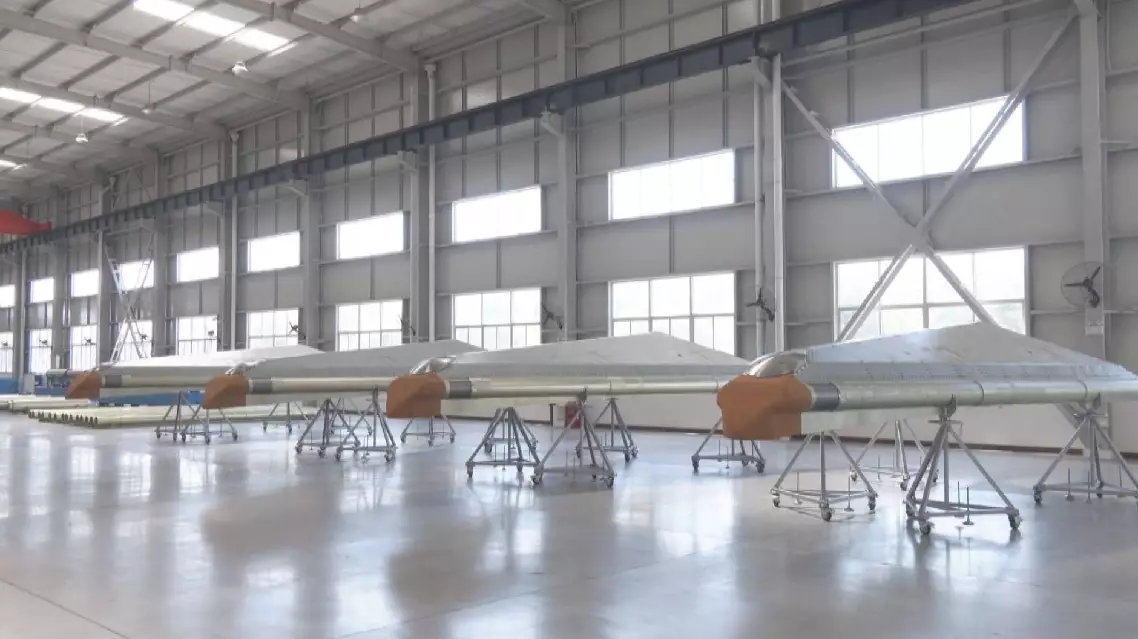
High-tech landing legs ensure Zhuque-3's safe return