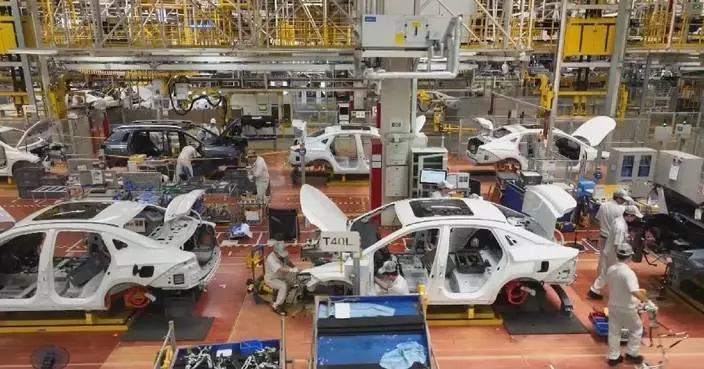
China's major steelmakers have showed stronger production capabilities in August, thanks to stabilized key raw material prices, an industry expert said on Tuesday.
Fu Jing, director of the Metallurgical Industry Information Center, made the remarks on the latest data of steel production in August during an interview with China Central Television (CCTV) in Beijing. According to the latest data released by the China Iron and Steel Association (CISA), major surveyed steel enterprises produced an average of 1.973 million tonnes of crude steel per day in the first 10 days of August, up 5.8 percent from the previous period.
The daily production of pig iron also experienced a synchronized upward trend, said the CISA.
"Due to high temperatures and rainfalls in summer, downstream demand for construction-related steel has remained relatively weak. Manufacturing steel demand has become more uneven across sectors. However, prices of raw materials, such as iron ore and coke, have structurally stabilized this month. So, the willingness of our steel production enterprises to produce has rebounded," said Fu.
The recovery was also supported by blast furnaces returning to active production after maintenance, directly driving up output of both crude steel and pig iron month on month, she added.
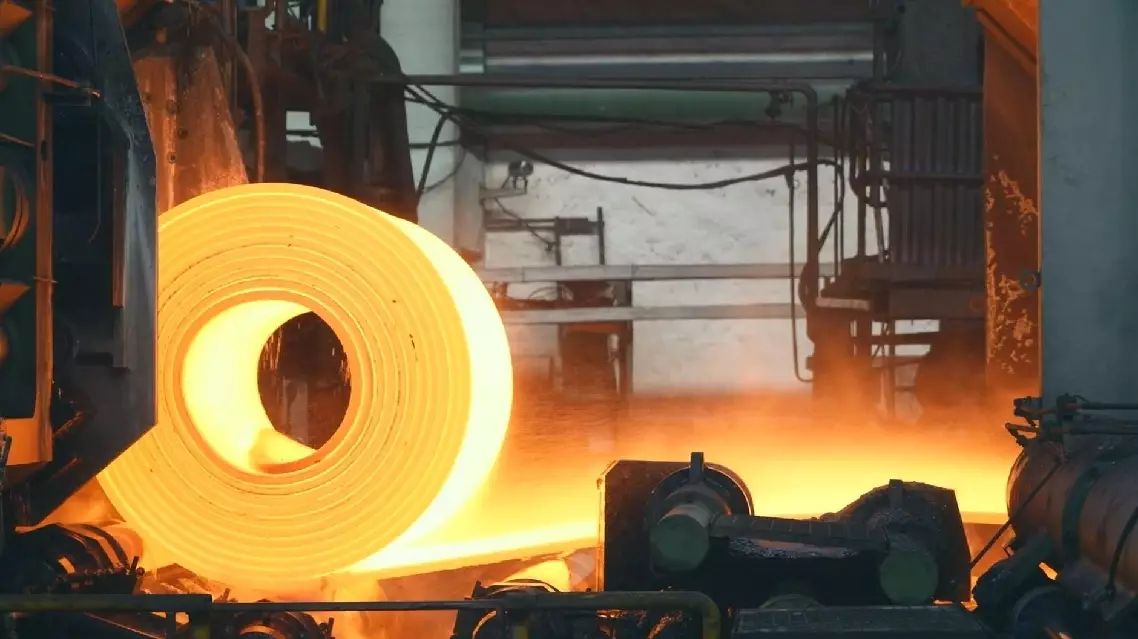
China’s steel output rises as raw material prices stabilize: expert
The U.S. National Highway Traffic Safety Administration (NHTSA) has opened an investigation into Tesla's certification that its new Cybercab meets all applicable Federal Motor Vehicle Safety Standards (FMVSS).
The probe, formally designated as an Audit Query, was opened on Sept. 3 and covers an estimated 1,000 Cybercab vehicles, according to an NHTSA investigation document made public on Friday. It will examine the process and technical data Tesla relied upon when certifying the Cybercab, as well as related issues. Tesla began commercial deployment of a small number of Cybercab vehicles in Austin, Texas, on Thursday and notified the agency that it had certified the vehicles as compliant with all applicable FMVSS. Tesla also told the NHTSA that it plans to gradually expand commercial deployment of the Cybercab to include additional vehicles and locations.
The vehicles lack permanently attached conventional manual controls, such as a brake pedal, gas pedal, steering wheel and mirrors, according to the NHTSA.
The agency said the inquiry will examine, among other issues, the extent to which Tesla's certification depended on determinations that certain FMVSS are inapplicable to the Cybercab.
In the United States, the NHTSA establishes vehicle performance requirements, while automakers must certify that their vehicles meet applicable standards before entering the U.S. market, subject to agency oversight to confirm compliance. The NHTSA said it conducts investigations when certified vehicles appear not to adhere to those requirements.
U.S. regulator opens probe into Tesla Cybercab self-certification