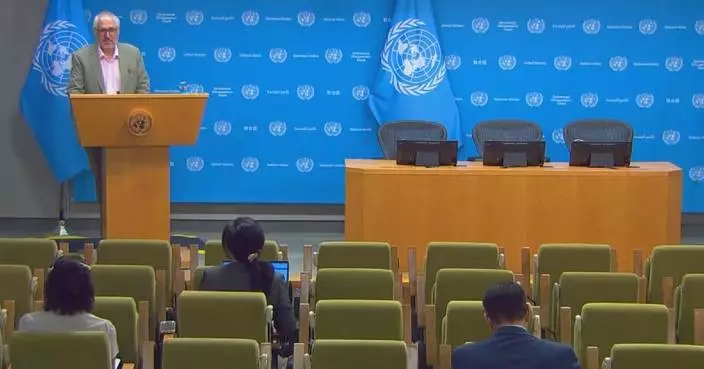
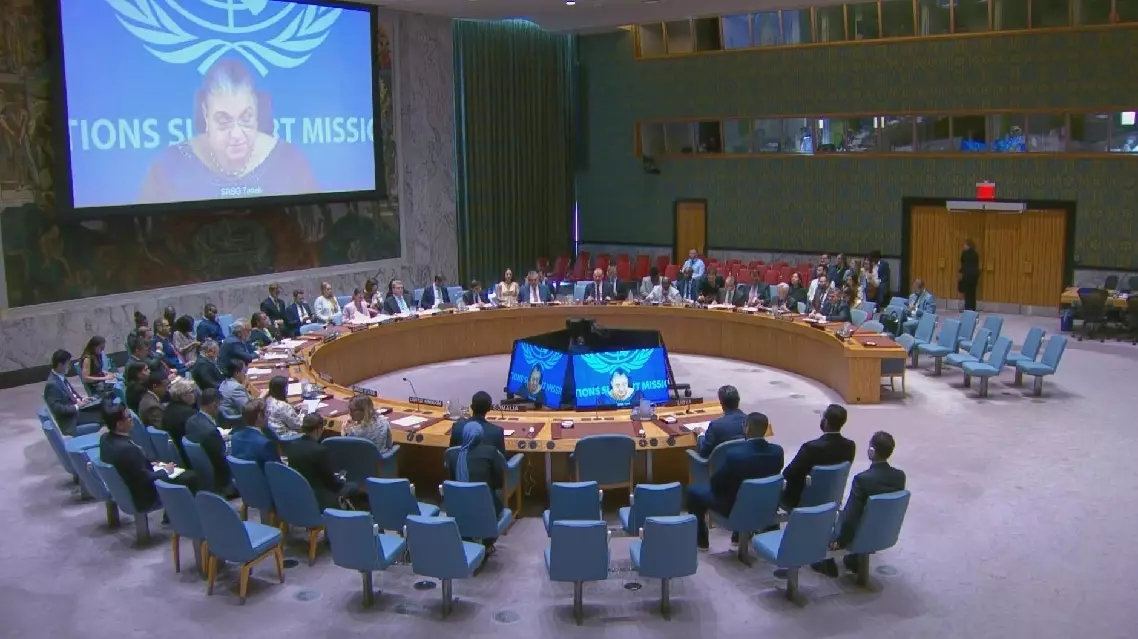
As Libya faces a political impasse delaying long-planned elections alongside clashes and drone strikes that left a major oil refinery ablaze, the Security Council heard the latest updates on Tuesday, with envoys calling for efforts to advance the political process in the North African country.
Hanna Tetteh, the UN secretary-general's special representative for Libya, warned the collision of extreme heat, water scarcity and environmental shocks with political division, armed insecurity and struggling institutions clearly makes the situation a peace and security issue.
Tetteh, also head of the UN Support Mission in Libya (UNSMIL), told the Security Council via a video link that the UN-facilitated political roadmap has made important progress. However, progress does not solely require the efforts of the UNSMIL, but also a sustained willingness of the Libyan political actors to engage constructively.
She unveiled the political roadmap a year ago, which is built around three core pillars: an electoral framework for presidential and legislative elections, unifying institutions through a new unified government, and a structured dialogue.
The six-month-long structured dialogue concluded in June, said Tetteh. "We now enter a critical phase: advancing unified institutions and the conditions necessary for inclusive elections," she added.
"The need to move Libya's political process forward remains crucial. The recent widespread electricity outages and public discontent, exacerbated by a prolonged heatwave, have exposed the consequences of institutional fragmentation, large-scale diversion of public resources, underinvestment and uncoordinated decision-making, all of which are essentially failures of governance," she said.
This is why the political process is about more than bridging political differences. It is about restoring the state's capacity to provide for its people, manage its resources responsibly under unified institutions, provide security and create resilience to confront the various risks to which it is exposed, said Tetteh.
Unifying institutions and holding elections require political resolve and compromise from Libyan stakeholders, with priority given to the national interests and the interests of the Libyan people. Sustained and coordinated international support is also essential, she noted.
Tetteh said the roadmap may require more time than initially envisaged, noting that the delay is not a loss of direction but a necessary adaptation to political realities and the views of Libyan stakeholders and international partners.
At the Security Council meeting, Fu Cong, China's permanent representative to the UN, called for efforts toward a comprehensive solution to the Libyan issue.
Fu said that recently, Libya has made notable progress in its political process, with a significant increase in oil and gas export revenues; at the same time, the country continues to face challenges, including unresolved fundamental political differences, rising localized security risks, and persistent macroeconomic pressures.
The international community must pursue a multi-track approach and work toward a comprehensive, integrated and fundamental solution to the Libyan issue, he told the Security Council, adding that sincere dialogue is needed to break the political deadlock.
Noting that the United Nations has recently worked actively to advance the political roadmap, he said the Libyan parties concerned should fully recognize that the division of state institutions and repeated postponement of elections are detrimental to the country's long-term development and the vital interests of the Libyan people.
China is deeply concerned about recent violent clashes in the country and urges all parties to exercise maximum restraint and cease all violent attacks, said the envoy.
"China calls on all parties, with the support of the United Nations, to intensify consultations, bridge their differences, and reach agreement as soon as possible on the relevant matters set out in the roadmap, thereby paving the way for national elections," he said.
As a good friend of Libya, China stands ready to continue working with the international community to make greater contributions to advancing a political settlement of the Libyan issue and promoting lasting peace and stability in Libya, Fu said.
The United Nations should continue to play a central role in mediating the Libyan issue, and efforts by countries outside the region should uphold the Libyan-led and Libyan-owned principle, and fully respect Libya's national conditions and the will of its people, he added.
UN envoy calls for political will to advance Libya's political process