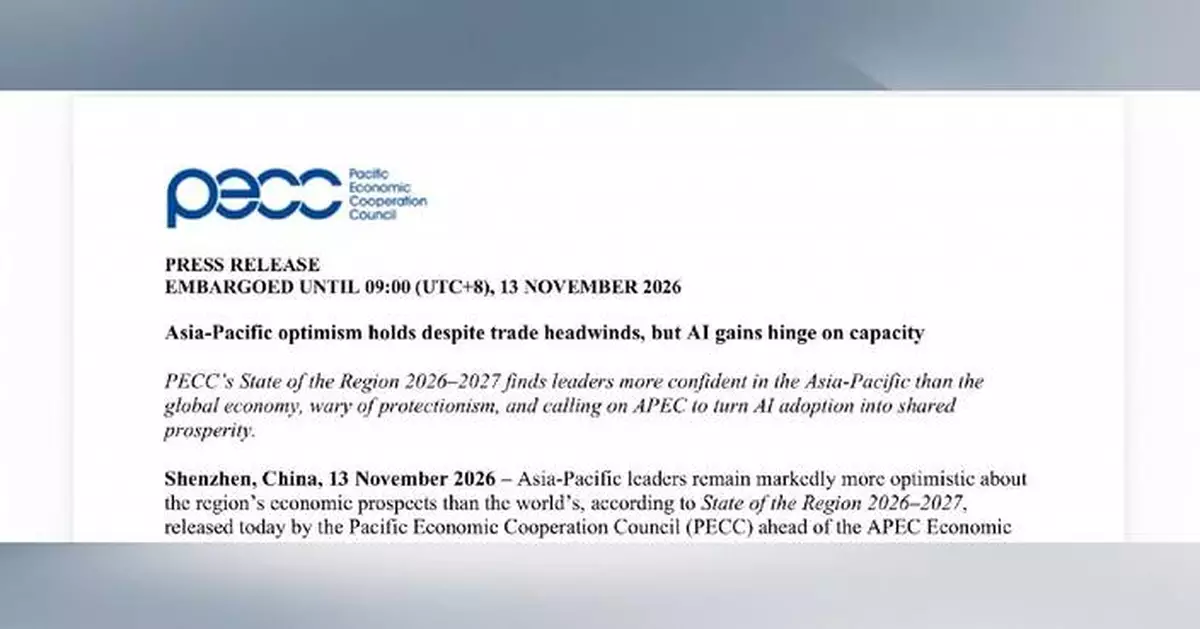
The economic outlook for the Asia-Pacific region is better than the global average, according to a report released by the Pacific Economic Cooperation Council (PECC) last Friday.
PECC is one of the three official observers of the Asia-Pacific Economic Cooperation (APEC), alongside the ASEAN Secretariat and the Pacific Islands Forum Secretariat.
In the report titled “State of the Region 2026-2027”, PECC says it conducted its annual opinion survey of the Asia-Pacific policy community from June to August 2026. The survey gathered responses from more than 500 experts and thought leaders from government, business, academia, civil society, and media.
The survey indicates that 51 percent of respondents are optimistic about economic growth in the Asia-Pacific region over the next two to three years, while only 21 percent express optimism regarding global economic growth — a difference of 30 percentage points.
The report suggests that factors such as robust domestic demand, technological dynamism, and ongoing regional cooperation are supporting the positive growth prospects in the region.
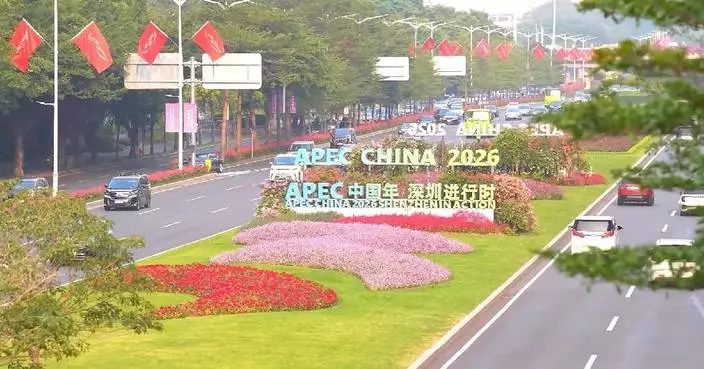
The 33rd APEC Economic Leaders' Meeting will be held in south China's Shenzhen on Wednesday and Thursday. This year's gathering, under the theme "Building an Asia-Pacific Community to Prosper Together," will focus on three priority areas identified by China -- openness, innovation, and cooperation.
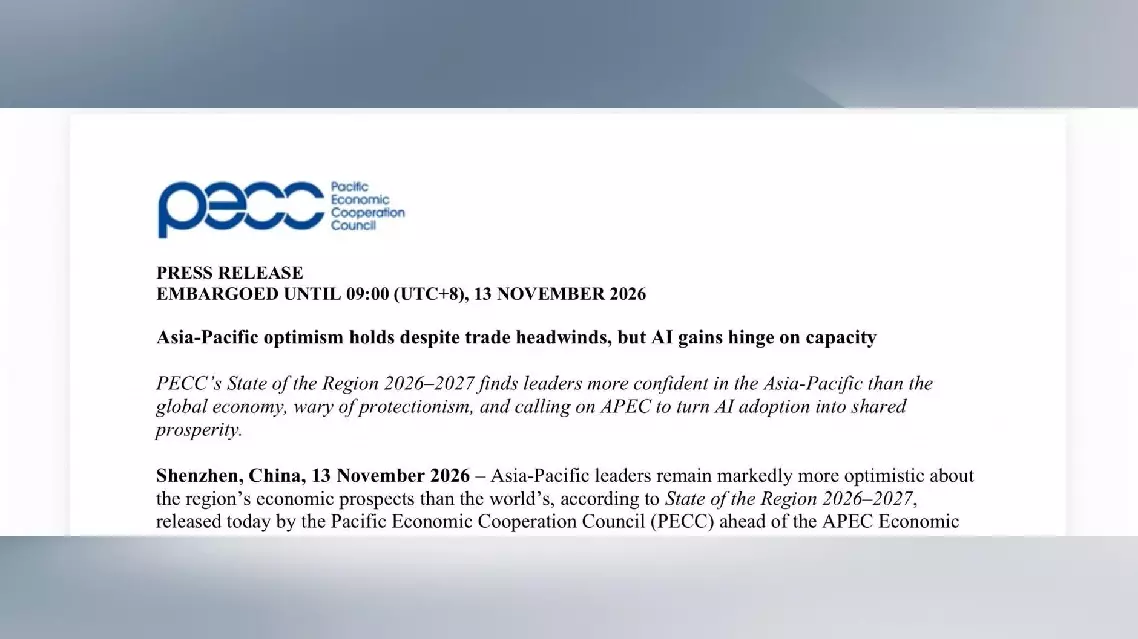
Asia-Pacific region shows better economic outlook than global average: PECC
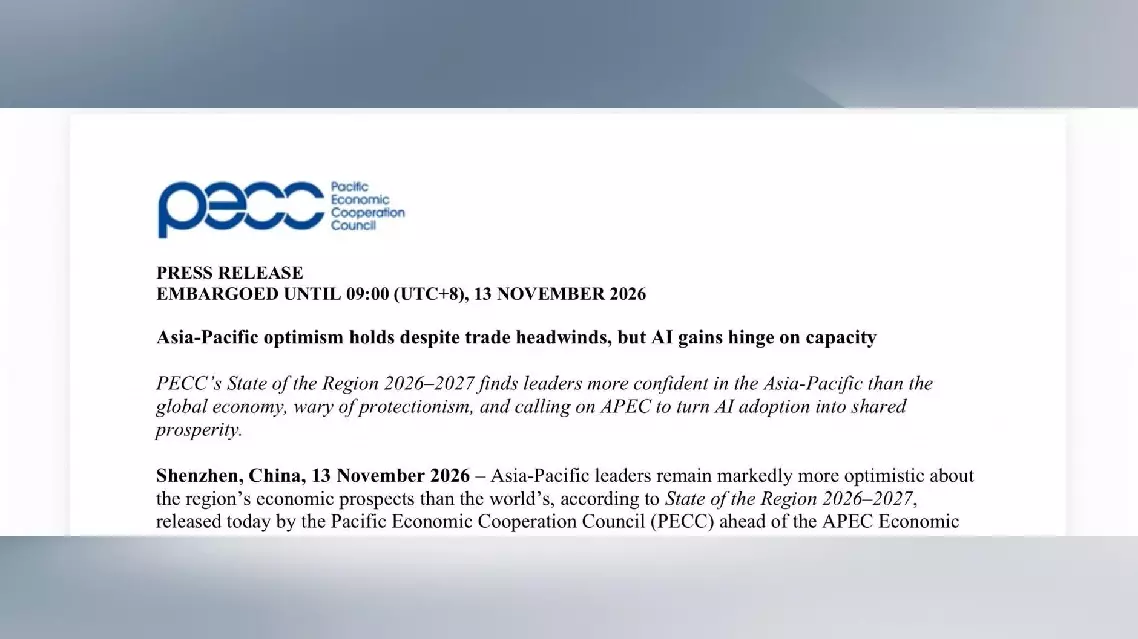
Asia-Pacific region shows better economic outlook than global average: PECC
The arrival of artificial intelligence (AI) is starting to reshape the centuries-old craftsmanship in China's "porcelain capital" of Jingdezhen in the eastern Jiangxi Province, but while this new technology lends a helping hand in kiln firing and porcelain design, it is still unlikely to replace the exquisite work of the ceramics masters who play their trade here.
The art of kiln firing is a traditional craft with thousands of years of history. The weather, the properties of the clay and the moisture in the firewood can all change conditions inside the kiln. Making sense of all these factors is a subtle skill that takes years of experience to properly develop.
Feng Heping is a veteran kiln master who has spent more than four decades in this line of work. He describes his job as that of a chief coordinator who is in charge of the entire process.
"I started in this trade in 1986. So I've been doing it for more than 40 years. You have to design and build your kiln according to your own approach, and personally make sure everything is done right.There's a saying in the trade: first loading, then firing, then extinguishing. When loading the kiln, you can't simply put everything straight in. You have to place each piece where the temperature is right for it," Feng said.
Today, fewer young people are willing to endure the long, quiet apprenticeship this age-old craft demands. Many master craftsmen are growing old, and much of what they know lives only in memory, passed from hand to hand and mind to mind. Without a way to preserve and pass it on, some are concerned the craft risks losing the generation that comes next.
But now, new technology is offering another way to understand the magic that happens inside the kiln.
Li Tao, a senior engineer at the Ceramic Research Institute of China National Light Industry of Jingdezhen Ceramic University, explained how his team has developed a high-tech new device which draws on 5G wireless technology, AI, and the vast data collection afforded by the Internet of Things (IoT).
"This is the 5G+AIoT digital kiln control system. We can install sensors on the kiln in advance, which can send temperature data, as well as information on the kiln atmosphere to this system. We still hope that experienced craftsmen like you can help us further refine it," Li told Feng.
According to Li, data on temperature, kiln atmosphere and energy consumption is collected in the cloud in real time, and AI algorithms use the data to dynamically optimize the firing process. But when it comes to craftsmanship, the changes in firing cannot simply be reduced to numbers, as he acknowledges that the mastery of the old craftsman is still essential.
"Craftsmen understand the temperature and subtlety of the kiln fire, while AI helps maintain its stability and continuity. Technology doesn't replace craftsmanship. It simply helps keep this thousand-year-old tradition alive. Traditional skills must be passed down, and we can't rely solely on years of accumulated experience. Protect the heritage, and keep the kiln fire burning. Technology can help preserve standards, protect the heritage, and keep the kiln fire burning," Li said.
In a further nod to the city's historic influence and the importance of its treasured traditions, the Jingdezhen Handicraft Porcelain Industry Sites were inscribed on the UNESCO World Heritage List in July this year -- acknowledging the global significance of its porcelain-making practice that has endured for centuries.
Jingdezhen was once known for its meticulous 72-step porcelain-making procedures. Today, a touch of AI is appearing in some of these processes, from shaping and trimming to painting and glazing. The addition of this modern assistance is now beginning to reach everyone who works in this much celebrated field.
"We often use AI to simplify complex patterns, or to serve as a reference for similar designs. For example, this flying bird was based on an image of Tom chasing the bird. It's simply a reference. It can quickly give you an idea to work with," said Wang Guoyi, a ceramic painter, as he worked on a creative design featuring the classic Tom and Jerry cartoon characters.
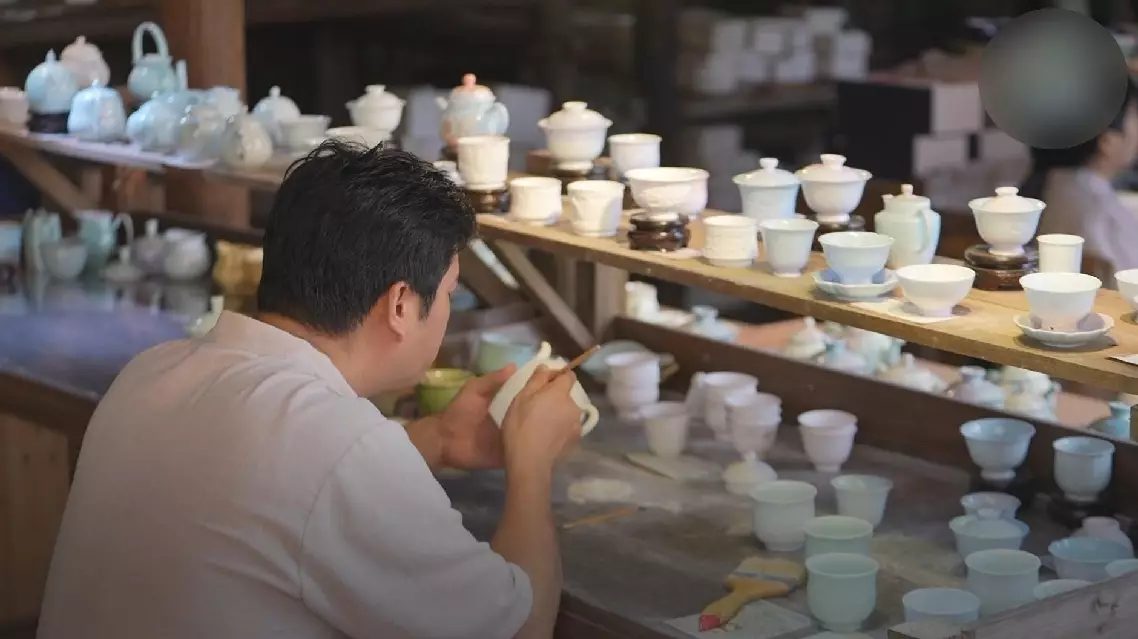
AI lends helping hand in traditional kiln firing, design in China's "porcelain capital"