The arrival of artificial intelligence (AI) is starting to reshape the centuries-old craftsmanship in China's "porcelain capital" of Jingdezhen in the eastern Jiangxi Province, but while this new technology lends a helping hand in kiln firing and porcelain design, it is still unlikely to replace the exquisite work of the ceramics masters who play their trade here.
The art of kiln firing is a traditional craft with thousands of years of history. The weather, the properties of the clay and the moisture in the firewood can all change conditions inside the kiln. Making sense of all these factors is a subtle skill that takes years of experience to properly develop.
Feng Heping is a veteran kiln master who has spent more than four decades in this line of work. He describes his job as that of a chief coordinator who is in charge of the entire process.
"I started in this trade in 1986. So I've been doing it for more than 40 years. You have to design and build your kiln according to your own approach, and personally make sure everything is done right.There's a saying in the trade: first loading, then firing, then extinguishing. When loading the kiln, you can't simply put everything straight in. You have to place each piece where the temperature is right for it," Feng said.
Today, fewer young people are willing to endure the long, quiet apprenticeship this age-old craft demands. Many master craftsmen are growing old, and much of what they know lives only in memory, passed from hand to hand and mind to mind. Without a way to preserve and pass it on, some are concerned the craft risks losing the generation that comes next.
But now, new technology is offering another way to understand the magic that happens inside the kiln.
Li Tao, a senior engineer at the Ceramic Research Institute of China National Light Industry of Jingdezhen Ceramic University, explained how his team has developed a high-tech new device which draws on 5G wireless technology, AI, and the vast data collection afforded by the Internet of Things (IoT).
"This is the 5G+AIoT digital kiln control system. We can install sensors on the kiln in advance, which can send temperature data, as well as information on the kiln atmosphere to this system. We still hope that experienced craftsmen like you can help us further refine it," Li told Feng.
According to Li, data on temperature, kiln atmosphere and energy consumption is collected in the cloud in real time, and AI algorithms use the data to dynamically optimize the firing process. But when it comes to craftsmanship, the changes in firing cannot simply be reduced to numbers, as he acknowledges that the mastery of the old craftsman is still essential.
"Craftsmen understand the temperature and subtlety of the kiln fire, while AI helps maintain its stability and continuity. Technology doesn't replace craftsmanship. It simply helps keep this thousand-year-old tradition alive. Traditional skills must be passed down, and we can't rely solely on years of accumulated experience. Protect the heritage, and keep the kiln fire burning. Technology can help preserve standards, protect the heritage, and keep the kiln fire burning," Li said.
In a further nod to the city's historic influence and the importance of its treasured traditions, the Jingdezhen Handicraft Porcelain Industry Sites were inscribed on the UNESCO World Heritage List in July this year -- acknowledging the global significance of its porcelain-making practice that has endured for centuries.
Jingdezhen was once known for its meticulous 72-step porcelain-making procedures. Today, a touch of AI is appearing in some of these processes, from shaping and trimming to painting and glazing. The addition of this modern assistance is now beginning to reach everyone who works in this much celebrated field.
"We often use AI to simplify complex patterns, or to serve as a reference for similar designs. For example, this flying bird was based on an image of Tom chasing the bird. It's simply a reference. It can quickly give you an idea to work with," said Wang Guoyi, a ceramic painter, as he worked on a creative design featuring the classic Tom and Jerry cartoon characters.
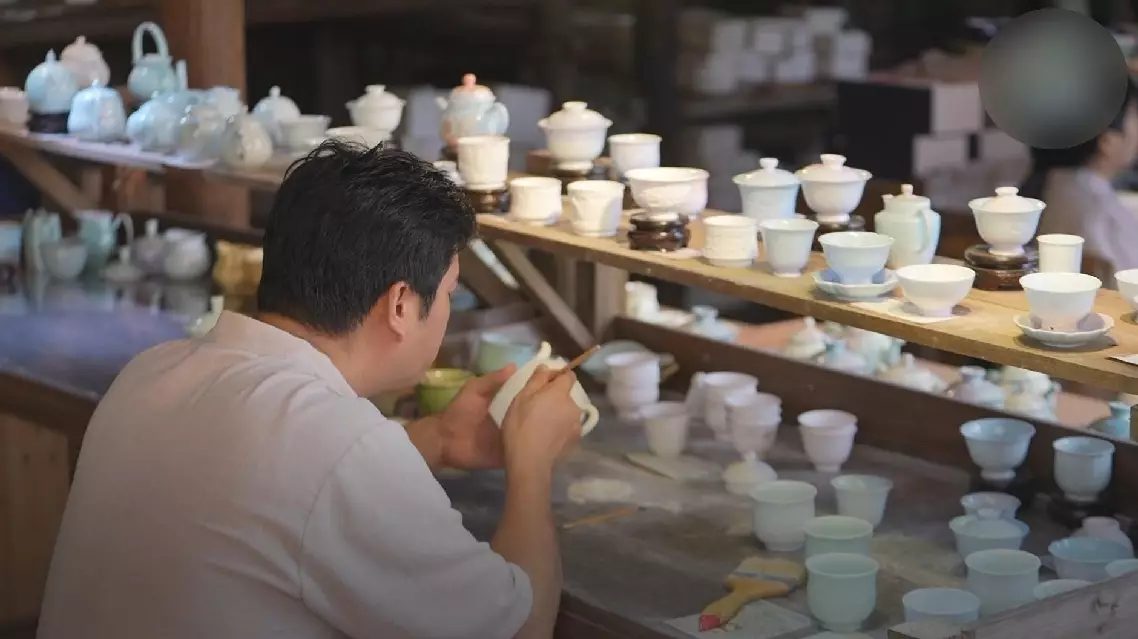
AI lends helping hand in traditional kiln firing, design in China's "porcelain capital"
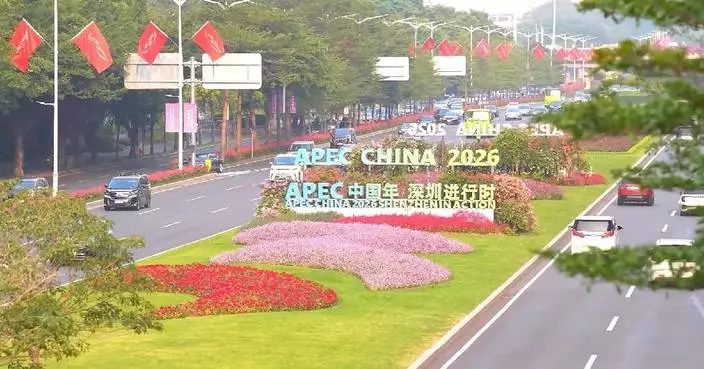
Business leaders from across the Asia-Pacific gathered in south China's Shenzhen Tuesday as the two-day 2026 Asia-Pacific Economic Cooperation (APEC) CEO Summit got underway, with many highlighting China's efforts to consistently deepen regional economic integration through pragmatic cooperation and hailing the country's commitment to open trading and high-quality development.
The two-day summit has gathered more than 2,000 political and business representatives from 21 APEC member economies and 13 non-APEC economies, with discussions set to focus on cooperation in emerging fields such as the digital economy, artificial intelligence (AI), and green and low-carbon development.
This year marks the third time China has hosted APEC following previous editions in Shanghai in 2001 and Beijing in 2014, and attendees note China's growing role as a driving force for the APEC region to advance cooperation and shared prosperity.
Many participants also say they have been impressed by what they have seen in the city of Shenzhen, which has undergone rapid development in recent decades to grow from a small fishing village into a bustling modern metropolis, with the city becoming known as a major manufacturing center before now evolving into a hub of high-tech innovation.
"We know China is a provider of manufacturing, but we also know China as a provider of innovation. We're here in Shenzhen, which is the 'Silicon Valley of China', providing so much new technology for the world. What we are looking for is for countries like China who play such an important role to really use the opportunity of APEC to lead the conversation. Global trade benefits everyone," said Robert Hillard, CEO of Deloitte Asia Pacific.
"I'm very surprised with Shenzhen and the growth that China has been doing in terms of how things are so modern and how much they develop infrastructure. I'm impressed with all your cameras here, with the little stick, which, by the way, I just bought one. And I think technology is super here in China," said Guillermo Ferreyros, Peru's representative to the APEC Business Advisory Council.
"I think China is a wonderful host. It allows for China to further expose the rapid changes, especially here in Guangdong Province that is the epicentre of innovative change and advanced manufacturing, along with a long list of leading businesses. And I think it's fantastic for them to bring people together and continue to talk. That is the most important thing that we all have to do in order to create more trade and more pragmatic outcomes," said Olivier Desmarais, Senior Vice-President of the Power Corporation of Canada.
As for this year's APEC CEO Summit, business leaders expressed hope that China's vision and proposals will once again steer the course of Asia-Pacific cooperation and pool strong synergy for regional development.
"Having that trade flow re-engage with China has been very positive for the U.S. soybean farmer. So I'm very excited for them to continue. We have other cooperators joining us actually here at APEC. The Almond Board of California is here and we hope that other cooperators will benefit from the trade. So we're very looking forward for everybody to participate and re-engage with Chinese business," said Carlos Salinas, executive director for East Asia at the U.S. Soybean Export Council.
"China is also leading on this smart manufacturing innovation as well as the green transformation. China is leading the world on this, and we are utilizing lots of these technologies in many of our factories. I'm looking forward to hear more from the leaders of the world to exchange ideas and to see the commitment that we all will try to work closely together for the whole world to be better, not just for big corporations, but I think we have to look for the SMEs as well in the region -- how they all can be embedded in our supply chains," said Saravoot Yoovidhya, CEO of the TCP group, a Thai food and beverage company.
"[It's important for] leaders from across the APEC economies to be here together and share our common agenda, and the way that China is building for the future is really inspiring, and it's an exciting opportunity for companies like Boeing to partner and share that future. I've attended APEC before, but not in Shenzhen, so for me this is a great opportunity to take," said Landon Loomis, president of Boeing China.

APEC business leaders hail China's efforts to promote cooperation, open trade across Asia-Pacific