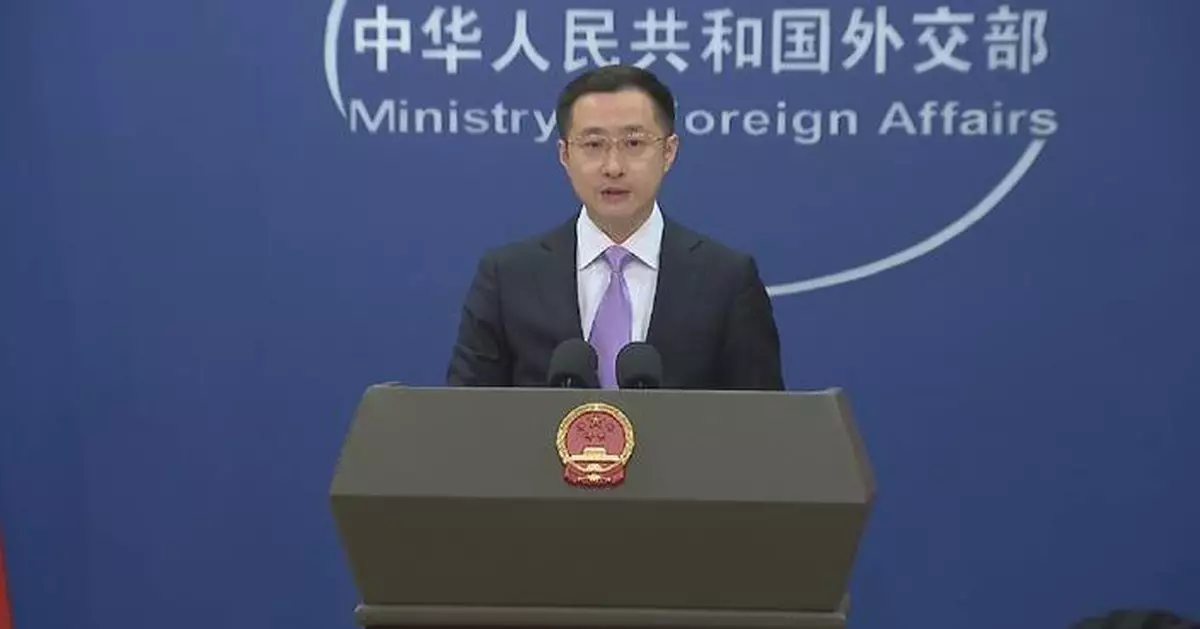
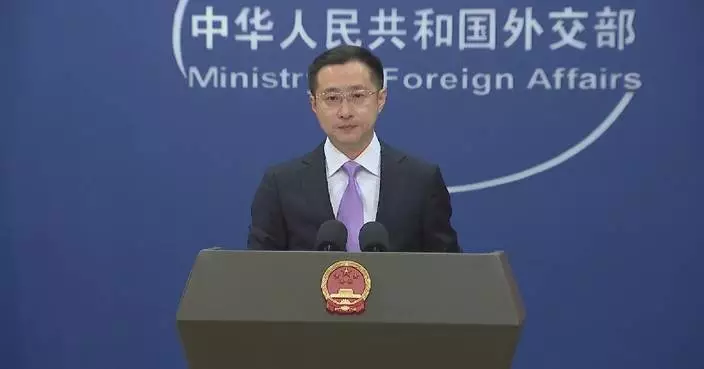
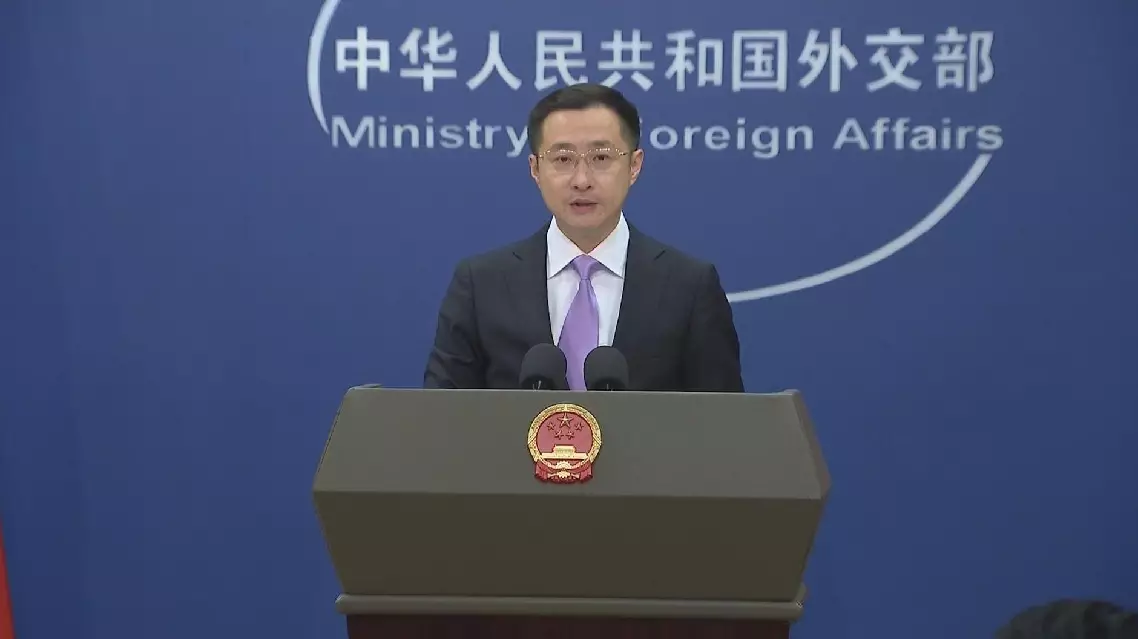
Chinese Foreign Minister Wang Yi's visit to the Republic of Korea (ROK) is expected to further advance the development of the strategic cooperative partnership between the two countries, Foreign Ministry spokesman Lin Jian said on Wednesday.
Wang, also a member of the Political Bureau of the Communist Party of China Central Committee, is paying a visit to ROK at the invitation of ROK Foreign Minister Cho Hyun.
While answering a media question on Wang's visit to ROK at a regular press briefing in Beijing, Lin said it will help both sides further implement the important consensus reached by the two heads of state.
"China and the ROK are neighbors and cooperation partners. The all-round rapid growth of bilateral ties, since diplomatic relations were established 34 years ago, has delivered tangible benefits to both peoples and contributed to peace, stability, development and prosperity in the region. Late last year and early this year, President Xi Jinping and President Lee Jae Myung had successful mutual visits and reached a number of important common understandings, opening up new prospects for the development of bilateral relations. We believe Foreign Minister Wang Yi's visit will boost efforts on both sides to deliver on the important common understandings between the two presidents, strengthen communication, enhance mutual trust, deepen exchange and cooperation, and make new progress in the China-ROK strategic cooperative partnership," said Lin.
Chinese FM's visit to further advance China-ROK strategic cooperative partnership: spokesman
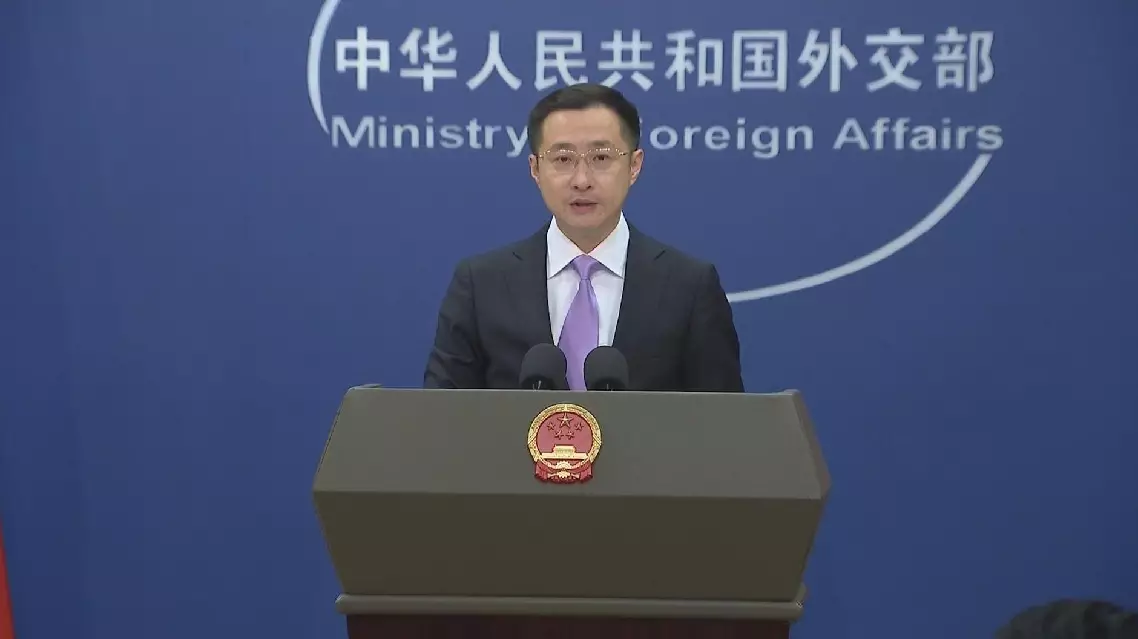
Chinese FM's visit to further advance China-ROK strategic cooperative partnership: spokesman
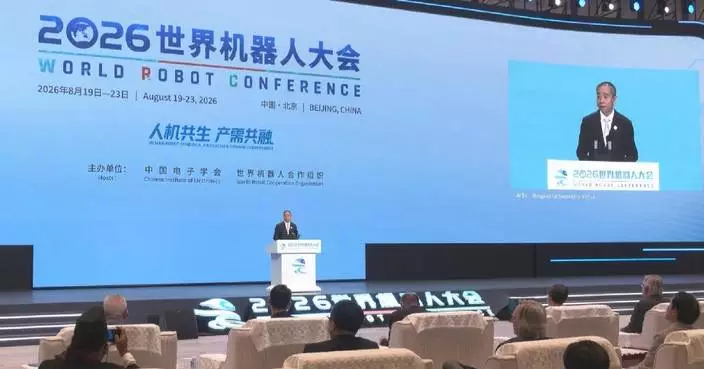
The 2026 World Robot Conference opened in Beijing E-Town on Wednesday, bringing more than 3,000 exhibits, with one tenth of them premiered.
Running for five days, the event has drawn over 300 exhibitors, up 69 percent from last year, and more than 60 activities are on agenda.
"We have built a 600-square-meter immersive zone with several hundred products on display. We designed scenarios like a cyber training camp, a real-life industrial park, and a future-life house to show innovative applications of robots. Visitors can even remotely operate the robots on their own and experience the latest robotic technologies," said Fang Pei, procurement and sales head at JD Embodied Intelligent Robotics.
Apart from the larger scale, the exhibition at this year's conference shifts more from individual robot skills to scenarios of their working applications.
At the booth of a Humanoid Robot Innovation Center, the robot Tiangong, once a "marathon runner" in previous robot marathon competitions, performs various jobs. Controlled through large models, Tiangong can carry goods, conduct quality inspections, and do other work.
In a household scenario, Tiangong can execute orders of users like finding sausage and putting in into a designated container.
"The general trend shows that the industry is now shifting the focus from robot bodies, its motion and manufacturing to its intelligence and ability to working in the real world," said Xiong Youjun, general manager of the Beijing Humanoid Robot Innovation Center.
The expansion of the exhibition scale aligns with the sector's rapid growth as a whole. According to the Ministry of Industry and Information Technology, China's industrial and service robot output rose 28 percent and 11.9 percent year on year in the first half of 2026, respectively. Chinese-developed quadruped robots now account for nearly 70 percent of global sales, with more than 400 domestically-built humanoid robot models, over half of the world's total.
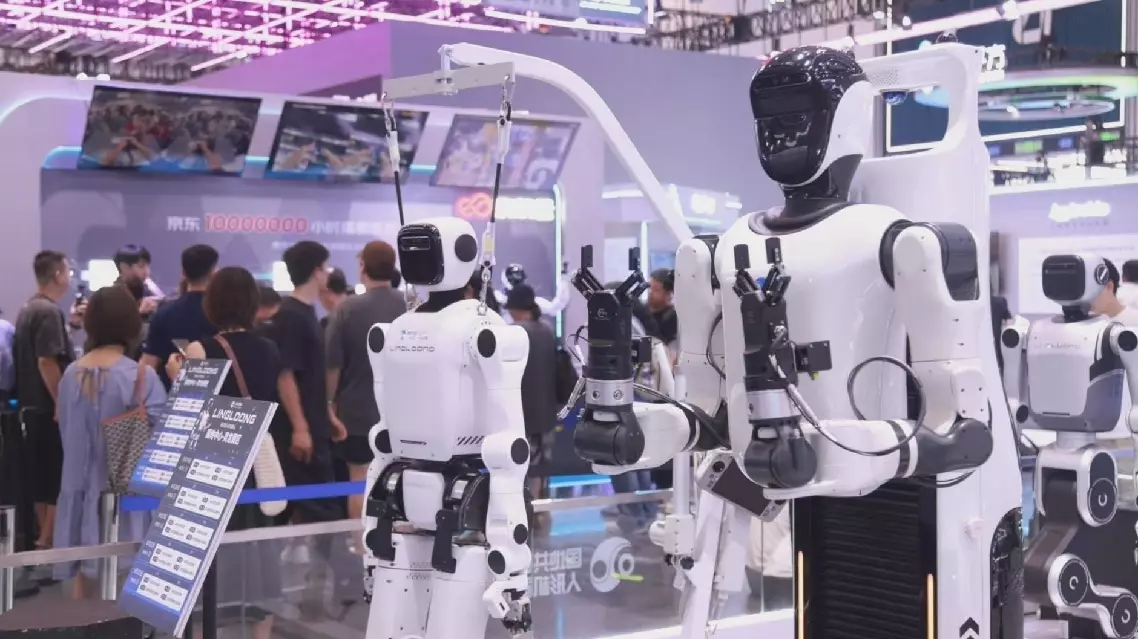
World Robot Conference features real-life applications