Development Bureau to launch Bonus Plot Ratio Pilot Scheme in September to expedite private redevelopment in seven old districts
To facilitate the launch of the Bonus Plot Ratio Pilot Scheme (the Pilot Scheme) in September, the Planning Department (PlanD), the Lands Department (LandsD) and the Buildings Department (BD) under the Development Bureau (DEVB) issued a Joint Practice Note (JPN) today (August 19) setting out the detailed requirements and arrangements of the Pilot Scheme.
The Secretary for Development, Ms Bernadette Linn, said, "Following the legislative amendment to lower the compulsory sale threshold over a year ago, the Pilot Scheme is another measure to expedite private redevelopment projects in old districts, which implements the creative and bold policy vision of the current-term Government. To focus market resources on promoting redevelopment in old districts, the Pilot Scheme will be implemented in seven old districts (Note). Private redevelopment sites located within these seven old districts, which meet other requirements of the Pilot Scheme, can obtain an additional 20 per cent plot ratio (PR) to enhance the financial viability of redevelopment projects."

The Secretary for Development, Ms Bernadette Linn, Photo source: reference image
She continued, "Data over the past decade shows that about 20 per cent of the new flats from all redevelopment projects came from the Urban Renewal Authority (URA), with the remaining 80 per cent from private development projects, which demonstrates the paramount importance of the private market participation in the redevelopment of old buildings. However, as redevelopment projects in old districts involve acquisition costs and there are certain constraints on development parameters for pursuing redevelopment in developed areas, market participation has remained sluggish. Given that buildings aged 50 years or above are increasing by more than 500 per year, and will even grow by an annual average of over 700 blocks in the coming 15 years, it is necessary for us to adopt an innovative and bolder policy to push the market to undertake redevelopment, with a view to tackling the issue of building ageing at a much faster pace than redevelopment by both the URA and the private market, thereby achieving our policy objective of addressing hidden hazards of old buildings and improving living environments. We are pleased to see that the public and the industry generally support this policy measure."
In finalising the implementation details and formulating the JPN, the DEVB and the three departments have considered the views received during the two-month consultation period at the end of last year, and further exchanged views with key stakeholders. The JPN sets out the implementation details, including the scope, application criteria and conditions, as well as the application deadline of the Pilot Scheme, providing developers with a clear understanding of the actual operation to facilitate early applications.
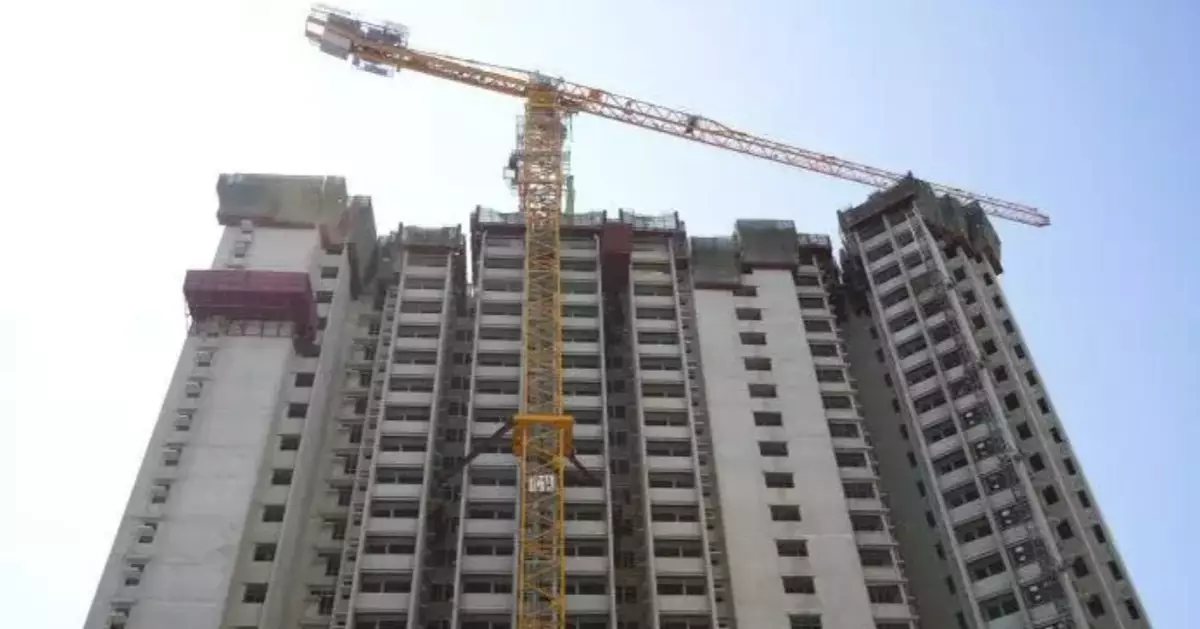
Photo source: reference image
Under the Pilot Scheme, if a developer commits to pull down a residential building in the seven old districts with the building age reaching 50 years or above with the site area not less than 700 square metres, and redevelop it into residential use, an additional 20 per cent premium-free gross floor area (GFA) will be provided as bonus. Developers can choose:
(i) to submit planning applications to the Town Planning Board (TPB) proposing an increase in permissible GFA for in-situ redevelopment, with a ceiling of 20 per cent. Upon approval, the bonus PR will be premium-free (under actual implementation arrangements, the land premium value of the 20 per cent bonus PR will be calculated by the standard rates, which can be used to offset the land premium payable for the in-situ redevelopment project); or
(ii) if it is decided not to increase the GFA by a maximum of 20 per cent at the in-situ redevelopment site, the bonus PR can be translated into land premium value to offset the land premium payable for that in-situ redevelopment project of the developer, or any land transactions carried out in the Northern Metropolis and other areas across Hong Kong, including land bidding, lease modification or land exchange projects. The validity period for the use of the land premium value will be 10 years. No interest will be payable for the value during the time limit and the land premium value is non-transferable in the market. No redemption, compensation or alike will be paid for any unused land premium value after expiry of the 10-year validity period of the land premium value.
In addition to providing the two options for the developers to choose based on their circumstances, the Pilot Scheme will also introduce two arrangements to facilitate applications and streamline the procedures. First, before submitting an application, developers can make enquiries with LandsD and PlanD about the eligibility of the redevelopment site, the land premium value of the bonus PR and planning matters, etc. Second, LandsD will use standard rates to calculate the land premium value of the bonus PR. LandsD has also issued a Practice Note (No. 9/2026) today to set out the applicable standard rates for each of the seven old districts, which are determined with reference to a basket of relevant market information.
The Pilot Scheme will cover a period of five years, commencing on September 1 this year until August 31, 2031. Setting a time period is mainly to encourage the market to seize the opportunity to drive redevelopment projects. Within the five-year period, LandsD will accept lease modification applications from developers for eligible redevelopment sites under the Pilot Scheme, and impose relevant lease conditions, including incorporating the building covenant period and penalties, so as to ensure that developers will implement the redevelopment plans on time. Following the launch of the Pilot Scheme, the DEVB will evaluate its effectiveness in a timely manner, and introduce adjustments where necessary, including considering whether the period of the Pilot Scheme will be extended, having regard to the market response.
The JPN can be downloaded from the websites of the PlanD (www.pland.gov.hk), the LandsD (www.landsd.gov.hk), and the BD (www.bd.gov.hk), while the LandsD's Practice Note No. 9/2026 can be downloaded from the website of the LandsD (www.landsd.gov.hk).
The Chief Executive's 2025 Policy Address proposed to incentivise private urban redevelopment with a new policy mindset. Apart from proposing the launch of the Pilot Scheme, it also suggested allowing the cross-district transfer of the PR. The TPB will consider amendments to the planning guidelines this Friday (August 21) to implement the latter proposal.
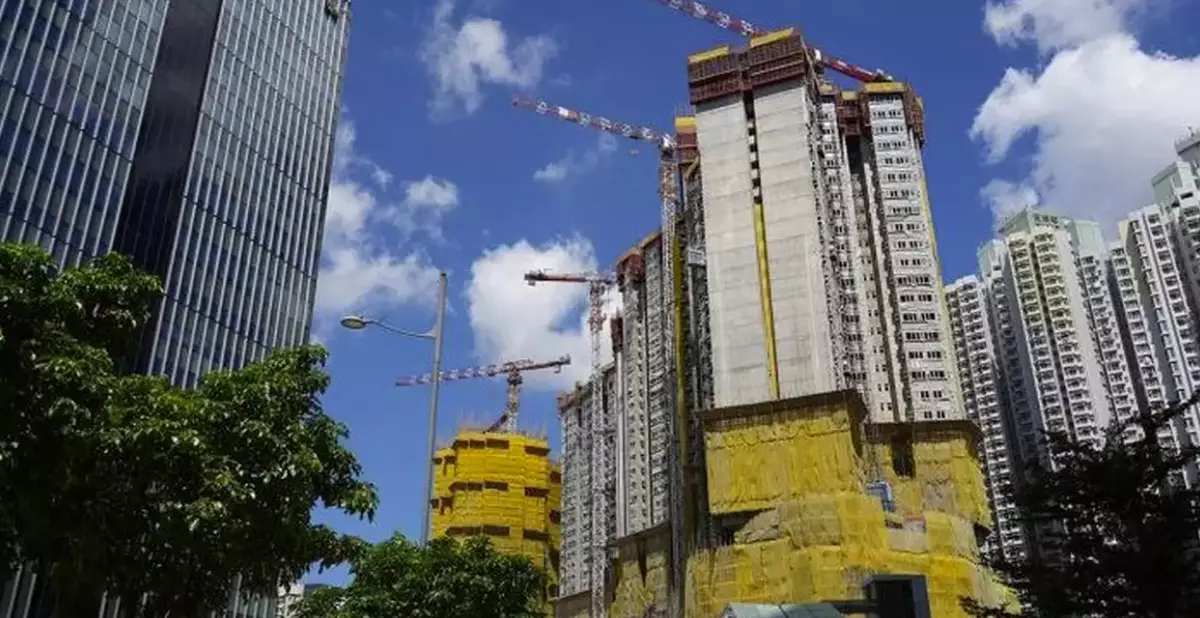
Photo source: reference image
Note: The seven old districts are designated areas under the Land (Compulsory Sale for Redevelopment) Ordinance, comprising Cheung Sha Wan (the same Outline Zoning Plan (OZP) covering also Sham Shui Po), Ma Tau Kok (covering Kowloon City and To Kwa Wan), Mong Kok, Sai Ying Pun and Sheung Wan (covered by the same OZP), Tsuen Wan, Wan Chai and Yau Ma Tei.