NEW YORK (AP) — Locked in a competitive reelection race, Los Angeles Mayor Karen Bass declared on social media last week that a new poll was evidence that her campaign was “gaining momentum.”
Just a few days later, the truth emerged: The poll was fabricated.
The California results were among at least three “polls” across three states posted online this month by Median Strategies, a previously unknown organization that admitted to the Los Angeles Times on Monday that the purported results were fake. The company wrote before shuttering its website this week that it “was created as a short-term social experiment examining how purported polling information could enter and spread through the political information ecosystem without independent verification.”
The post offered no explanation of who was behind the “experiment” or for what purpose.
The trajectory of the California poll offers a cautionary tale about the perils of trusting unvetted polling. While high-quality independent polls still exist, they appear amid a slew of other surveys produced by outside groups, campaigns or super PACs or using undisclosed or questionable methodologies. It can be a struggle to make sense of the findings — and as the latest episode shows, even campaigns may end up falling for falsified data.
“This is much bigger than one fake poll,” said Chris Wilson, a veteran Republican pollster who now leads the public opinion firm EyesOver. “It’s never been easier to make invented numbers look legitimate, and campaigns and outside groups have every incentive to amplify anything favorable before anyone verifies it.”
The Median Strategies fake polls, none of which appeared in Associated Press coverage, claimed to evaluate support in the Democratic primary for governor in Wisconsin, the gubernatorial race in Nevada, and the mayoral race in Los Angeles.
The Los Angeles poll, which purported to show Bass, an incumbent Democrat, leading councilmember Nithya Raman, a progressive Democrat, by about 12 percentage points in the mayoral race, was shared by the Bass campaign on social media and covered by the California Post before it was revealed to be bogus.
The Bass campaign has since deleted its social media post promoting the poll, but defended itself by saying that it “was reported on by multiple news outlets.”
"Any bad faith attempts to influence elections should be investigated and prosecuted to the fullest extent of the law,” Bass campaign spokesman Alex Stack said.
Median's “findings” were shared by polling aggregation accounts on social media. They were not, however, included in the databases of major independent aggregators, including The New York Times, Real Clear Politics or FiftyPlusOne.
The New York Times and FiftyPlusOne noted that the polls were released without basic information that was needed for vetting, such as who was running the firm. When they reached out, Median Strategies did not respond to requests for more information.
“When the poll was released, it lacked basic information about how it was conducted and who was behind it,” Will Davis, director of Election Data Analytics at The New York Times, wrote in an email to the AP. “Releasing this type of information is standard practice for pollsters, and because that information was not provided, we did not include it.”
Mary Radcliffe, Head of Research at FiftyPlusOne, also thought the methodology statement for the Wisconsin poll was missing key details, including the source for the voter file the company claimed to have used and the vendor who fielded part of the sample.
Median did not respond to her questions, so the polls were not included in FiftyPlusOne’s database. But Radcliffe noted that her method for screening polls is not infallible.
“There is a universe where they could have come up with plausible answers to my questions,” she said. “This is an industry built on trust. I have to trust that people are answering my questions in good faith.”
While admissions of falsified polling data are rare, they are not without precedent.
In 2010, for instance, the left-leaning blog Daily Kos said that polling for its website, conducted by a firm called Research 2000, was fraudulent.
But it’s common for pollsters to release polls with minimal information about how the survey was conducted, what questions were asked, or who was behind it. Higher-quality polls rely on expensive methodologies, such as randomized sampling, so many pollsters opt for cheaper solutions. In addition, many election polls are conducted by campaigns or super political action committees with a stake in the outcome of the race. This can leave few — if any — reliable and independent polls to evaluate in contests like midterm primaries.
Before writing about any poll, AP verifies that it meets high standards of transparency and methodological rigor. But even high-quality polls have some amount of error, which underscores the importance of examining each finding with caution.
The introduction of prediction market platforms like Kalshi and Polymarket gives polls a different significance for people betting on election outcomes.
The posts about Wisconsin and Nevada drew little reaction and were not accompanied by any discernible movement on the two prediction markets when they were released, but there were some shifts on both platforms after Bass shared the false Median Strategies numbers.
On Kalshi, the price of a “yes” contract on Bass winning the Los Angeles mayoral election rose two cents, from about 63 cents to about 65 cents, within fifteen minutes of Median’s post. On Polymarket, roughly twenty separate accounts traded thousands of contracts in Bass’s favor six minutes after the tweet.
In the days leading up to Bass's post about Median, trading on the LA mayoral election had been thin, with a typical trade over that week being under $10.
While the price movements were small, the concentration of trading on both platforms shortly after the release of Median’s fake poll was not.
Before it was taken down, the Median Strategies website included a statement claiming that “no individual involved held or traded any position in an election prediction market, betting market, or other financial instrument tied to the races covered by Median Strategies.”
More than a week after the firm began sharing “results,” it remains unclear who is behind Median Strategies.
No one responded to AP's questions sent to an email address listed on its website, which was created little more than a week ago. Before it was taken offline, the only content on the site was a statement indicating that the firm “has concluded its polling project and will not publish additional polls.”
“All previously published polling releases have been withdrawn and should not be cited or treated as genuine polling data,” it wrote.
The firm highlighted what it called “a credibility problem” in its first social media post earlier in the month.
“Polling has a credibility problem. Ours is the fix: no partisan clients, no campaign or party money, numbers that go wherever the data takes them even when it’s inconvenient. Trustworthy polling, rebuilt,” it wrote.
Associated Press writers Linley Sanders and Michael Reo in Washington, Scott Bauer in Madison, Wis., and Michael Blood in Los Angeles contributed.
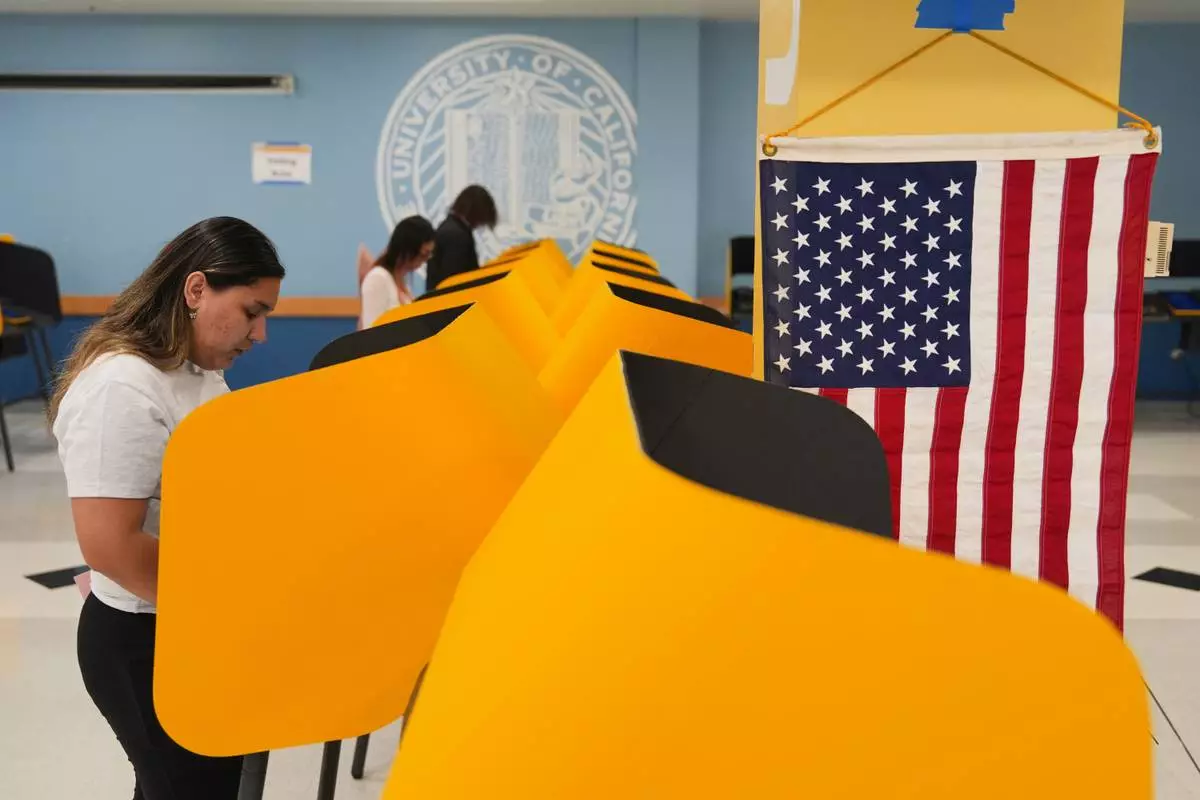
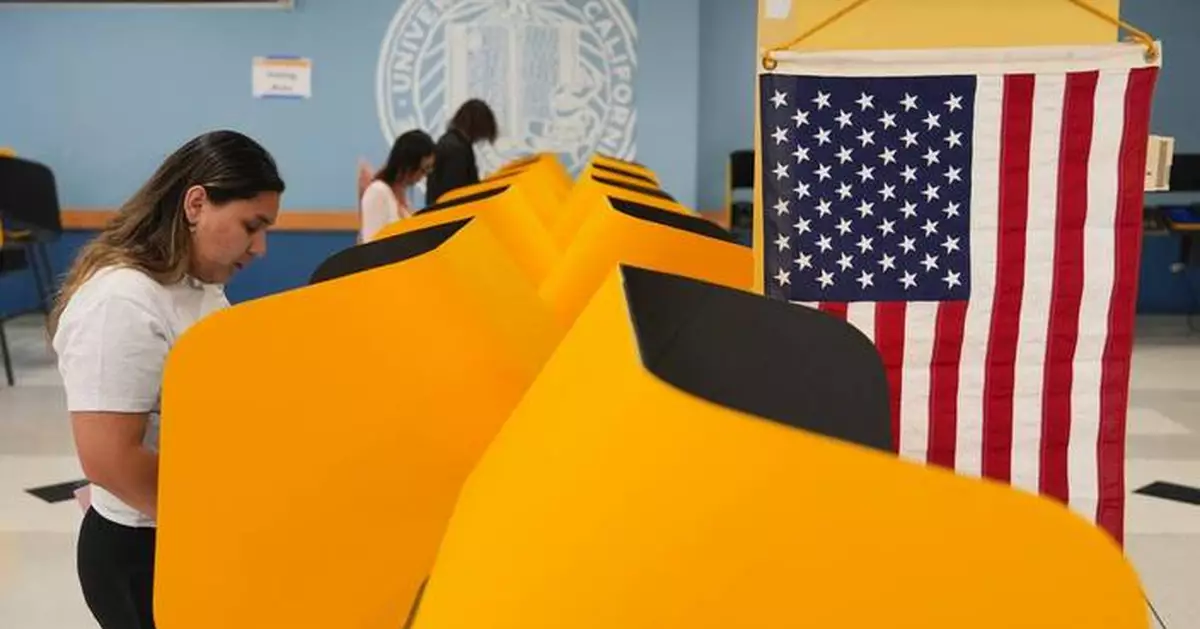
FILE - Voters cast their ballots at a voting center on the UCLA campus, June 2, 2026, in Los Angeles. (AP Photo/Jae C. Hong, File)