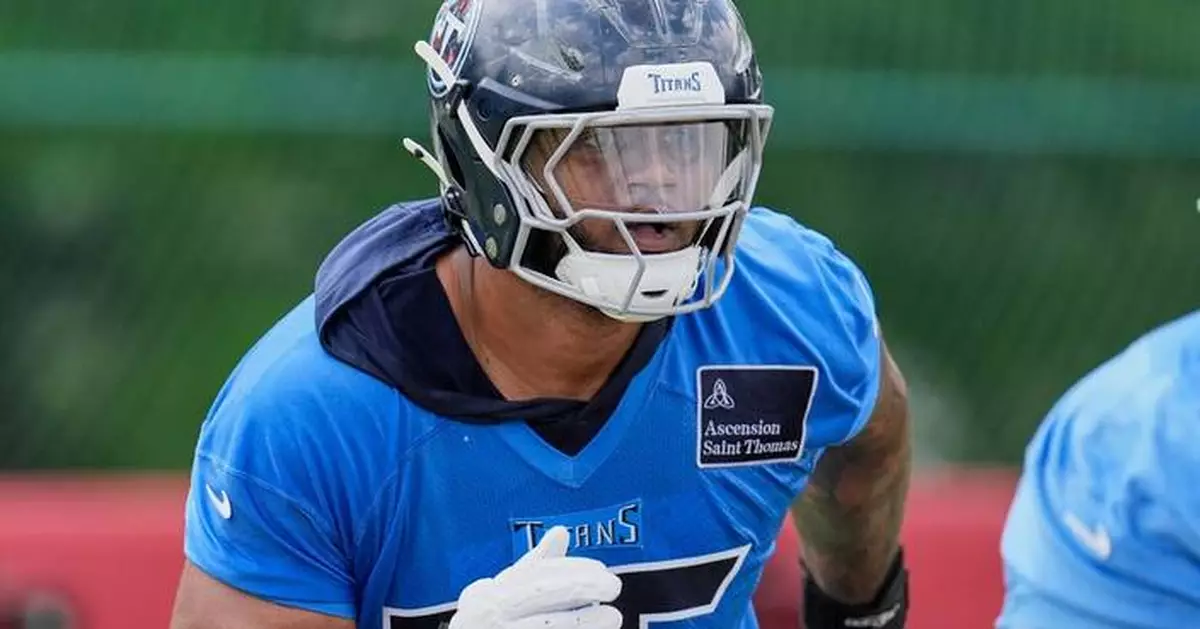
Left tackle Dan Moore of the Tennessee Titans can list all the sponsorship deals he has done as a pro on one hand: A few meet and greet opportunities when he was with the Steelers, a grill company that gave him some barbecue tools in exchange for his endorsement.
Million-dollar deals? No such thing, especially for someone playing his position. If he were in college — a talented offensive lineman with a chance to make his team a national contender — that might be different.
“It’s only been five years since NIL started,” said Moore, who heads into his sixth year in the NFL this season. “Another five years, and we could see college football becoming semi-pro.”
And that, in short, is the not-so-hidden secret driving a new era in college sports. It is a business rebuilt to allow players to cash in on their name, image and likeness fame, one that pays exorbitant prices to athletes under the guise that the money isn’t a salary, but rather a payment for services the athletes provide through sponsorship deals.
That’s the way many of the headline-grabbing six- and seven-figure payments that go to college players for so-called “third party NIL” can truly comport with the NCAA rulebook. And that rulebook — for all its rapid changes in recent years — refuses to do away with the fading notion that college athletes aren't pros who can be paid merely to show up and play.
Mike McGlinchey, a ninth-year NFL right tackle with the Denver Broncos, has a contract worth $52 million in guaranteed money but he doesn’t have a sponsorship deal. That puts him in the majority of NFL offensive linemen, who either don’t need to work extra for more income or aren’t well-known enough to grab much more than a local deal or two.
Of the 20 biggest NFL endorsement deals listed by Sportico – a list that starts with Chiefs tight end Travis Kelce at $32 million – not a single one belongs to a lineman.
But in college, there’s Jordan Seaton, the five-star left tackle who was one of Deion Sanders’ biggest signings at Colorado, then left the Buffs to play at LSU. There, in the heart of SEC country, Seaton reportedly makes $4 million for pitching a national chain pharmacy, a fast-food restaurant, a personal finance firm and others.
It’s a far cry from what McGlinchey envisioned when NIL arrived five years ago; he graduated from Notre Dame long before the era of paying college players began.
“What I thought NIL was supposed to mean was a local Ford dealership in South Bend puts the offensive line on a billboard and gives us a truck to drive around for six months,” he said. “Now, NIL means, ‘We have collectives of money and the one with the biggest checkbook is going to win.' They’ve used name-image-likeness to open the floodgates to say. ‘We’re going to pay the most to get this kid.'"
Among the 20 highest-paid NFL endorsers are quarterbacks Geno Smith ($1.5 million), Sam Darnold ($1 million) and Deshaun Watson ($750,000).
All of those amounts are less than what the top 10 college players make in sponsorships, according to On3, which tracks college NIL deals, none of which are disclosed by schools. It's a list that includes Seaton but does not include college football’s most widely recognizable name: Arch Manning, who reportedly took a pay cut this year to $2.5 million to help Texas beef up its roster.
Niklas Myhr, an associate professor at Chapman University and an expert in digital marketing, acknowledges the nod-nod, wink-wink element to all these NIL deals, but also thinks some of the numbers are the product of what he calls an “immature market.”
“Basically, there is no mature market for 20-year-old amateur athletes the way there is for sneakers,” he said. “So it's basically reverse engineering a market.”
There is an agency in charge of enforcing the rules with the objective of putting guardrails around a spending spree exacerbated by a transfer portal that encourages players to seek better offers from different schools.
Among the 14-month-old College Sports Commission’s top missions is making sure companies partnered with schools — “associated entities” — are paying players an amount within a “fair range of compensation” compared to what others might receive for the same services. The CSC also verifies that those companies are using the athlete’s NIL for a “valid business purpose” — i.e., to promote goods and services provided to the general public for profit, as opposed to hanging onto, or “warehousing,” the NIL rights for future use or having the player simply show up to an event to shake hands.
“The valid business purpose, proper range of compensation evaluation is a key part of answering that question,” said Greg Sankey, the commissioner of the SEC, when asked if players were really being paid for anything beyond just showing up and playing. “And, in fact, it’s those who are signing those deals who need to answer those questions.”
Deals cut with non-associated entities — the definition of which has been disputed — aren't subject to the same scrutiny. In theory, those deals, if truly between an athlete and a business with no connection to the school, are only limited by what the market will bear.
“I believe they’re arguing that coming to this high-profile college as a star player will warrant their NIL to become valuable just by brute force,” Myhr said, when asked how a brand justifies spending so much on a relatively unknown pitchman. “They believe they can predict the future value of this athlete is worth $1 million, or $4 million. That’s a stretch when it comes to transfering that (NIL) into captivating storytelling.”
While a good chunk of Chiefs quarterback Patrick Mahomes' $30 million in endorsements comes from his hard-to-miss State Farm TV commercials, it would be harder to spot most of college's best-paid pitchmen.
Quarterback Darian Mensah’s featured NIL deal with Miami – his third school in three years – is with a luxury watch company. Mensah’s NIL is believed worth $6.5 million, which is more than what all but nine current NFL players earn in endorsements, according to Sportico.
Among Seaton’s handful of NIL deals is one in which he goes on social media to tell his 77,000 Instagram followers of his love for Raising Cane's — a chicken joint with roots in the Baton Rouge area that has strong connections to LSU. It helps explain how Seaton's haul rose to about the same as that brought in by Livvy Dunne, the former LSU gymnast who has 5.1 million followers and is considered the highest female earner in the short history of third-party NIL.
Steve Denton, the CEO at Opendorse, which helps players find third-party NIL deals, argues the market is accurate because “college athletes have so much influence in their community that they actually perform better than influencers or creators.”
“Brands are clamoring to work with college athletes because sports is one of those things that slows people down and gets your attention," Denton said.
Well aware of runaway costs of third-party NIL, college sports leaders are working in Washington on a solution that could address some of the transparency issues involved in NIL. A provision in the Protect College Sports Act awaiting a vote in the Senate would more than double the revenue-sharing amount schools can pay annually to athletes to nearly $49 million.
What’s different about that pool of money is that, because it’s not considered third-party NIL, it is excluded from scrutiny by the CSC. Under NCAA rules, that money couldn’t technically be considered a salary, but by removing it from the third-party NIL rules, it would do away with needing to justify the payments as legitimate NIL.
What would remain, according to industry leaders, would be a tranche of “organic” third-party NIL deals like Seaton's agreement with Raising Cane's. The deals presumably would not be related to any existing arrangement with multimedia rights (MMR) partners hired by the schools that currently broker deals with players.
Jon Bishop of Playfly Sports, an MMR company that looks to find deals for players and schools, sees the bill not so much imposing a cap on spending, but creating a new, and welcome lane for that organic NIL.
“There were certain brands ... that leaned in early, but many who set out thinking, ‘I don’t want be in the headlines because I paid someone on the side' and all that stuff,” Bishop said. “So all of these things are just going to start to make a marketplace that actually will function, and I think function well.”
AP Sports Writer Teresa M. Walker in Nashville contributed to this story.
Sign up for Top 25 poll alerts here. Visit the Top 25 here and see AP’s full college football coverage here.
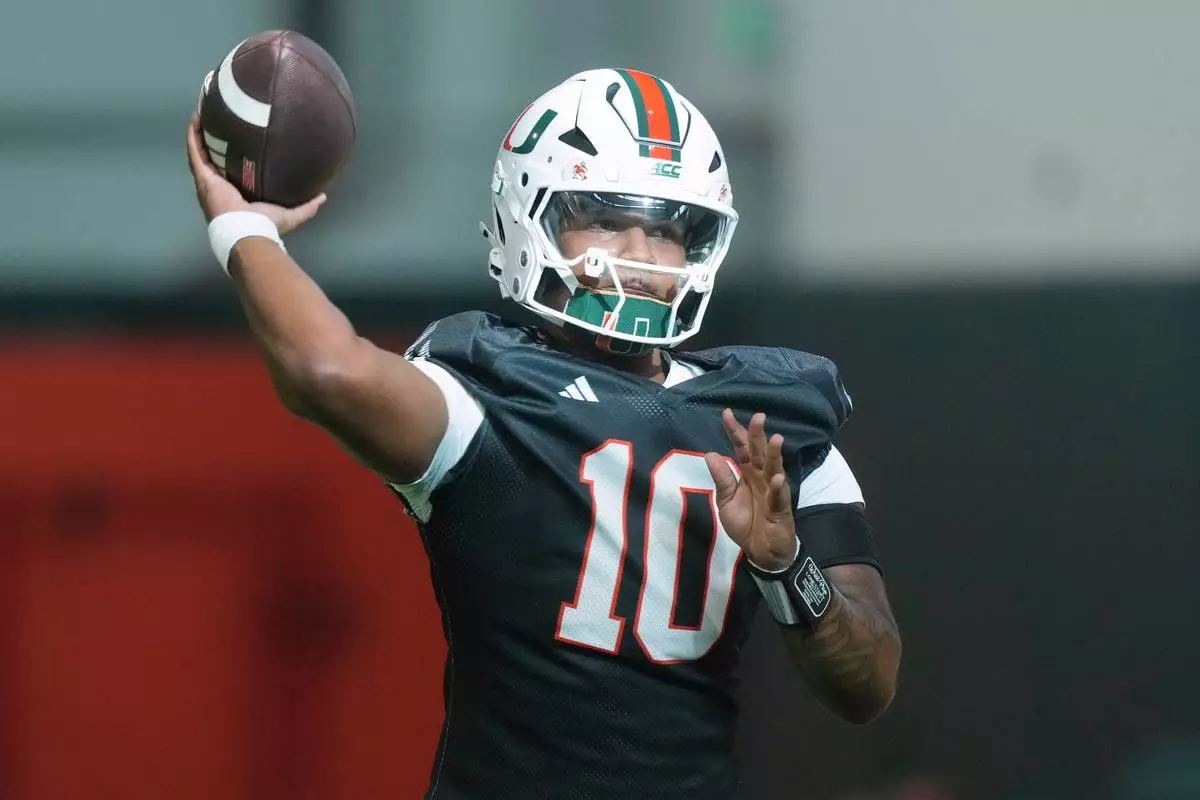
FILE - Miami quarterback Darian Mensah (10) throws a pass during a practice session at their training facility, Tuesday, Aug. 4, 2026, in Coral Gables, Fla. (AP Photo/Marta Lavandier, File)
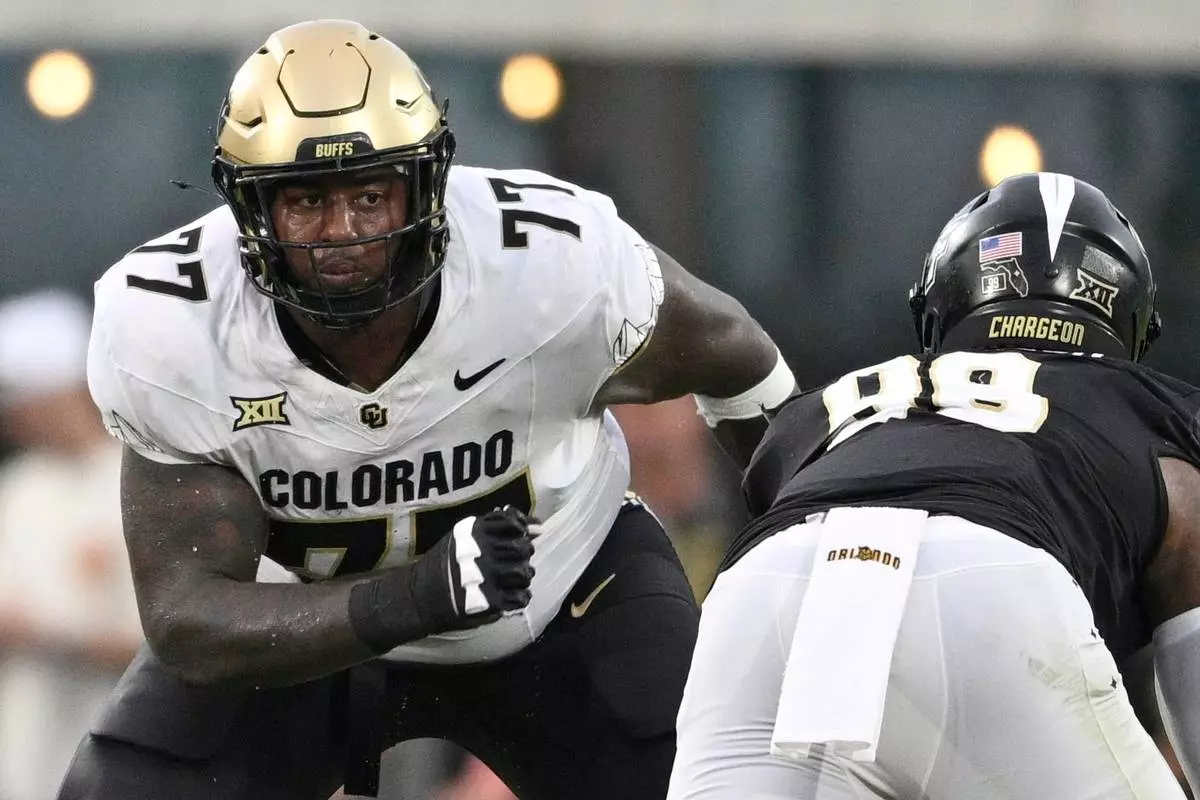
FILE - Colorado offensive tackle Jordan Seaton (77) sets up to block against Central Florida defensive end Jamaal Johnson (99) during the second half of an NCAA college football game, Saturday, Sept. 28, 2024, in Orlando, Fla. (AP Photo/Phelan M. Ebenhack, File)
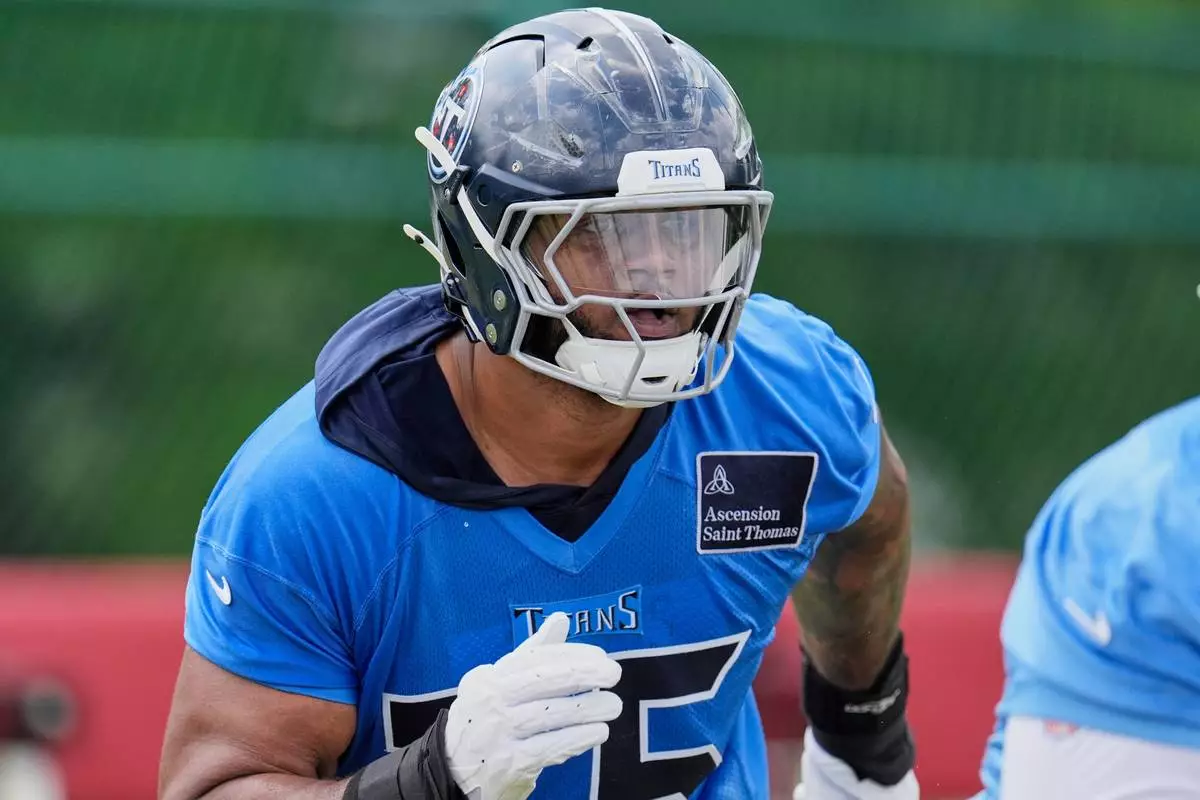
FILE - Tennessee Titans offensive tackle Dan Moore Jr. (75) runs through a drill during an NFL football practice Tuesday, June 3, 2025, in Nashville, Tenn. (AP Photo/George Walker IV, File)