Skip to Content Facebook Feature Image

Read our big scoop: Ice-cream cones, the ingenious invention of American immigrants

ENT

Read our big scoop: Ice-cream cones, the ingenious invention of American immigrants
ENT

ENT

Read our big scoop: Ice-cream cones, the ingenious invention of American immigrants

2026-08-20 02:46 Last Updated At:11:46

DETROIT (AP) — Read this quickly, before it melts.

Ice cream was a rare and expensive treat for centuries because of the difficulty of storing ice. In the summer of 1790, President George Washington spent $200 on ice cream, the equivalent of $7,259 today, according to the International Dairy Foods Association.

By the 1800s, inventions like mechanical refrigeration had made ice cream cheaper and more accessible. But America’s pushcart vendors needed a way to serve ice cream to customers.

Enter “penny licks.” Customers would pay a penny for a scoop of ice cream served in a thick glass, which they would lick clean and hand back to the vendor. The glass — sometimes rinsed, sometimes not — was then filled for the next customer. But vendors were frustrated by broken glass and cities were concerned about the spread of disease. London banned penny licks in 1898.

Italian immigrants came to the rescue. In 1902, Antonio Valvona, an ice-cream maker living in Manchester, England, was granted a U.S. patent for a metal mold that could form edible waffle-like cups. He quickly started selling the cups on both sides of the Atlantic.

The following year, Italo Marchiony, an ice cream vendor in New York, was granted a patent for a similar device. Marchiony went on to develop the ice-cream sandwich.

But it was the 1904 St. Louis World’s Fair that gave the ice-cream cone its now-familiar shape and vaulted it to popularity.

Several concessionaires at the fair have been touted as the inventors of the ice-cream cone. Joy Baking Group, founded in 1918 and currently making 2 billion cones a year, credits Ernest Hamwi, a 20-year-old Syrian immigrant.

Hamwi was selling zalabiyeh – a crisp, fried pastry – in a booth next to Albert Aboussie, a Lebanese-born ice cream vendor. When Aboussie ran out of paper cups, Hamwi began rolling his pastries into cones dubbed “cornucopias.” They were an instant hit.

By 1910, “cornucopia” had been simplified to “cone,” and Hamwi founded the Missouri Cone Co.

Cone technology quickly advanced, with machines replacing hand-rolling. For those who wanted a lighter texture, the cake cone arrived in the early 1940s — around the time Dairy Queen and Baskin-Robbins emerged.

Increasingly health-conscious Americans eat less ice cream than they used to. In 1984, the average American consumed 17.8 pounds of regular ice cream each year, according to the U.S. Department of Agriculture. By 2024, that had fallen to 12 pounds.

But as anyone from George Washington to Ben & Jerry could tell you, on a hot summer night it’s a treat that’s hard to beat.

Part of a recurring series, “American Objects,” marking the 250th anniversary of the United States. For more American objects, click here. For more stories on the anniversary, click here.

FILE - A youngster eats an ice cream cone in front of the Ben & Jerry's ice cream shop in Montpelier, Vt., April 25, 2006. (AP Photo/Toby Talbot, File)

FILE - A youngster eats an ice cream cone in front of the Ben & Jerry's ice cream shop in Montpelier, Vt., April 25, 2006. (AP Photo/Toby Talbot, File)

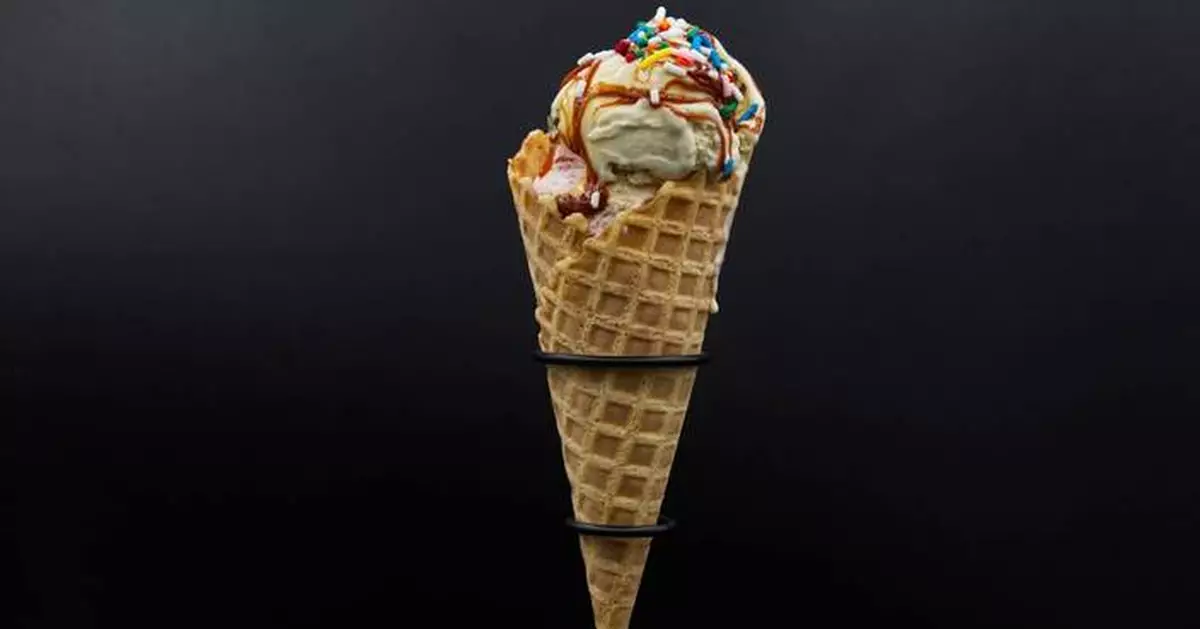
Ice cream on a waffle cone begins to melt as it is displayed in Phoenix, Wednesday, Aug. 19, 2026. (AP Photo/Dario Lopez-Mills)

Ice cream on a waffle cone begins to melt as it is displayed in Phoenix, Wednesday, Aug. 19, 2026. (AP Photo/Dario Lopez-Mills)

Ice cream on a waffle cone is displayed in Phoenix, Wednesday, Aug. 19, 2026. (AP Photo/Dario Lopez-Mills)

Ice cream on a waffle cone is displayed in Phoenix, Wednesday, Aug. 19, 2026. (AP Photo/Dario Lopez-Mills)
TOKYO (AP) — Four people doing weed control work on a railway track in Japan died after being hit by an express train as it entered a station while they were still working there on Thursday, officials said.

The accident occurred at Shin-Kanuma Station, north of Tokyo, on the Tobu Nikko Line, and involved the Tokyo-bound Spacia express train, the Tochigi prefectural police said.

The four — three workers and a supervisor — were rushed to a hospital but later pronounced dead, according to police and train operator Tobu Railway Co.

Six other people at the site — two other workers, three on lookout duty and an on-site supervisor — were safe, Tobu Railway said. They had been assigned to spray herbicide. About 50 passengers on the train were also uninjured.

Railway officials said it was unclear why the workers did not leave the site when the train was approaching, or what the lookout people were doing. They said they are cooperating with authorities investigating the cause of the accident.

Those on lookout duty are supposed to warn fellow workers of an approaching train by waving a flag, using a whistle or a microphone. What happened Thursday before and during the accident was still under investigation, Tobu officials said.

Fatal train accidents are rare in Japan, which has a reputation for safe and punctual transportation.

Takao Suzuki, head of Tobu's railway business division, apologized for the fatal accident. “We take this severe accident seriously and we will ensure preventive measures and never let this happen," he said.

Trains on the line were suspended for several hours, but services resumed later Thursday, officials said.

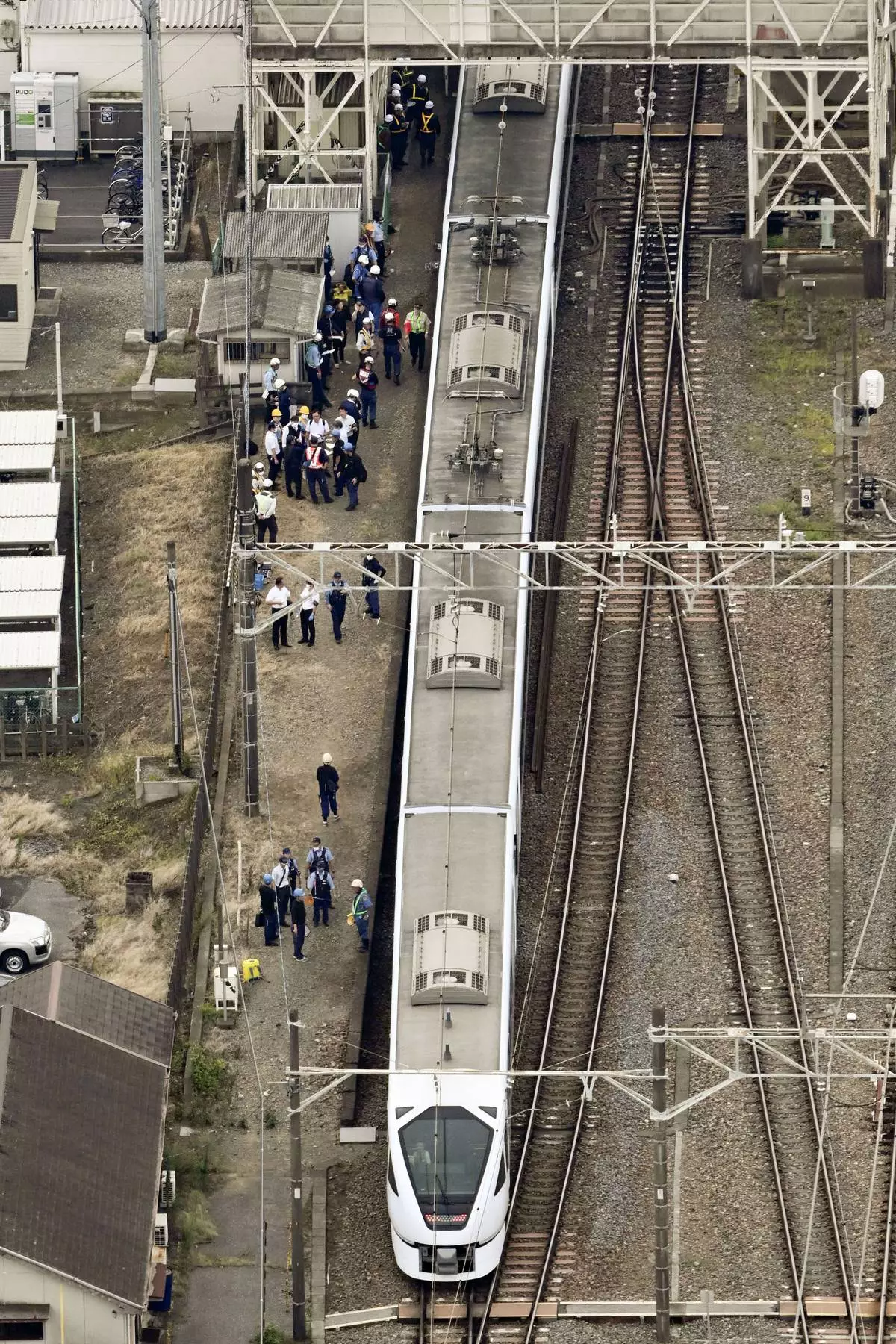
This aerial photo shows, the Spacia X express train stopped after coming into contact with four workers at Shin-Kanuma Station on the Tobu Nikko Line in Kanuma, north of Tokyo, Thursday, Aug. 20, 2026. (Kyodo News via AP)

This aerial photo shows, the Spacia X express train stopped after coming into contact with four workers at Shin-Kanuma Station on the Tobu Nikko Line in Kanuma, north of Tokyo, Thursday, Aug. 20, 2026. (Kyodo News via AP)

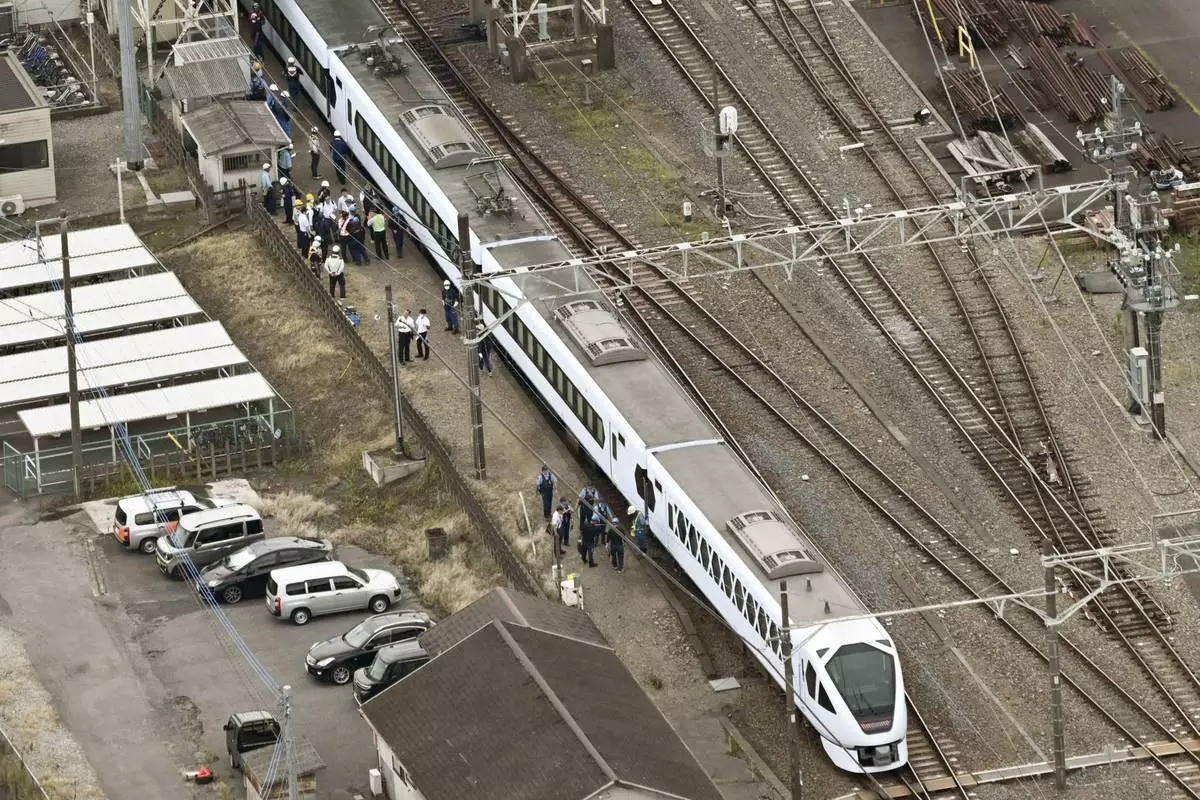
This aerial photo shows, the Spacia X express train stopped after coming into contact with four workers at Shin-Kanuma Station on the Tobu Nikko Line in Kanuma, north of Tokyo, Thursday, Aug. 20, 2026. (Kyodo News via AP)

This aerial photo shows, the Spacia X express train stopped after coming into contact with four workers at Shin-Kanuma Station on the Tobu Nikko Line in Kanuma, north of Tokyo, Thursday, Aug. 20, 2026. (Kyodo News via AP)

Recommended Articles