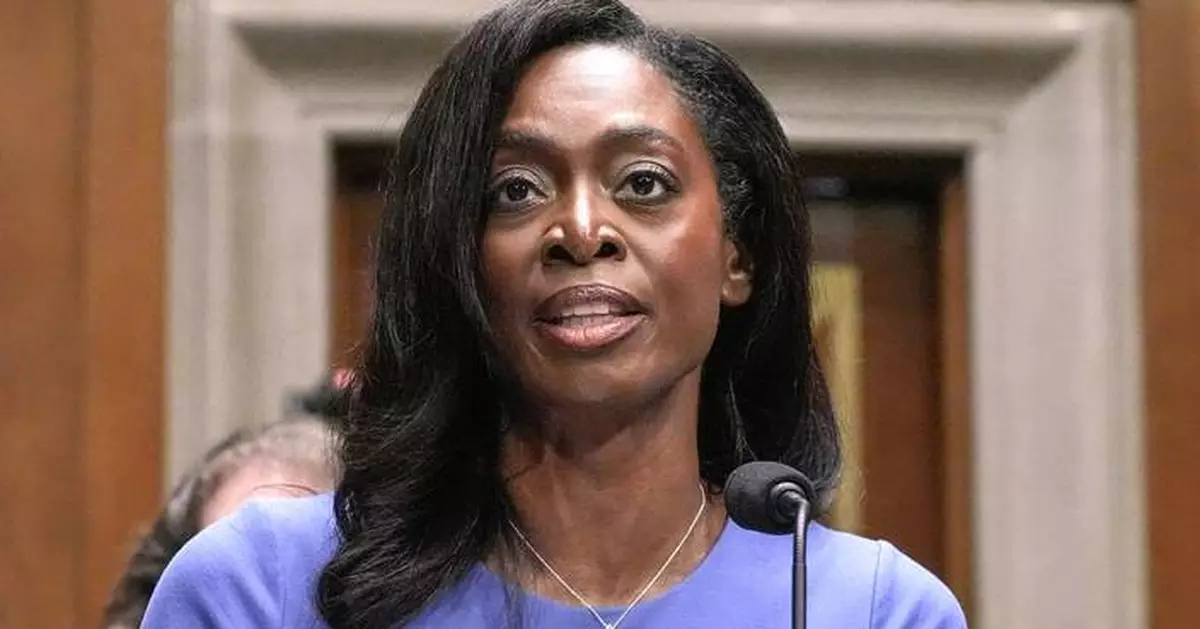
NEW YORK (AP) — In her first large staff meeting, the new director of the Centers for Disease Control and Prevention promised Wednesday to advocate for the agency while acknowledging that congressionally funded programs lacked staff and employees were feeling burned out.
Dr. Erica Schwartz also said she wouldn’t hesitate to disagree with U.S. Health Secretary Robert F. Kennedy Jr. if necessary — but said she wouldn’t do so publicly.
Schwartz started at the head of the Atlanta-based federal agency last week, taking the reins from a series of temporary directors. She spoke to CDC employees Wednesday at her first “all hands” staff meeting. The Associated Press heard a recording of the meeting.
Schwartz mentioned an AP story this week about CDC programs that have congressional appropriations but functionally are dead or nearly dead because the CDC staffers who did the work were laid off by President Donald Trump’s administration or remain on leave.
She did not say exactly what she will do about these “zombie" programs and about staffers who feel exhausted and overloaded, but said she will meet with CDC staffers to learn more about the situation and what can be done.
“The good news is, I’m here,” she said. “I’m Week 1 of being here, and now I can certainly be able to advocate for the CDC. I think when you have (had) that leadership vacuum, it’s, you know, it’s hard to get that advocacy.”
Schwartz previously served in uniformed government jobs with the U.S. Coast Guard and the U.S. Public Health Service. When she disagrees with other leaders she does so in private, “because that’s just part of the uniformed service person in me,” she said. She said she would continue to do so, but “not in front of the media.”
She also promised to build public trust in the agency through “radical transparency, scientific rigor and honest communications,” echoing language used by Kennedy.
Schwartz is the 22nd leader of the CDC, which is charged with protecting Americans from preventable health threats. In her talk Wednesday, she acknowledged the challenges agency employees have faced.
Largely due to layoffs and resignations, the agency has lost 3,000-plus employees, more than one-quarter of its workforce. Morale has plummeted as a succession of mostly temporary leaders has come and gone. The front office has been staffed by political appointees with little or no training in medicine or public health.
Kennedy, a leading voice in the anti-vaccine movement, took several steps that ran counter to CDC research and recommendations, including disbanding an expert advisory committee and appointing his own panel that included several vaccine skeptics.
CDC staffers asked questions Wednesday, including one about Trump's executive order calling for revamped childhood vaccine recommendations that promote his long-held but discredited theory that childhood shots should be spaced out into separate medical visits.
Schwartz said a task force on childhood vaccine safety is being established and she is on the panel. It has not met yet, she said. The panel has been given 90 days to report to Trump, she added.
Some current and former CDC employees said Schwartz appeared to be earnest, but want to see what she does.
The National Public Health Coalition, an organization of former and current CDC workers, issued a statement after the meeting.
“CDC staff and the American people deserve a strong, independent leader who will follow the science, defend public health expertise and put the health and safety of the public ahead of political pressure,” the statement said. “Dr. Schwartz has spoken about rebuilding trust. That trust must be earned through action."
The Associated Press Health and Science Department receives support from the Howard Hughes Medical Institute’s Department of Science Education and the Robert Wood Johnson Foundation. The AP is solely responsible for all content.
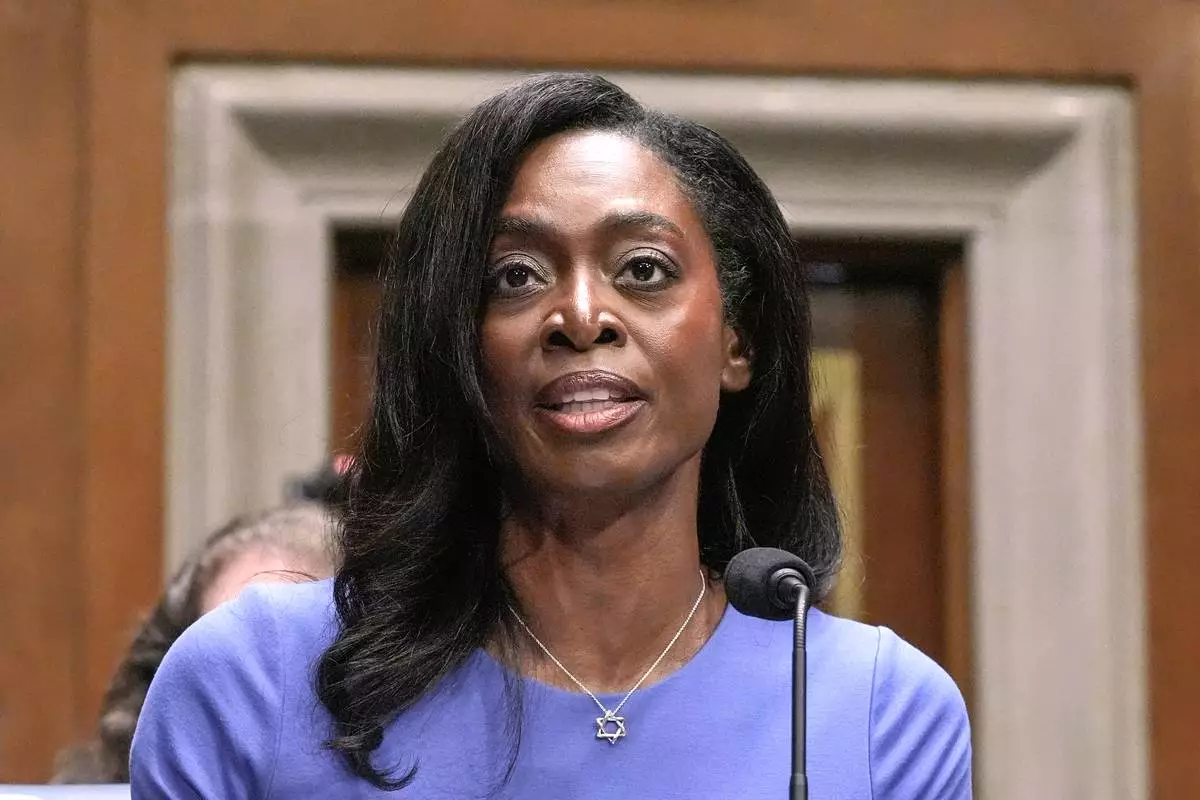
FILE - Dr. Erica Schwartz testifies during a Senate Health Education Labor and Pensions committee confirmation hearing to be the director of the Centers for Disease Control and Prevention on Capitol Hill, Wednesday, July 15, 2026, in Washington. (AP Photo/Mariam Zuhaib, File)
NEW YORK (AP) — U.S. stocks rose Wednesday after the U.S. Treasury Department announced a move that could ease pressure coming from the bond market. Strong profit reports for the spring from Estee Lauder, Target and other U.S. companies also helped support Wall Street.
The S&P 500 climbed 0.2% for its first gain in four days after setting its all-time high last week. The Dow Jones Industrial Average added 119 points, or 0.2%, and the Nasdaq composite ticked 0.2% higher.
Financial markets have come under growing strain as Treasury yields charged higher through the summer on worries about inflation, big government debts and other factors. That makes borrowing money more expensive for everyone, which slows the economy and undercuts prices for stocks and other investments.
But Treasury yields fell in the morning after the U.S. Treasury Department said it will at least double the size of its planned purchases of longer-term Treasurys from Sept. 9 through Nov. 4. The department said it’s doing so “to provide greater liquidity support in longer-dated nominal sectors where there is consistent strong sponsorship from market participants.”
These longer-term 10- and 30-year Treasurys are less beholden to the Federal Reserve, which can raise or lower very short-term interest rates for overnight loans. President Donald Trump has lobbied for the Fed to lower interest rates to help the economy.
Longer-term yields are set instead by investors in the bond market, who decide how much interest they need to get paid by the U.S. government in exchange for lending it money. And recently, they have been demanding more in interest to make up for the growing risks of high inflation, continued government deficits and other factors.
After the Treasury department’s announcement, the yield on the 10-year Treasury fell to 4.64% from 4.71% late Tuesday. It, though, remains well above its 3.97% level from before the war with Iran sent oil prices and worries about inflation much higher.
The 30-year Treasury yield, which recently touched its highest level since 2007, fell more sharply to 5.18% from 5.28% late Tuesday.
The relief could be short lived, some analysts warn. The amount of bonds the U.S. Treasury is proposing to repurchase is a fraction of the overall total.
“The boost to buybacks is also happening in a world of challenged Fed credibility,” according to strategists at BNP Paribas. Investors are questioning whether the Federal Reserve will raise the federal funds rate soon to match the tough talk its chairman, Kevin Warsh, has been offering on getting inflation down toward its 2% target.
“We do not believe buybacks will be enough to offset a continued loss in Fed credibility,” the BNP Paribas strategists wrote in a report, calling them “necessary, but not sufficient.”
On Wall Street, Moderna and Merck helped lead the market after they announced encouraging initial results from a study of a cancer vaccine they co-developed. The new drug showed better recurrence-free survival in melanoma patients who had a combination of it and Keytruda, a prescription immunotherapy drug made by Merck, than with Keytruda alone.
Moderna soared 177%, while Merck jumped 12.6%.
The continuing parade of U.S. companies reporting bigger profits for the spring than analysts expected, meanwhile, continues to support stocks.
Estee Lauder rallied 16.3% after CEO Stéphane de La Faverie said a key measure of its revenue growth accelerated for a fourth straight quarter. It reported growth in revenue around the world, with the strongest in mainland China.
The skin care company reported earnings per share of 39 cents, after excluding some restructuring and other one-time expenses. That’s up from just 9 cents a year earlier and was better than the 32 cents that analysts expected, according to FactSet.
Such growth is imperative because stock prices tend to follow the path of corporate profits over the long term. And strong growth helps allay criticism that stock prices shot too high in their runs to records.
Target rose 4.3%, Lowe’s added 2% and homebuilder Toll Brothers climbed 4% after they all reported better profits for the latest quarter than expected.
They helped offset drops for some Big Tech stocks, which restrained the overall market.
Broadcom fell 4.6% and was the heaviest weight on the S&P 500. It and other winners of the artificial-intelligence boom have been swinging sharply through the summer on worries that their stocks may have shot too high and that the AI frenzy may not be sustainable if it doesn’t produce big-enough profits.
All told, the S&P 500 rose 16.22 points to 7,707.98. The Dow Jones Industrial Average climbed 119.65 to 53,463.05, and the Nasdaq composite added 41.38 to 26,331.09.
In stock markets abroad, indexes were mostly lower in Asia and mixed in Europe.
Tokyo’s Nikkei 225 sank 3.2%. South Korea’s Kospi, which has been home to some of the world’s sharpest swings because of its heavy reliance on AI stocks, slumped 5.8%.
AP Writers Michelle Chapman, Chan Ho-him, Mike Stobbe and Elaine Kurtenbach contributed to this report.
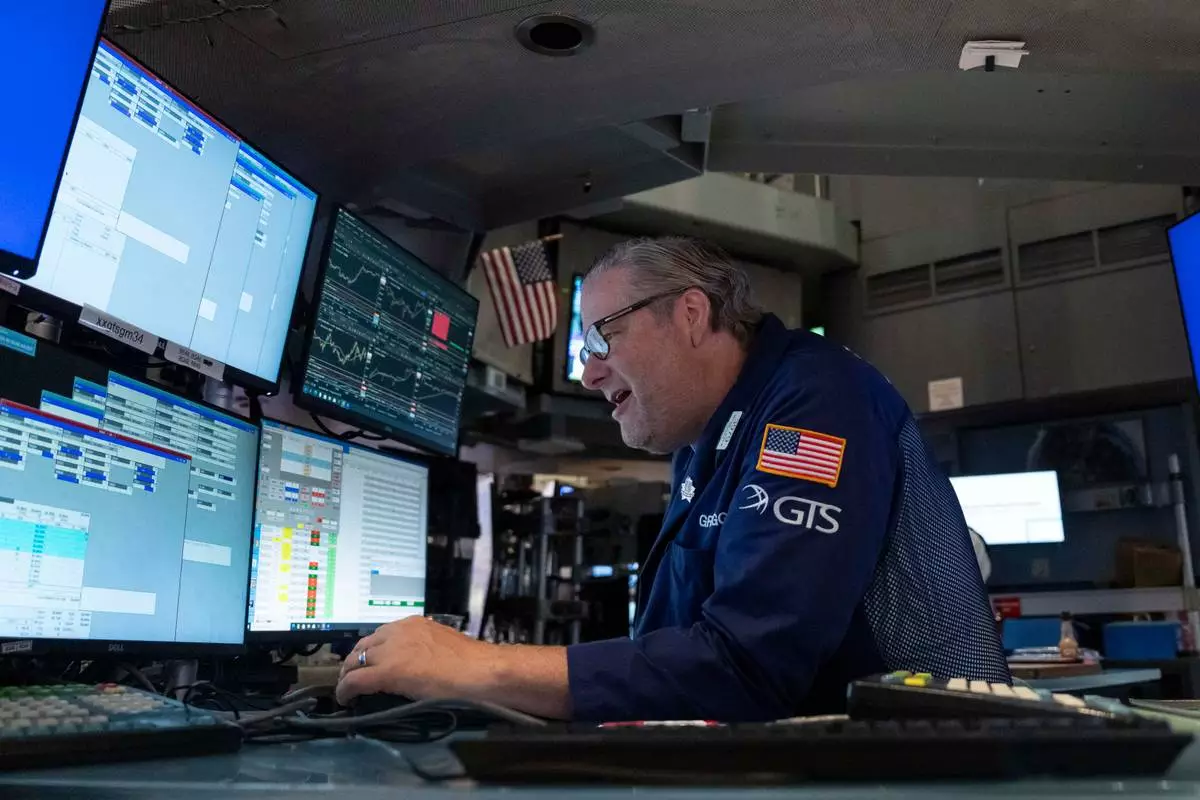
Specialist Gregg Maloney works on the floor of the New York Stock Exchange, Monday, Aug. 17, 2026, in New York. (AP Photo/Yuki Iwamura)
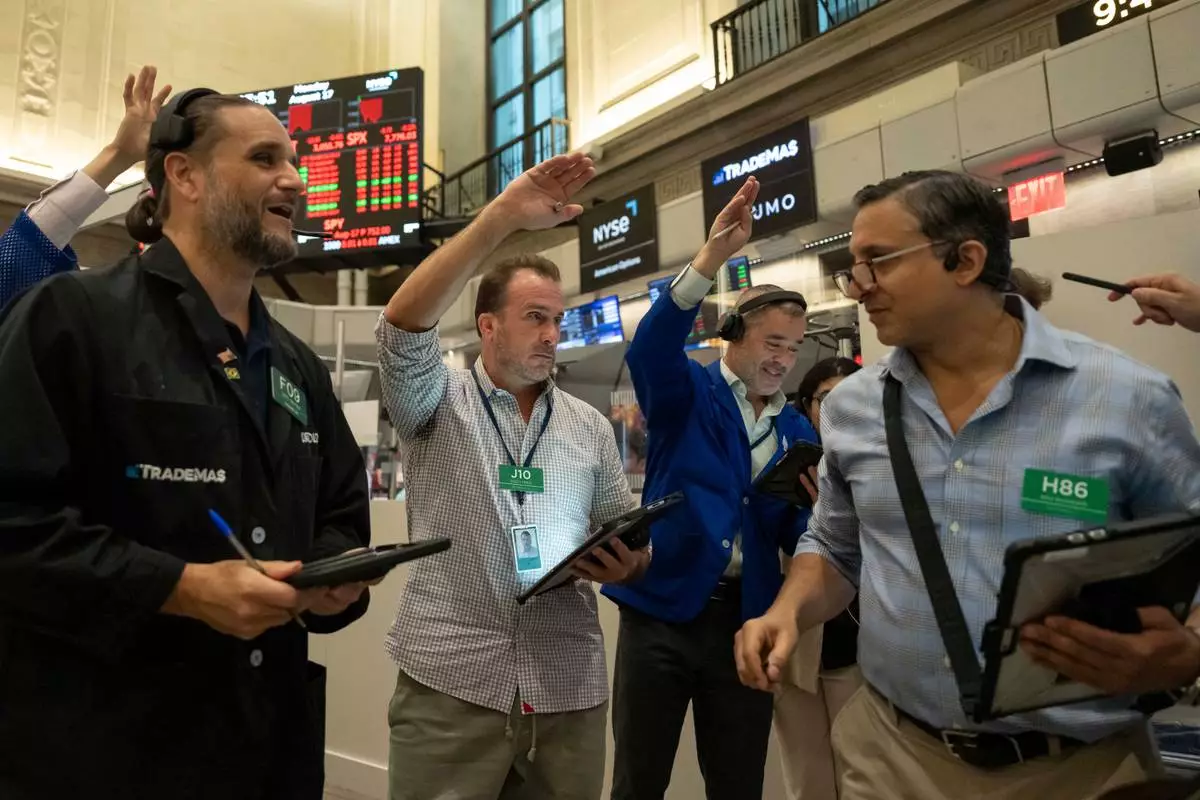
Options traders Chris Dattolo, Scott Frinzi, Justin Kanda, and Ravi Bhandari, left to right, work on the floor of the New York Stock Exchange, Monday, Aug. 17, 2026, in New York. (AP Photo/Yuki Iwamura)
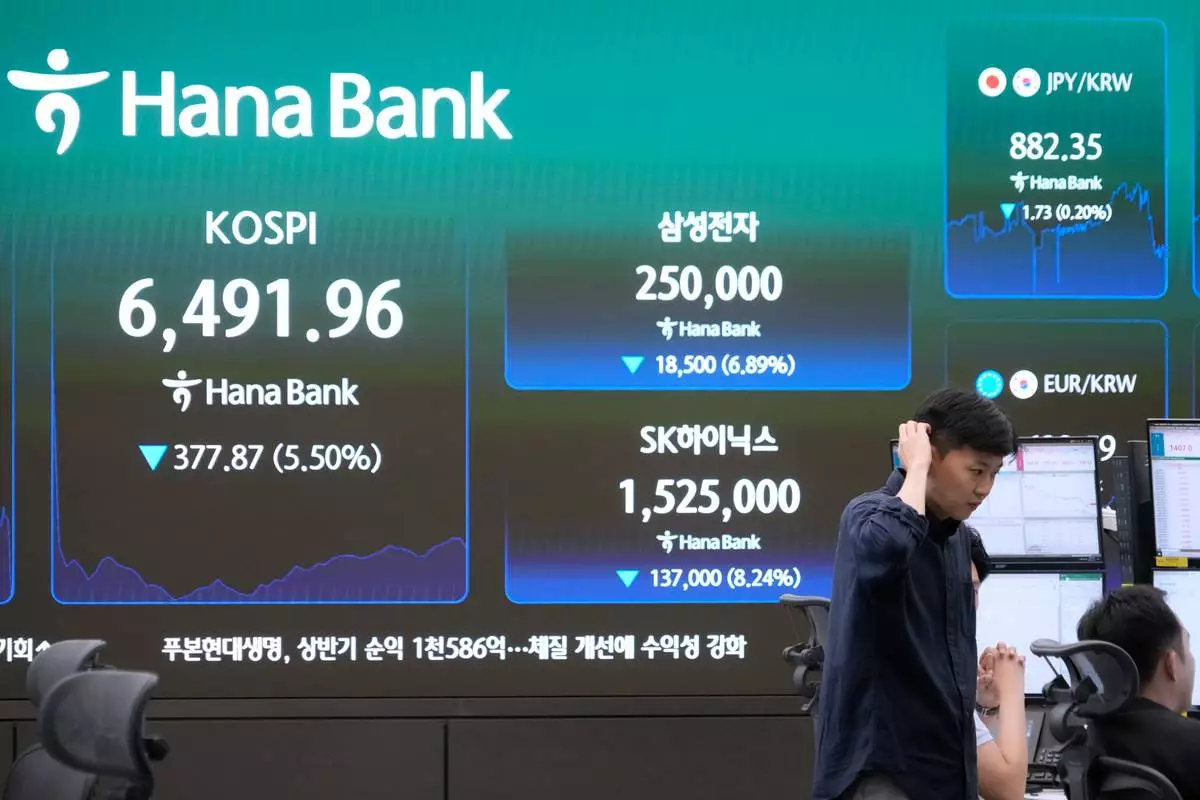
Currency traders work near a screen showing the Korea Composite Stock Price Index (KOSPI), SK Hynix and Samsung Electronics Co. stock price at the foreign exchange dealing room of the Hana Bank headquarters in Seoul, South Korea, Wednesday, Aug. 19, 2026. (AP Photo/Ahn Young-joon)
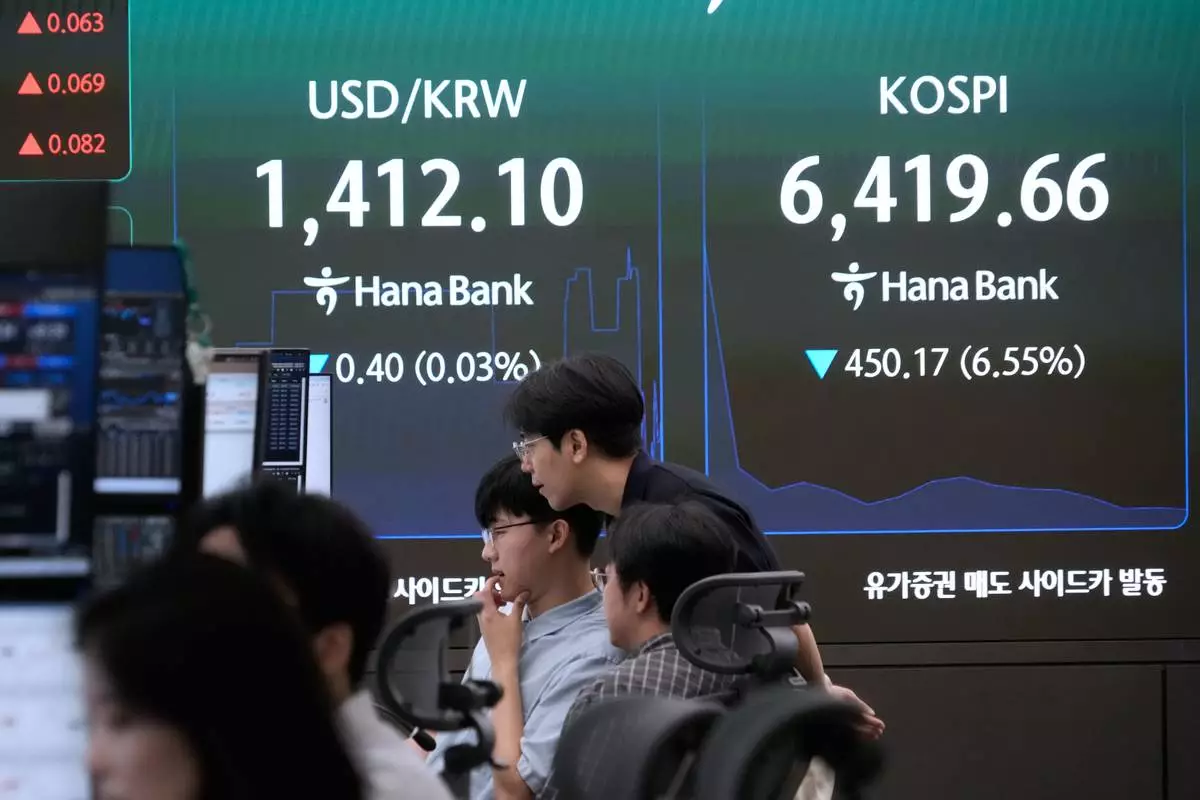
Currency traders watch monitors near a screen showing the Korea Composite Stock Price Index (KOSPI) and the foreign exchange rate between U.S. dollar and South Korean won at the foreign exchange dealing room of the Hana Bank headquarters in Seoul, South Korea, Wednesday, Aug. 19, 2026. (AP Photo/Ahn Young-joon)
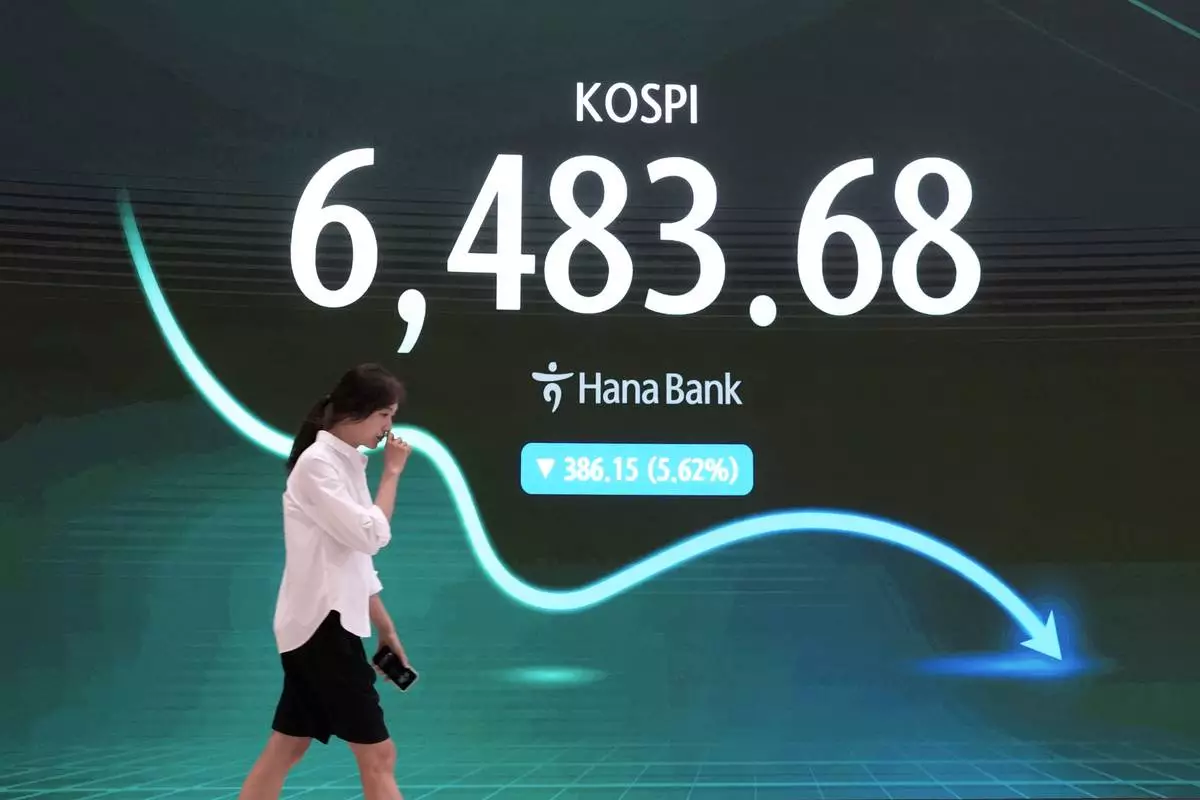
A currency trader passes by a screen showing the Korea Composite Stock Price Index (KOSPI) at the foreign exchange dealing room of the Hana Bank headquarters in Seoul, South Korea, Wednesday, Aug. 19, 2026. (AP Photo/Ahn Young-joon)