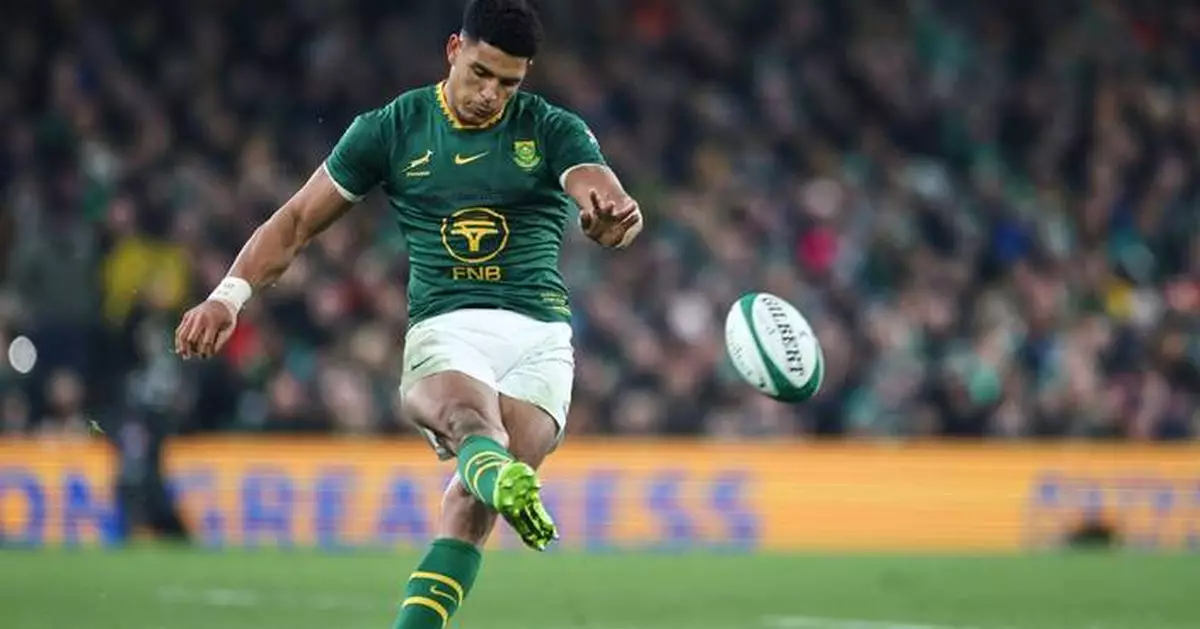
Chances are high the South Africa-New Zealand rugby test series starting on Saturday will be decided by a goalkicker.
Fortunately for both teams, they have some sharpshooters. The Springboks can roll out Handre Pollard, Sacha Feinberg-Mngomezulu and Mannie Libbok. The All Blacks can put up Ruben Love, Damian McKenzie and Beauden Barrett. All have made vital goalkicks.
But in the history of series between the teams dating to 1921, the winning goalkicker hasn't always been the obvious one. Here's some standouts.
Morkel was one of two in the Springboks tour party who had test experience from before World War I. Morkel starred on the 1912-13 tour of Europe at fullback and returned for the first-ever series against New Zealand a little slower at age 32 but still a threat. New Zealand won the first test 13-5 at Carisbrook and South Africa had to win the second at Eden Park. They were 5-5 when Morkel hit a great drop goal, then worth four points, in the 68th minute. He'd taken a clearance kick, ran a few yards and let fly. South Africa won 9-5 and it was the last points of the series. The third test in Wellington, dubbed ‘The Rugby Championship of the World,’ was played in driving rain and mud and finished 0-0. Morkel was acclaimed for saving the Boks with immaculate line kicks. The series was drawn.
Geffin was taken prisoner by the Germans in World War II and, in camp, learned under 1924 Bok Bill Payn how to goalkick in bare feet. The tighthead prop debuted in the 1949 series. In the first test in Cape Town, Jack van der Schyff missed three shots and Geffin took over. His world record five penalties beat New Zealand 15-11 from 11-0 down. South Africa won the second test at Ellis Park and the series was clinched in the third test in Durban by 9-3 with three more Geffin penalties. Swept 4-0, New Zealand didn't have a kicker of the quality of Geffin, who contributed 32 of South Africa's 47 points and was forever known as ‘The Boot.’ One of his boots is in the New Zealand Rugby Museum.
Also nicknamed ‘The Boot.’ Clarke was originally considered cumbersome and injury prone. But the burly fullback with the prodigious right boot was fit in time for the visit by the 1956 Springboks. With the series at 1-1, New Zealand demanded changes and Clarke debuted in the third test in Christchurch. His third-minute penalty immediately put the Boks on notice. He slotted three shots, New Zealand won 17-10 and the Evening Post newspaper wrote: “Clarke made as remarkably successful a debut as any fullback in history can ever have done.” Two more 40-meter plus penalties in the Eden Park decider helped New Zealand win a series from the Boks for the first time. Clarke played in South Africa's 75th jubilee matches in 1964 and moved there in 1977.
The 1970 series was to be decided in the fourth and final test at Ellis Park. South Africa led 2-1. They took first use of the wind and McCallum, as he was all series, was radar-like as a place-kicker. The Boks reached halftime 14-3 ahead moments after a 65-meter penalty by McCallum. He hadn't expected to nail it. Captain Dawie de Villiers told him to kick for goal only so the forwards could have a breather. McCallum's 14 points underpinned a 20-17 win that handed New Zealand its first series loss anywhere in 10 years. “The man who beat us was the fullback Ian McCallum,” New Zealand great Colin Meads said. “I take my hat off to him. I can understand now how the Springboks felt about Don Clarke in 1956."
The slightly built Hewson's porous defense made his All Black status constantly criticized. He was booed in his home test debut but three months later he was still the fullback when the controversial 1981 series with the visiting Springboks reached its climax in the ‘flour bomb test.’ Eden Park was surrounded by barbed wire and riot police, and another anti-apartheid protester flying a Cessna was dropping flour bombs on the pitch. Hewson's frailties let the Springboks rally with three tries by Ray Mordt. The series appeared set to finish in a draw with the score 22-22 at 80 minutes. But referee Clive Norling kept penalizing the Springboks. The decisive penalty came in the 89th and Hewson hit the goalkick that won the match and series. “It just had to go over,” he said.
New Zealand led 1-0 and went to Pretoria to clinch a first-ever series win in South Africa and avoid a third-test decider at Ellis Park. The All Blacks led 24-11 but the Boks rallied to trail 24-23. The All Blacks earned a 40-meter penalty. Goalkicker Simon Culhane had just left injured and his replacement, Jon Preston, insisted he'd take the kick with his first touch of the ball. He made it. A Joel Stransky penalty cut the deficit to one again in the 73rd. The All Blacks got another penalty in their own half in the 75th. Preston delivered again. Zinzan Brooke added a dropped goal and the All Blacks secured history. “Thinking back, they were the biggest kicks of my career,” Preston said. The magnitude of the achievement hit home to the All Blacks when they reached the tunnel to the changing rooms and waiting with tears in his eyes was Don Clarke.
See AP’s full rugby coverage here
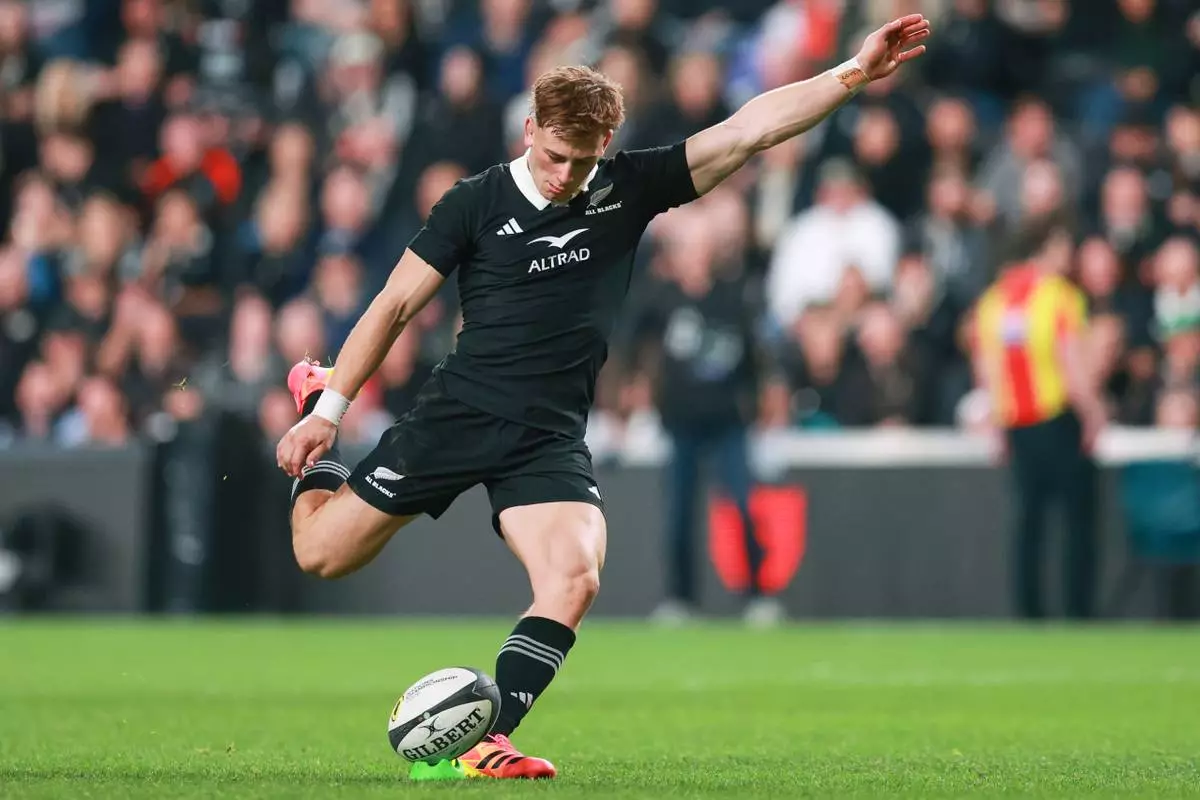
FILE - New Zealand's Ruben Love kicks a conversion during the Nations Championship rugby international between the All Blacks and France in Christchurch New Zealand, July 4, 2026. (Craig Butland/Photosport via AP, File)
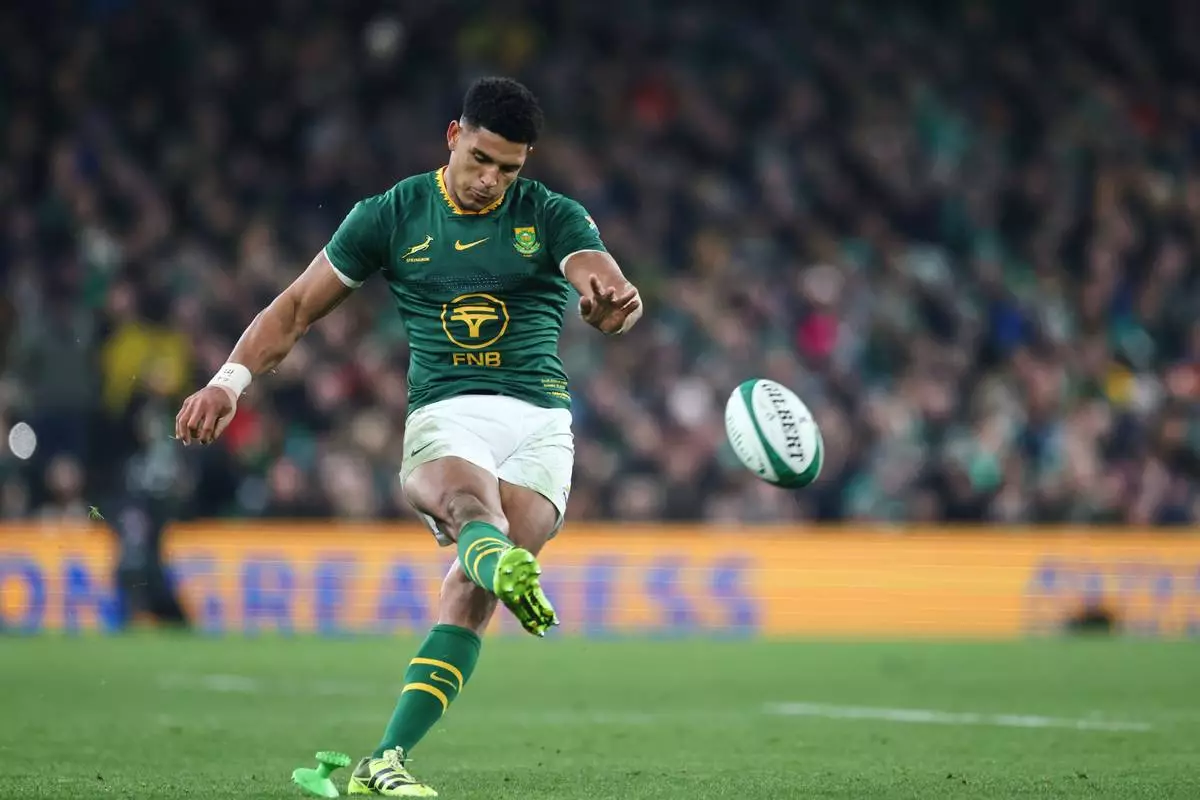
FILE - South Africa's Sacha Feinberg-Mngomezulu kicks a ball to score a conversion during the rugby union Nations Series match between Ireland and South Africa in Dublin, Nov. 22, 2025. (AP Photo/Peter Morrison, File)
SARAJEVO, Bosnia-Herzegovina (AP) — Polls opened Sunday morning in Bosnia for a general election in which most citizens of the multi-ethnic Balkan nation are focused on everyday problems, while some mainstream politicians are whipping up war-era tensions that have kept the country divided since its brutal 1992-95 conflict.
Around 3.4 million voters in Bosnia are choosing the three members of the country's multi-ethnic presidency, lawmakers for the national Parliament, and heads of institutions for the country's two entities: the Muslim-majority Federation of Bosnia and Herzegovina, and Republika Srpska, which is dominated by ethnic Serbs.
Bosnia has a complex web of governing institutions that were created by a U.S.-brokered peace agreement in 1995 in an effort to manage the ethnic divisions between Muslim Bosniaks, Orthodox Serbs and Catholic Croats that gave rise to the war.
On Sunday morning, Associated Press journalists reported seeing multiple polling places where voting could not begin on time due to difficulties with new digital voting technology, a measure introduced to address earlier concerns over vote tampering.
Taking center stage in the contest is a staunchly pro-Russian politician who, despite not appearing on the ballot, has dominated the campaign and inflamed divisions that have sparked fears of renewed instability.
Milorad Dodik, the separatist and nationalist former president of the Serb-majority Republika Srpska, has been banned from holding public office after being convicted of defying decisions by the international envoy overseeing the 1995 peace agreement.
Just back from a trip to Moscow where he met with Russian President Vladimir Putin, Dodik's party, the Alliance of Independent Social Democrats, is likely to win the election in Republika Srpska.
At his party's final election rally Friday night in Banja Luka, Republika Srpska's administrative capital, Dodik told supporters that Bosnia “is dead."
"It is an impossible country. It doesn’t make any sense,” Dodik said at the rally, which was also attended by the Russian ambassador to Bosnia and Herzegovina, Igor Khalabukov.
Dragan Bursac, an analyst, said despite Dodik not appearing on the ballot for the first time in nearly 30 years, he “is still in command. He is everywhere.”
“He is all over the media, not only in the entity of Republika Srpska, but in all of Bosnia and Herzegovina. It is obvious that these measures to ban him from political life are not working, and he is using them,” Bursac said.
While Bosnia has been peaceful in recent years, its politicians have kept alive the divisions between the country's Bosniaks, who are mainly Muslim, and its Serbs and Croats. Bosnian Serb leaders like Dodik have pushed for the separation of their entity from the rest of Bosnia, which has led to concerns among Western countries that tensions could once again spill over.
One of the poorest countries in Europe, Bosnia is still struggling to recover decades after the war that started in 1992 after Bosnia declared independence from the Serb-led former Yugoslavia and ethnic Serbs took up arms to carve out their own state and join Serbia.
The conflict killed more than 100,000 people and displaced millions.
Bosnia is formally seeking to join the European Union, but progress toward membership has been stalled despite EU efforts to encourage Bosnia's divided leaders to work together for reform.
Ahead of Election Day, Durak Miler, a resident of the Bosnian capital of Sarajevo, said governing politicians “just poison people when they talk.”
“We should change the old faces,” he said. “They have been governing for 35 years ... I think whoever comes next will work better for retired people and the poor.”
The country's wartime wounds were recently revived by a public homage in Serbia and among Bosnian Serbs to the wartime army commander Ratko Mladic, who died in late August while serving a life sentence for genocide and other war crimes.
Bosnian Serbs view Mladic as a hero despite his conviction by a U.N. court over the massacre of more than 8,000 Muslim men and boys in Srebrenica in 1995, and other atrocities.
Key Bosnian Serb officials attended the funeral service for Mladic in Belgrade that sparked harsh EU criticism and angered Bosniak politicians.
Authorities are for the first time using electronic identification of voters and ballot scanners to prevent irregularities or organized voter manipulation, which have cast doubt on the fairness of previous elections.
On Sunday, some voters in Banja Luka expressed concern that the new digital systems could confuse older voters. Republika Srpska's interior ministry said in a press release that of 1,957 polling stations in the entity, there had been delays at 201.
But voter Radomir Vukelic said the experience of casting his ballot “was great.”
"This is why I expect the results to be correct. You've got a scanner, you've got a paper, you've got it all,” he said.
Most of Bosnia's 75 political parties running in the election are organized along ethnic lines in the country's Serb-controlled Republika Srpska and the Bosniak-Croat Federation of Bosnia-Herzegovina. The two entities are bound together by the central presidency and Parliament.
The Bosniak nationalist Party of Democratic Action has focused its campaign on efforts to keep Bosnia united against Serb separatism. Bosnian Croats, too, largely support their ethnic parties, including the Bosnian branch of Croatia's ruling conservative Croatian Democratic Union.
Polls will close at 7 p.m. local time.
Many disillusioned citizens say politicians are using nationalism to avoid solving important problems such as poor living standards and an exodus of youth from the country.
Ivan Silic, from the southern town of Mostar, said ahead of the election: “I don’t see that anything is getting better, from the moment I started to vote.”
“We all know who lives well,” he said. "It is better for (politicians), and for the rest of us everything is the same.”
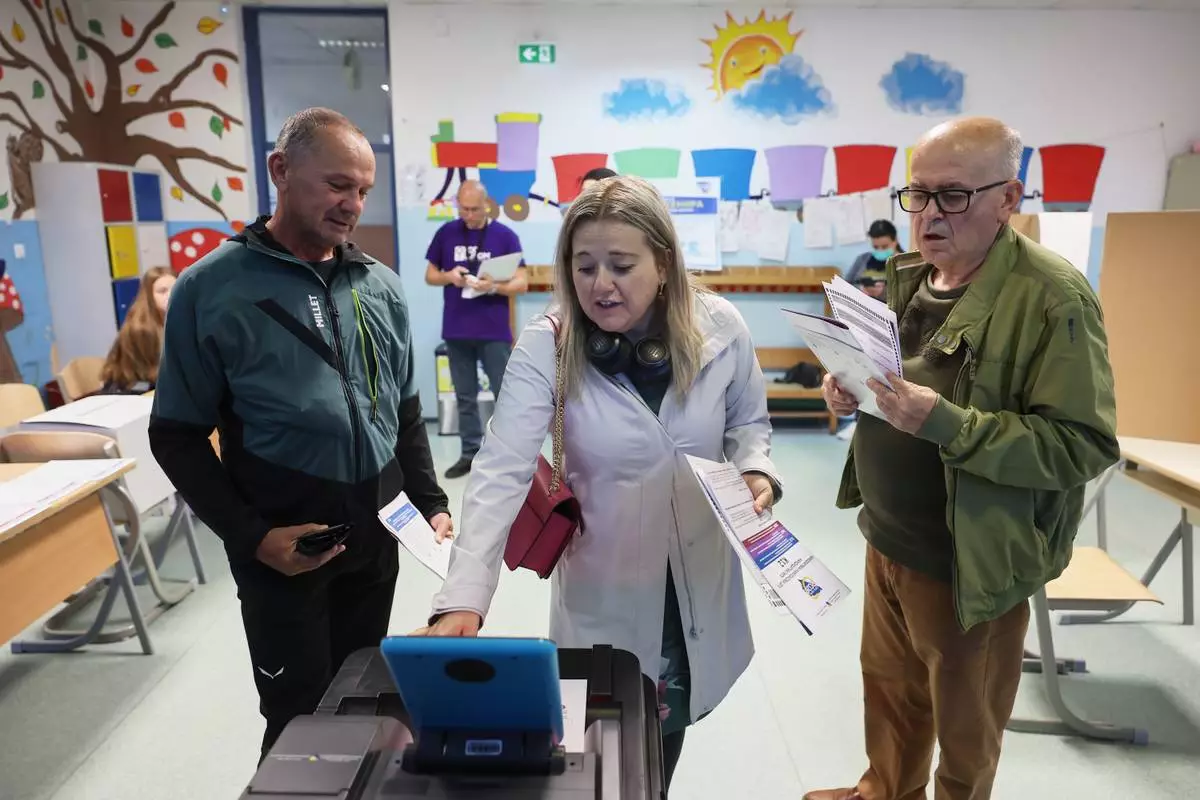
A woman places her ballot into an electronic ballot box during the general election in Sarajevo, Bosnia, Sunday, Oct. 4, 2026. (AP Photo/Armin Durgut)
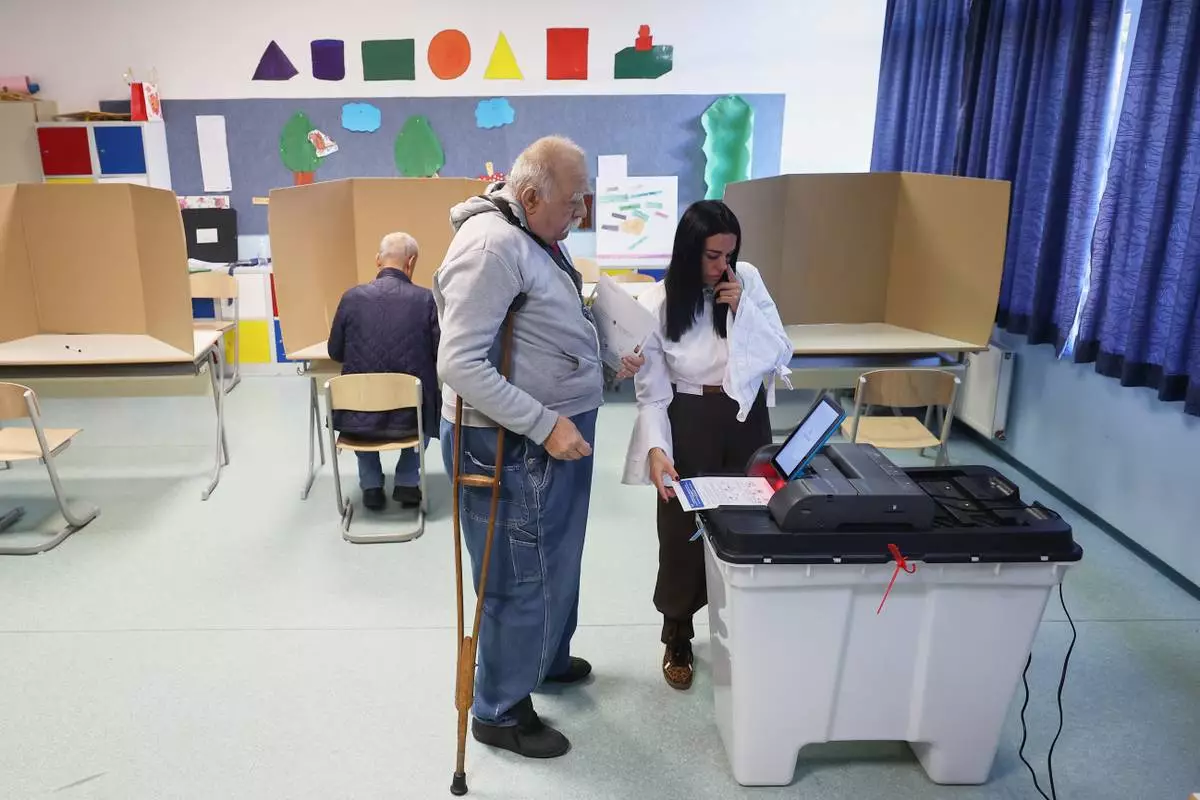
An elderly man is assisted by an official to place his ballot into an electronic ballot box during the general election in Sarajevo, Bosnia, Sunday, Oct. 4, 2026. (AP Photo/Armin Durgut)
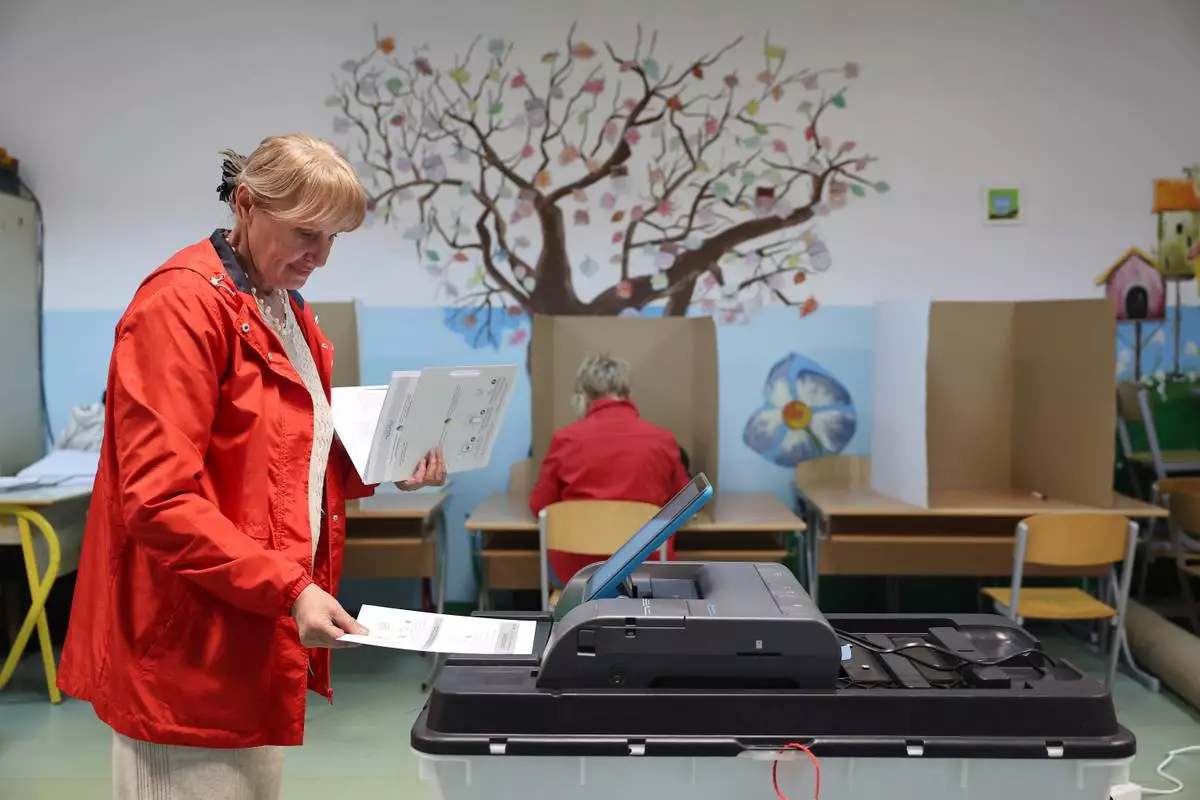
A woman places her ballot into an electronic ballot box during the general election in Sarajevo, Bosnia, Sunday, Oct. 4, 2026. (AP Photo/Armin Durgut)
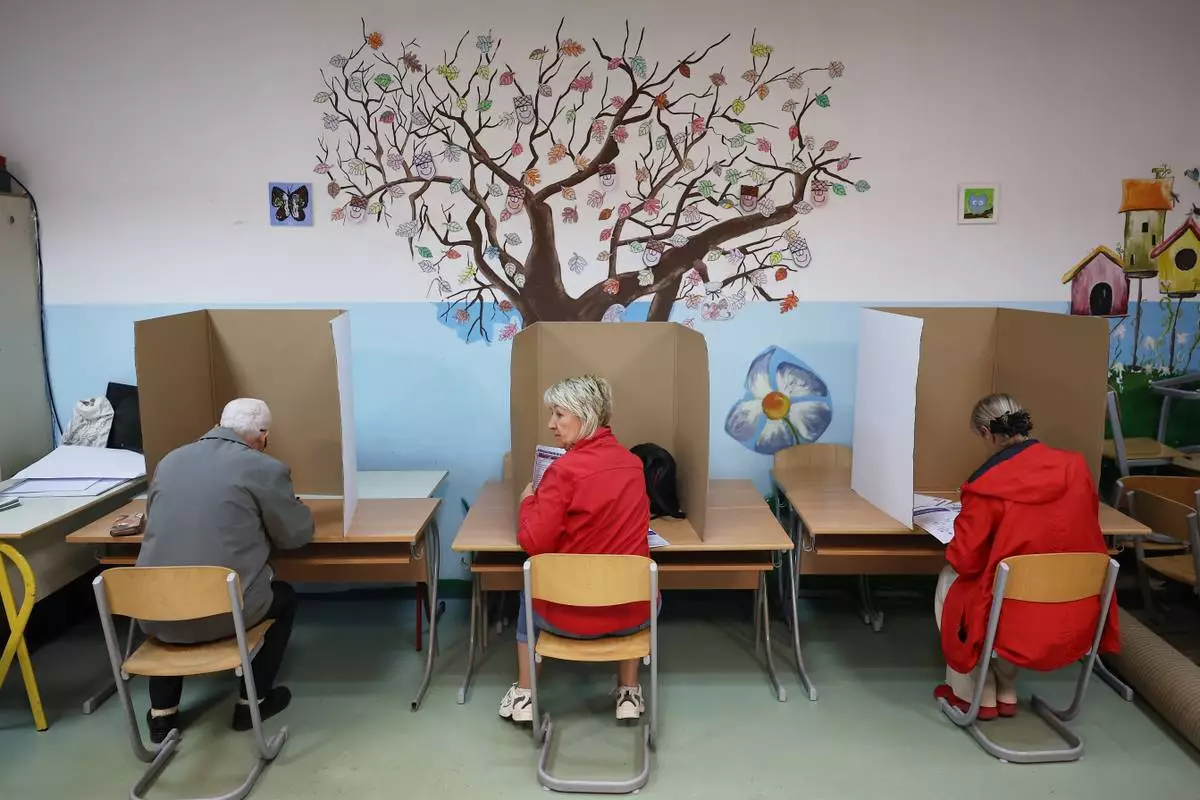
People cast their ballots during the general election in Sarajevo, Bosnia, Sunday, Oct. 4, 2026. (AP Photo/Armin Durgut)
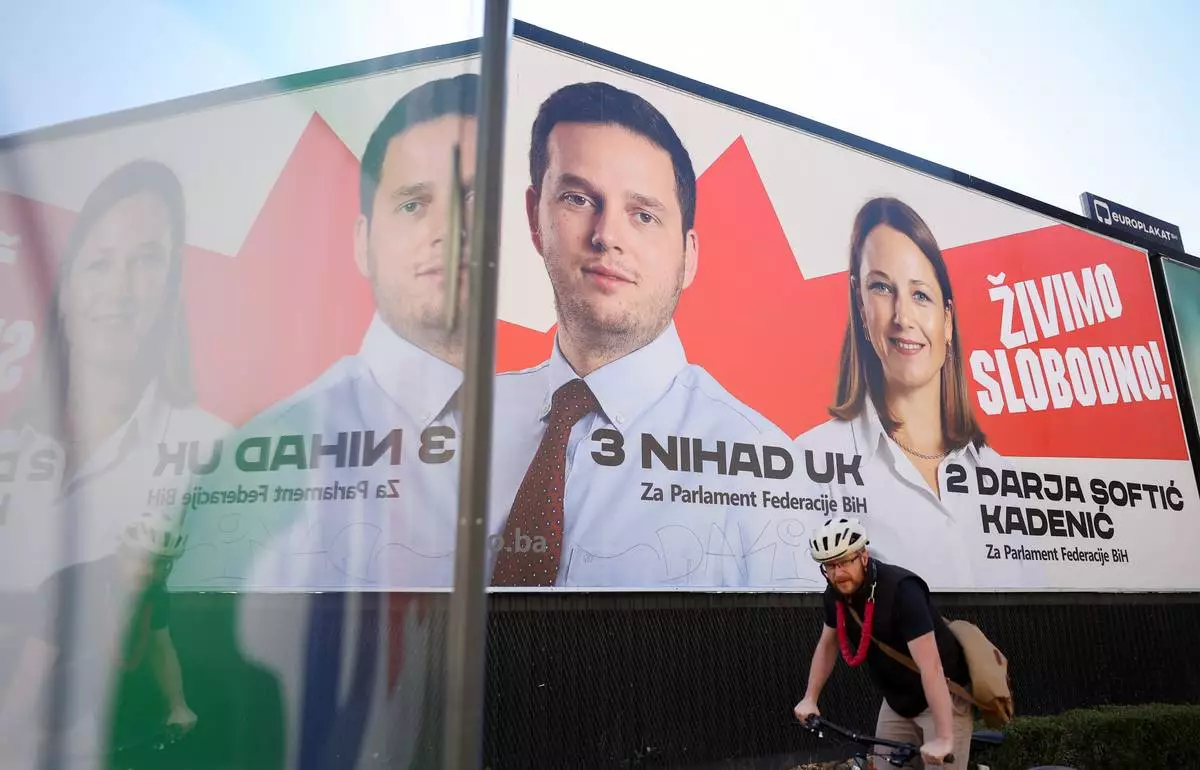
A man rides a bicycle beneath an election poster featuring Our Party (NS) candidates for the upcoming general elections in Sarajevo, Bosnia, on Sept. 29, 2026. (AP Photo/Armin Durgut)
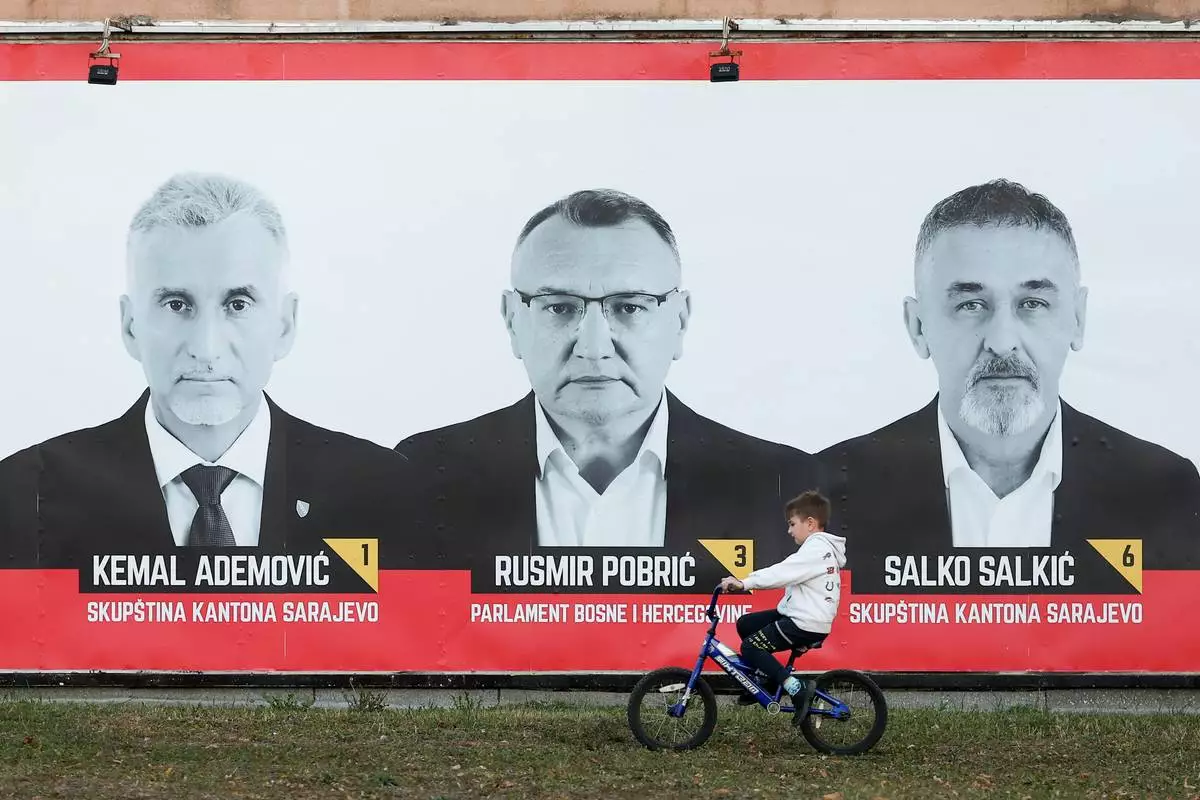
A boy rides a bicycle past an election poster featuring Red Lines (CL) candidates in the upcoming general elections in Sarajevo, Bosnia, on Sept. 30, 2026. (AP Photo/Armin Durgut)
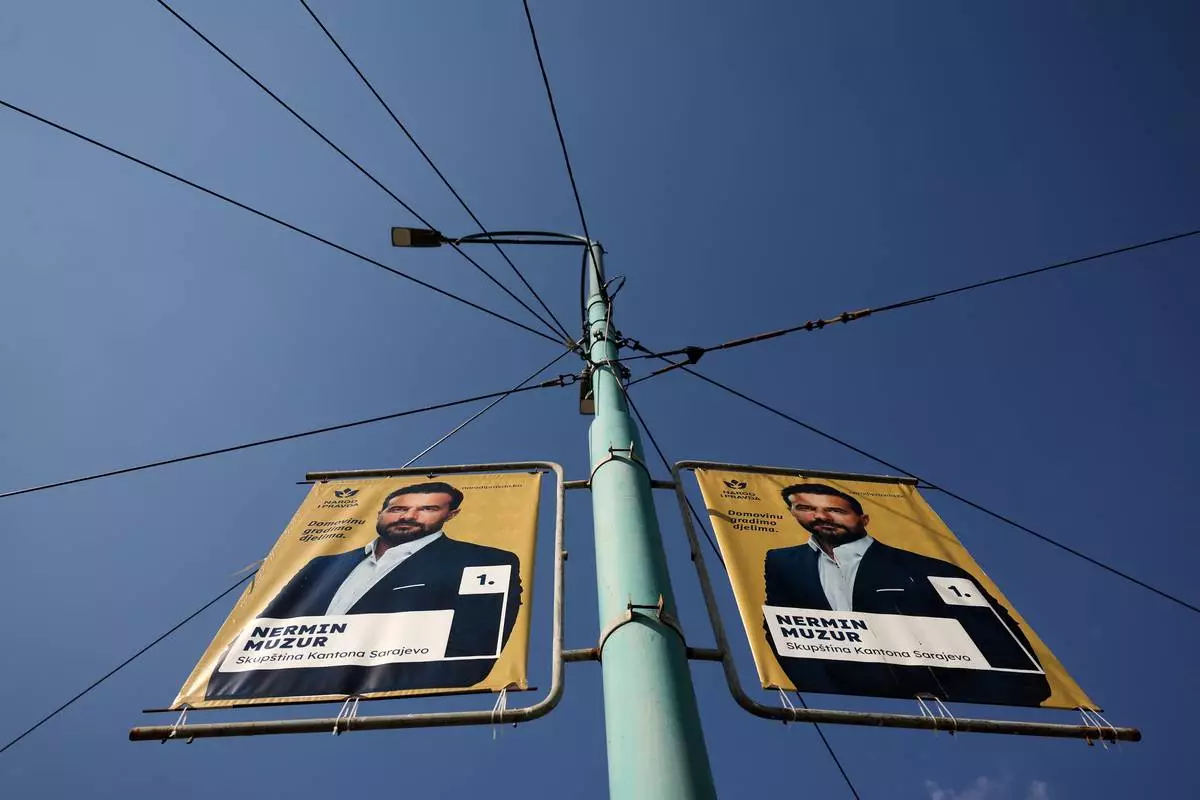
An election poster featuring Nermin Muzur, People and Justice Party (NiP) candidate, hangs from a pole ahead of the upcoming general elections in Sarajevo, Bosnia, on Sept. 29, 2026. (AP Photo/Armin Durgut)
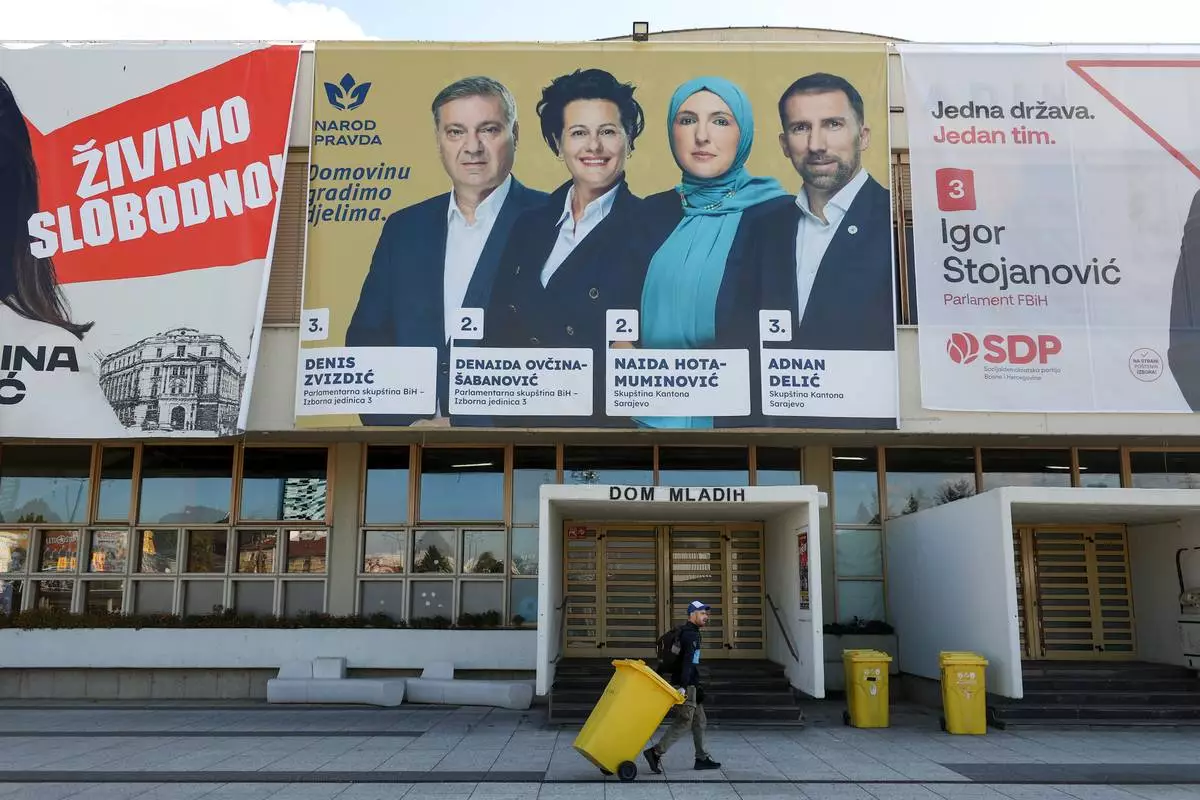
A man walks beneath an election poster featuring People and Justice Party (NiP) candidates for the upcoming general elections in Sarajevo, Bosnia, on Sept. 29, 2026. (AP Photo/Armin Durgut)
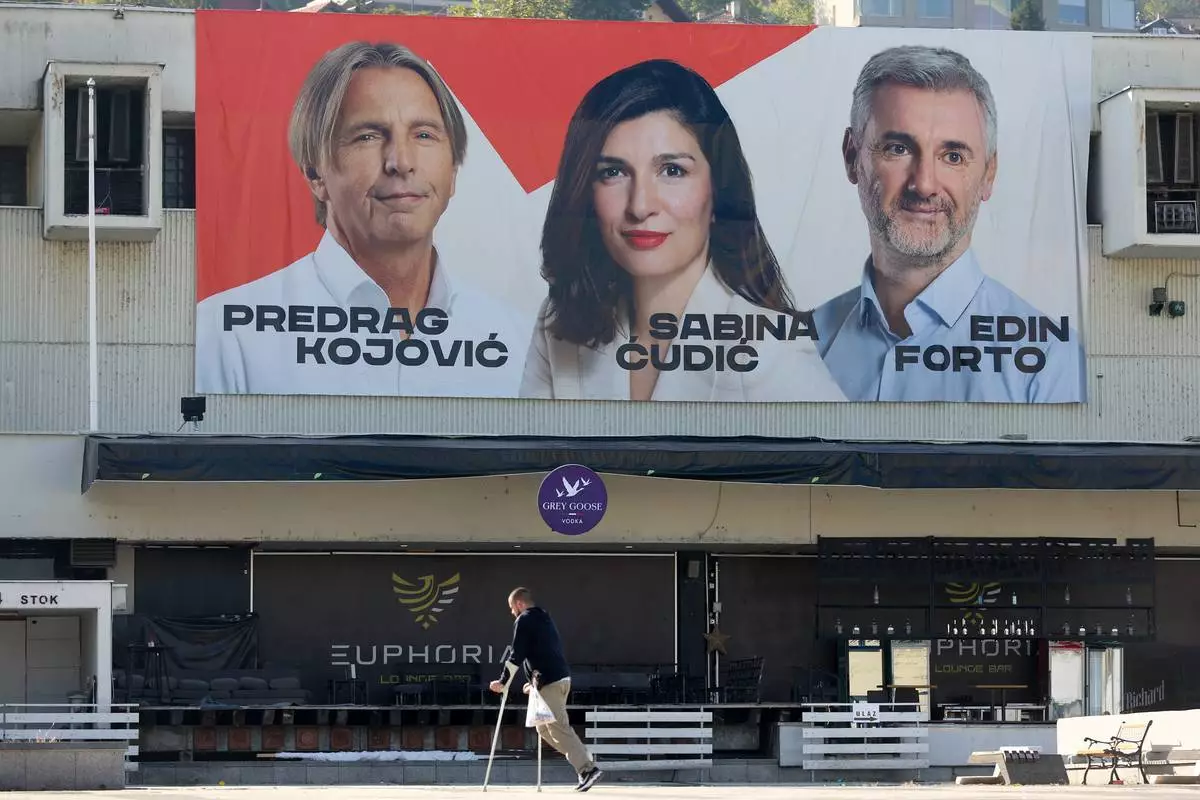
A man walks beneath an election poster featuring Our Party (NS) candidates for the upcoming general elections in Sarajevo, Bosnia, on Sept. 29, 2026. (AP Photo/Armin Durgut)