Skip to Content Facebook Feature Image

Bosnia votes as pro-Russian politician looms large over the race and ethnic tensions simmer

News

Bosnia votes as pro-Russian politician looms large over the race and ethnic tensions simmer
News

News

Bosnia votes as pro-Russian politician looms large over the race and ethnic tensions simmer

2026-10-04 13:06 Last Updated At:13:10

SARAJEVO, Bosnia-Herzegovina (AP) — Polls opened Sunday morning in Bosnia for a general election in which most citizens of the multi-ethnic Balkan nation are focused on everyday problems, while some mainstream politicians are whipping up war-era tensions that have kept the country divided since its brutal 1992-95 conflict.

Around 3.4 million voters in Bosnia are choosing the three members of the country's multi-ethnic presidency, lawmakers for the national Parliament, and heads of institutions for the country's two entities, the Federation of Bosnia and Herzegovina and Republika Srpska.

More Images
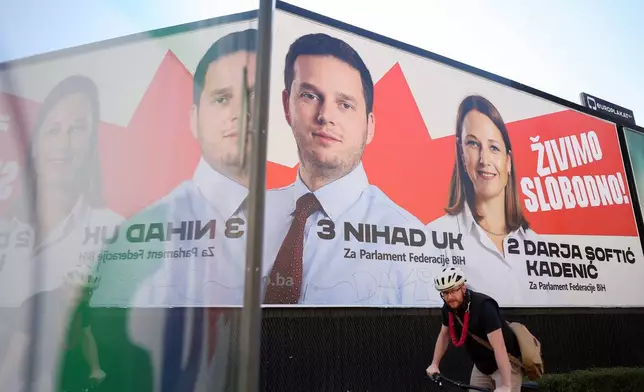
A man rides a bicycle beneath an election poster featuring Our Party (NS) candidates for the upcoming general elections in Sarajevo, Bosnia, on Sept. 29, 2026. (AP Photo/Armin Durgut)
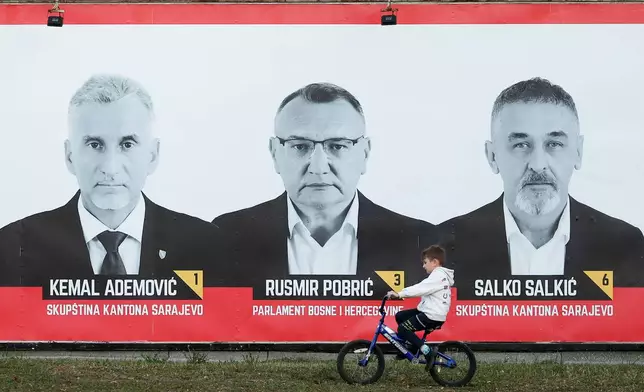
A man rides a bicycle beneath an election poster featuring Our Party (NS) candidates for the upcoming general elections in Sarajevo, Bosnia, on Sept. 29, 2026. (AP Photo/Armin Durgut)

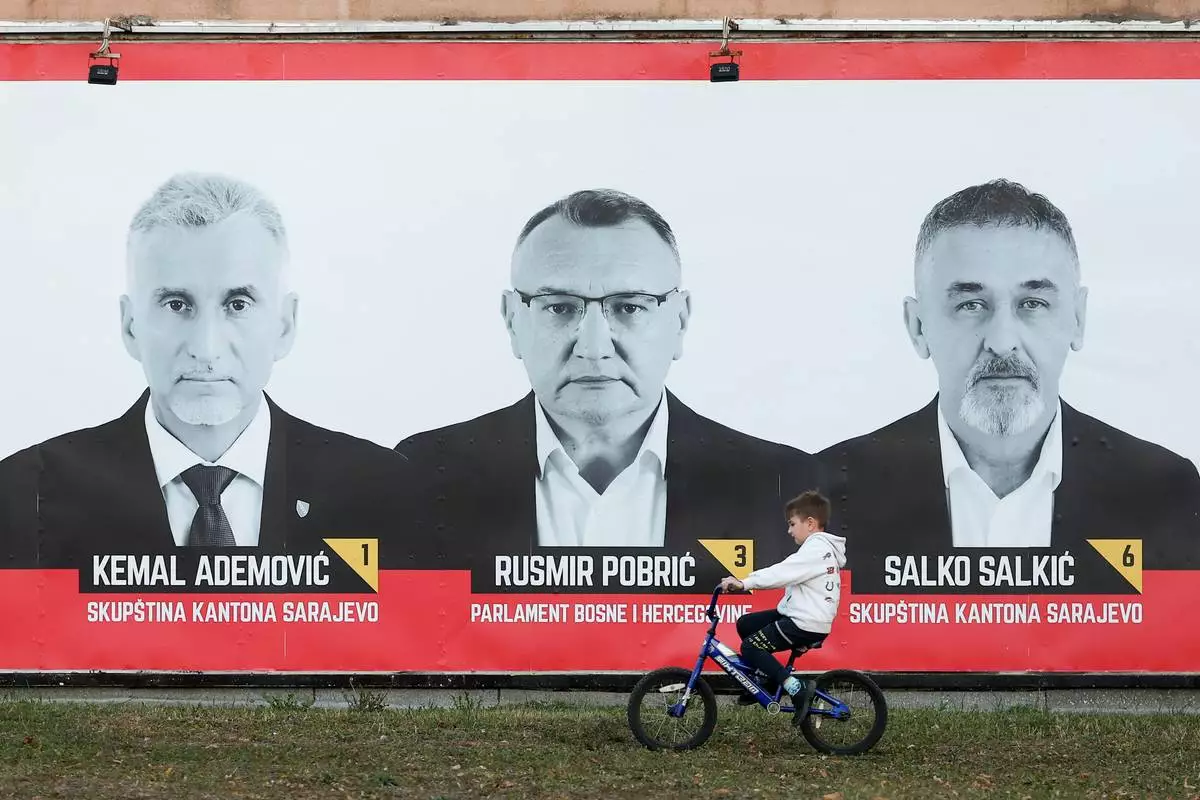
A boy rides a bicycle past an election poster featuring Red Lines (CL) candidates in the upcoming general elections in Sarajevo, Bosnia, on Sept. 30, 2026. (AP Photo/Armin Durgut)
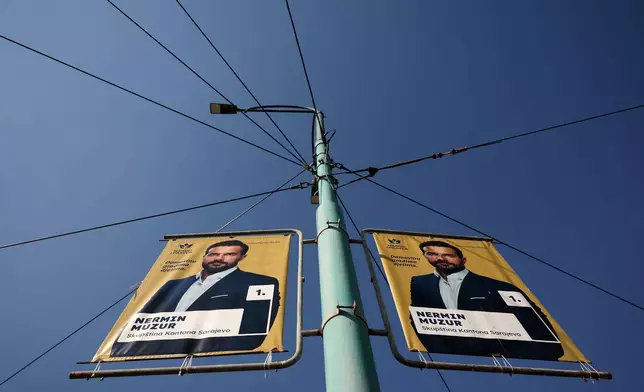
A boy rides a bicycle past an election poster featuring Red Lines (CL) candidates in the upcoming general elections in Sarajevo, Bosnia, on Sept. 30, 2026. (AP Photo/Armin Durgut)

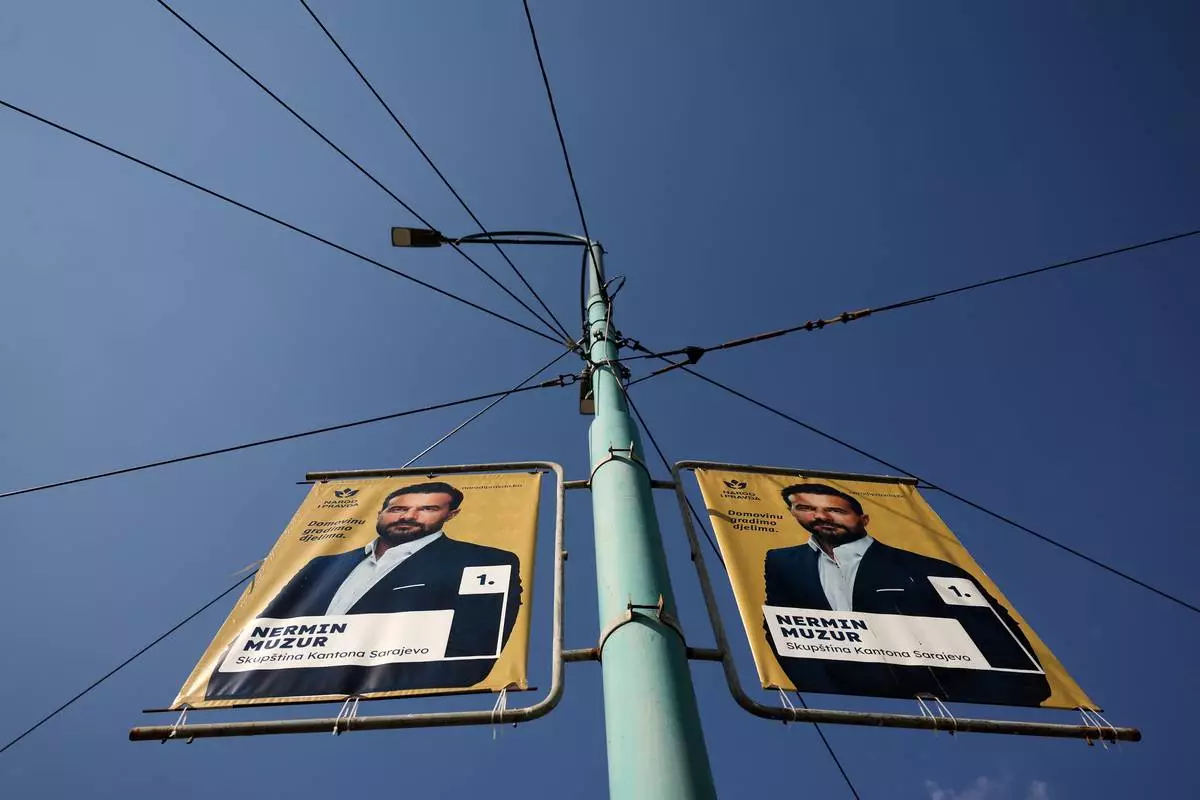
An election poster featuring Nermin Muzur, People and Justice Party (NiP) candidate, hangs from a pole ahead of the upcoming general elections in Sarajevo, Bosnia, on Sept. 29, 2026. (AP Photo/Armin Durgut)
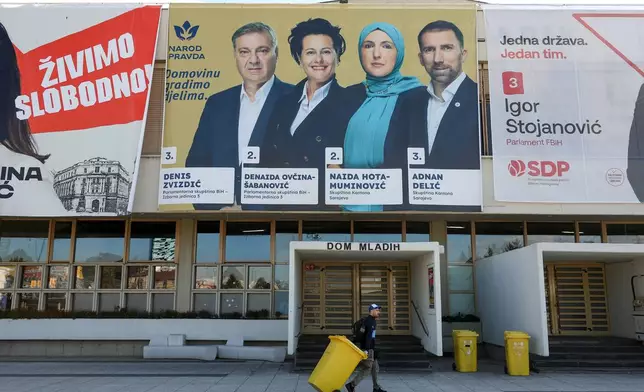
An election poster featuring Nermin Muzur, People and Justice Party (NiP) candidate, hangs from a pole ahead of the upcoming general elections in Sarajevo, Bosnia, on Sept. 29, 2026. (AP Photo/Armin Durgut)

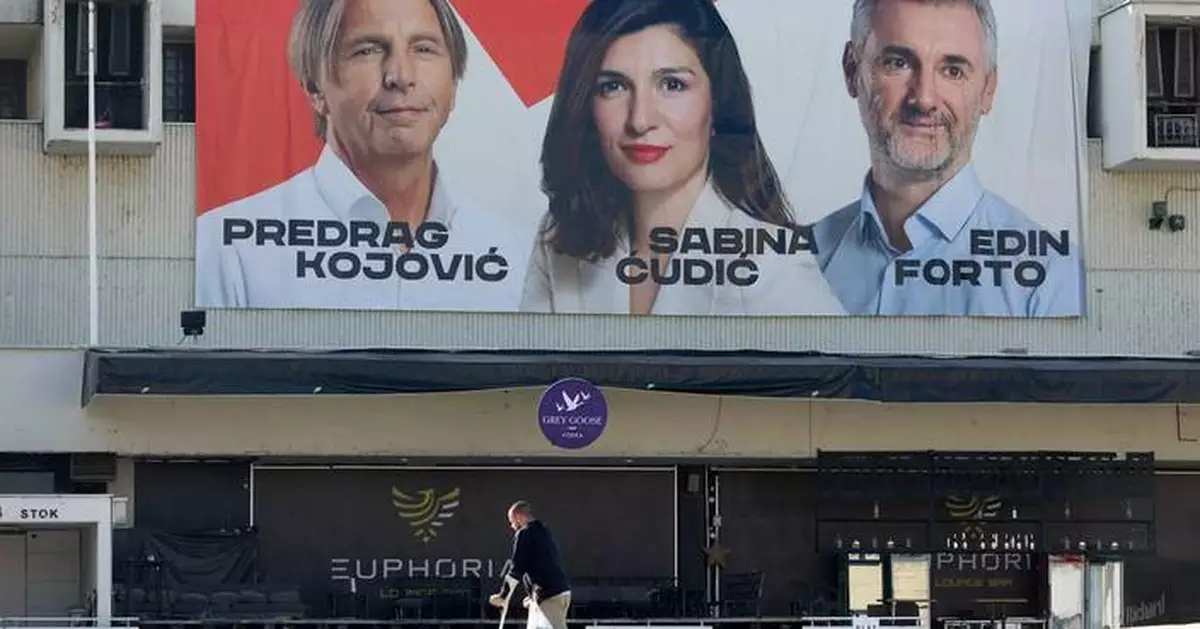
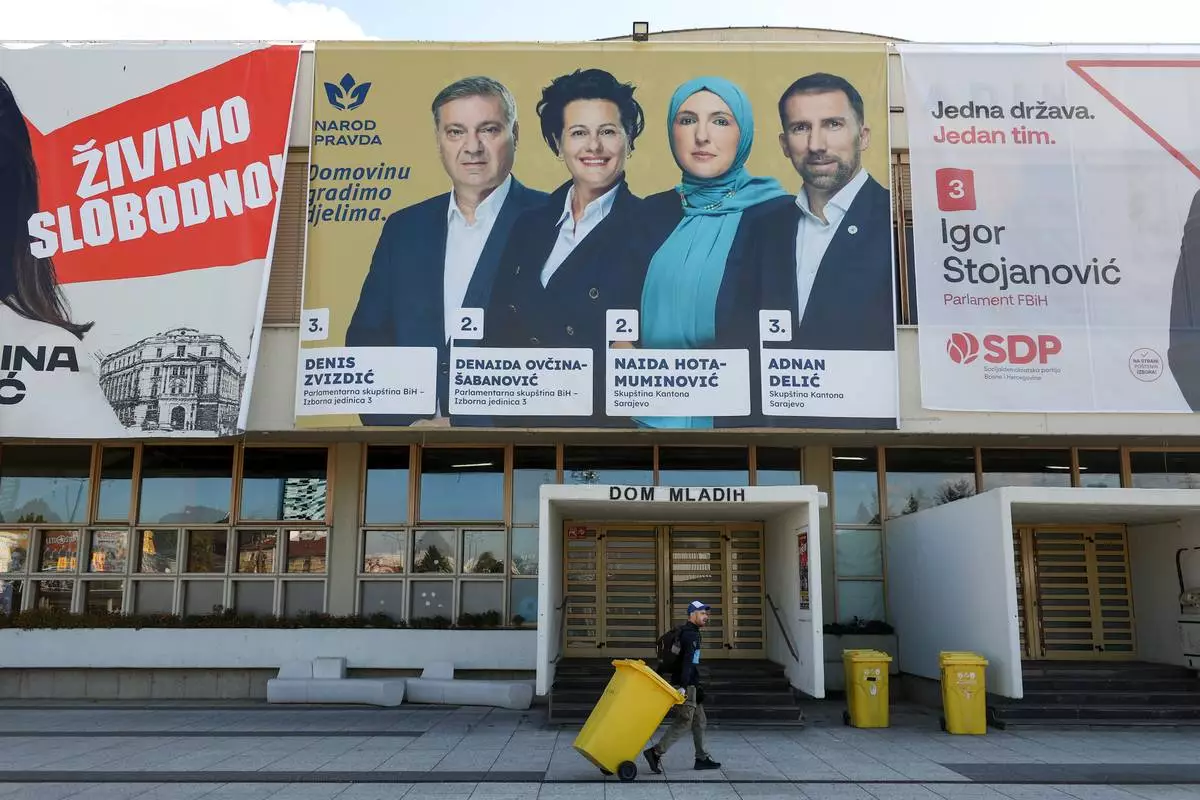
A man walks beneath an election poster featuring People and Justice Party (NiP) candidates for the upcoming general elections in Sarajevo, Bosnia, on Sept. 29, 2026. (AP Photo/Armin Durgut)
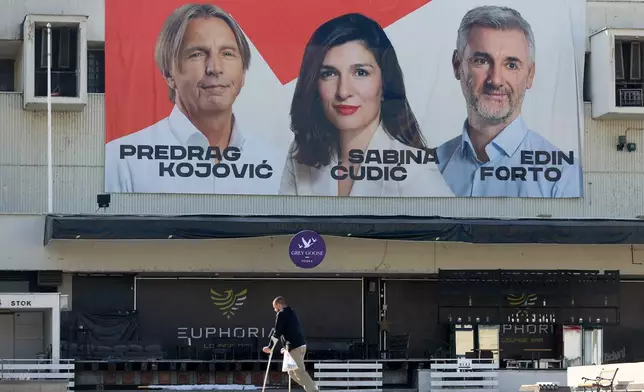
A man walks beneath an election poster featuring People and Justice Party (NiP) candidates for the upcoming general elections in Sarajevo, Bosnia, on Sept. 29, 2026. (AP Photo/Armin Durgut)

A man walks beneath an election poster featuring Our Party (NS) candidates for the upcoming general elections in Sarajevo, Bosnia, on Sept. 29, 2026. (AP Photo/Armin Durgut)

A man walks beneath an election poster featuring Our Party (NS) candidates for the upcoming general elections in Sarajevo, Bosnia, on Sept. 29, 2026. (AP Photo/Armin Durgut)

The complex network of institutions was created in a U.S.-brokered peace agreement that ended the war.

Taking center stage in the contest is a staunchly pro-Russian politician who, despite not appearing on the ballot, has dominated the campaign and inflamed divisions that have sparked fears of renewed instability.

Milorad Dodik, the separatist and nationalist former president of the Serb-majority Republika Srpska, has been banned from holding public office after being convicted of defying decisions by the international envoy overseeing the 1995 peace agreement.

Just back from a trip to Moscow where he met with Russian President Vladimir Putin, Dodik's party, the Alliance of Independent Social Democrats, is likely to win the election in Republika Srpska.

At his party's final election rally Friday night in Banja Luka, Republika Srpska's administrative capital, Dodik told supporters that Bosnia “is dead."

"It is an impossible country. It doesn’t make any sense,” Dodik said at the rally, which was also attended by the Russian ambassador to Bosnia and Herzegovina, Igor Khalabukov.

Dragan Bursac, an analyst, said despite Dodik not appearing on the ballot for the first time in nearly 30 years, he “is still in command. He is everywhere.”

“He is all over the media, not only in the entity of Republika Srpska, but in all of Bosnia and Herzegovina. It is obvious that these measures to ban him from political life are not working, and he is using them,” Bursac said.

While Bosnia has been peaceful in recent years, its politicians have kept alive the divisions between the country's Bosniaks, who are mainly Muslim, and its Serbs and Croats. Bosnian Serb leaders like Dodik have pushed for the separation of their entity from the rest of Bosnia, which has led to concerns among Western countries that tensions could once again spill over.

One of the poorest countries in Europe, Bosnia is still struggling to recover decades after the war that started in 1992 after Bosnia declared independence from the Serb-led former Yugoslavia and ethnic Serbs took up arms to carve out their own state and join Serbia.

The conflict killed more than 100,000 people and displaced millions.

Bosnia is formally seeking to join the European Union, but progress toward membership has been stalled despite EU efforts to encourage Bosnia's divided leaders to work together for reform.

Ahead of Election Day, Durak Miler, a resident of the Bosnian capital of Sarajevo, said governing politicians “just poison people when they talk.”

“We should change the old faces,” he said. “They have been governing for 35 years ... I think whoever comes next will work better for retired people and the poor.”

The country's wartime wounds were recently revived by a public homage in Serbia and among Bosnian Serbs to the wartime army commander Ratko Mladic, who died in late August while serving a life sentence for genocide and other war crimes.

Bosnian Serbs view Mladic as a hero despite his conviction by a U.N. court over the massacre of more than 8,000 Muslim men and boys in Srebrenica in 1995, and other atrocities.

Key Bosnian Serb officials attended the funeral service for Mladic in Belgrade that sparked harsh EU criticism and angered Bosniak politicians.

Authorities are for the first time using electronic identification of voters and scanning of ballots to prevent irregularities or organized voter manipulation, which have cast doubt on the fairness of previous elections.

Salko Bijavica, from the southern town of Mostar, said he is glad that “every vote will be counted,” and that the change will give “hope to people that elections will be fair.”

Most of Bosnia's 75 political parties running in the election are organized along ethnic lines in the country's Serb-controlled Republika Srpska and the Bosniak-Croat Federation of Bosnia-Herzegovina. The two entities are bound together by the central presidency and Parliament.

The Bosniak nationalist Party of Democratic Action has focused its campaign on efforts to keep Bosnia united against Serb separatism. Bosnian Croats, too, largely support their ethnic parties, including the Bosnian branch of Croatia's ruling conservative Croatian Democratic Union.

Polls will close at 7 p.m. local time.

Many disillusioned citizens say politicians are using nationalism to avoid solving important problems such as poor living standards and an exodus of youth from the country.

Ivan Silic, from the southern town of Mostar, said: “I don’t see that anything is getting better, from the moment I started to vote.”

“We all know who lives well,” he said. "It is better for (politicians), and for the rest of us everything is the same.”
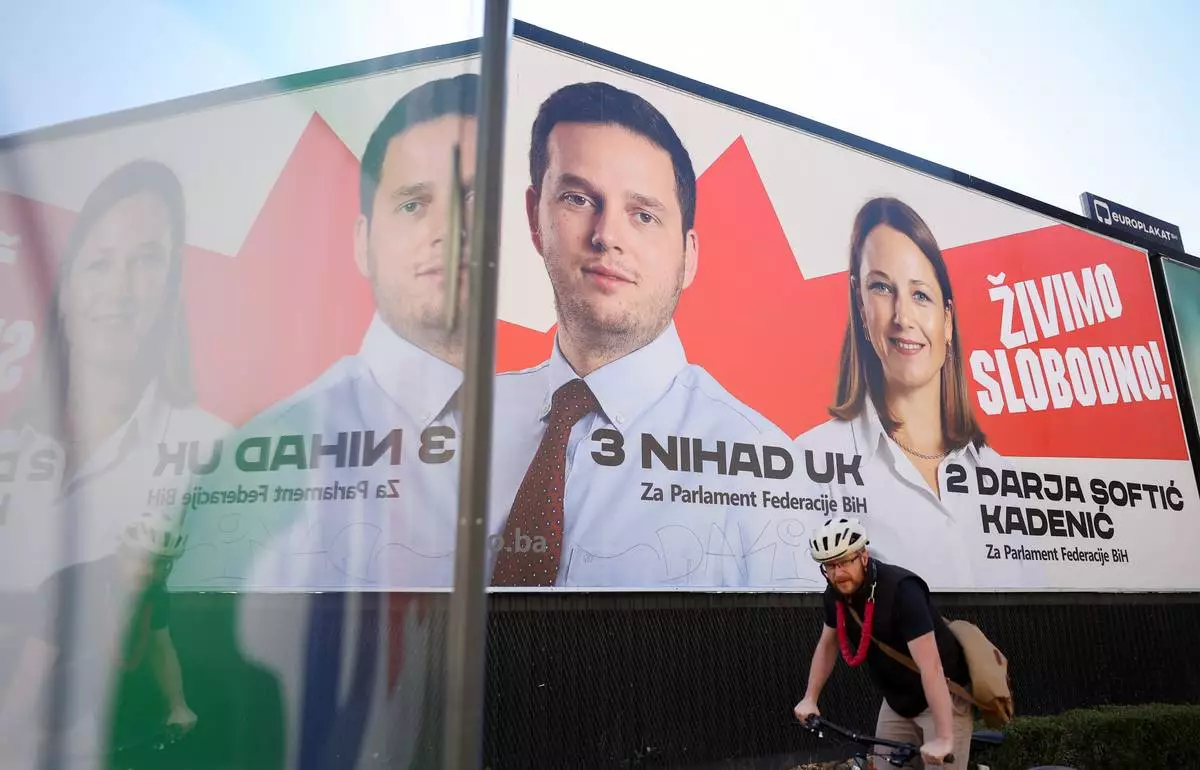
A man rides a bicycle beneath an election poster featuring Our Party (NS) candidates for the upcoming general elections in Sarajevo, Bosnia, on Sept. 29, 2026. (AP Photo/Armin Durgut)
A man rides a bicycle beneath an election poster featuring Our Party (NS) candidates for the upcoming general elections in Sarajevo, Bosnia, on Sept. 29, 2026. (AP Photo/Armin Durgut)

A boy rides a bicycle past an election poster featuring Red Lines (CL) candidates in the upcoming general elections in Sarajevo, Bosnia, on Sept. 30, 2026. (AP Photo/Armin Durgut)
A boy rides a bicycle past an election poster featuring Red Lines (CL) candidates in the upcoming general elections in Sarajevo, Bosnia, on Sept. 30, 2026. (AP Photo/Armin Durgut)

An election poster featuring Nermin Muzur, People and Justice Party (NiP) candidate, hangs from a pole ahead of the upcoming general elections in Sarajevo, Bosnia, on Sept. 29, 2026. (AP Photo/Armin Durgut)
An election poster featuring Nermin Muzur, People and Justice Party (NiP) candidate, hangs from a pole ahead of the upcoming general elections in Sarajevo, Bosnia, on Sept. 29, 2026. (AP Photo/Armin Durgut)

A man walks beneath an election poster featuring People and Justice Party (NiP) candidates for the upcoming general elections in Sarajevo, Bosnia, on Sept. 29, 2026. (AP Photo/Armin Durgut)
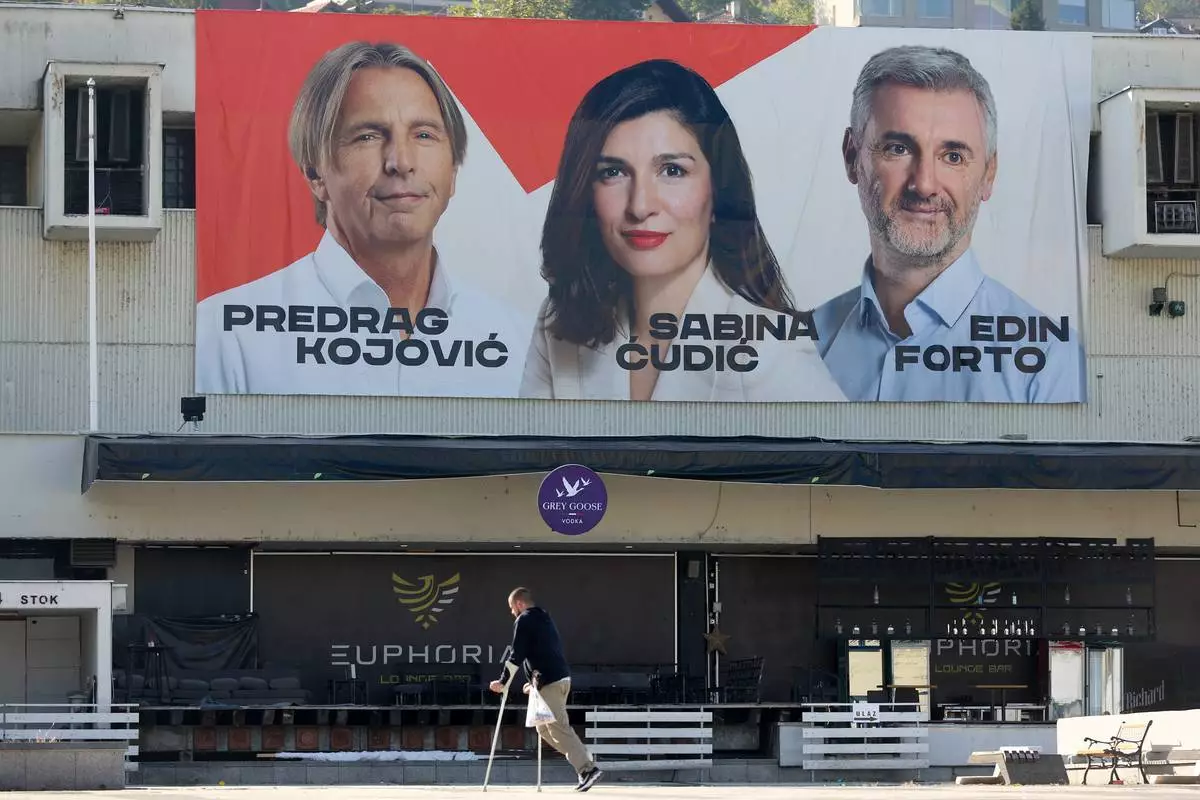
A man walks beneath an election poster featuring People and Justice Party (NiP) candidates for the upcoming general elections in Sarajevo, Bosnia, on Sept. 29, 2026. (AP Photo/Armin Durgut)

A man walks beneath an election poster featuring Our Party (NS) candidates for the upcoming general elections in Sarajevo, Bosnia, on Sept. 29, 2026. (AP Photo/Armin Durgut)
A man walks beneath an election poster featuring Our Party (NS) candidates for the upcoming general elections in Sarajevo, Bosnia, on Sept. 29, 2026. (AP Photo/Armin Durgut)
SAO PAULO (AP) — Brazilians vote Sunday in a high-stakes presidential election pitting incumbent Luiz Inácio Lula da Silva against Sen. Flávio Bolsonaro, ideological opposites who are each seen as having a shot at an outright victory.

If no candidate gets more than 50% of the vote, the top two vote-getters will head to a runoff on Oct. 25 in Latin America's economic powerhouse. Ten other candidates are expected to garner much smaller numbers of votes on Sunday.

Bolsonaro, 45, is the son of far-right former President Jair Bolsonaro and an ally of U.S. President Donald Trump. Lula, who at 80 is one of the world’s oldest heads of state, is running in his seventh presidential election and has strengthened Brazil's ties with Beijing.

Trump allies have found support in recent years in some Latin American countries, including Argentina, Colombia and Peru.

Almost 159 million Brazilians are eligible to vote in this tense political showdown.

Where Bolsonaro has leaned into his ideological alliance with Trump, Lula has criticized Washington. He has often spoken about risks of U.S. intervention in the Brazilian elections after the Trump administration imposed high tariffs against Brazilian exports, revoked the visa of the country’s ambassador in D.C. and sanctioned a Supreme Court justice who chaired the probe that ended up resulting in the sentencing of Jair Bolsonaro, Lula's predecessor.

Flávio Bolsonaro has touted his proximity to the White House and insisted Brazil needs to strike better deals with the Trump administration, including the rare minerals economy. Brazil estimates its deposits to hold up to 21 million tons, second only to China. Bolsonaro also has campaigned on releasing his father from his 27-year prison sentence for attempting a coup and bringing him back to politics.

Bolsonaro denies he's being helped by the U.S. government. "That narrative won't stick, sorry,” he said at a September campaign event.

Brazilians will also elect 27 state governors, members of state legislatures, all 513 federal congressmen and 54 of the country’s 81 senators in Sunday's vote.

Thomas Traumann, a political consultant based in Rio de Janeiro, says last-minute mistakes by either candidate or by their allies could make all the difference for undecided voters.

“ Polarization in Brazil created a trap. There’s no third candidate. You only have two options, and they fight each other in an atmosphere that becomes worse and worse,” Traumann said. “It is much more a competition of accusations than a competition of proposals.”

Four years ago, Lula beat Jair Bolsonaro by 2.1 million votes — a margin of just under 2 percentage points. At the time, Brazilians were upset with the then-president’s handling of the coronavirus pandemic, his repeated threats against democracy, his attacks on the electronic voting system, and the poor shape of the nation’s economy as inflation was on the rise.

Now, the incumbent faces a tough battle due to an affordability crisis and a corruption scandal that ensnared the same justice who led the investigation into Bolsonaro.

Carlos Melo, a political science professor at Insper University in Sao Paulo, says some voters have grown weary of Lula, who is seeking a fourth nonconsecutive term as president. He is one of the oldest presidents on the continent, along with Trump and Nicaragua's Daniel Ortega, both of whom also are 80.

“Many in the Lula campaign were not expecting such a difficult election a few weeks ago, and it is clear to them that the present election is a tough battle and the next ones, without Lula, could be even more so,” Melo said.

Bolsonaro has seen his political career tainted by several corruption accusations, the latest of them involving a disgraced banker paying him millions of dollars, allegedly to produce a movie on his father's life. More recently, he has been under fire from Roman Catholics who fear he might make too many concessions to his evangelical base.

Follow AP’s coverage of Latin America and the Caribbean at https://apnews.com/hub/latin-america

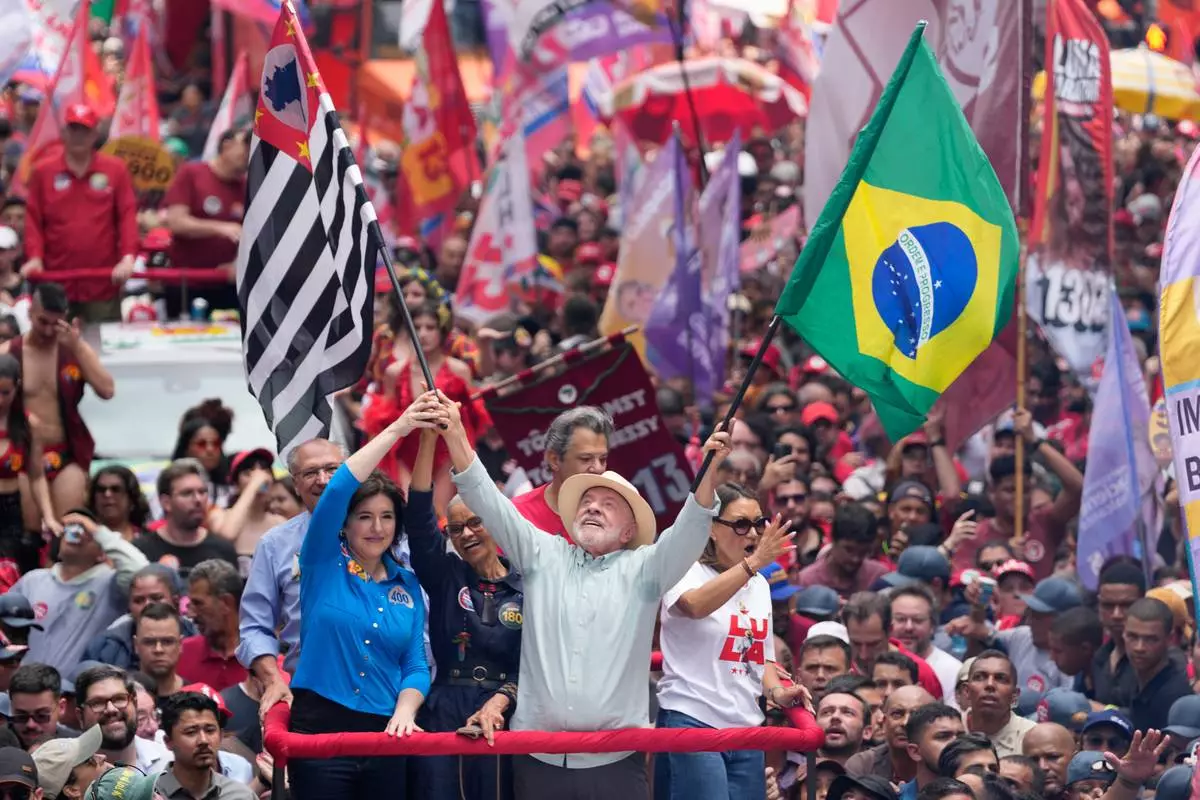
President Luiz Inacio Lula da Silva, who is running for reelection, waves a Brazilian and Sao Paulo state flags during a campaign rally a day ahead of the country's general election in Sao Paulo, Saturday, Oct. 3, 2026. (AP Photo/Andre Penner)

President Luiz Inacio Lula da Silva, who is running for reelection, waves a Brazilian and Sao Paulo state flags during a campaign rally a day ahead of the country's general election in Sao Paulo, Saturday, Oct. 3, 2026. (AP Photo/Andre Penner)

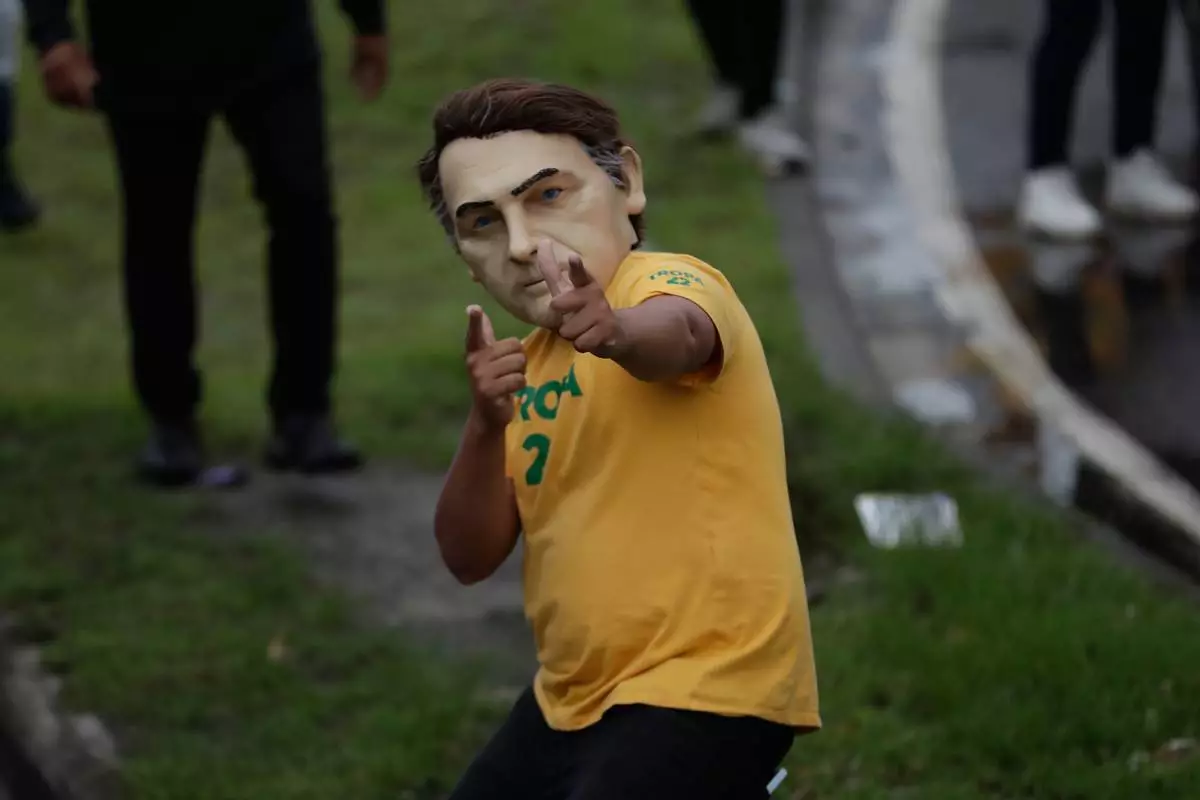
A supporter of opposition presidential candidate Flavio Bolsonaro wears a mask of his father, former President Jair Bolsonaro, during a campaign rally a day ahead of the country's general election, in Campo Grande, Rio de Janeiro state, Saturday, Oct. 3, 2026. (AP Photo/Bruna Prado)

A supporter of opposition presidential candidate Flavio Bolsonaro wears a mask of his father, former President Jair Bolsonaro, during a campaign rally a day ahead of the country's general election, in Campo Grande, Rio de Janeiro state, Saturday, Oct. 3, 2026. (AP Photo/Bruna Prado)

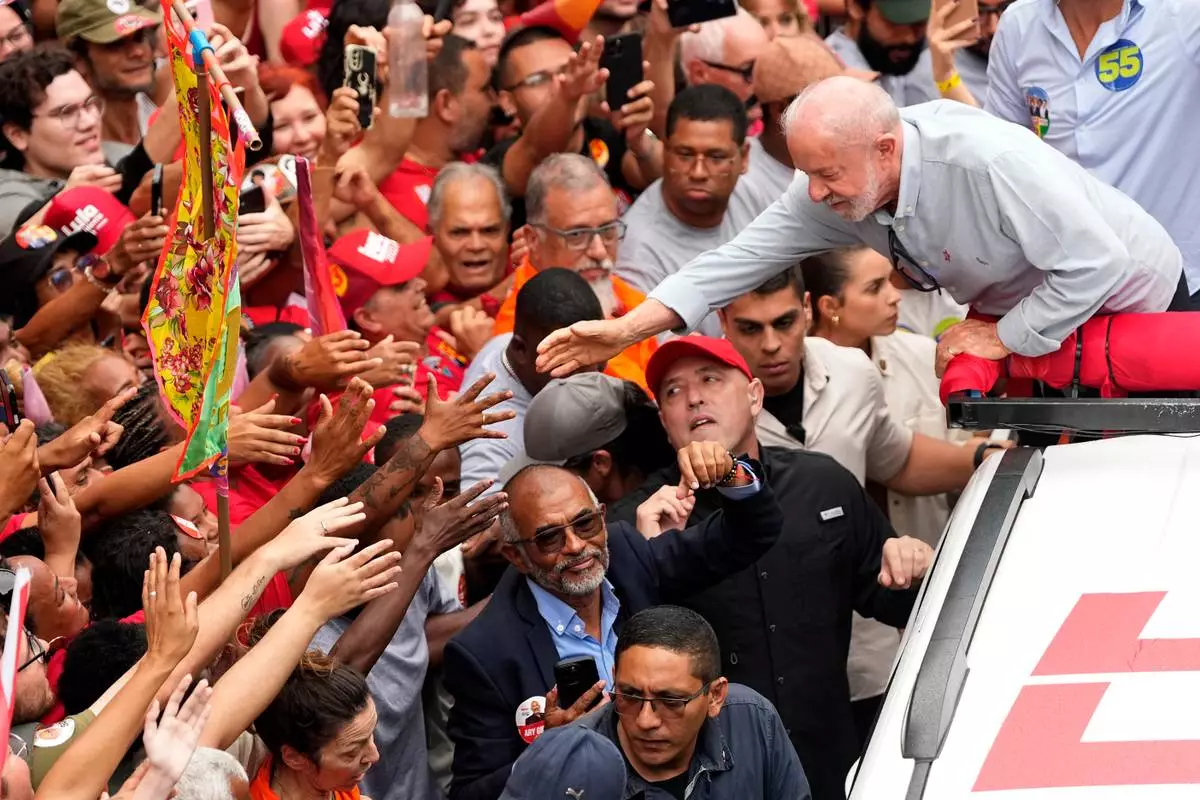
Brazilian President Luiz Inacio Lula da Silva, who is running for reelection, greets supporters during a campaign rally in Rio de Janeiro, Brazil, Friday, Oct. 2, 2026. (AP Photo/Silvia Izquierdo)

Brazilian President Luiz Inacio Lula da Silva, who is running for reelection, greets supporters during a campaign rally in Rio de Janeiro, Brazil, Friday, Oct. 2, 2026. (AP Photo/Silvia Izquierdo)

Recommended Articles