China has been stepping up the development of free trade zones over recent years, forming a new driver of high-level opening up that integrates coastal, inland, and border areas.
In the Lingang New Area of the Shanghai Free Trade Zone, pilot banks can now provide offshore trade "document review-free" services to pilot enterprises under certain conditions, reducing the settlement time for offshore trade from three days to three seconds.
"We have achieved 'no document review required' and instant settlement, reaching the same timeliness as mature offshore centers in Hong Kong and Singapore," said Lin He, deputy director of the financial and trade division at the Administrative Committee of Lingang New Area, China (Shanghai) Pilot Free Trade Zone.
Lingang New Area recently released an expansion plan for a comprehensive reform pilot program for offshore trade and financial services. The scope of the pilot will be upgraded from the previous single scenario of "offshore trade" to all offshore business scenarios, which will more effectively support market entities to participate in various activities such as global production, sales and services in the future.
From the establishment of the Shanghai Free Trade Zone in 2013, the first free trade zone in China, to the unveiling of the Inner Mongolia Free Trade Zone this year, China has established 23 free trade zones in eight phases.
Today, free trade zones, occupying less than four-thousandths of China's land area, contribute more than a quarter of the country's foreign investment inflow and one-fifth of its total import and export volume. More than 480 institutional innovations pioneered in free trade zones have been replicated and promoted at the national level.
"After more than a decade of operations, free trade zones have become an important platform for China to promote institutional opening-up. In the first year of the 15th Five-Year Plan Period (2026-2030), each free trade zone is accelerating the introduction of a series of fundamental and pioneering reform and opening-up measures to promote the steady and long-term development of high-level opening-up," said Sheng Bin, deputy director of the China Free Trade Zone Research Center of Nankai University.
This year, the Chinese capital Beijing extended its negative list management system for cross-border data transfer from the free trade zone to the entire city, while adding four new categories: medical devices, autonomous driving, trade logistics, and banking. This will enable data to flow across borders more efficiently, conveniently, and securely on a larger scale.
In Hainan Province, a "zero tariff" policy now covers more than 6,600 tariff items, increasing the coverage rate to 74 percent.
"Imports of precision parts and intermediate goods such as raw materials and auxiliary materials under 'zero tariffs' have increased significantly. Upstream and downstream enterprises in Hainan have more efficient division of labor and cooperation, which is more conducive to the coordinated development of the entire industrial chain," said Guo Jin, director of the reform and institutional innovation division of the Hainan Free Trade Port Working Committee Office.
In the Xiamen Area at the Fujian Free Trade Zone, the pioneering "bonded maintenance outside special customs supervision zones" model allows aircraft maintenance companies to enjoy a series of bonded policies such as exemption from guarantees and tax refunds, saving an average of 35 million yuan (about 5.1 million U.S. dollars) in guarantee amount per aircraft.
Currently, nine world-renowned aircraft maintenance companies have settled in the Xiamen Area, with 80 percent of maintenance orders coming from overseas.
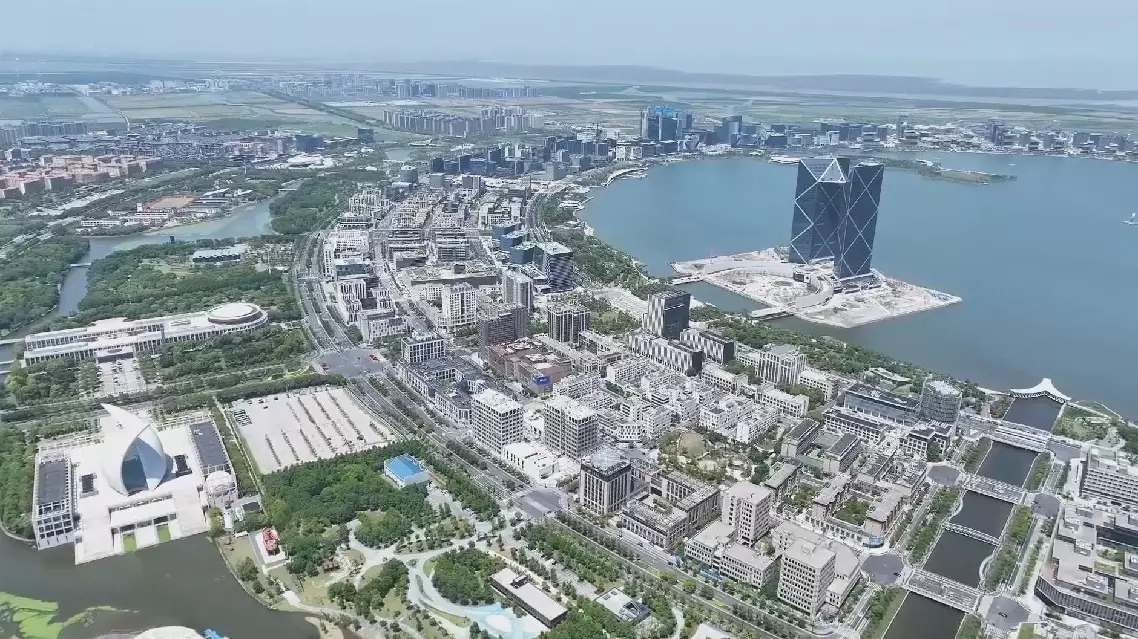
Fast-developing free trade zones fuel China's high-level opening-up