Iran on Thursday dismissed U.S. President Donald Trump’ s threats of economic pain and isolation, while Syria’s foreign minister is visiting Pakistan, which is seeking to defuse tensions between the United States and Iran.
Here’s a look at the latest developments in the Iran war and the wider Middle East on Thursday. Full coverage can be found here.
Iran’s Foreign Minister Abbas Araghchi has rejected the economic threats made against his country, saying that such “failed policies” will stir more hostility among Iranians and “bring more failures.”
Araghchi's comments came a few hours after President Donald Trump threatened “crushing economic measures” against Iran. Trump promised “Economic Warfare and Isolation on an unprecedented scale,” but provided few details.
In a social media post, Araghchi maintained the threats aim to divert the attention of the U.S. public from domestic financial problems, adding that the U.S. “economic terrorism threatens the global economy and the national sovereignty of countries around the world.”
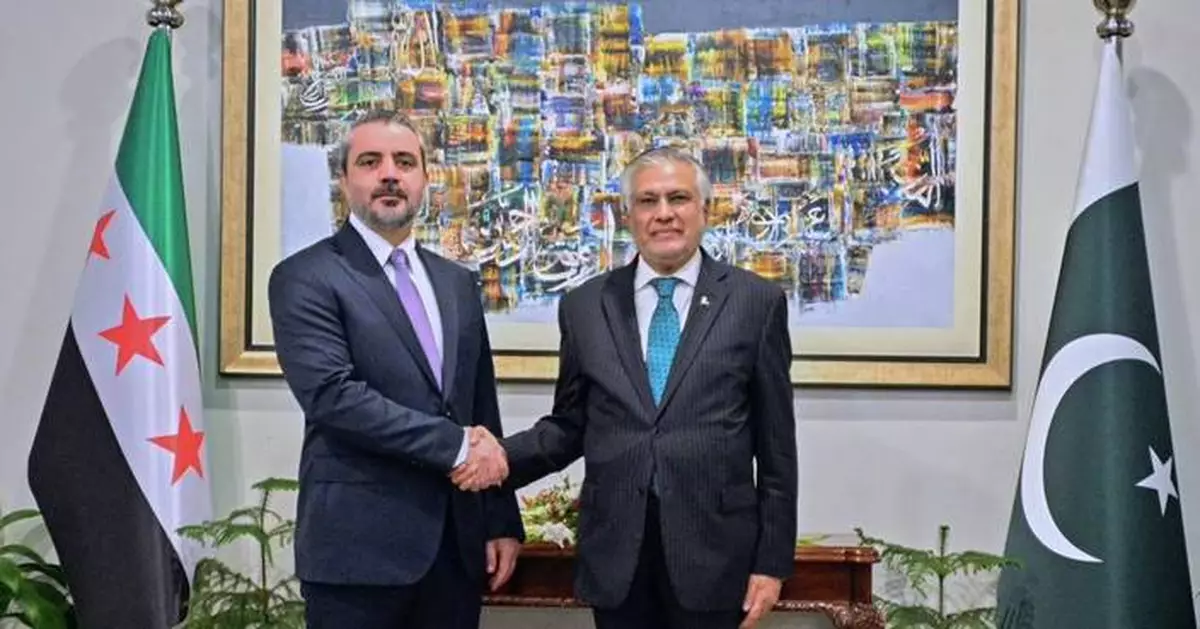
Syria's Foreign Minister Assad al-Shibani has arrived in Islamabad for talks expected to focus on regional issues, Pakistan's Ministry of Foreign Affairs said.
The visit comes days after Israeli airstrikes targeted an air base in northern Syria, causing damage but no casualties.
Pakistani officials say the country's political and military leadership remains in contact with both Iran and United States over efforts to de-escalate tensions and push for the resumption of talks after a 60-day deadline under a June memorandum of understanding expired. The agreement was brokered by Pakistan with help from regional countries.
The bodies of two Pakistanis killed in last week’s Houthi attack on a Tanzanian-flagged commercial vessel in the Bab el-Mandeb Strait have been repatriated to Pakistan.
Six Pakistani sailors who were injured in the attack have also safely returned to the country, Foreign Minister Ishaq Dar said in a post on X.
Dar thanked Saudi Arabia’s Foreign Ministry for its cooperation, including medical assistance.
“Pakistan condemns the attack in the strongest terms and reiterates that the safety and security of seafarers must be ensured at all times,” Dar said.
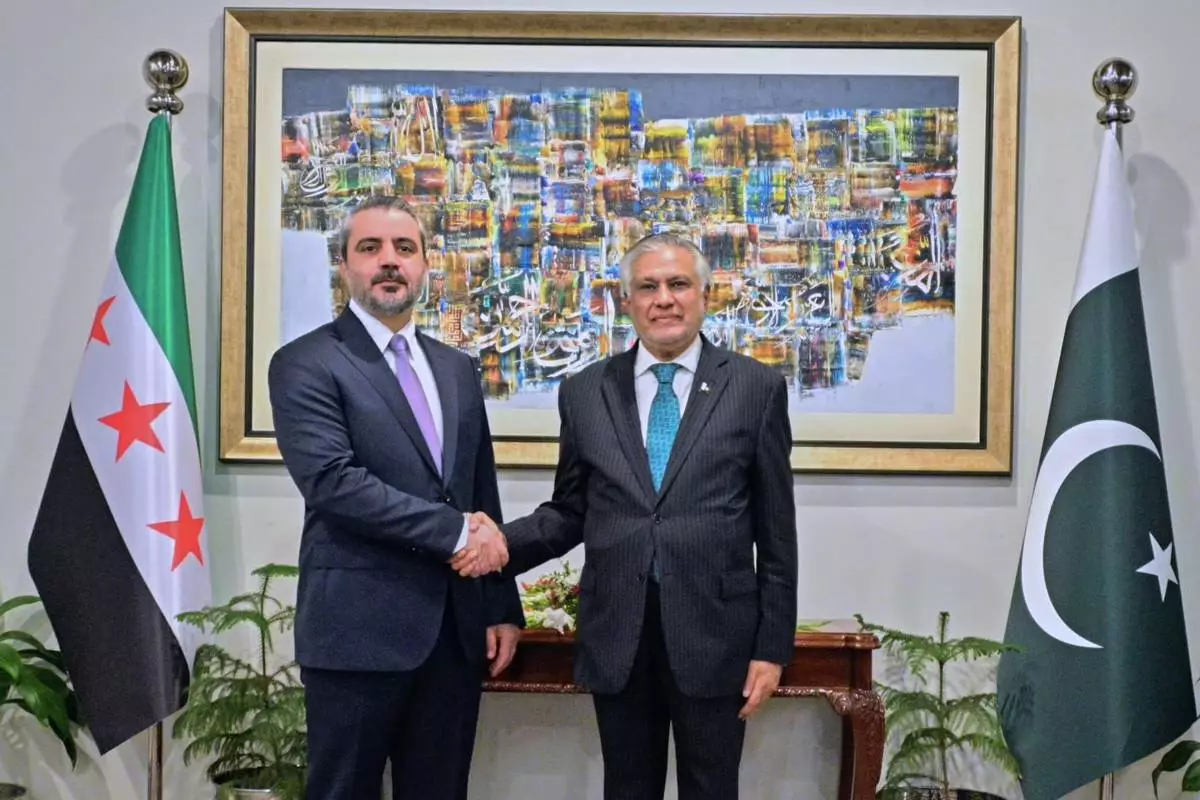
In this photo released by the Pakistan Ministry of Foreign Affairs, Syrian Foreign Minister Asaad Hassan al-Shibani, left, shakes hands with his Pakistani counterpart Ishaq Dar before their meeting in Islamabad, Pakistan, Thursday, Aug. 20, 2026. (Pakistan Ministry of Foreign Affairs via AP)
KYIV, Ukraine (AP) — When Russia fires a ballistic missile at Ukraine, air-defense systems have only minutes — sometimes seconds — to detect and intercept the deadly threat.
The lack of time has left Kyiv and other cities increasingly exposed to devastating attacks by the missiles that come down so fast and so steeply that Ukraine says only the U.S.-made Patriot defense system can stop them. But Ukraine says it has too few batteries and interceptors to protect itself.
Unlike cruise missiles, which behave like pilotless planes, ballistic missiles are launched like rockets and then dive steeply toward their targets at several times the speed of sound.
That sharply reduces the time available to find and destroy a warhead.
When the warhead is hurled toward its target, “it’s very, very steep and it’s going at a ridiculous speed,” said Thomas Withington, an expert on electronic warfare at the Royal United Services Institute, who compared the physics to playing catch. If the ball is “going really fast, it’s harder to catch.”
Russia’s ground-launched Iskander-M missile is the Kremlin’s main ballistic missile. Another example is the air-launched Kinzhal missile. Russia has also fired S-300 and S-400 air-defense missiles at ground targets. A model known as the Zircon is technically a hypersonic anti-ship cruise missile, but its high speed resembles that of a ballistic missile and creates a similar interception problem.
Here's a look at the challenge of shielding Ukraine from some of Russia's deadliest projectiles.
The most capable Patriot system supplied to Ukraine is designed for high-speed missile defense. Instead of exploding near a target, the PAC-3 system uses a maneuverable interceptor designed to collide with an incoming warhead. The Patriot technology must track the missile, predict its path and launch within minutes, sometimes leaving seconds for the final engagement.
Patriots are currently the only system in Ukrainian service able to intercept the Russian Iskander-M, S-400 and Zircon missiles, according to Ukrainian Air Force spokesman Yurii Ihnat. The United States and its allies operate other anti-ballistic systems, including THAAD and sea-based Aegis defenses, but they have not been provided to Ukraine.
Even Patriot protection is not guaranteed. When a Patriot battery is absent, out of position or short of missiles, most other Ukrainian defenses cannot substitute for it.
Ukraine has too few batteries to shield every city. Russia combines ballistic missiles with cruise missiles, drones and decoys, forcing defenders to track many threats and ration scarce interceptors.
The interceptor shortage has become more acute as the U.S.-Israeli war with Iran has consumed large numbers of Patriot and THAAD interceptors. An analysis by The Associated Press estimated that the U.S. Patriot inventory had fallen by at least 65% from its prewar level, while the Pentagon said it retained a deep arsenal.
Production cannot immediately close the gap. Lockheed Martin delivered more than 600 PAC-3 MSE interceptors in 2025 and is working toward annual capacity of 2,000 by the end of 2030. NATO says Europe’s first Patriot missile production facility is expected to open in September in Germany.
Political signals from Washington have also shifted. At a NATO summit in Turkey in July, President Donald Trump said the United States would give Ukraine a license to produce Patriots. About three weeks later, he said he had not made a final decision. Even with a license, officials and experts told AP that starting production in Ukraine would take years.
Ukraine is also trying to destroy Russian missile launchers and infrastructure before missiles can be fired — shooting the archer instead of the arrow.
Ukrainian President Volodymyr Zelenskyy asked Trump to help secure Elon Musk’s permission for Ukrainian forces to use Starlink communications for targeting inside Russia, where Musk has restricted the service, according to someone familiar with the matter. Zelenskyy also told lawmakers on Capitol Hill that he wanted Starlink to help with targeting inside Russia, according to a person in the room. Both spoke on the condition of anonymity to discuss the sensitive private discussions.
Such access could help Ukrainian drones hunt launchers and related infrastructure, reducing the number of missiles Patriot batteries must face.
Kyiv is also developing Freya, a proposed Ukrainian-led, lower-cost anti-ballistic system intended to reduce dependence on Patriots. Ukraine and nine European countries formed a coalition in July to pursue a shared missile-defense capability, with Zelenskyy saying they could jointly develop a mass-produced system within 12 months. Freya remains under development, and it is unclear when it could become operational.
Following a Russian ballistic attack on Kyiv earlier this month, Zelenskyy said Ukraine received only one-third as many air-defense missiles in the first half of 2026 as in the same period last year. He said Ukraine's partners that are unwilling to increase interceptor deliveries immediately should instead impose new sanctions, noting that a significant share of Russia’s ballistic missile production has been untouched by sanctions.
Associated Press Writer Danica Kirka in London contributed to this report.
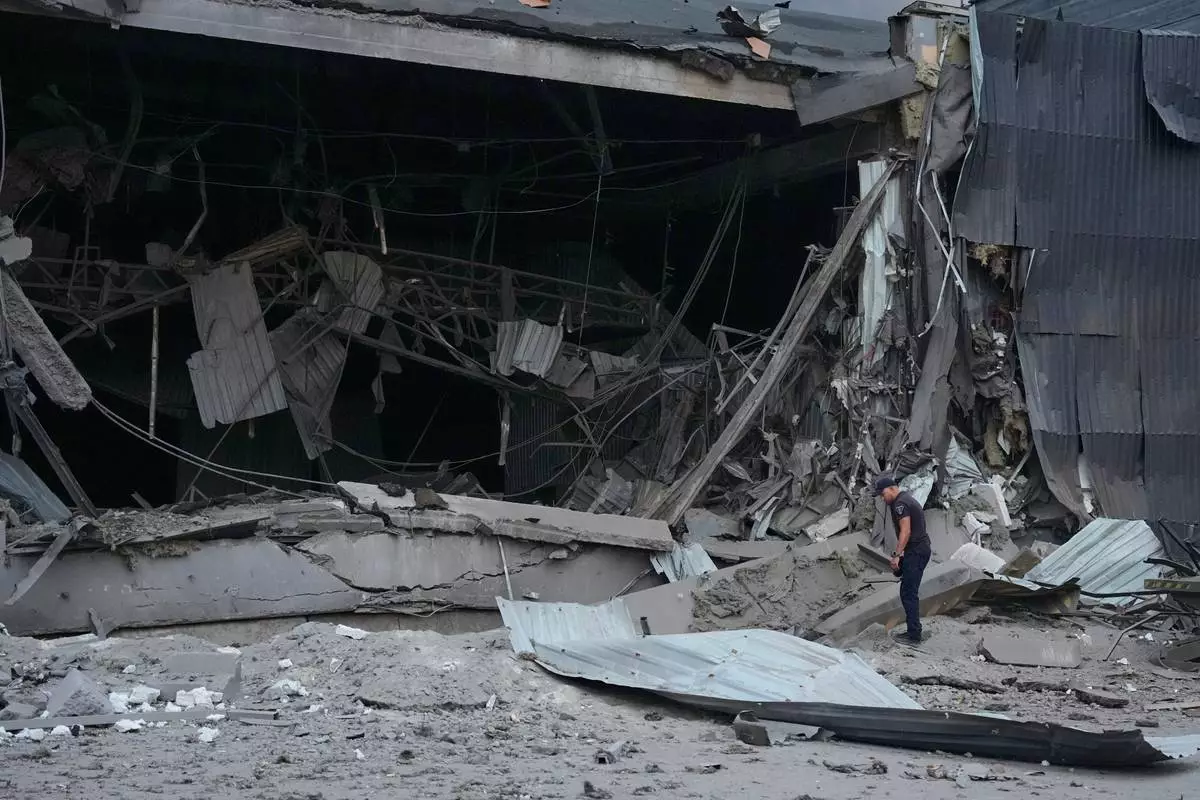
A police officer examines a damaged Nova Poshta postal warehouse after Russian missiles strikes in Kyiv, Ukraine, Wednesday, Aug. 5, 2026. (AP Photo/Efrem Lukatsky)
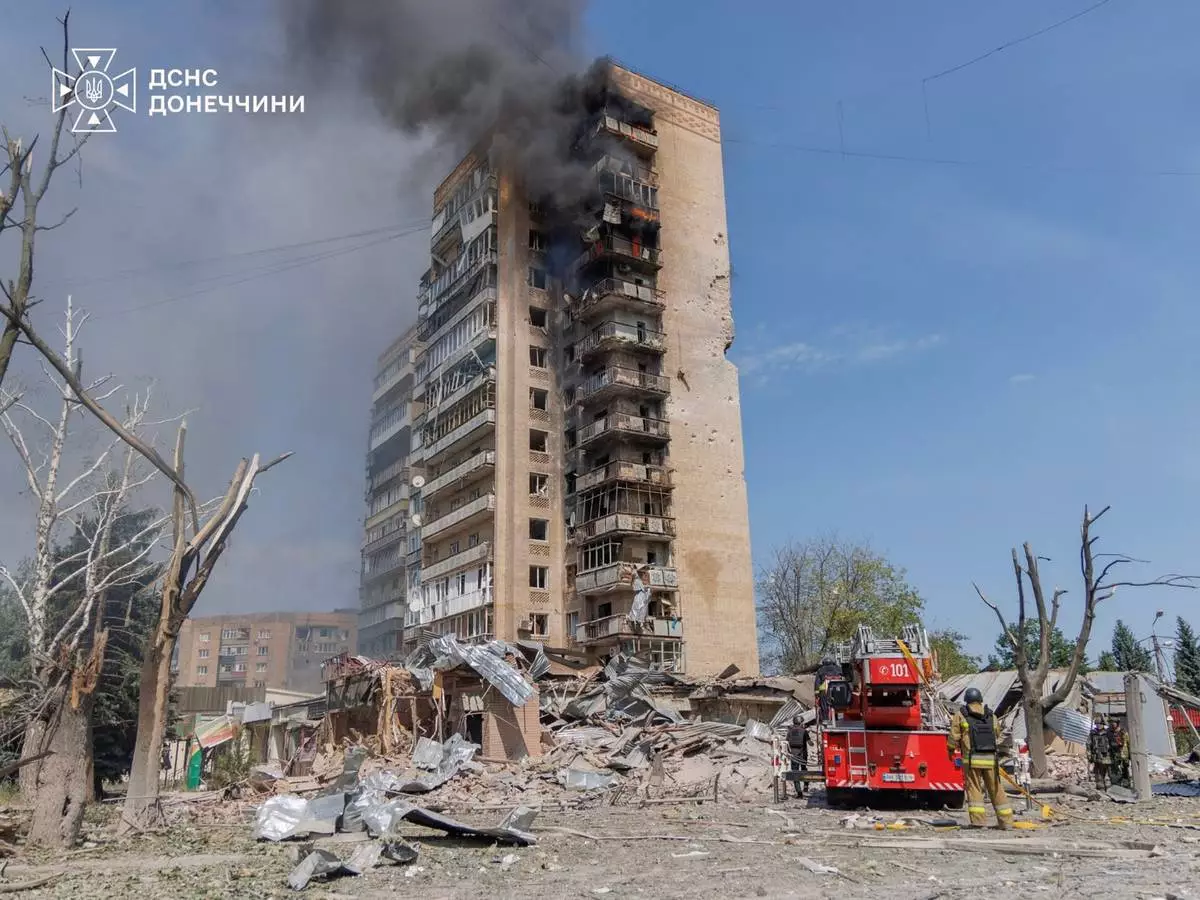
In this photo provided by the Ukrainian Emergency Service, firefighters put out a fire in a residential building following a Russian air attack in Kramatorsk, Donetsk region, Ukraine, Wednesday, Aug. 5, 2026. (Ukrainian Emergency Service via AP)
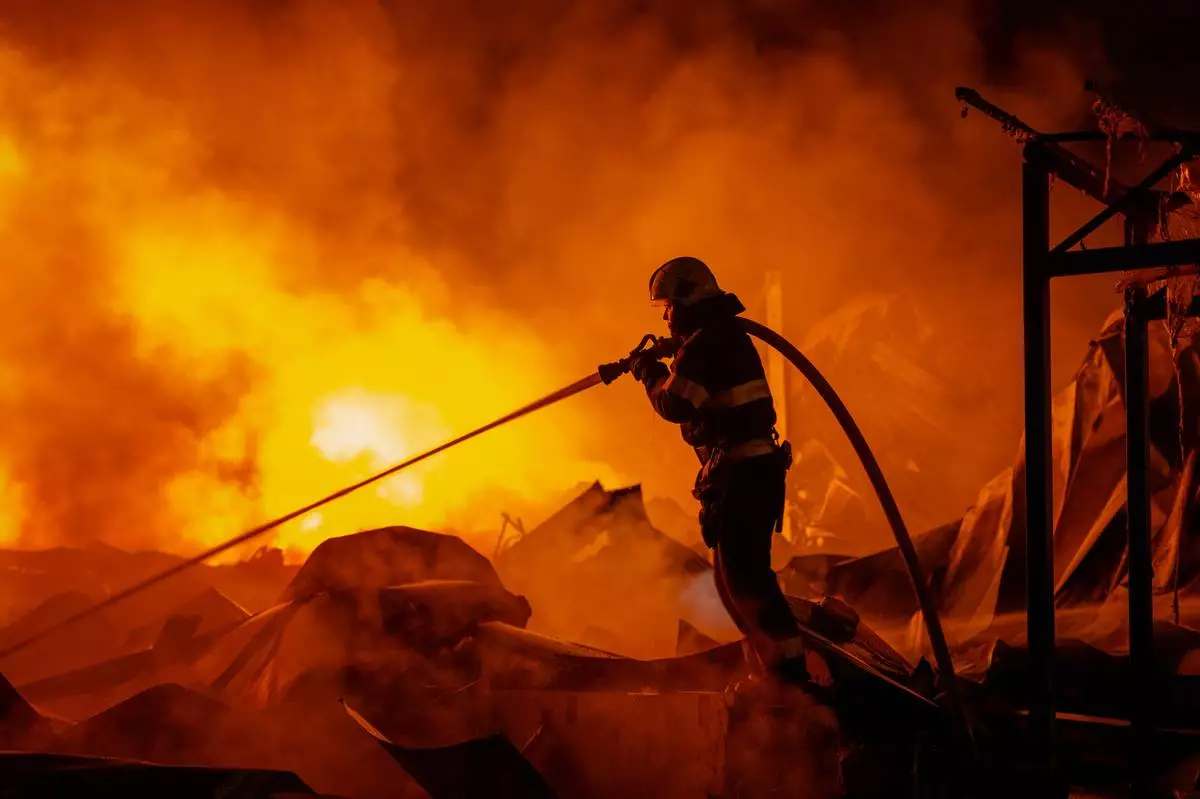
Firefighters put out a fire after Russian missiles hit a warehouse in Kyiv, Ukraine, Wednesday, Aug. 5, 2026. (AP Photo/Dan Bashakov)
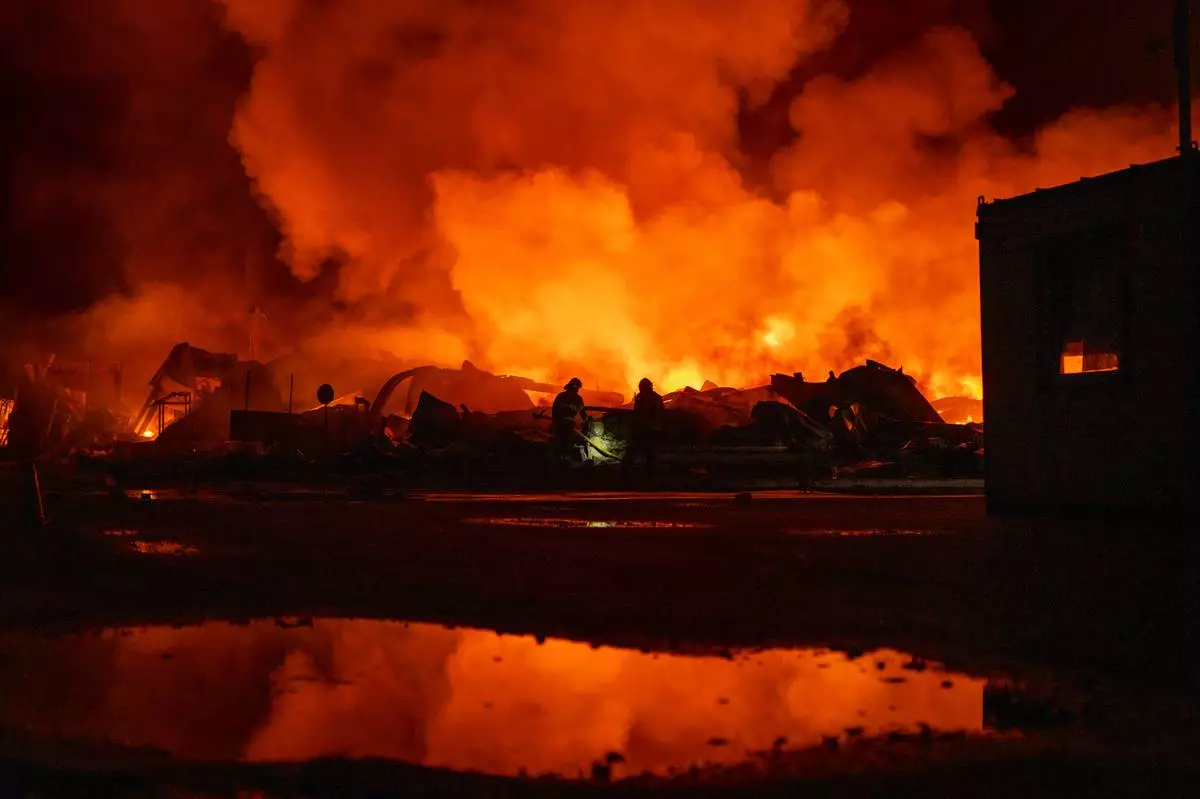
Firefighters put out a fire after Russian missiles hit a warehouse in Kyiv, Ukraine, Wednesday, Aug. 5, 2026. (AP Photo/Dan Bashakov)
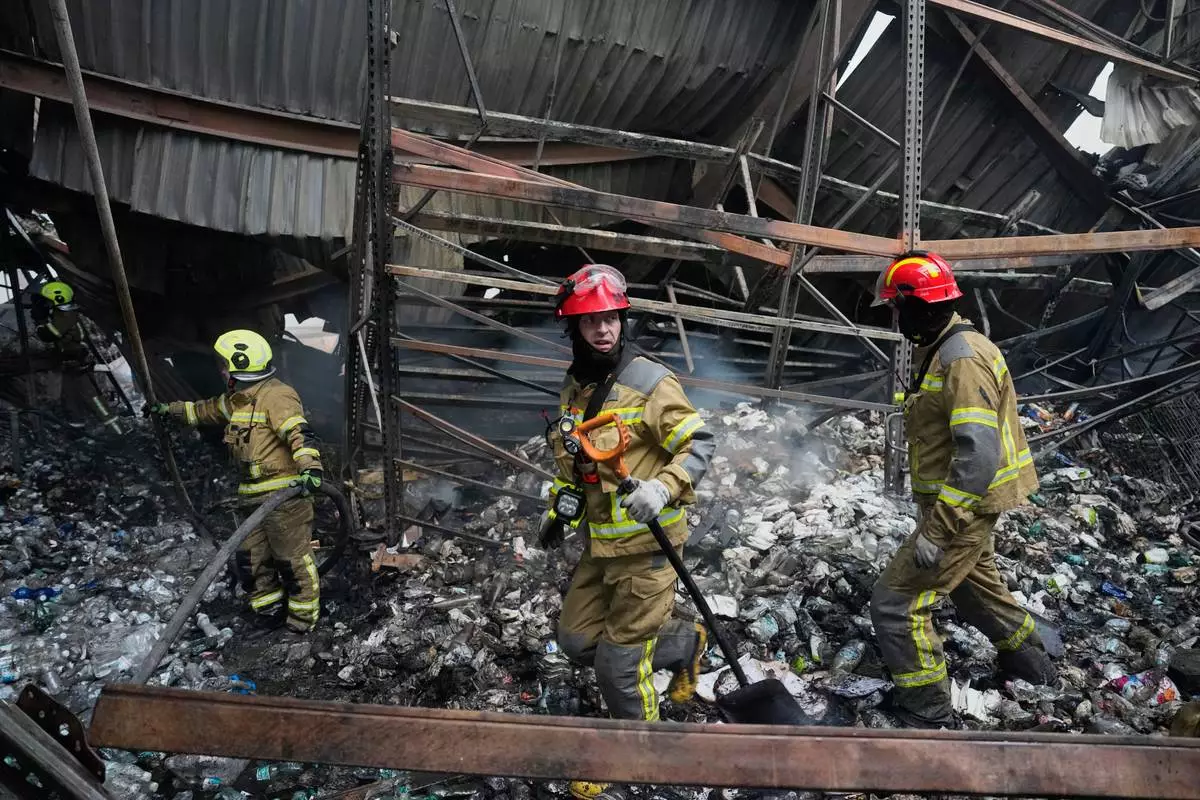
Firefighters put out a fire after Russian missiles hit a food warehouse near Kyiv, Ukraine, Wednesday, Aug. 5, 2026. (AP Photo/Efrem Lukatsky)