Speech by SCST at opening ceremony of ASEAN Film Festival 2026
Following is the speech by the Secretary for Culture, Sports and Tourism, Miss Rosanna Law, at the opening ceremony of the ASEAN (Association of Southeast Asian Nations) Film Festival 2026 today (August 20):
Deputy Commissioner Hua You (Deputy Commissioner of the Ministry of Foreign Affairs of the People's Republic of China in the Hong Kong Special Administrative Region (SAR)), Consul-General Muzambli Markam (Dean of ASEAN Consuls-General in Hong Kong and Consul-General of Malaysia in Hong Kong), Chairman Daryl Ng (Chairman of Hong Kong-ASEAN Foundation), Commissioner Nicholas Ho (Commissioner for Belt and Road), Consuls-General, the Honorable Vivian Kong (Legislative Council Member), distinguished guests, ladies and gentlemen,
Good evening. I am delighted to join you once again at the opening ceremony of the ASEAN Film Festival.
As we gather for the fourth edition of this vibrant festival, I am delighted to see it growing from strength to strength. This year marks a milestone, with an unprecedented participation of 20 economies - including nine first-time participants such as the Chinese Mainland and the Hong Kong SAR. Through the universal language of music and storytelling woven into these films, this festival will undoubtedly deepen cultural understanding and forge closer bonds among ASEAN countries and our friends from around the region.
But this event is about far more than just screenings - it is fundamentally about connection and collaboration. These themes resonate profoundly with Hong Kong's strategic positioning as the East-meets-West centre for international cultural exchanges. Over the coming weeks, our city will host a dynamic lineup of sharing sessions, networking events, and collaborative dialogues. These exchanges are not merely cultural; they are essential to building lasting partnerships and genuine friendships.
As the Secretary for Culture, Sports and Tourism, I am proud that our Cultural and Creative Industries Development Agency (CCIDA) is sponsoring select programmes this year. Our aim is to help provide more valuable opportunities for Hong Kong's own film professionals to engage with the ASEAN community and beyond, fostering mutual learning and creative synergy.
Specifically, CCIDA is co-presenting the screenings of two local productions - "Last Song for You" and "Band Four" - alongside a dedicated networking reception and a post-screening talk with Hong Kong filmmakers. I sincerely hope these events will spark meaningful dialogues and insightful exchanges between our local creative sectors and distinguished visitors from ASEAN.
Hong Kong's film industry remains a cornerstone of our pride and identity. The Hong Kong SAR Government is steadfast in its commitment to supporting our filmmakers through targeted initiatives. Through the Film Development Fund, we nurture emerging talent, back original local productions, encourage international co-productions, and showcase Hong Kong cinema on the global stage.
Beyond the silver screen, we are actively integrating film with tourism to bring our cinematic culture into everyday life. In the past two years, we have launched two immersive and distinctive film set exhibitions - the "Kowloon Walled City: A Cinematic Journey" and the "Yau Ma Tei Police Station: A Cinematic Journey". I warmly invite those of you who have yet to experience them to do so, and discover the unique ambience of the Hong Kong cinema firsthand.
Before I close, I would like to extend my heartfelt appreciation to the Hong Kong-ASEAN Foundation for organising this wonderful event. I wish the ASEAN Film Festival 2026 every success, and everyone here a very pleasant evening. Thank you.

Source: AI-found images
CFS announces test results of Summer Food Surveillance Programme
The Centre for Food Safety (CFS) of the Food and Environmental Hygiene Department (FEHD) today (August 20) released the findings of its Summer Food Surveillance Programme 2026. The results of about 2 600 food samples tested were satisfactory, except for six unsatisfactory samples that had been announced earlier. The overall satisfactory rate was 99.8 per cent. A spokesman for the CFS reminded members of the public to remain vigilant and pay more attention to food safety and environmental hygiene as the hot and humid climate of the long summer in Hong Kong facilitates the multiplication of bacteria.
The spokesman said, "The CFS collected about 2 600 samples from market stalls, restaurants, food factories, fresh provision shops, online vendors (including online retailers and online food delivery platforms), hawkers and others for tests."
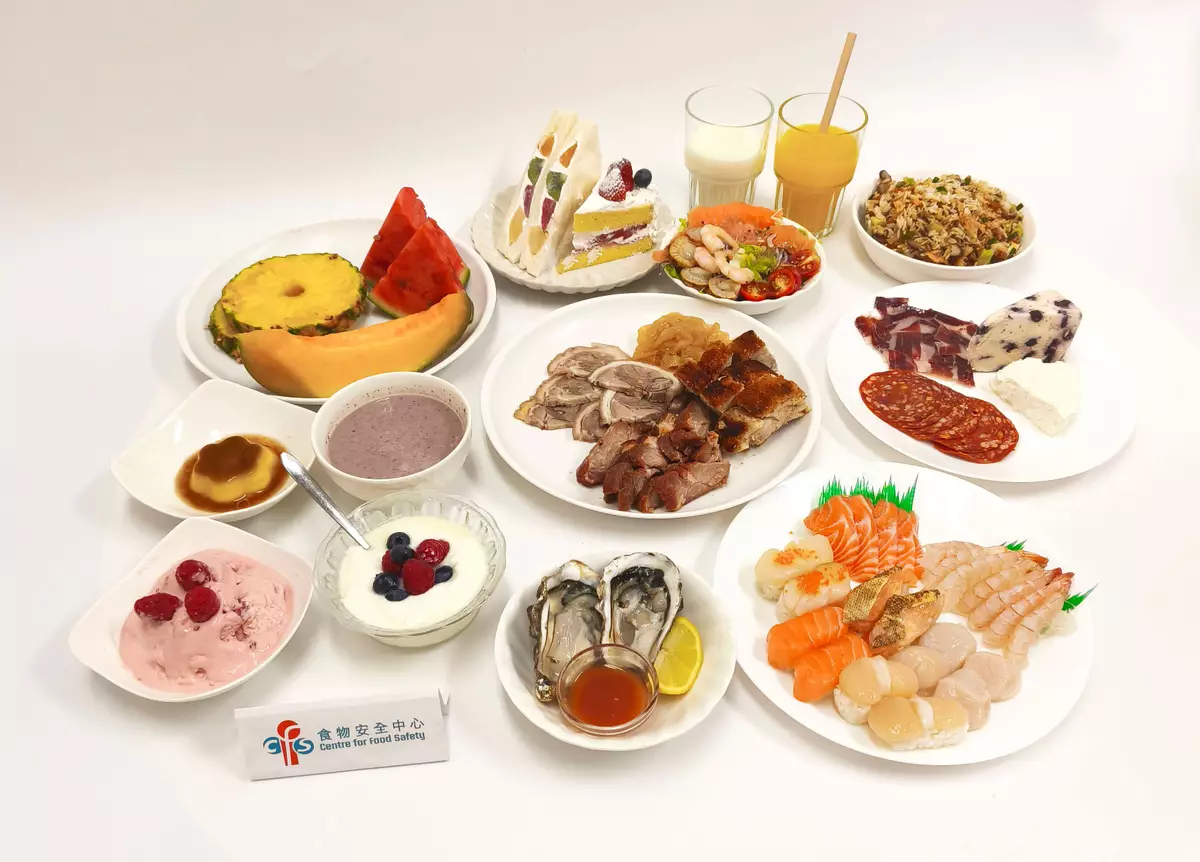
The samples comprised 535 samples of dairy products and frozen confections, 113 samples of cut fruit and salads, 192 samples of desserts and drinks, 61 samples of sandwiches, 244 samples of cold cuts or cooked meat products, 862 samples of aquatic products (such as sushi and sashimi, fish, crustaceans, molluscs and other edible aquatic animals) and 592 samples of other ready-to-eat foods.
The spokesman said that about 2 420 food samples were collected for microbiological tests, and about 170 samples for chemical tests. The results showed that except for a frozen confection sample and four ice cream samples detected with coliform bacteria counts exceeding the legal limits, and a prepackaged pork floss sample detected with an antioxidant exceeding the legal limit, the remaining samples were all satisfactory.The overall satisfactory rate was 99.8 per cent.
The CFS has announced the test results of the unsatisfactory samples and conducted follow-up actions, including instructing the vendors concerned to stop selling the relevant food and remove from shelves the affected products, and tracing the sources of the food items in question.
A spokesman for the CFS said, "In view of hot weather, the CFS has been enhancing surveillance of frozen confection. The FEHD has been stepping up inspections of factories that manufacture ice cream at the wholesale level and licensed frozen confection factoriesat the retail level this year, ensuring that food premises comply with relevant licensing conditions and meet statutory hygiene standards in the handling and manufacturing of ice cream. As of July this year, the CFS has organised 10 thematic seminars for the trade, providing health education to operators and staff of frozen confection factories and distributing food safety pamphlets to remind them of the proper way of handling frozen confections. The CFS has also reminded members of the public to pay attention to food safety during the summer period through various channels, such as social media and seminars."
The spokesman reminded members of the public in particular that raw or undercooked foods are high-risk foods as there is not any, or inadequate, heat treatment to eliminate the microorganisms present that can pose risks to human health. Raw or undercooked foods are also associated with the risk of contracting antimicrobial resistance (AMR) microorganisms. Although these AMR microorganisms may not cause illnesses, they may transfer their antibiotic resistance genes to other bacteria inside the human body, therefore affecting the effectiveness of the future use of antibiotics when needed. Susceptible populations such as pregnant women, young children, the elderly and people with weakened immunity (e.g. people with chronic diseases or those on antibiotics treatment, antacid and long-term steroids or drugs given to prevent transplant rejection) are of higher risk of being infected or having complications if they consume raw or undercooked foods due to their health status. They should therefore avoid eating raw and undercooked foods.
Members of the public should pay attention to food safety, especially in summer, and observe the following Five Keys to Food Safety in order to reduce the risk of foodborne diseases:
- choose (choose safe raw materials);
- clean (keep hands and utensils clean);
- separate (separate raw and cooked food);
- cook (cook thoroughly); and
- safe temperature (keep food at a safe temperature).
Members of the public are also reminded to dine out in licensed and hygienic restaurants. Food premises selling sushi and sashimi or other high-risk foods require a special permit. The public should patronise only those with relevant licences or permits issued by the FEHD.
CFS announces test results of Summer Food Surveillance Programme Source: HKSAR Government Press Releases