China expressed firm opposition to the U.S. allegation of a "shadow transshipment network" on Thursday, calling it a false narrative and fabrication.
Spokesman for the Ministry of Commerce He Yadong said the U.S. report entitled "The Great Transshipment Scam: Rise, Scope, and Costs" disregards the facts and distorts right and wrong by denouncing normal international trade and investment as a "scam." "This is a typical act of unilateralism and protectionism aimed at suppressing and blocking Chinese products. China is strongly dissatisfied with and firmly opposed to this. In fact, it is the United States' excessively high and differentiated tariffs that are the fundamental cause of the threats to the security of global supply chains. By attributing its domestic economic problems to external factors, the United States will not be able to resolve its own deep-seated problems. China urges the United States to immediately stop its irresponsible accusations, stop undermining China-U.S. economic and trade relations, and genuinely safeguard the security and stability of global industrial and supply chains," said He at a press conference in Beijing.
"China has always complied with international economic and trade rules and will continue to conduct economic and trade cooperation with all parties on the basis of equality and mutual benefit, jointly build a trade network of mutual benefit and win-win outcomes, and make positive contributions to global development and prosperity," he added.
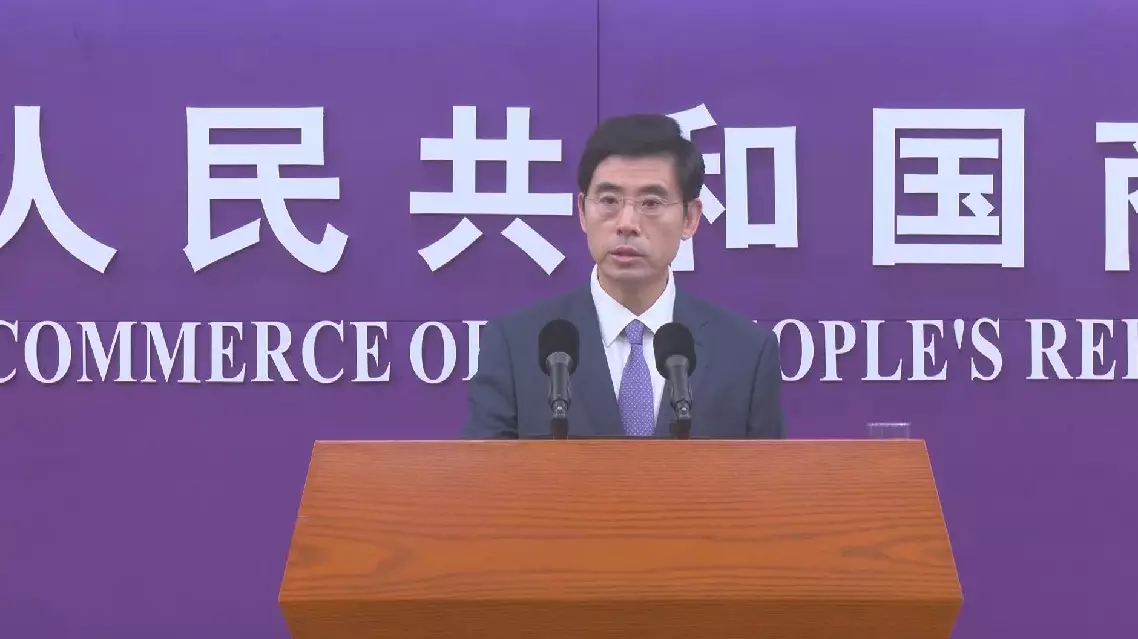
China calls US "shadow transshipment scam" allegation false narrative
The U.S. Treasury Department on Friday added the International Criminal Court (ICC) to its sanctions list, extending U.S. sanctions against the Hague-based court from individual officials to the institution itself.
"Today, the United States is sanctioning the International Criminal Court. We will ban transactions with this rogue court, cutting off their resources and crippling its ability to operate," U.S. Secretary of State Marco Rubio said in a statement.
"President (Donald) Trump will never allow the International Criminal Court to prosecute Americans," said Rubio. "America never joined the court. We don't need it. And we don't want it."
The court was added to the Specially Designated Nationals and Blocked Persons List, subjecting it to U.S. asset-blocking sanctions and restrictions on transactions involving U.S. persons, according to a notice published by the Treasury's Office of Foreign Assets Control.
Alongside the new designation, the Treasury issued four general licenses authorizing certain transactions involving the ICC, including a 180-day authorization for activities necessary to maintain its operations, as well as exemptions covering information technology services, the court's pension plan and activities related to ICC detainees.
The U.S. State Department said in a fact sheet that the 180-day license was intended to give countries that are parties to the ICC time to demonstrate meaningful progress on diplomatic and legal resolutions addressing U.S. concerns regarding the court.
The designation follows earlier U.S. sanctions against ICC officials under an executive order signed by Trump in February 2025. To date, the United States has imposed sanctions on over a dozen persons pursuant to the order, including ICC President Tomoko Akane of Japan, according to the state department.
The Trump administration has accused the ICC of improperly asserting jurisdiction over the United States and Israel, neither of which is a party to the Rome Statute establishing the court.
Tensions surged after the tribunal issued arrest warrants in 2024 for Israeli Prime Minister Benjamin Netanyahu and then Defense Minister Yoav Gallant over war crimes and crimes against humanity related to the Gaza conflict. The ICC maintains it holds jurisdiction over alleged crimes committed within member territories, regardless of the suspect's citizenship.
The ICC strongly rejected the U.S. sanctions on Friday. "It is an assault on the rule of law and on the very foundations of the international legal order which strikes at the simple principle that no one stands above the law," the ICC said in a statement, vowing that the designation would not deter it from carrying out its mandate.
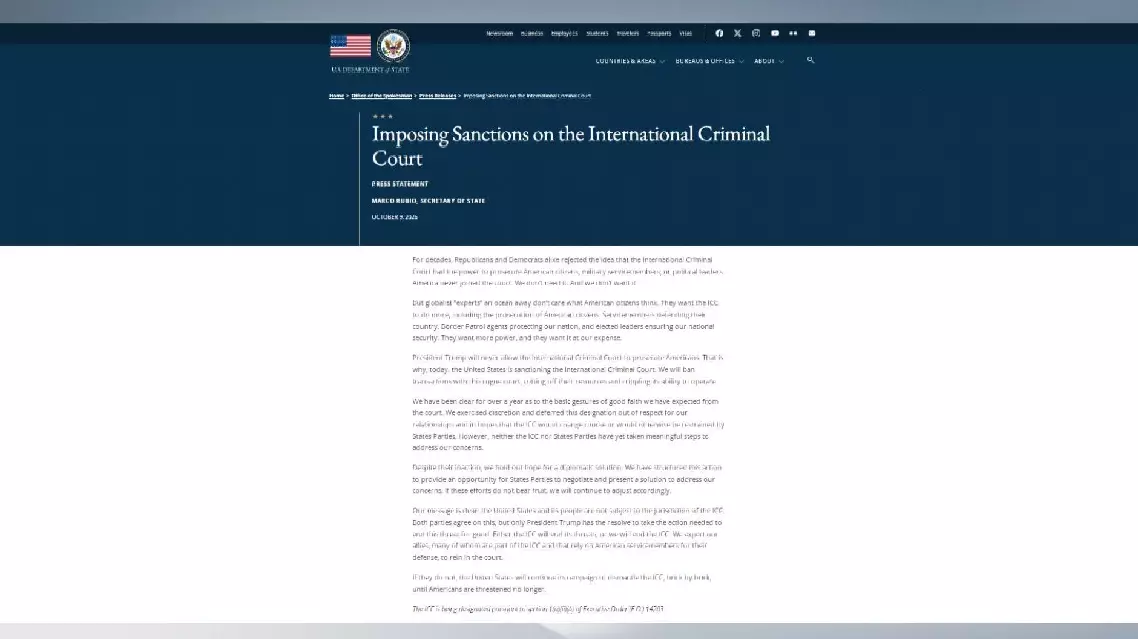
U.S. sanctions International Criminal Court