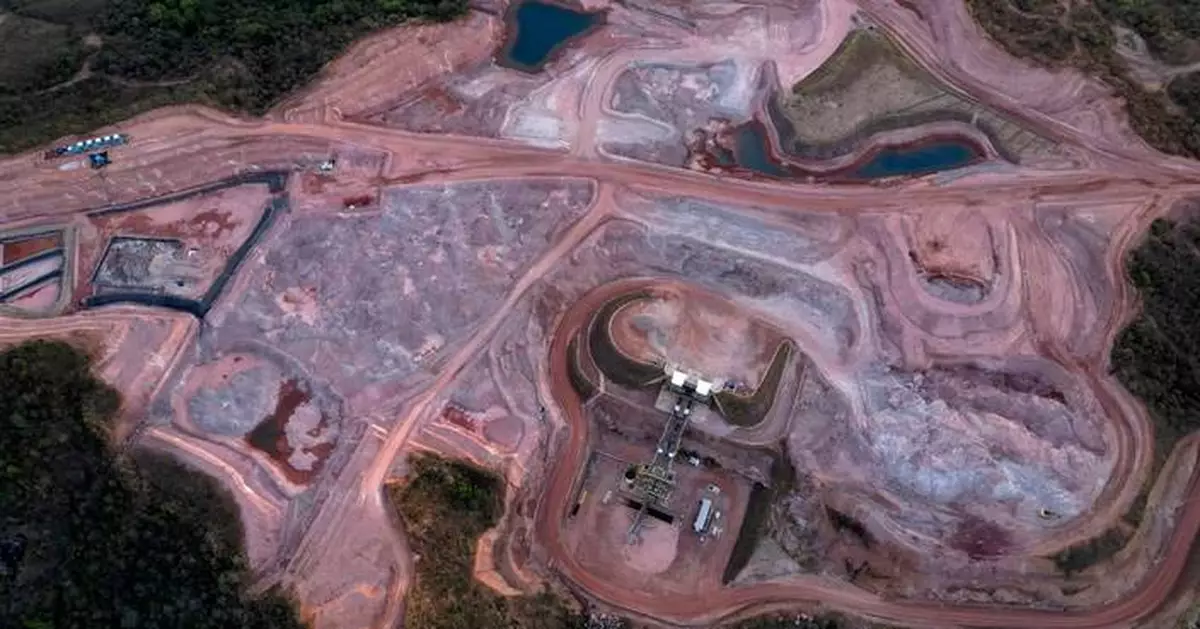
SAO PAULO (AP) — In the global race to secure rare earths that are key for everything from mobile phones to green technologies, Brazil is emerging as an alternative to China's dominance, particularly for the United States and Australia, according to an analysis of mining permits by The Associated Press and Reporter Brasil.
That could boost the economy of Latin America’s largest and most populous nation, which is second only to China in rare earth reserves.
Click to Gallery
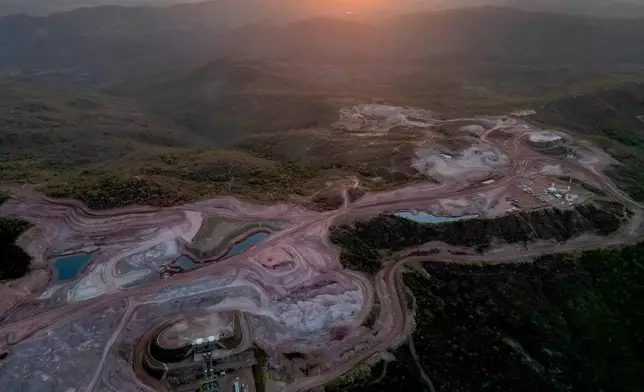
FILE - A mine operated by Serra Verde Mining digs for rare earth elements including neodymium, praseodymium, terbium and dysprosium, which are essential for the production of permanent magnets, in Minacu, Goias state, Brazil, July 28, 2025. (AP Photo/Eraldo Peres, File)
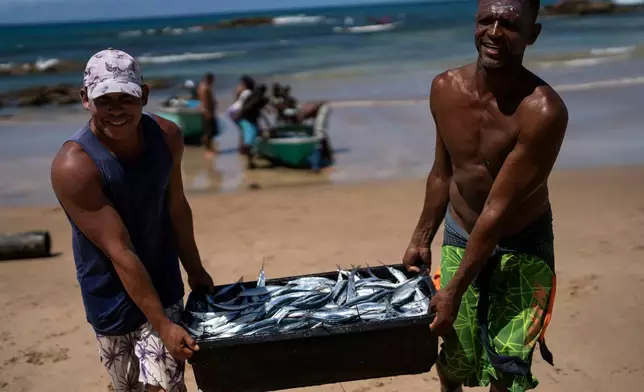
FILE - Fishermen carry their catch of the day to the beach in Salvador, Bahia state, Brazil, Sept. 15, 2022. (AP Photo/Rodrigo Abd, File)
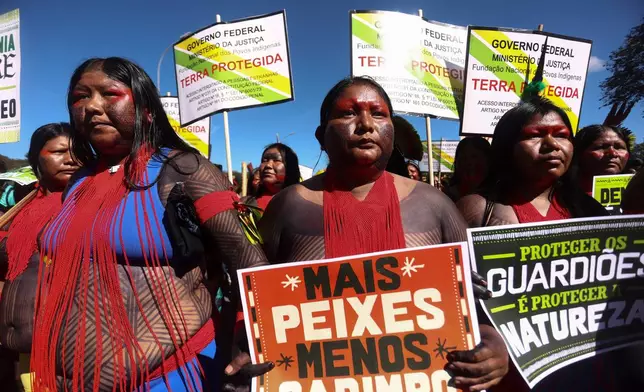
FILE - An Indigenous woman marches with a sign that reads in Portuguese "More fish, less mining," during the 20th annual Free Land Indigenous Camp in Brasilia, Brazil, April 23, 2024. (AP Photo/Luis Nova, File)
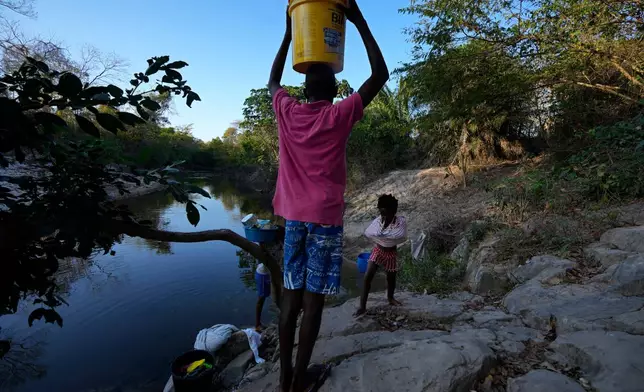
FILE - Children carry water from the Branco River at dawn at the Kalunga quilombo, a Brazilian settlement founded by escaped enslaved Africans, in the rural area of Cavalcante in Goias state, Brazil, Aug. 15, 2022. (AP Photo/Eraldo Peres, File)
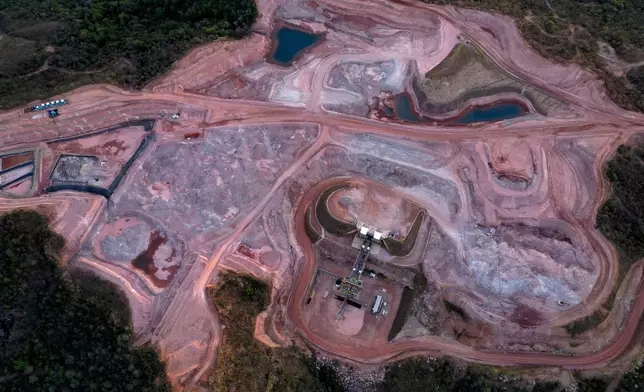
FILE - A mine operated by Serra Verde Mining digs for rare earth elements including neodymium, praseodymium, terbium and dysprosium, which are essential for the production of permanent magnets, in Minacu, Goias state, Brazil, July 28, 2025. (AP Photo/Eraldo Peres, File)
Foreign capital is rushing in. Nearly half of the 2,727 overall rare earth exploration applications — or 42% — in Brazil were made by subsidiaries of foreign mining companies or firms with foreign ownership stakes. Eleven of the 20 companies with the largest number of applications are backed by foreign investment, mostly from Australia, the U.S. and Canada.
The analysis reviewed all National Mining Agency records through June. Rare earth exploration applications have surged, with more than 86% filed in the past three years, including 268 in the first half of 2026, according to the agency’s public data.
But the mining, which in some cases could happen near reserves in the Amazon rainforest, also comes with major environmental risks. Indigenous communities are beginning to sound the alarm. It also raises questions about relations between the U.S. and Brazil, long trading partners, and Brazil and China, which have become closer in recent years.
“Brazil’s rare earths are significant not just because of the sheer size of the deposits," said Robert Muggah, co-founder of the Igarape Institute, a Brazilian think tank, "but because they sit at the intersection of resource nationalism, energy transition demand, Western supply-chain diversification and competition with China’s rare earth dominance.”
This article is a collaboration between Reporter Brasil and The Associated Press.
Rare earths are essential in digital and defense technologies, used in electronics, magnets and batteries. They are also used in wind turbines and electric vehicle motors, critical to the transition away from fossil fuels like oil, gas and coal that cause global warming. The International Energy Agency estimated in 2022 that demand for rare earths could increase at least threefold by 2040.
The AP-Reporter Brasil analysis identified a wave of U.S. investment after China last year restricted rare earth exports in response to U.S. tariffs. That put tremendous pressure on U.S. companies, and many experts believe it brought President Donald Trump back to the negotiating table with Beijing.
The new U.S. investment has included the purchase of Brazil’s only commercial rare earth producer, Serra Verde, by a firm in which the U.S. government has a stake. The analysis also drew on corporate ownership records compiled through Cruzagrafos, a platform developed by the Brazilian Association of Investigative Journalism.
At least 25% of the applications are to mine in areas that overlap with or are located within 10 kilometers (6 miles) of 283 protected areas and Indigenous territories, according to the Energy Transition Observatory, a platform developed by Reporter Brasil that cross-references geolocation data from mining projects and protected lands. Experts say mining projects within this buffer zone can cause environmental damage.
Depending on what is mined, toxic chemicals can be released and radioactive waste generated. Other potential impacts include deforestation, air pollution, noise and polluted water seeping into rivers and lakes, which can poison fish populations and sully drinking water supplies.
The path from an exploration permit to commercial production can take five to 10 years, requiring companies to submit technical studies and exploration plans to the National Mining Agency and environmental regulators. Projects affecting Indigenous territories must also undergo consultation with the communities.
But rising demand has spurred efforts to speed approvals. Brazil’s Ministry of Mines and Energy, under President Luiz Inacio Lula da Silva, has discussed streamlining environmental licensing for strategic mining projects. Sen. Flávio Bolsonaro, a leading candidate challenging Lula in October’s election, has also proposed faster permitting for mining.
“Mining always leaves a footprint,” said Gilvan Magalhães, president of the residents’ association of Familia Magalhaes, a small Afro-Brazilian community in Goias state in central Brazil. Their territory with some 30 families overlaps with mining claims by the Canadian firm Aclara Resources, which last year secured $5 million in project development financing from the U.S. International Development Finance Corporation.
Aclara in a statement said its project initially overlapped with the community’s territory, but “no mining activities will take place there." Still, residents fear operations that could start as early as 2028 could affect local springs and wildlife.
Australia, the U.S. and Canada offer investment mechanisms that reduce risk in a sector where few prospects become profitable mines, said Julio Nery, director of mining affairs at the Brazilian Mining Institute.
Of every 1,000 potential rare earth prospects, only about 100 justify drilling and exploration. “And out of those 100, you’ll end up with only two good projects. The success rate is not very high,” Nery said.
Australian companies have taken a leading role in Brazil, accounting for 695 mining applications. Nearly a third were filed by Borborema Recursos Minerais, a subsidiary of the Sydney-based Brazilian Rare Earths Pty Ltd.
“We recognize that the critical minerals environment at the moment is quite concentrated,” Sophie Davies, Australia’s ambassador to Brazil, told the AP in an interview without specifically referencing China. “The challenge is where and how the markets are traded and how minerals are produced.”
U.S. companies ranked second with 347 applications.
Alpha Minerals Brazil, controlled by Texas-based Rare Earth Americas Inc., accounted for 181. Originally incorporated in the Cayman Islands, the company moved to the U.S. in 2025 and says it is “on a mission to become the premier new source of rare earth supply for America.”
Other major filers include Mineracao Apollo, partly controlled by Nevada-based Atlas Lithium, and Aclara, which recently opened a pilot processing plant in Louisiana, where it plans to turn rare earth materials into metals and alloys.
In February, the only company producing rare earths in Brazil, Serra Verde, secured a $565 million financing package from the U.S. International Development Finance Corporation. In April, USA Rare Earth announced an agreement to acquire Serra Verde for about $2.8 billion, three months after the U.S. Department of Commerce announced plans to provide up to $1.6 billion in support to USA Rare Earth. The department receives over 16 million shares in the deal, finalized in June.
Serra Verde is the only producer outside Asia with capacity to supply all four magnetic rare earth elements — neodymium, praseodymium, dysprosium and terbium — essential to automotive, medical, renewable energy, electronics, robotics, defense and aerospace industries.
“The Western rare earth sector stands at a critical inflection point, as governments and strategic industries urgently seek reliable sources of critical rare earths — particularly scarce heavy rare earths,” Thras Moraitis, CEO of Serra Verde Group, said in a statement during the acquisition.
Leonardo Durans, a director at Brazil’s Trade Ministry overseeing rare earth policy, said the country will not take sides in the U.S.-China dispute.
The AP-Reporter Brasil analysis showed that Chinese companies had filed no rare earth mining applications in Brazil as of June, but they have shown interest.
Mineracao Taboca, Brazil’s largest tin producer, was acquired last year by state-owned China Nonferrous Metal Mining Group, which operates a cassiterite mine in the Amazon rainforest and has announced plans to study rare earth potential in the area.
Also last year, Shenghe Resources Holding signed a memorandum of understanding with Brazilian companies WEG Minerao and Fenrir do Brasil to pursue rare earth opportunities. Fenrir has a mining project in Minas Gerais, a state in the southeast, focused on the exploration of elements including rare earths.
China's rare earth reserves still are thought to be double what Brazil might have. China has an estimated 44 million metric tons, according to the U.S. Geological Survey, while Brazil has an estimated 21 million metric tons, according to its Geological Service.
“The challenge today is that China dominates processing and refining,” said Brazilian lawmaker Zé Silva, author of pending legislation that would establish a federal policy on critical minerals and rare earths, set investment priorities and create a national council to monitor significant foreign influence in the sector. “Under our proposal, companies are welcome to invest, but they must transfer technology to Brazil, including processing capacity.”
On Monday, Brazil's president said the Senate would move forward with the proposed law, to keep mining-related jobs in the country and defend national interests.
“We will not allow anyone from outside to come here and exploit our mineral resources, because we want their processing and transformation to happen here,” Lula said.
The Associated Press’ climate and environmental coverage receives financial support from multiple private foundations. AP is solely responsible for all content. Find AP’s standards for working with philanthropies, a list of supporters and funded coverage areas at AP.org.
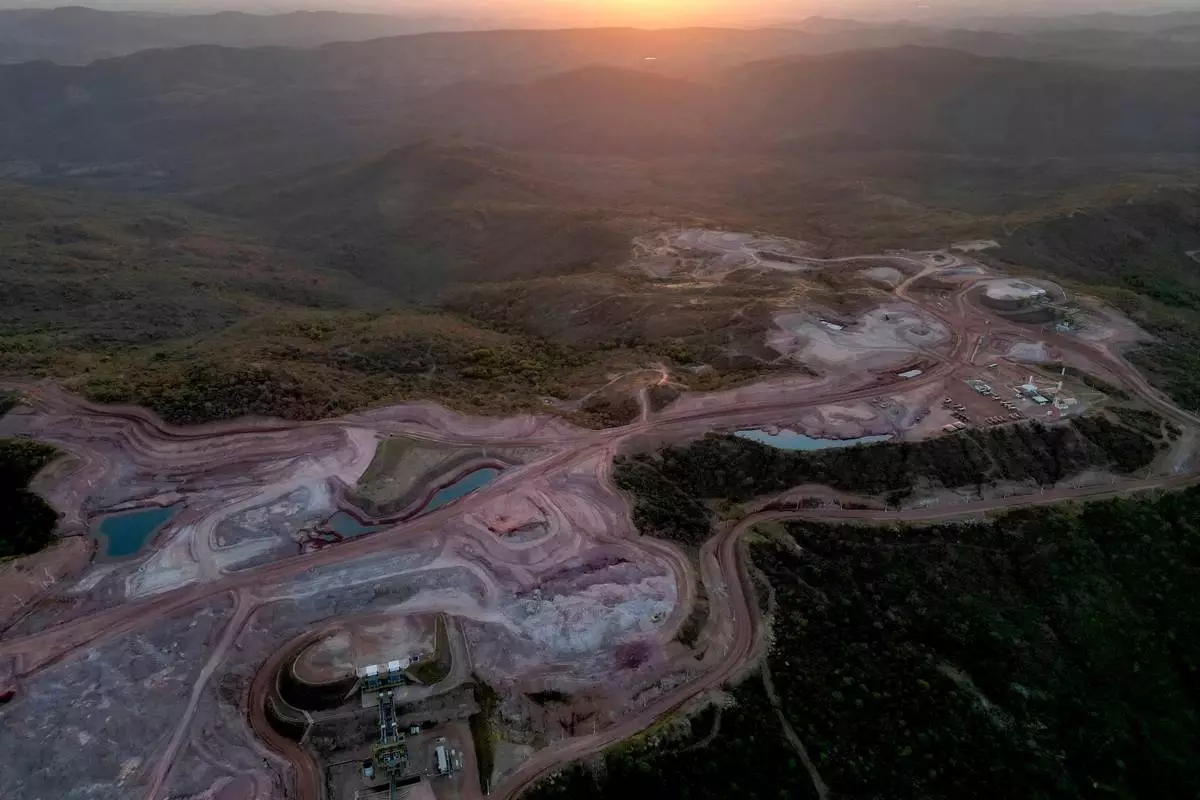
FILE - A mine operated by Serra Verde Mining digs for rare earth elements including neodymium, praseodymium, terbium and dysprosium, which are essential for the production of permanent magnets, in Minacu, Goias state, Brazil, July 28, 2025. (AP Photo/Eraldo Peres, File)
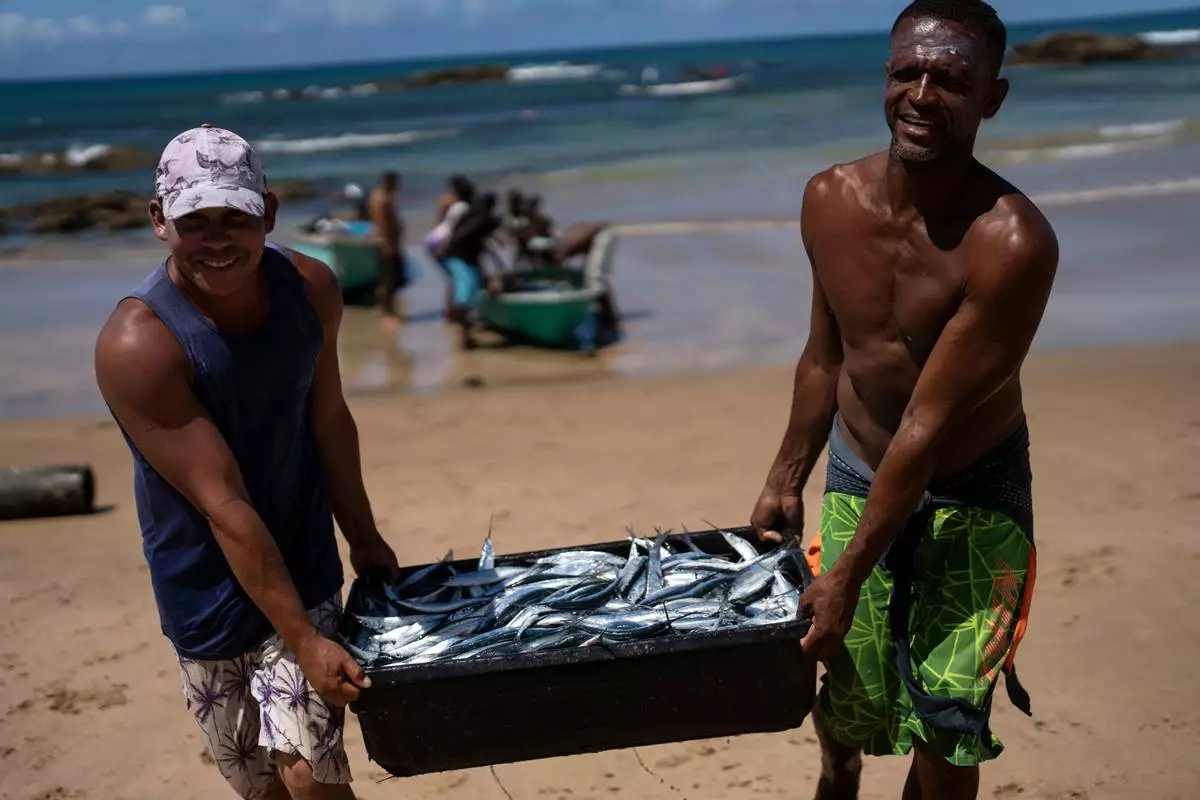
FILE - Fishermen carry their catch of the day to the beach in Salvador, Bahia state, Brazil, Sept. 15, 2022. (AP Photo/Rodrigo Abd, File)
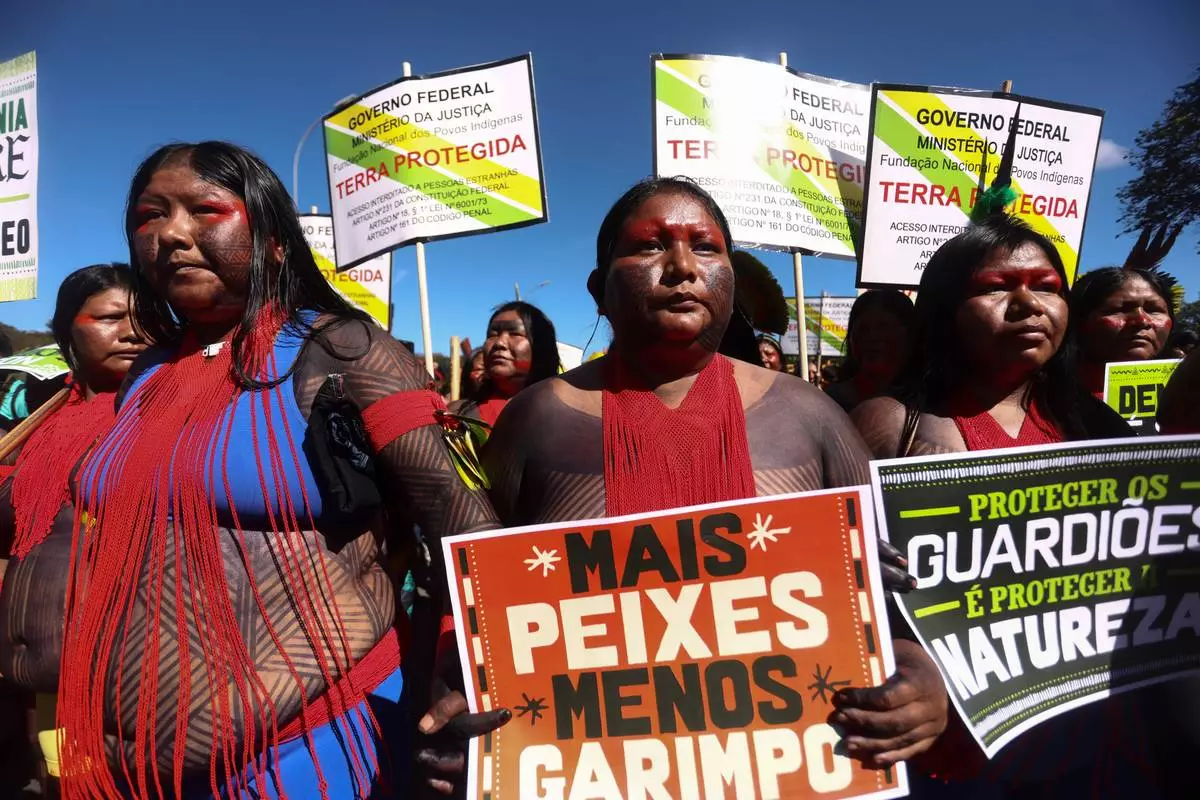
FILE - An Indigenous woman marches with a sign that reads in Portuguese "More fish, less mining," during the 20th annual Free Land Indigenous Camp in Brasilia, Brazil, April 23, 2024. (AP Photo/Luis Nova, File)
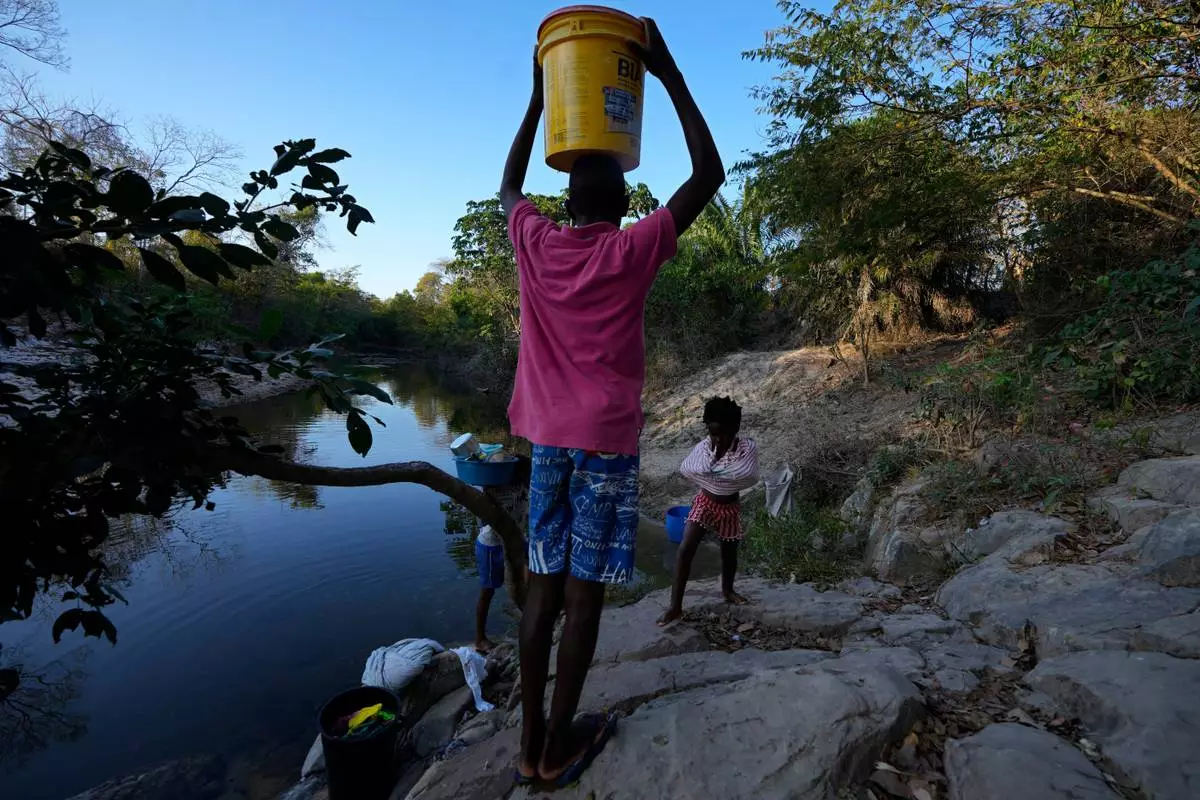
FILE - Children carry water from the Branco River at dawn at the Kalunga quilombo, a Brazilian settlement founded by escaped enslaved Africans, in the rural area of Cavalcante in Goias state, Brazil, Aug. 15, 2022. (AP Photo/Eraldo Peres, File)
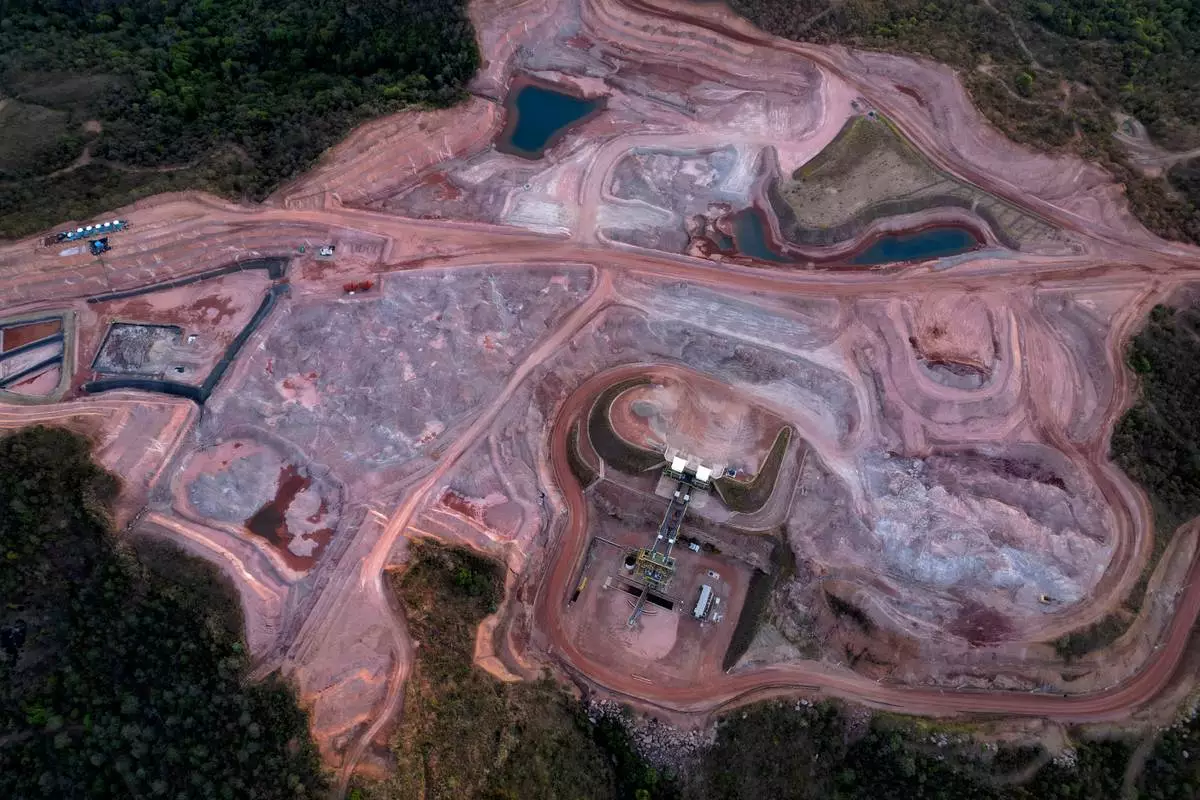
FILE - A mine operated by Serra Verde Mining digs for rare earth elements including neodymium, praseodymium, terbium and dysprosium, which are essential for the production of permanent magnets, in Minacu, Goias state, Brazil, July 28, 2025. (AP Photo/Eraldo Peres, File)