CHICAGO (AP) — Grant Holmes of the Atlanta Braves lost his bid for a no-hitter against the Chicago White Sox on Thursday when Andrew Benintendi lined a single to left with no outs in the seventh.
Holmes was relieved by Didier Fuentes after the hit, which followed a leadoff walk to Miguel Vargas. The 30-year-old right-hander walked three and struck out three.
Atlanta led 2-0 after seven in a makeup game of a June 11 rainout at Rate Field.
The 30-year-old Holmes retired 18 of the first 20 White Sox hitters. Colson Montgomery walked with two outs in the second and Drew Romo walked with one out in the fifth for Chicago's first two baserunners.
There's been only one no-hitter in the majors this season, a combined effort by three Houston pitchers in a 9-0 win over Texas on May 25. The Braves' last no-hitter was by Kent Mercker in a 6-0 win over the Dodgers at Los Angeles on April 8, 1994.
Holmes has never pitched a complete game in the majors. His longest effort was 7 2/3 innings on April 14, 2025, in an 8-4 win over Toronto.
Holmes spent 10 years in the minors before making his major league debut on June 16, 2024, with the Braves.
See AP’s full MLB coverage here

Atlanta Braves pitcher Grant Holmes delivers during the first inning of a baseball game against the Chicago White Sox, Thursday, Aug. 20, 2026, in Chicago. (AP Photo/Matt Marton)

Atlanta Braves pitcher Grant Holmes delivers during the first inning of a baseball game against the Chicago White Sox, Thursday, Aug. 20, 2026, in Chicago. (AP Photo/Matt Marton)
NEW YORK (AP) — The relief that swept the bond market just a day earlier disappeared on Thursday as oil prices, worries about high inflation and the U.S. government’s debt kept rising. That helped knock the U.S. stock market to its worst day in three weeks, and Walmart led the way on concerns about its upcoming profits.
The S&P 500 fell 0.9% for its fourth loss in the five days since setting its all-time high last week. The Dow Jones Industrial Average dropped 703 points, or 1.3%, and the Nasdaq composite sank 1%.
The bond market remains the center of the action after yields charged higher through the summer. Treasury Secretary Scott Bessent made a surprise move Wednesday that brought some temporary relief. His department said it will at least double the size of its planned purchases of longer-term Treasurys from Sept. 9 through Nov. 4.
That helped push yields down after the 10-year Treasury’s yield hit its highest level in more than a year and the 30-year yield got back to where it was in 2007. It was a big deal because high yields slow the economy by raising interest payments for people, companies and the government, and they can undercut prices for stocks and other investments.
But analysts had cautioned the effect may be short lived, given how small the purchases are relative to the overall size of the Treasury market and how they don’t fix the fundamental concerns that had driven up yields. Plus, more signals arrived quickly to keep those concerns high.
The U.S. government’s debt topped $40 trillion on Wednesday, a staggering record that arrived just months after the national debt first blew past the $39 trillion mark in April, because Washington continues to spend far more money than it brings in.
And on Thursday, the price for a barrel of Brent crude climbed 2.4% to $93.78 as uncertainty continues about when the war with Iran will allow oil tankers to freely exit the Persian Gulf again. President Donald Trump threatened Iran with “the MOST CRUSHING ECONOMIC OPERATION EVER TAKEN AGAINST ANY COUNTRY” late Wednesday but provided few details.
That helped push the 10-year Treasury yield up to 4.70% from 4.65% late Wednesday. It’s almost back to its 4.71% level from late Tuesday, before the Treasury Department made its announcement.
A couple encouraging reports on the U.S. economy also helped raise longer-term Treasury yields, which move with investors’ expectations for the economy and inflation in coming years. One said fewer U.S. workers applied for unemployment benefits last week than economists expected, while another said manufacturing in the mid-Atlantic region appears to be much stronger than expected.
On Wall Street, Walmart was the heaviest weight on the S&P 500 and fell 9.2% for its worst loss in four years even though it reported stronger profit and revenue for the latest quarter than analysts expected. Investors focused instead on an important underlying measure of revenue growth, which slowed again. Its forecast for profit in the current quarter also fell short of analysts’ expectations.
Given its massive size, Walmart offers a look at how shoppers are doing across the United States. A surprisingly weak update on sales at U.S. retailers overall last month had raised worries that shoppers may be succumbing to pressure from high inflation and a job market that may be looking less solid.
Advance Auto Parts tumbled 24.5% for its worst loss in three years after the retailer reported weaker revenue for the latest quarter than analysts expected, even though its profit topped expectations. CEO Shane O’Kelly said that “tighter household budgets constrained spending more than we anticipated, especially during the last four weeks of the quarter.”
Spending by U.S. consumers is the main engine of the economy, and a pullback by them could exacerbate what’s already a slowdown in growth for the economy.
A pullback could also mean a double-whammy for travel companies, which would see fewer bookings when they have to pay higher prices for fuel. Norwegian Cruise Line Holdings fell 3.4%, while United Airlines sank 3.5% and American Airlines lost 2.5%.
Helping to keep Wall Street’s losses in check was Deere, which reported stronger profit and revenue for the latest quarter than analysts expected. It rose 6.9% as the company said order trends indicate the agriculture equipment business looks set to accelerate after this year.
All told, the S&P 500 fell 66.82 points to 7,641.16. The Dow Jones Industrial Average dropped 703.84 to 52,759.21, and the Nasdaq composite sank 263.92 to 26,067.17.
In stock markets abroad, indexes were mixed in Europe following a stronger finish in Asia.
South Korea’s Kospi soared 5.9% for one of the world’s biggest moves after the two tech titans that dominate its market, Samsung Electronics and SK Hynix, jumped. Such swings have become more common for Seoul’s market, which has borne the brunt of rising and falling worries that winning stocks in the artificial-intelligence boom may have shot too high.
AP Business Writers Chan Ho-him and Michelle Chapman contributed to this report.
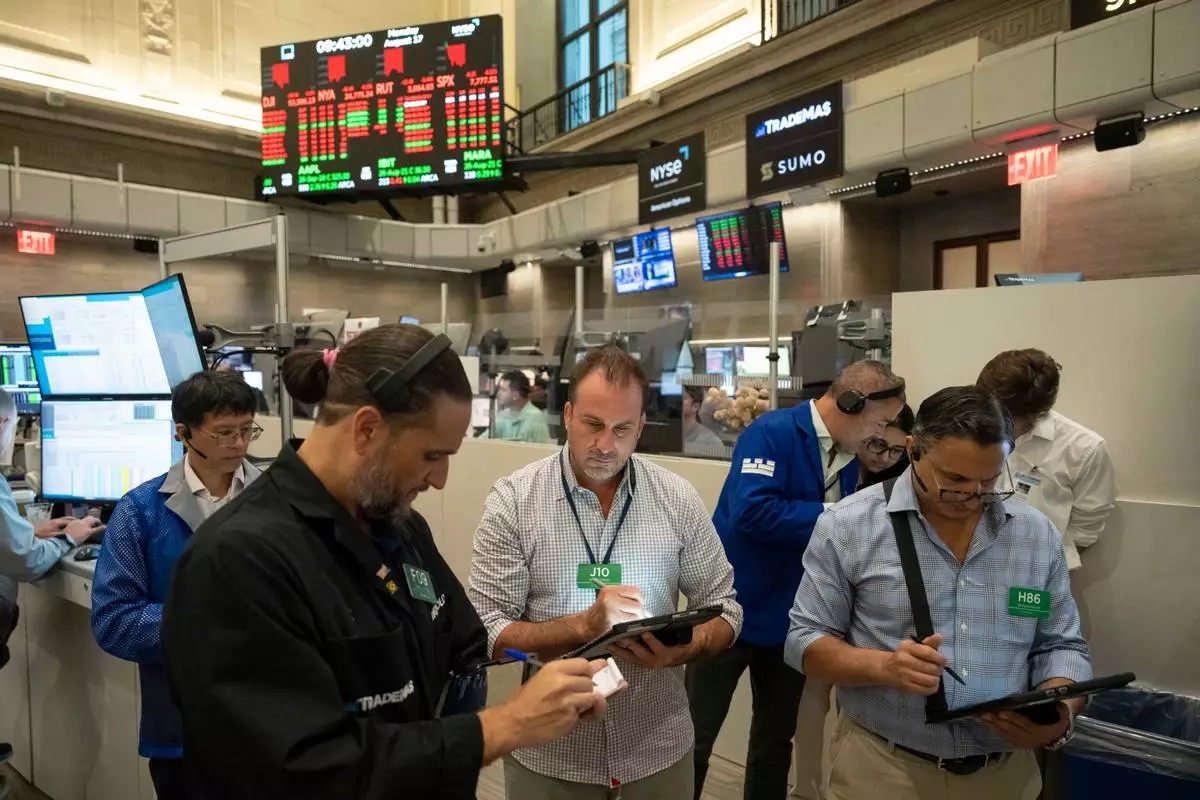
Options traders Chris Dattolo, Scott Frinzi, and Ravi Bhandari, left to right, work on the floor of the New York Stock Exchange, Monday, Aug. 17, 2026, in New York. (AP Photo/Yuki Iwamura)
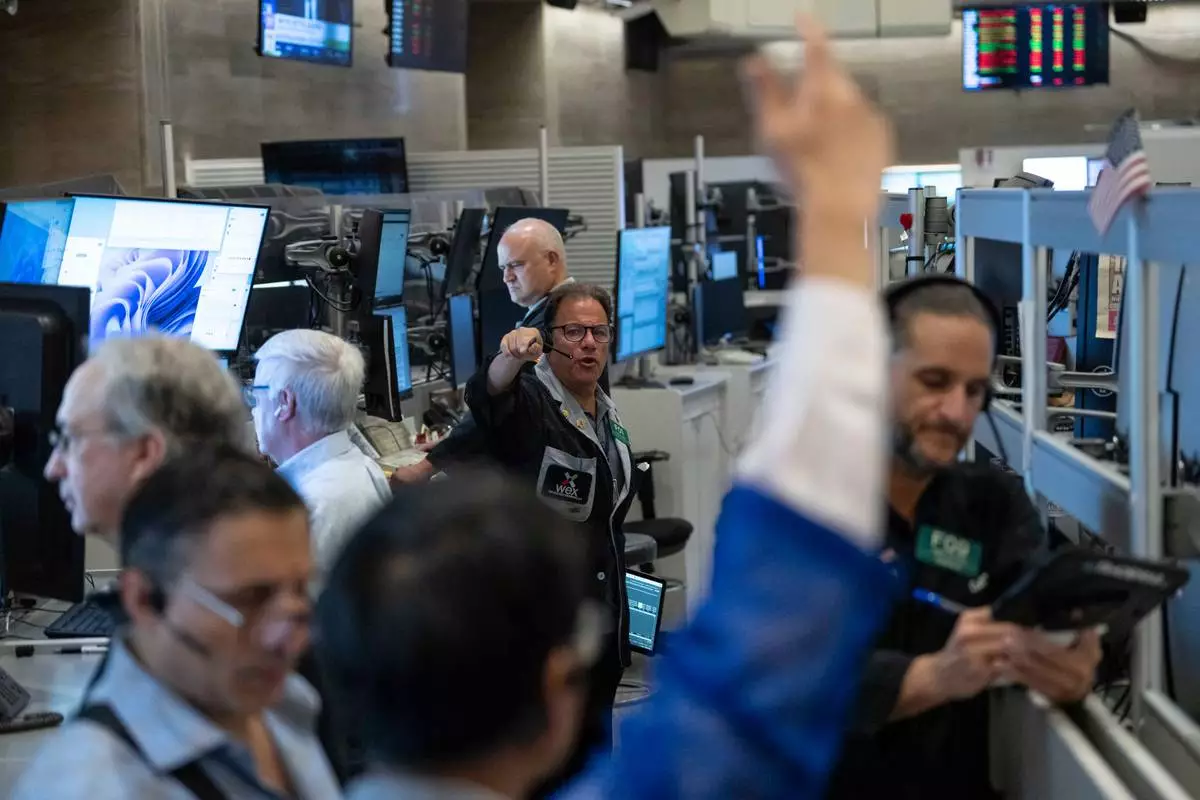
Options trader Anthony Spina works on the floor of the New York Stock Exchange, Monday, Aug. 17, 2026, in New York. (AP Photo/Yuki Iwamura)
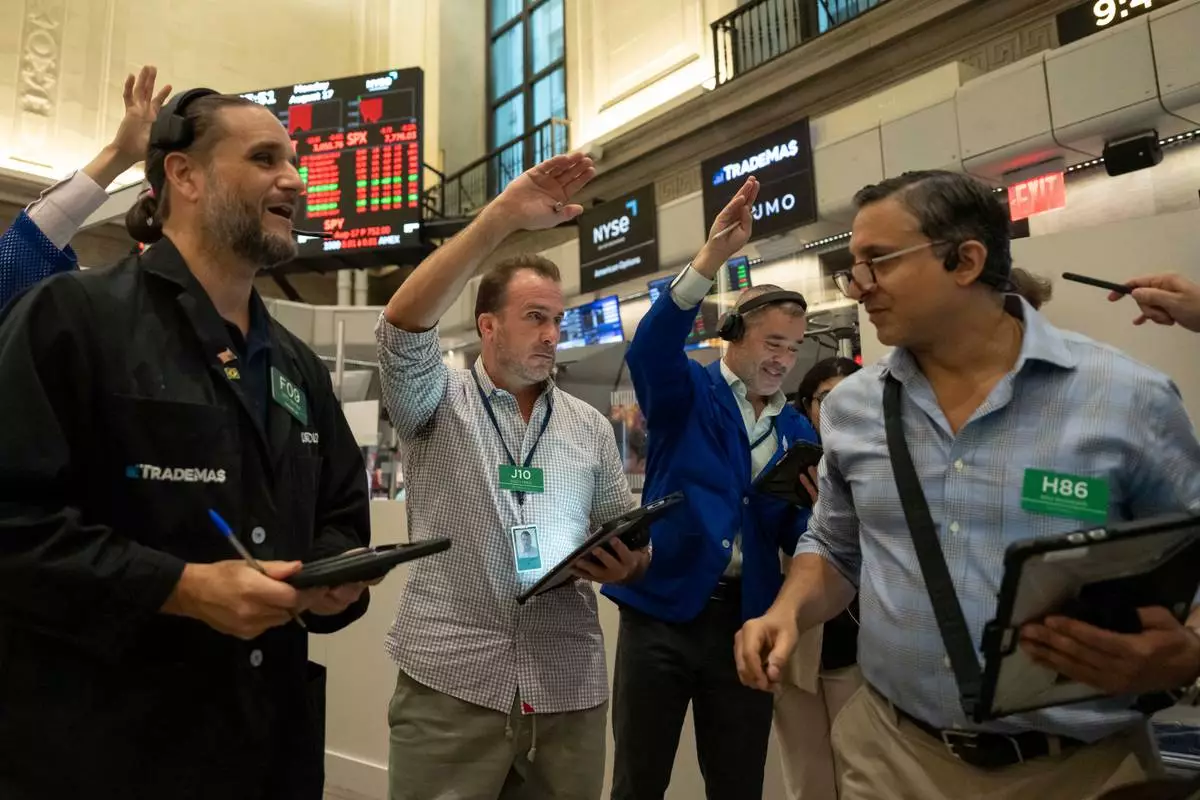
Options traders Chris Dattolo, Scott Frinzi, Justin Kanda, and Ravi Bhandari, left to right, work on the floor of the New York Stock Exchange, Monday, Aug. 17, 2026, in New York. (AP Photo/Yuki Iwamura)

People walk in front of an electronic stock board showing Japan's Nikkei index at a securities firm Thursday, Aug. 20, 2026, in Tokyo. (AP Photo/Eugene Hoshiko)
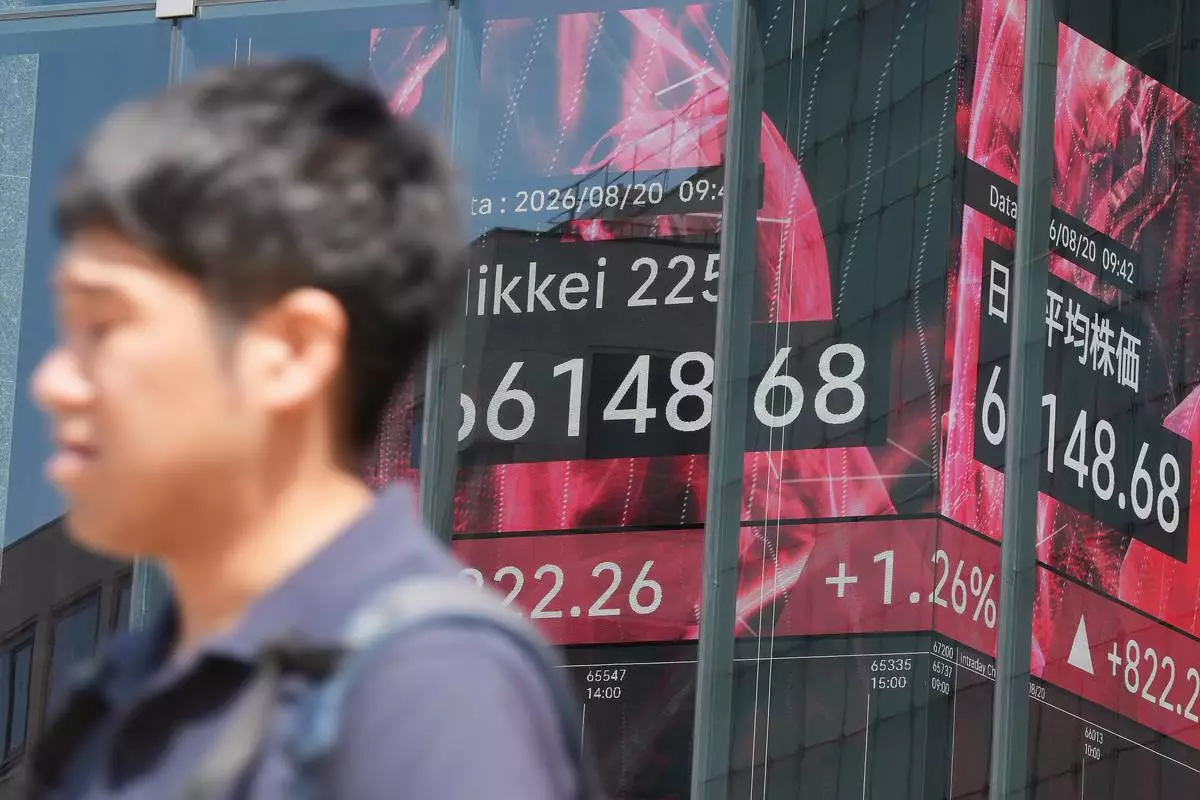
A person walks in front of an electronic stock board showing Japan's Nikkei index at a securities firm Thursday, Aug. 20, 2026, in Tokyo. (AP Photo/Eugene Hoshiko)
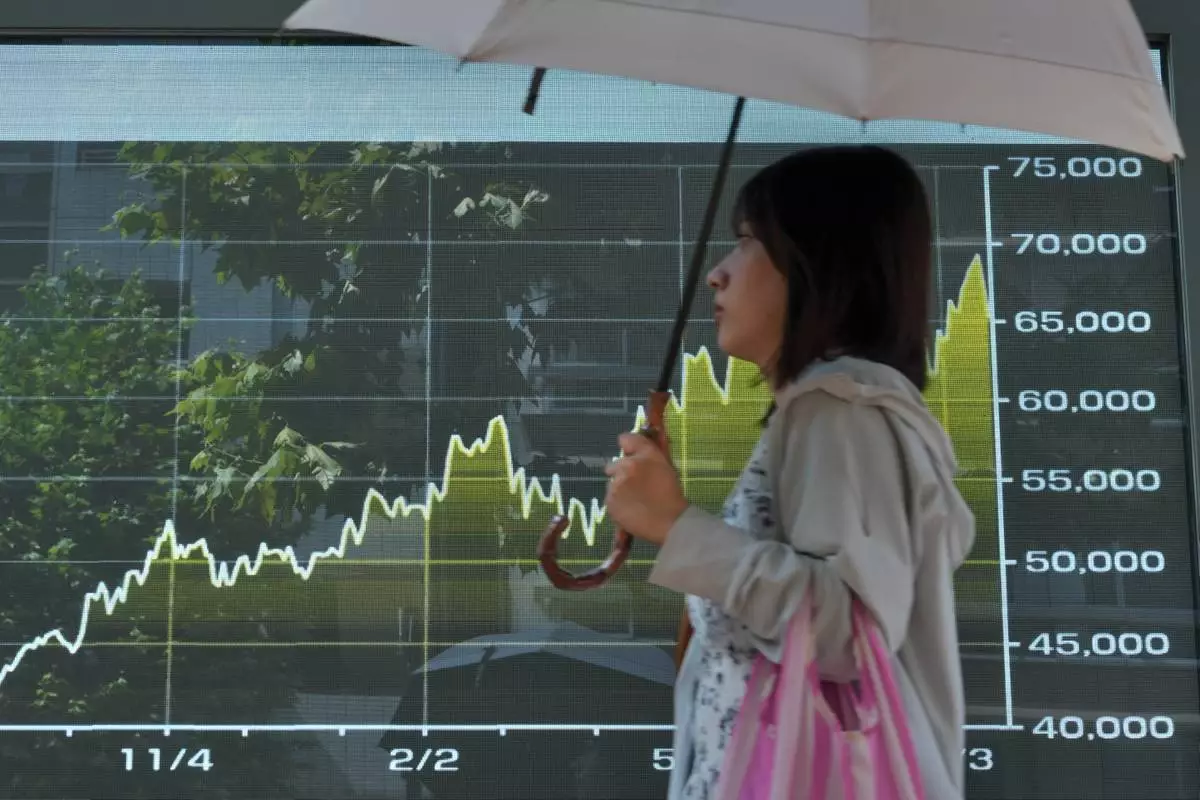
A person walks in front of an electronic stock board showing Japan's Nikkei index at a securities firm Thursday, Aug. 20, 2026, in Tokyo. (AP Photo/Eugene Hoshiko)
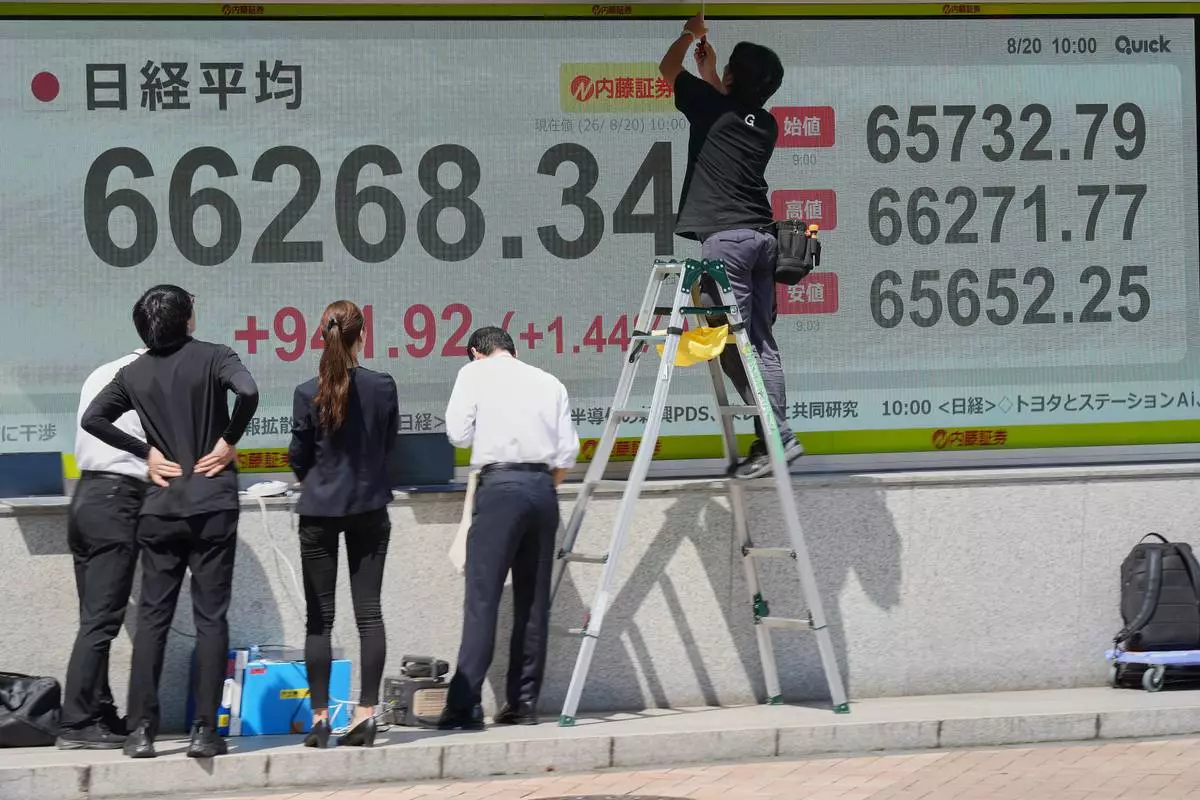
Staff arrange an electronic stock board showing Japan's Nikkei index at a securities firm Thursday, Aug. 20, 2026, in Tokyo. (AP Photo/Eugene Hoshiko)
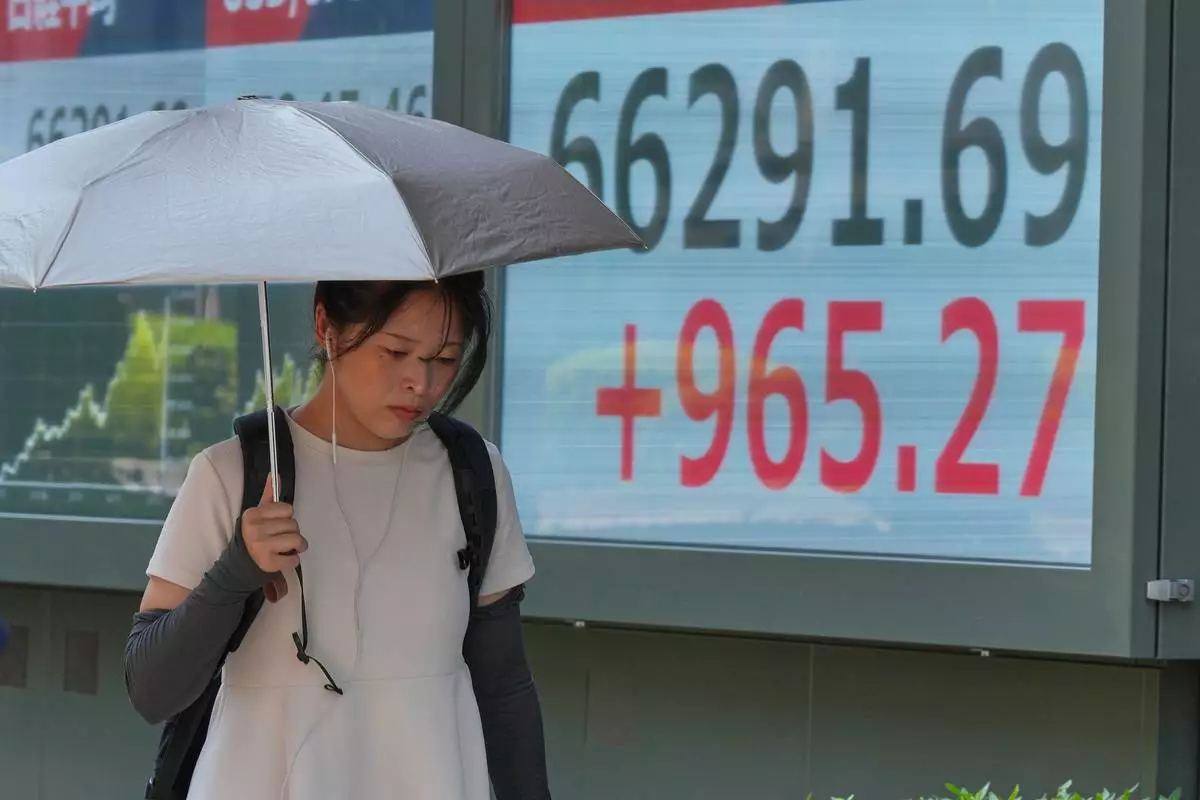
A person walks in front of an electronic stock board showing Japan's Nikkei index at a securities firm Thursday, Aug. 20, 2026, in Tokyo. (AP Photo/Eugene Hoshiko)