Skip to Content Facebook Feature Image

Somalia faces another hunger crisis and the UN food agency head says it has far less funds to help

News

Somalia faces another hunger crisis and the UN food agency head says it has far less funds to help
News

News

Somalia faces another hunger crisis and the UN food agency head says it has far less funds to help

2026-08-20 21:38 Last Updated At:22:01

MOGADISHU, Somalia (AP) — Six million people in Somalia are facing acute food insecurity while the World Food Program has only a tenth of the resources it had in 2022 when it helped avert famine in the drought- and conflict-stricken East African nation, the head of the U.N. agency told The Associated Press.

“We can only do the bare minimum,” WFP executive director Carl Skau said Wednesday during a visit to a nutrition center on the outskirts of the capital, Mogadishu. “We’re only providing these nutrition supplies to the children that are really the worst hit.”

More Images
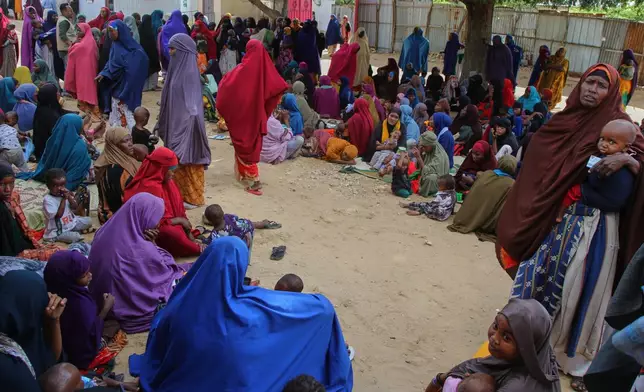
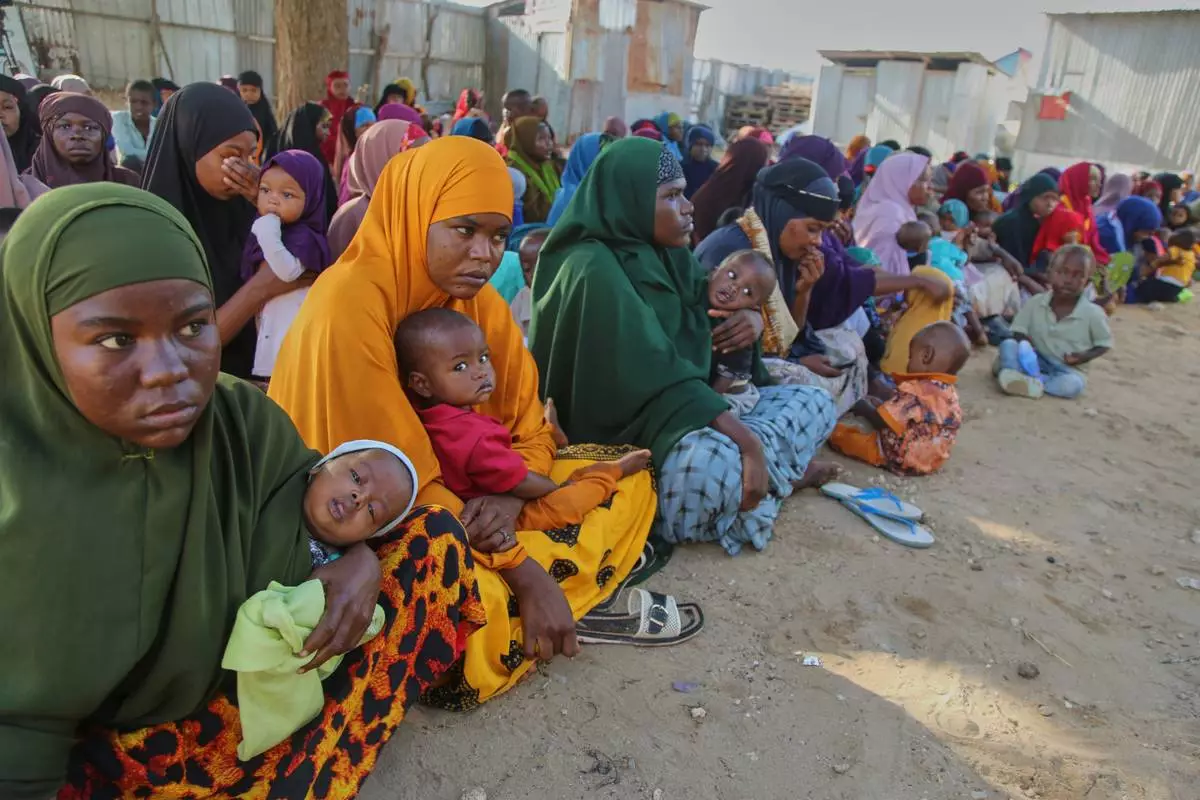
Somali women displaced by drought sit at Feynuus Nutrition Centre on the outskirts of the capital, Mogadishu, Somalia, Wednesday, Aug. 19, 2026. (AP Photo/Farah Abdi Warsameh)
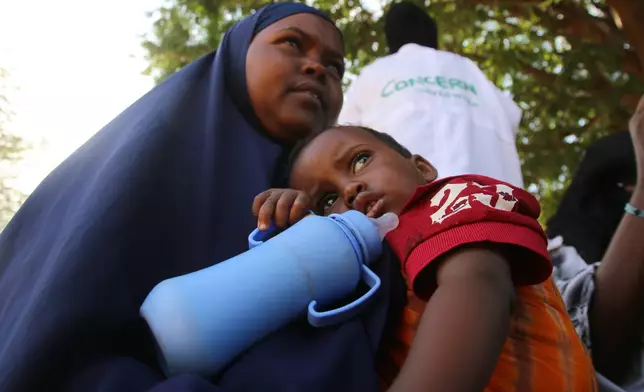
Somali women displaced by drought sit at Feynuus Nutrition Centre on the outskirts of the capital, Mogadishu, Somalia, Wednesday, Aug. 19, 2026. (AP Photo/Farah Abdi Warsameh)

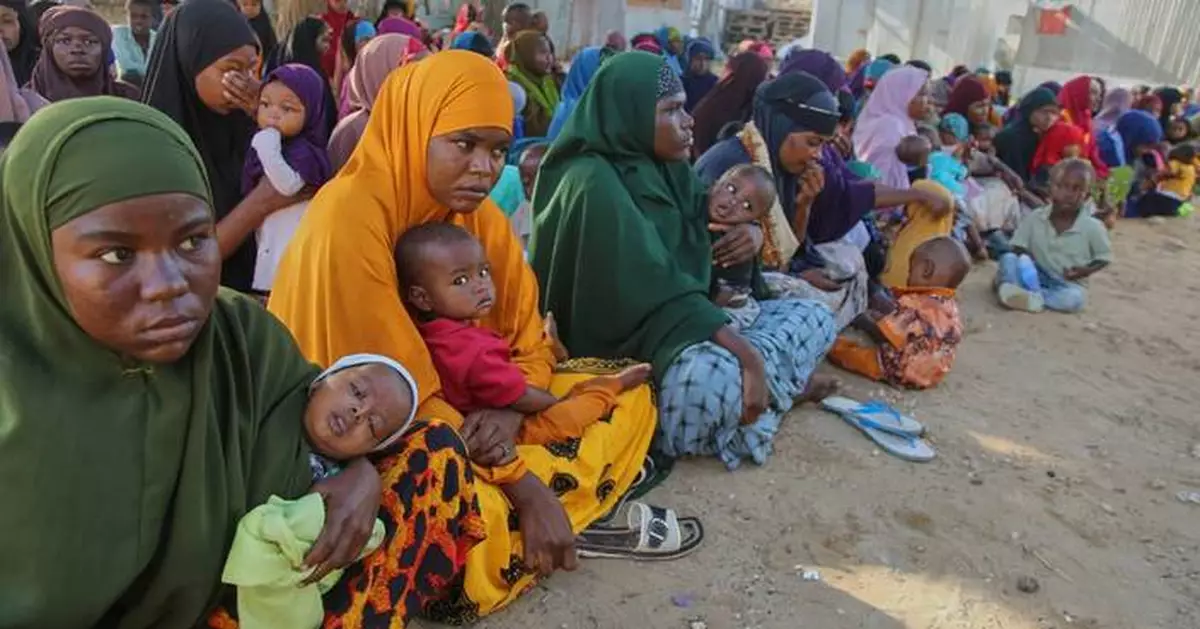
A Somali woman displaced by drought sits holding her child at Feynuus Nutrition Centre on the outskirts of the capital, Mogadishu, Somalia, Wednesday, Aug. 19, 2026. (AP Photo/Farah Abdi Warsameh)

A Somali woman displaced by drought sits holding her child at Feynuus Nutrition Centre on the outskirts of the capital, Mogadishu, Somalia, Wednesday, Aug. 19, 2026. (AP Photo/Farah Abdi Warsameh)

Acting Executive Director of the World Food Programme (WFP) Carl Skau, center, meets Somali women displaced by drought at Feynuus Nutrition Centre on the outskirts of the capital, Mogadishu, Somalia, Wednesday, Aug. 19, 2026. (AP Photo/Farah Abdi Warsameh)

Acting Executive Director of the World Food Programme (WFP) Carl Skau, center, meets Somali women displaced by drought at Feynuus Nutrition Centre on the outskirts of the capital, Mogadishu, Somalia, Wednesday, Aug. 19, 2026. (AP Photo/Farah Abdi Warsameh)

A child is weighed at Feynuus Nutrition Centre on the outskirts of the capital, Mogadishu, Somalia Wednesday, Aug. 19, 2026. (AP Photo/Farah Abdi Warsameh)
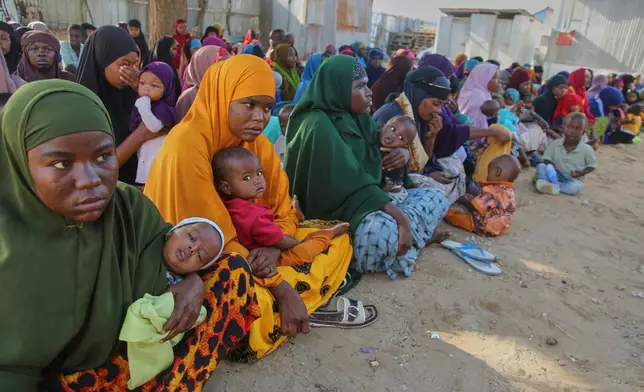
A child is weighed at Feynuus Nutrition Centre on the outskirts of the capital, Mogadishu, Somalia Wednesday, Aug. 19, 2026. (AP Photo/Farah Abdi Warsameh)

Somali women displaced by drought sit at Feynuus Nutrition Centre on the outskirts of the capital, Mogadishu, Somalia Wednesday, Aug. 19, 2026. (AP Photo/Farah Abdi Warsameh)

Somali women displaced by drought sit at Feynuus Nutrition Centre on the outskirts of the capital, Mogadishu, Somalia Wednesday, Aug. 19, 2026. (AP Photo/Farah Abdi Warsameh)

The reduced funds, because of cuts in international aid by donors and the redirection of resources to other humanitarian crises, meant that the WFP is unable to expand its assistance in Somalia, Skau said.

The WFP projects that 1.9 million children under age 5 in the country will suffer acute malnutrition this year, including nearly 500,000 who will require urgent treatment for severe acute malnutrition. Overall, around 30% of the population faces critical levels of food insecurity, the U.N. has said.

“We had 10 times more resources than now,” Skau said of the 2022 hunger emergency that was caused by a prolonged drought. “We were able to step in, and we prevented a famine here in Somalia."

“We know what’s going on, we have the capacity, we have the experience of dealing with this. We just need the resources now to do it.”

The consequences of the current food shortage, which is also a result of drought, conflict and the displacement of people, are seen at the Feynuus Health Center in Mogadishu’s Kahda district. Dozens of women carrying babies waited beneath a large tree or crowded along the veranda of the corrugated-metal facility seeking help.

Inside, health workers placed children in a blue weighing sling, screened them for malnutrition, and distributed therapeutic food.

Halima Mohamed Hassan, a mother of six, had walked nearly 3 kilometers (2 miles) carrying her malnourished 4-year-old child. She is pregnant, but said she hadn't eaten for two days. Her last meal was plain rice.

Health workers treated the child she brought with a special nutrient-dense food, while Hassan said that her other children were also malnourished, but she wasn't able to bring them to the center.

“I could not carry all of them,” she said.

Hassan fled the Lower Shabelle region four months ago after her husband died of malnutrition, she said. Food and water became scarce, and conflict made it increasingly dangerous for the family to stay.

She and her children walked for four nights before reaching a camp for internally displaced people on Mogadishu’s outskirts.

Hassan now shares a makeshift shelter with her widowed mother and her mother's four other children. The two women look for occasional work washing clothes in nearby neighborhoods to feed their household of 12.

The Feynuus center receives between 250 and 350 patients daily, mainly displaced women and children from regions outside Mogadishu, said Abdirahman Barkhad, program director of Youth Link Somalia, which operates the center.

Barkhad said that about 10 nearby health and nutrition centers had closed because of a reduction in humanitarian funding, increasing pressure on those that remain.

“We have witnessed children collapsing, because their families do not have enough food,” he said.

Mohamud Moallim Abdulle, commissioner of the Somali Disaster Management Agency, described the country’s food situation as “extremely alarming.”

He said that an estimated 1.85 million children are malnourished, while around 6 million people are affected by drought, and 2 million urgently need assistance.

Skau said that mothers he met this week in the town of Burhakaba described drought, insecurity, and also rising food prices as the main drivers of the crisis. Some had lost their crops and fled their homes. Others walked for three or four hours to reach health facilities, because aid workers couldn't reach them.

“I spoke to women with eight to 10 children,” Skau said. “They don’t know where the next meal is going to come from.”

Insecurity, with Somalia battling a 20-year-long insurgency by the al-Shabab militant group, also makes humanitarian operations more expensive. WFP must use aircraft in areas where staff and supplies can't travel safely by road, and some communities are inaccessible, Skau said.

He said that conflict in the Middle East was adding to the pressure by driving up fuel and food prices, limiting agricultural supplies, and drawing funding toward other emergencies.

After her child received some food at the center, Hassan began the walk back to the camp they live in. Her five other children were still waiting and hungry, she said, and she would have to return with them one at a time.

For more on Africa and development: https://apnews.com/hub/africa-pulse

The Associated Press receives financial support for global health and development coverage in Africa from the Gates Foundation. The AP is solely responsible for all content. Find AP’s standards for working with philanthropies, a list of supporters and funded coverage areas at AP.org.
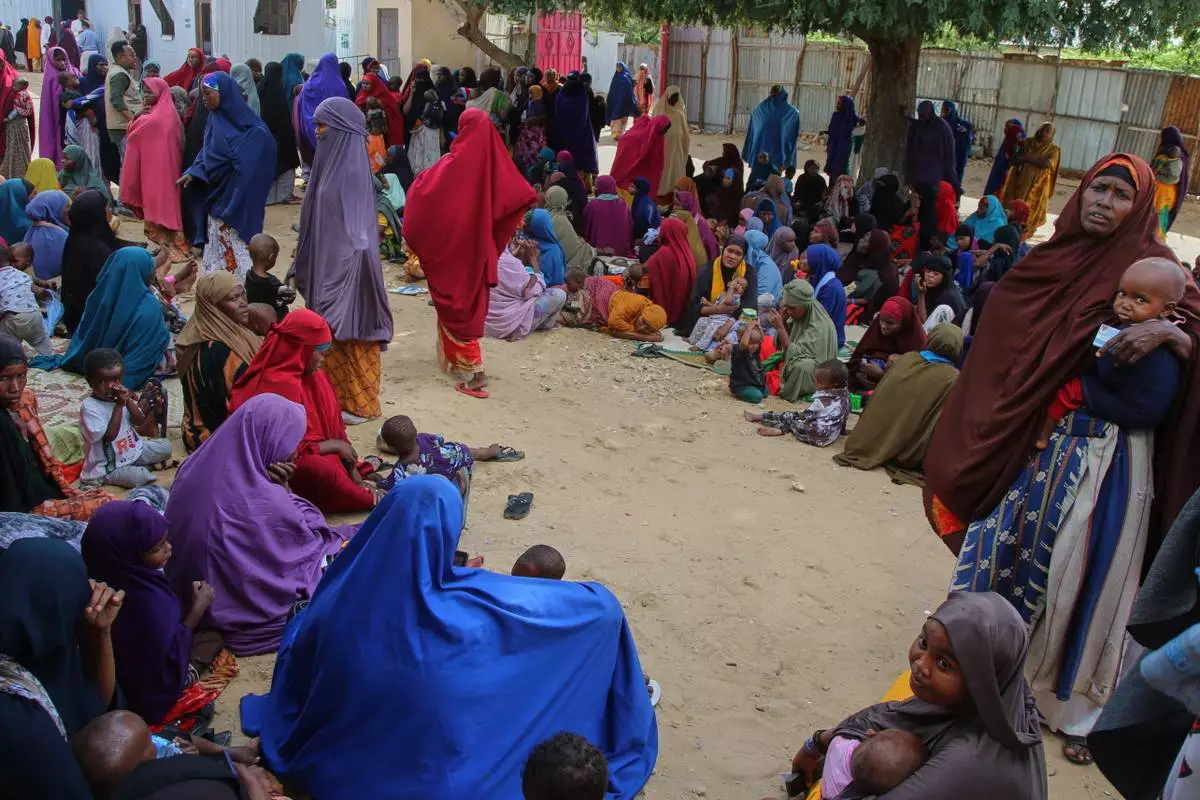
Somali women displaced by drought sit at Feynuus Nutrition Centre on the outskirts of the capital, Mogadishu, Somalia, Wednesday, Aug. 19, 2026. (AP Photo/Farah Abdi Warsameh)
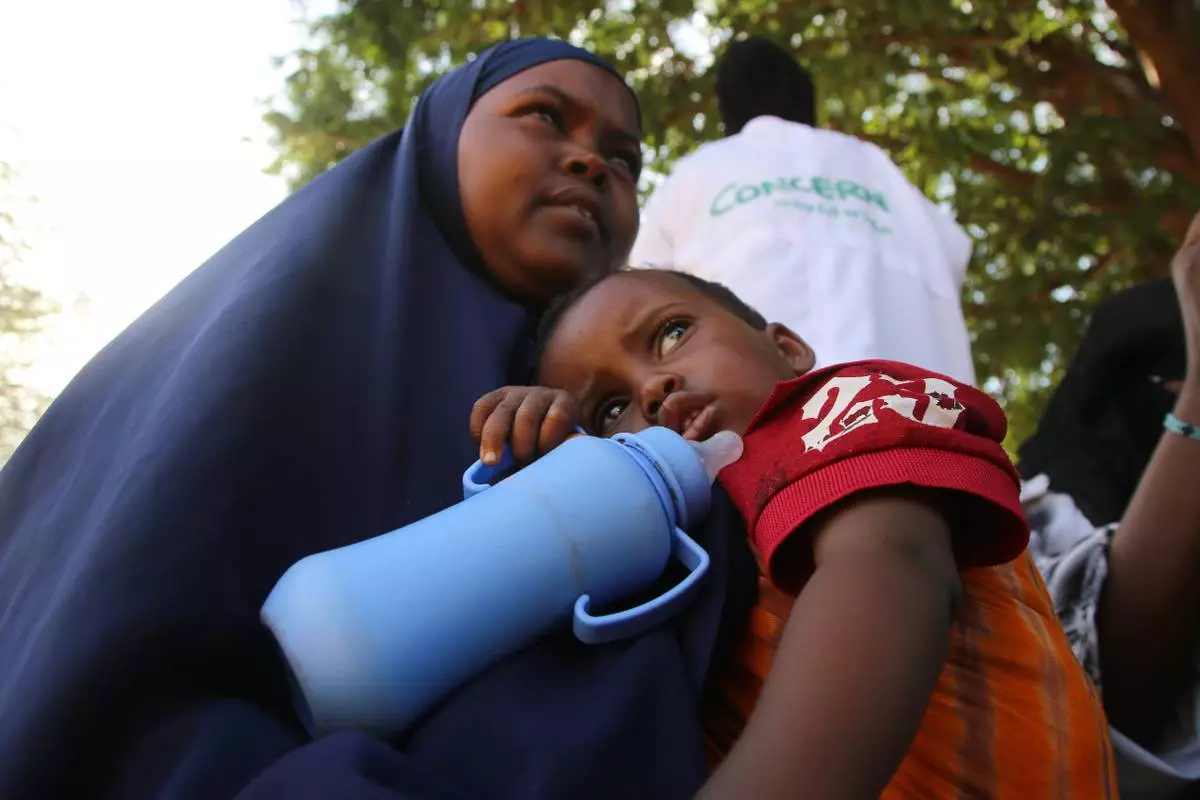
Somali women displaced by drought sit at Feynuus Nutrition Centre on the outskirts of the capital, Mogadishu, Somalia, Wednesday, Aug. 19, 2026. (AP Photo/Farah Abdi Warsameh)

A Somali woman displaced by drought sits holding her child at Feynuus Nutrition Centre on the outskirts of the capital, Mogadishu, Somalia, Wednesday, Aug. 19, 2026. (AP Photo/Farah Abdi Warsameh)

A Somali woman displaced by drought sits holding her child at Feynuus Nutrition Centre on the outskirts of the capital, Mogadishu, Somalia, Wednesday, Aug. 19, 2026. (AP Photo/Farah Abdi Warsameh)

Acting Executive Director of the World Food Programme (WFP) Carl Skau, center, meets Somali women displaced by drought at Feynuus Nutrition Centre on the outskirts of the capital, Mogadishu, Somalia, Wednesday, Aug. 19, 2026. (AP Photo/Farah Abdi Warsameh)

Acting Executive Director of the World Food Programme (WFP) Carl Skau, center, meets Somali women displaced by drought at Feynuus Nutrition Centre on the outskirts of the capital, Mogadishu, Somalia, Wednesday, Aug. 19, 2026. (AP Photo/Farah Abdi Warsameh)

A child is weighed at Feynuus Nutrition Centre on the outskirts of the capital, Mogadishu, Somalia Wednesday, Aug. 19, 2026. (AP Photo/Farah Abdi Warsameh)
A child is weighed at Feynuus Nutrition Centre on the outskirts of the capital, Mogadishu, Somalia Wednesday, Aug. 19, 2026. (AP Photo/Farah Abdi Warsameh)


Somali women displaced by drought sit at Feynuus Nutrition Centre on the outskirts of the capital, Mogadishu, Somalia Wednesday, Aug. 19, 2026. (AP Photo/Farah Abdi Warsameh)

Somali women displaced by drought sit at Feynuus Nutrition Centre on the outskirts of the capital, Mogadishu, Somalia Wednesday, Aug. 19, 2026. (AP Photo/Farah Abdi Warsameh)

NEW YORK (AP) — A rise in oil prices on Thursday is sending worries about inflation and yields in the bond market higher, erasing some of the relief the U.S. Treasury Department created the day before. A drop for Walmart following its latest profit report also helped drag the U.S. stock market lower.

The S&P 500 slipped 0.2% and is on track for a fourth loss in the five days since setting its all-time high last week. The Dow Jones Industrial Average was down 305 points, or 0.6%, as of 9:35 a.m. Eastern time, and the Nasdaq composite was 0.3% lower.

The bond market remains the center of action after yields charged higher through the summer on worries about high inflation, gargantuan government debts and other factors. Treasury Secretary Scott Bessent made a move Wednesday that jolted financial markets to at least double the size of his department’s planned purchases of longer-term Treasurys from Sept. 9 through Nov. 4.

That helped push yields down after the 10-year Treasury’s yield had hit its highest level in more than a year and the 30-year yield got back to where it was in 2007, before the Great Recession sent yields toward zero worldwide. It’s a big deal because high yields slow the economy by raising interest payments for people, companies and the government and can undercut prices for stocks and other investments.

But analysts had cautioned the effect may be short lived, given how small the purchases are relative to the overall size of the Treasury market and other factors. Plus, more signals arrived quickly to push the bond market’s worries higher.

The U.S. government’s debt topped $40 trillion on Wednesday, a staggering record that arrived just months after the national debt first blew past the $39 trillion mark in April, because Washington continues to spend far more money than it brings in.

And on Thursday, the price for a barrel of Brent crude climbed 2.4% to $93.83 as uncertainty continues about when the war with Iran will allow oil tankers to freely exit the Persian Gulf again. President Donald Trump threatened Iran with “Economic Warfare and Isolation on an unprecedented scale” late Wednesday but provided few details.

That helped push the 10-year Treasury up to 4.69% from 4.65% late Wednesday. It’s almost back to its 4.71% level from late Tuesday, before the Treasury Department made its announcement.

A couple encouraging reports on the U.S. economy also helped push up longer-term Treasury yields, which move with expectations for the economy and inflation in coming years. One said fewer U.S. workers applied for unemployment benefits last week than economists expected, while another said manufacturing in the mid-Atlantic region appears to be much stronger than expected.

On Wall Street, Walmart was the heaviest weight on the S&P 500 lower and fell 7.5% even though it reported stronger profit and revenue for the latest quarter than analysts expected. Investors focused more instead on how an important underlying measure of revenue growth at its stores slowed again. Its forecast for profit in the current quarter also fell short of analysts’ expectations.

Advance Auto Parts tumbled 19.8% after the retailer reported weaker revenue for the latest quarter, even though its profit topped expectations. CEO Shane O’Kelly said that “tighter household budgets constrained spending more than we anticipated, especially during the last four weeks of the quarter.”

Helping to keep Wall Street’s losses in check was Deere, which reported stronger profit and revenue for the latest quarter than analysts expected. It rose 3.6% as the company said order trends indicate the agriculture equipment business looks set to accelerate after this year.

In stock markets abroad, indexes dipped in Europe following a stronger finish in Asia.

South Korea’s Kospi soared 5.9% for one of the world’s biggest moves after the two tech titans that dominate its market, Samsung Electronics and SK Hynix, jumped.

AP Business Writers Chan Ho-him and Michelle Chapman contributed to this report.

Options traders Chris Dattolo, Scott Frinzi, and Ravi Bhandari, left to right, work on the floor of the New York Stock Exchange, Monday, Aug. 17, 2026, in New York. (AP Photo/Yuki Iwamura)

Options traders Chris Dattolo, Scott Frinzi, and Ravi Bhandari, left to right, work on the floor of the New York Stock Exchange, Monday, Aug. 17, 2026, in New York. (AP Photo/Yuki Iwamura)

Options trader Anthony Spina works on the floor of the New York Stock Exchange, Monday, Aug. 17, 2026, in New York. (AP Photo/Yuki Iwamura)

Options trader Anthony Spina works on the floor of the New York Stock Exchange, Monday, Aug. 17, 2026, in New York. (AP Photo/Yuki Iwamura)

Options traders Chris Dattolo, Scott Frinzi, Justin Kanda, and Ravi Bhandari, left to right, work on the floor of the New York Stock Exchange, Monday, Aug. 17, 2026, in New York. (AP Photo/Yuki Iwamura)

Options traders Chris Dattolo, Scott Frinzi, Justin Kanda, and Ravi Bhandari, left to right, work on the floor of the New York Stock Exchange, Monday, Aug. 17, 2026, in New York. (AP Photo/Yuki Iwamura)

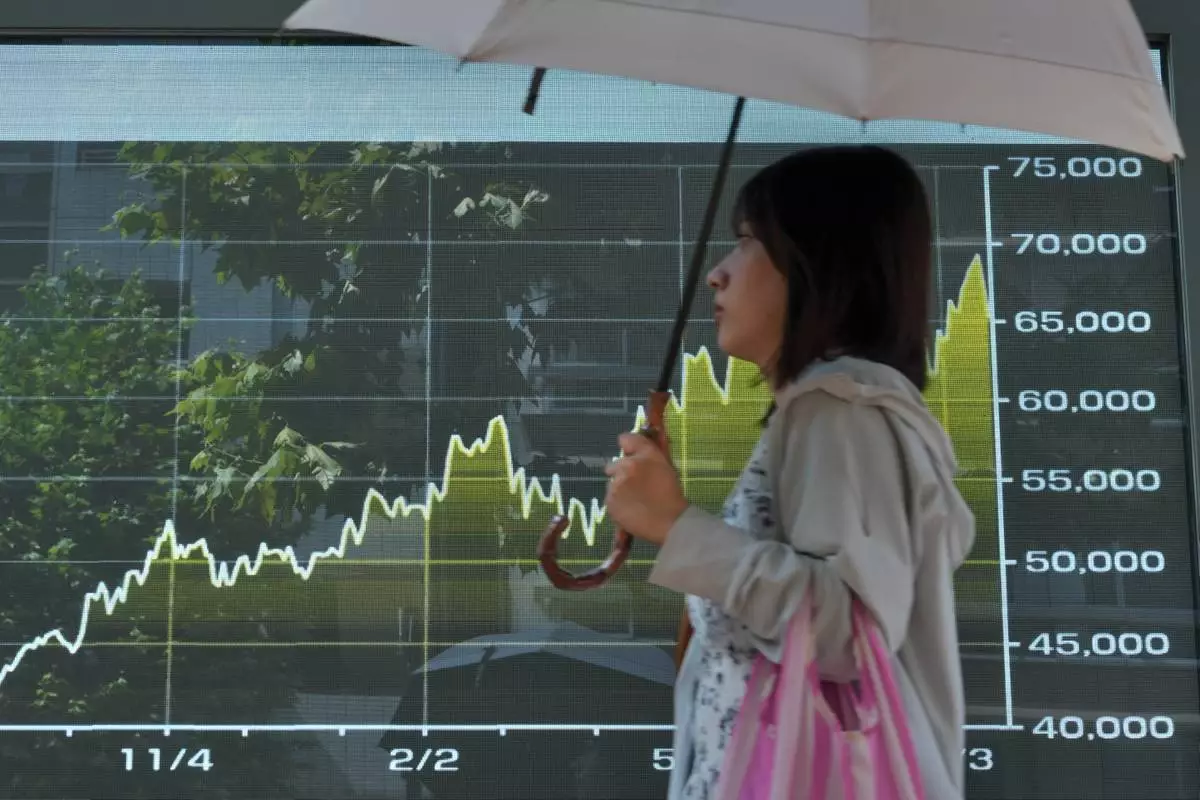
People walk in front of an electronic stock board showing Japan's Nikkei index at a securities firm Thursday, Aug. 20, 2026, in Tokyo. (AP Photo/Eugene Hoshiko)

People walk in front of an electronic stock board showing Japan's Nikkei index at a securities firm Thursday, Aug. 20, 2026, in Tokyo. (AP Photo/Eugene Hoshiko)

A person walks in front of an electronic stock board showing Japan's Nikkei index at a securities firm Thursday, Aug. 20, 2026, in Tokyo. (AP Photo/Eugene Hoshiko)

A person walks in front of an electronic stock board showing Japan's Nikkei index at a securities firm Thursday, Aug. 20, 2026, in Tokyo. (AP Photo/Eugene Hoshiko)

A person walks in front of an electronic stock board showing Japan's Nikkei index at a securities firm Thursday, Aug. 20, 2026, in Tokyo. (AP Photo/Eugene Hoshiko)

A person walks in front of an electronic stock board showing Japan's Nikkei index at a securities firm Thursday, Aug. 20, 2026, in Tokyo. (AP Photo/Eugene Hoshiko)

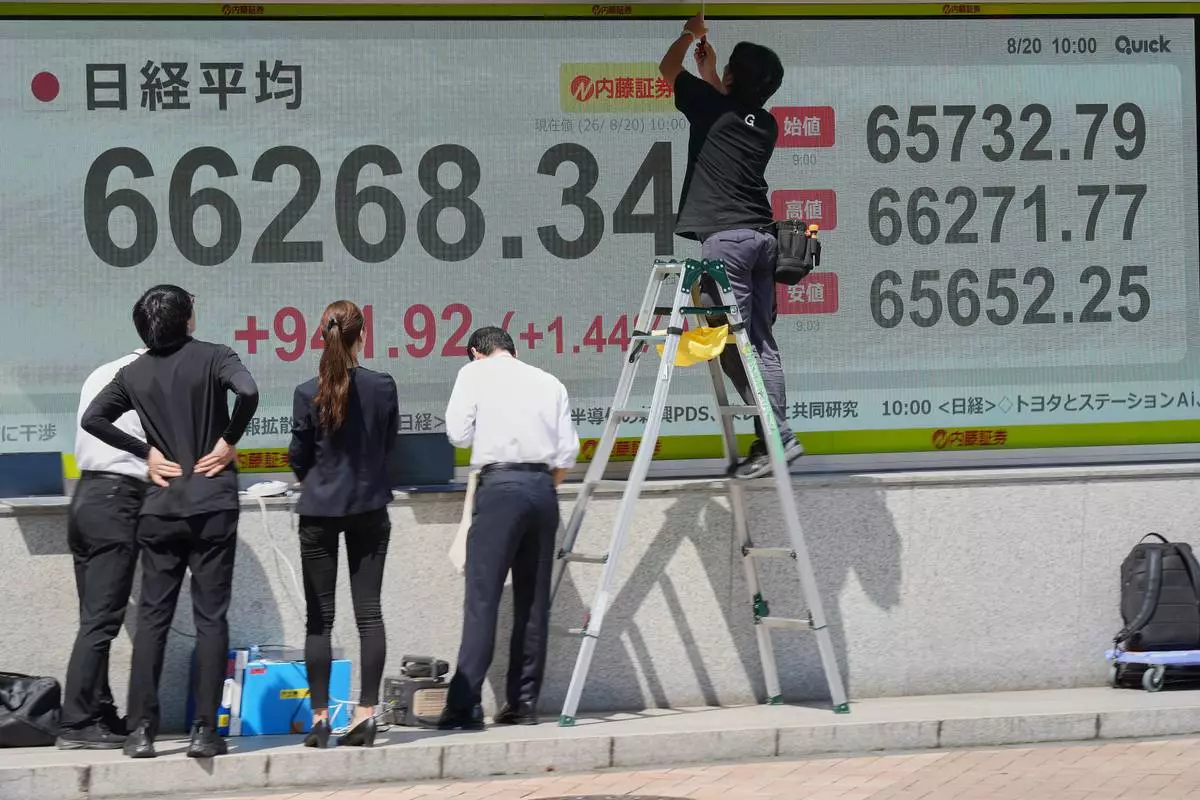
Staff arrange an electronic stock board showing Japan's Nikkei index at a securities firm Thursday, Aug. 20, 2026, in Tokyo. (AP Photo/Eugene Hoshiko)

Staff arrange an electronic stock board showing Japan's Nikkei index at a securities firm Thursday, Aug. 20, 2026, in Tokyo. (AP Photo/Eugene Hoshiko)

A person walks in front of an electronic stock board showing Japan's Nikkei index at a securities firm Thursday, Aug. 20, 2026, in Tokyo. (AP Photo/Eugene Hoshiko)

A person walks in front of an electronic stock board showing Japan's Nikkei index at a securities firm Thursday, Aug. 20, 2026, in Tokyo. (AP Photo/Eugene Hoshiko)

Recommended Articles