NORMAN, Okla. (AP) — Oklahoma football coach Brent Venables agreed Thursday to a two-year contract extension, after leading the Sooners to the College Football Playoff last season.
The deal adds two years to Venables’ previous contract and runs through Jan. 31, 2032. The extension, announced by athletics director Roger Denny, is pending approval by the OU Board of Regents, which meets next month.
“Since I arrived at Oklahoma, I’ve had the opportunity to spend a lot of time with Coach Venables, his staff and our student-athletes,” said Denny, who started as OU’s AD in February. “It didn’t take long to see how well suited he is to lead Oklahoma Football. Coach Venables is elite at building culture — not just in the locker room, but throughout the entire program. Our players are drawn to him. They trust him, they believe in him and he has a unique ability to connect with young men and bring out the best in them.
“What I hope this extension says to our players is that in an environment that changes every day, we’re investing in stability for our program. Amidst the disruption of college sports, Oklahoma will be a place where student-athletes will find consistency.”
Venables, 55, is entering his fifth season as Oklahoma’s coach. He led the Sooners to a 10-3 record and their first College Football Playoff appearance since 2019. They were the No. 8 seed and hosted a first-round game, which they lost to Alabama, 34-24. It marked OU’s second 10-win regular season under Venables, who also won 10 games in 2023, and the 2026 team is ranked No. 10 in the AP Top 25.
Oklahoma’s 2025 defense, under the direction of Venables as play-caller, was one of the nation’s best. The Sooners ranked sixth in the country in yards allowed per game (272.5) and seventh in points allowed per outing (15.5). They also led the nation in tackles for loss per game (9.4) and sacks per contest (3.5), and paced the SEC in seven defensive categories.
Denny said Venables he attributes he seeks in all Oklahoma coaches.
“Right now, more than ever, what we need and more importantly what our student athletes need is stability,” Denny said. “When we have coaches and staff members that have demonstrated the ability to excel at the level that we expect them to excel we're going to invest in them, and we’re going to do that knowing that it's not always going to be easy.”
Sign up for Top 25 poll alerts here. Visit the Top 25 here and see AP’s full college football coverage here.

FILE - Oklahoma head coach Brent Venables walks the field before an NCAA college football game against Alabama, Saturday, Nov. 15, 2025, in Tuscaloosa, Ala. (AP Photo/Vasha Hunt,File)
GUATEMALA CITY (AP) — The United States has deported nearly 2,300 Mexicans to Guatemala this year and sent at least dozens more to Honduras, according to official data, a shift from the beginning of U.S. President Donald Trump’s second term when such transfers were minimal.
Until now, Mexicans deported from the United States were sent almost exclusively back to their country by air and land. Only a handful arrived in other countries.
Some civil organizations believe this change reported in recent days is a way to increase pressure on Mexico, whose government has protested the deaths of 17 Mexicans in immigration custody or during enforcement operations. This also comes as Trump has expanded agreements with allied Latin American countries to conduct joint operations in the region against criminal groups and has increased its security demands to Mexico.
Guatemalan President Bernardo Arévalo confirmed Wednesday night that, so far this year, 2,284 Mexicans deported from the U.S. have arrived in the country as part of a “transit stopover” before being taken to Mexico as part of an “arrangement” with the Mexican government, and without these individuals being under any refugee or asylum status.
“They are arriving on planes carrying Guatemalan returnees, and what we have done is bring them in transit so that, in coordination with Mexican immigration authorities, we can return them to Mexican territory within 24 hours of their arrival in the country,” he explained at a press conference.
The costs of these operations are covered by the Mexican government or, in some cases, by U.S. funding, he added.
Mexico’s National Migration Institute (INM) confirmed to The Associated Press in a brief message that Mexicans have been deported by the Trump administration to Guatemala and Honduras, primarily since April, and are then transported by bus to southern Mexico.
“The reason is that the United States wants to prevent them from crossing back into its territory,” the institution said. The INM did not provide figures or further details.
Asked about why the Mexicans were sent to Central America and not their own country, and for more details, the U.S. Department of Homeland Security, which oversees immigration enforcement, said in an emailed statement that the administration “is utilizing all lawful options to carry out the largest deportation operation in history, just as President Trump promised.”
“The Mexican government has expressed its opposition to this practice to U.S. authorities and has reiterated that every Mexican citizen has the right to enter the country,” the Mexican Foreign Ministry said in a statement on Thursday. It added that Mexico is coordinating with the countries involved to ensure the safe return of Mexican citizens.
Historically, Mexico has always been willing to receive its deported citizens.
Since Trump’s first term, it has also accepted deportees from third countries, although the details of immigration agreements with Washington have usually been opaque. In 2025, Mexico received some 12,000 deported foreigners, mostly Cubans and Venezuelans, according to figures provided by Mexican President Claudia Sheinbaum. The government has not updated these figures since December although the practice has continued.
Authorities in Honduras also did not respond to requests for comment, but according to official documents from the country accessed by The Associated Press, 82 Mexicans deported from the United States arrived in the Honduran city of San Pedro Sula on two flights on August 13 and 15. An additional 35 arrived on Thursday.
Another 165 Mexicans were deported to Honduras between May and mid-July, according to the website Third Country Deportation Watch, run by the NGOs Human Rights First and Refugees International, which track U.S. deportation flights to third countries.
The website does not clarify the source of its nationality figures, but both organizations have expressed concern because these transfers could endanger migrants who possibly sought asylum in the U.S. or have few resources in an unknown country.
The deportation tactic “seems to be to put pressure on the Mexican government,” said Savitri Arvey of Human Rights First. “They really don’t want any Mexicans crossing the border.” Some of those deported arrived in Honduras on U.S. military flights, she added.
At the beginning of his second term, with immigration control as one of his priorities, Trump reached agreements with Mexico, Guatemala, El Salvador, Honduras, Costa Rica and Panama to act as “bridge” or destination countries for migrants from third countries expelled from U.S. territory. These agreements gradually expanded to more countries, including some African ones, most recently Liberia.
Until recently, only a handful of Mexicans had been expelled from the U.S. to countries other than Mexico.
Arévalo said on Wednesday that Guatemala received 15 Mexicans in 2025. As of February 2026, Honduras had officially reported the arrival of six. Costa Rica has received 11 Mexicans since Trump’s return to the White House, and according to local immigration authorities, they remain in the country. Presumably, these individuals may have requested not to be returned to Mexico out of fear.
Immigration lawyers believe that the Trump administration is using deportations to third countries as a legal loophole to indirectly force asylum seekers to return to Mexico when the government cannot send them there because it would violate court orders from immigration judges that recognize the dangers. Organizations and politicians both inside and outside the U.S. have also questioned the use of force by U.S. immigration authorities.
Verza reported from Mexico City and González from Tegucigalpa.
Follow AP’s Latin America coverage at https://apnews.com/hub/latin-america
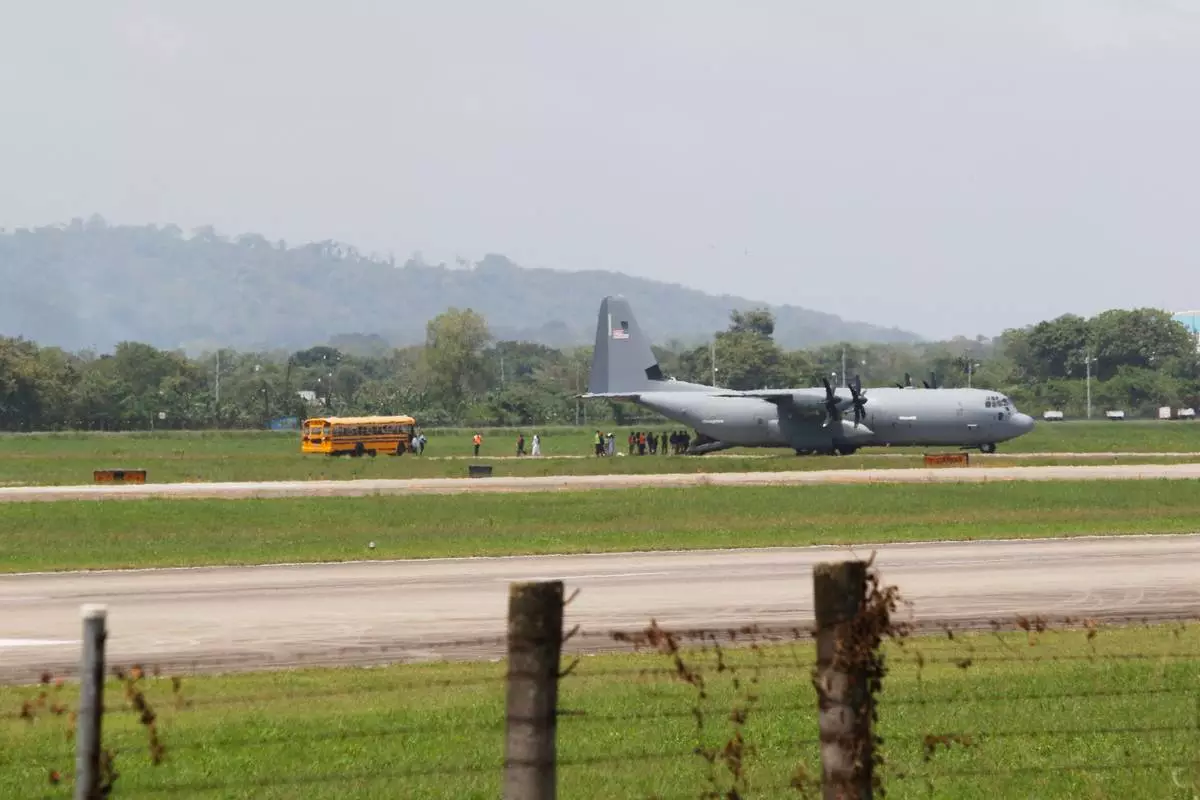
Migrants deported from the United States walk to a waiting bus after deplaning at the Ramon Villeda Morales Airport in San Pedro Sula, Honduras, Thursday, Aug. 20, 2026. (AP Photo/Delmer Martinez)
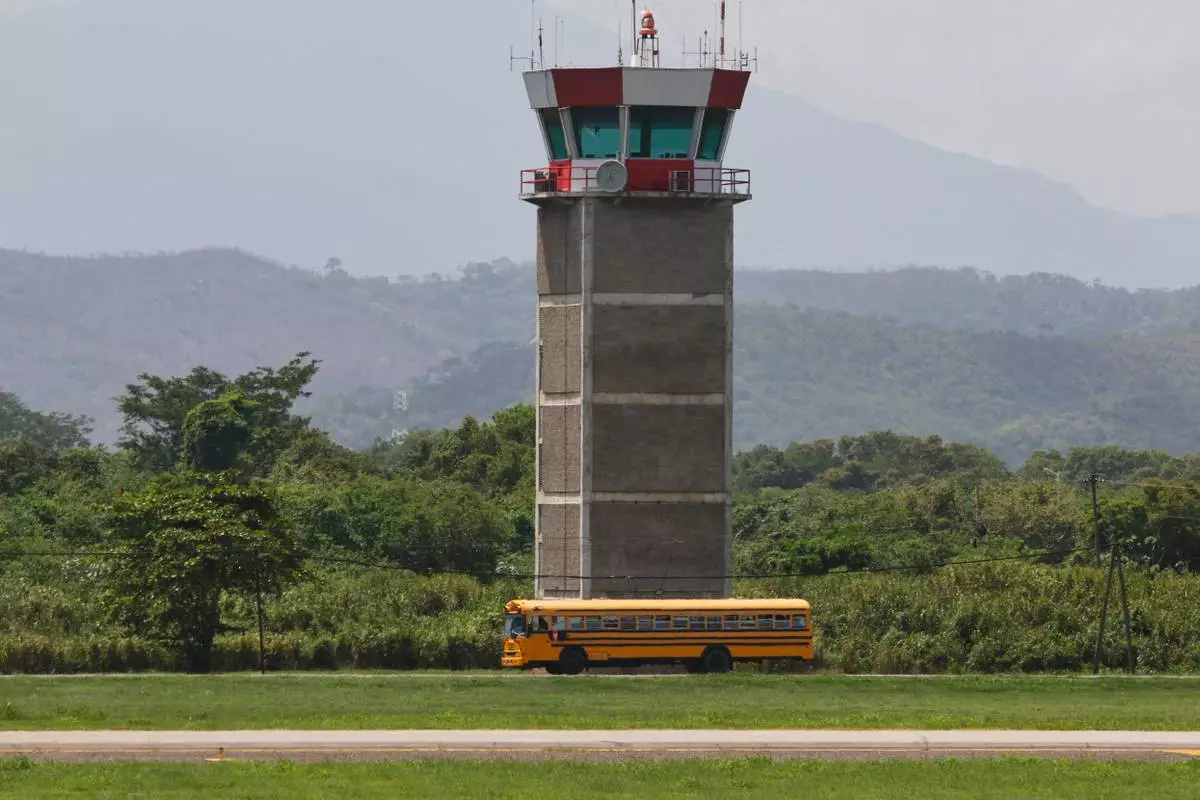
Migrants deported from the United States are transported in a bus after arriving on plane at the Ramon Villeda Morales Airport in San Pedro Sula, Honduras, Thursday, Aug. 20, 2026. (AP Photo/Delmer Martinez)
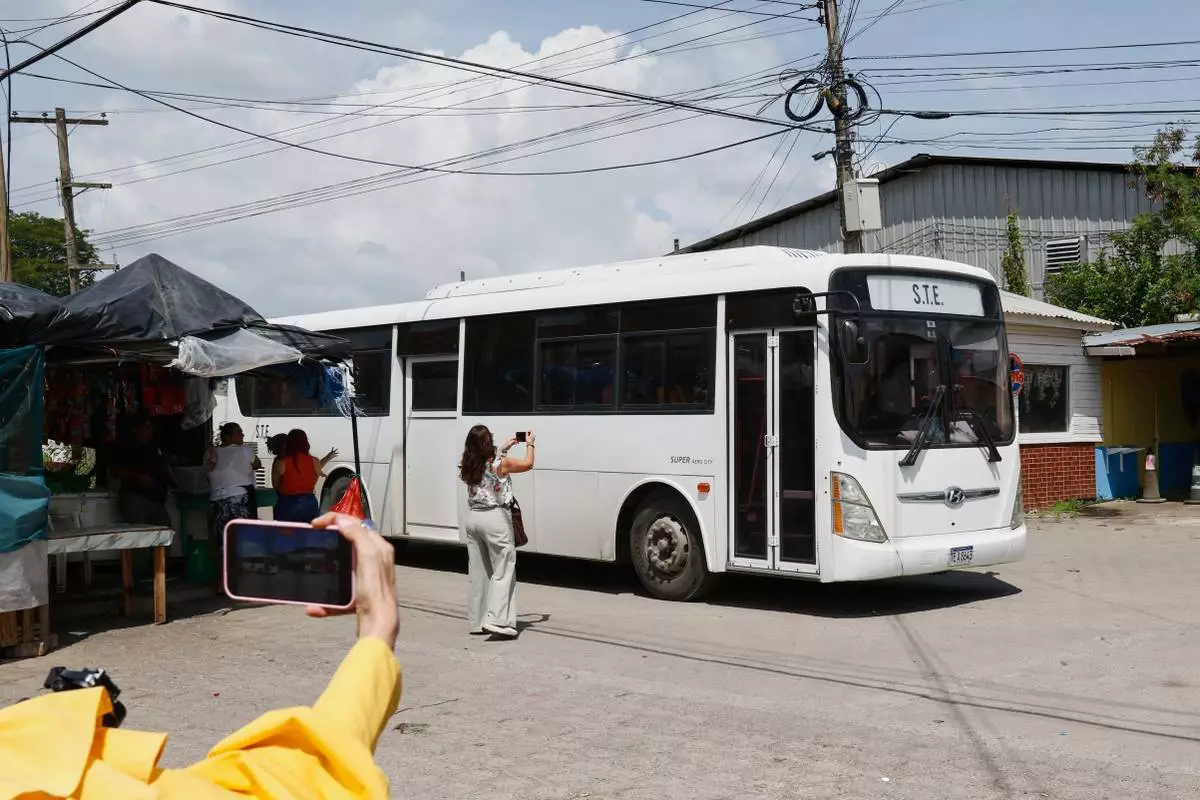
Journalists take images of a bus transporting migrants deported from the United States following their arrival at the Ramón Villeda Morales Airport in San Pedro Sula, Honduras, Thursday, Aug. 20, 2026. (AP Photo/Delmer Martinez)
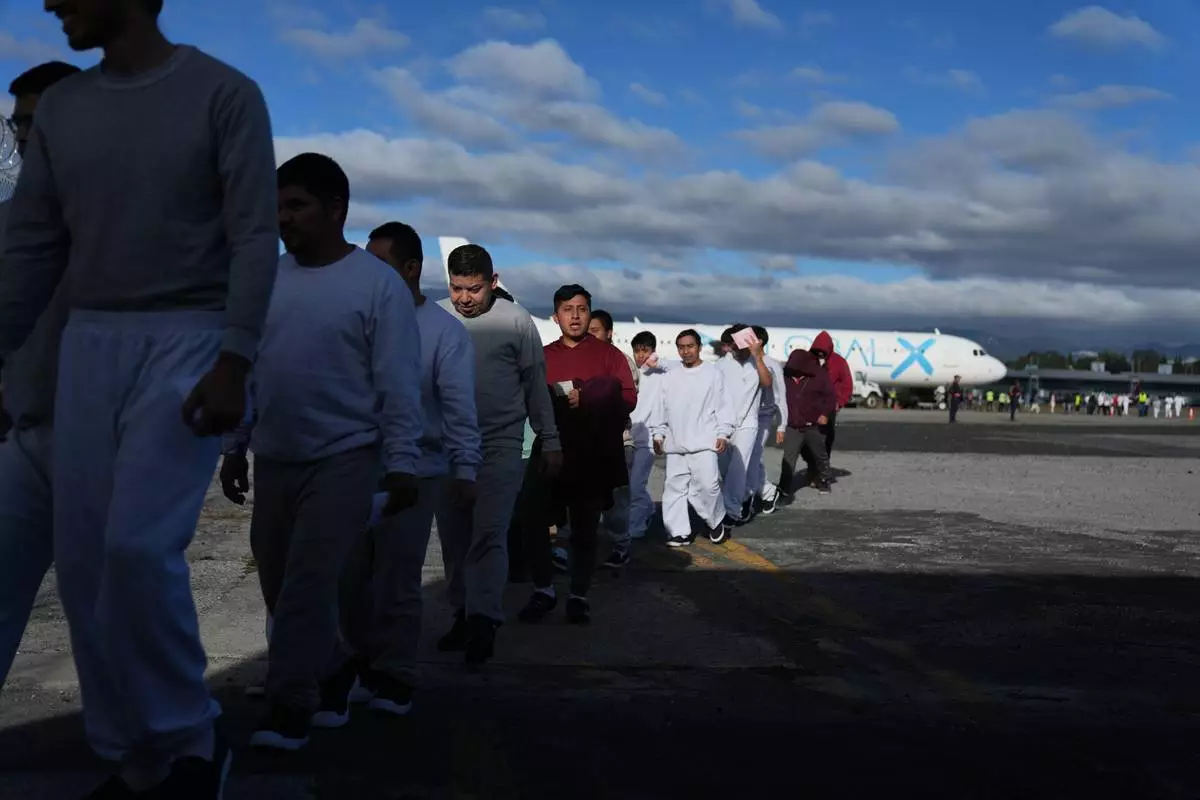
FILE - Guatemalans deported from the U.S. arrive at La Aurora airport in Guatemala City, Dec. 30, 2025, after deplaning a repatriation flight. (AP Photo/Moises Castillo, File)