Residents in Tokyo have voiced strong opposition to the Japanese government's attempts to revise the country's Three Non-Nuclear Principles, warning that the move could increase nuclear risks and undermine regional peace.
A U.S. bomber dropped an atomic bomb over Hiroshima on Aug. 6, 1945, killing around 140,000 people by the end of that year. Three days after the world's first-ever nuclear attack decimated the city, a second atomic bomb was dropped on Nagasaki in southwestern Japan.
As the only country in the world to have suffered atomic bombings, Japan has long upheld the Three Non-Nuclear Principles, which prohibit possessing, producing or permitting the introduction of nuclear weapons into Japanese territory.
However, since taking office in October 2025, Japanese Prime Minister Sanae Takaichi's government has pushed to revise Japan's three national security documents and has repeatedly called for a review of the "no introduction" clause of the Three Non-Nuclear Principles. The moves have sparked concern both in Japan and abroad over the future direction of the country's nuclear policy.
According to a Mainichi Shimbun opinion poll conducted in July, the approval rate for Japan's Liberal Democratic Party (LDP) plummeted 4 percentage points to 23 percent compared to June, hitting its lowest level since the Takaichi cabinet was formed.
Amid the growing public concern, local residents in Tokyo shared their views on the government's push to alter the long-standing non-nuclear policy.
"I am firmly opposed to it. The reason is that, up until now, Japan has been the only country to have suffered atomic bombings, coupled with our nuclear guiding principles about not possessing weapons - the Three Non-Nuclear Principles: no possession, no production, and no introduction of nuclear weapons. Therefore, the very idea of reconsidering this policy is utterly absurd, and I am firmly opposed to it," said Makkun Mori, an IT engineer.
Actress Eri Fujiwara also voiced strong opposition to any reconsideration of the principles.
"I really think that we must uphold the Three Non-Nuclear Principles unconditionally. This principle was never meant to be changed, and even considering its revision is wrong," she said.
The debate has intensified as some voices within the ruling camp argue that Japan needs to strengthen its deterrence through approaches such as "nuclear sharing," a concept that would allow the country to host allied nuclear weapons despite its non-nuclear stance.
Mori dismissed the idea outright.
"'Nuclear sharing' is not a direction we should pursue. I firmly oppose any path toward military expansion or the adoption of nuclear deterrence strategies," he said.
Many residents have also voiced deep anxiety over the possibility of the United States deploying nuclear weapons on Japanese soil, dismissing claims that such a move would enhance Japan's security.
"From a security standpoint, nuclear weapons are inherently unsafe and have repeatedly brought the world to the brink of crisis. Therefore, whether it is American nuclear weapons, or other countries manufacturing or introducing nuclear weapons on Japanese soil, they all bring the same kind of risk, and I feel deeply uneasy about this. That is my view," Mori said.
Fujiwara struck an equally uncompromising tone, saying such a scenario must be prevented entirely.
"Anxiety. First, as a premise, that should absolutely never be allowed. I think the very act of bringing nuclear weapons into Japanese territory must be stopped completely and utterly," she said.
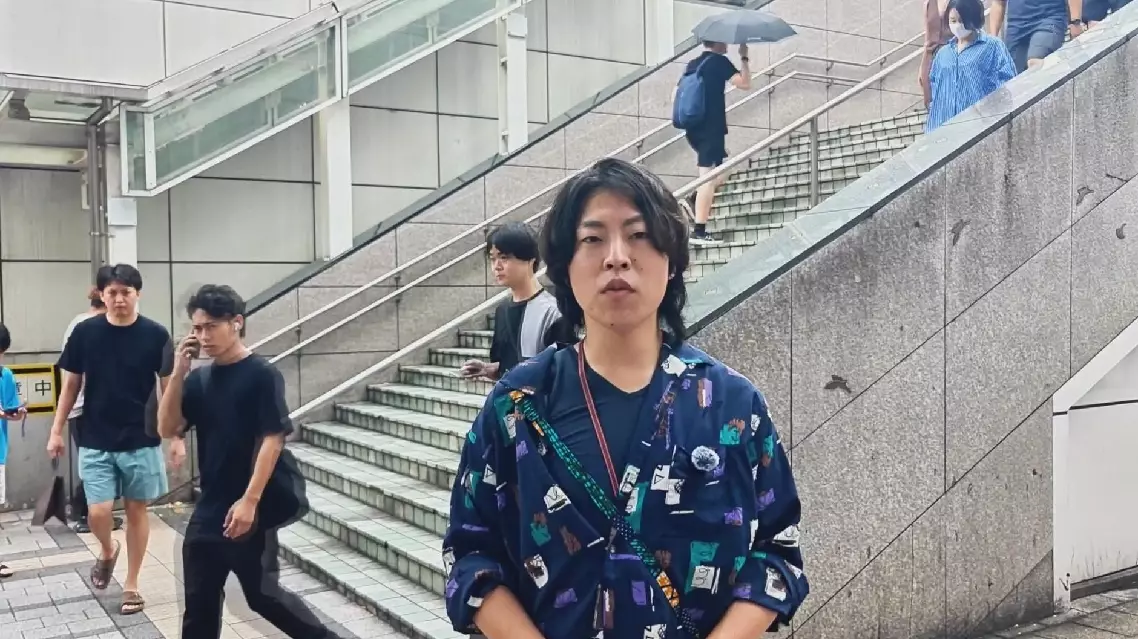
Tokyo residents oppose revisions to Japan's Three Non-Nuclear Principles