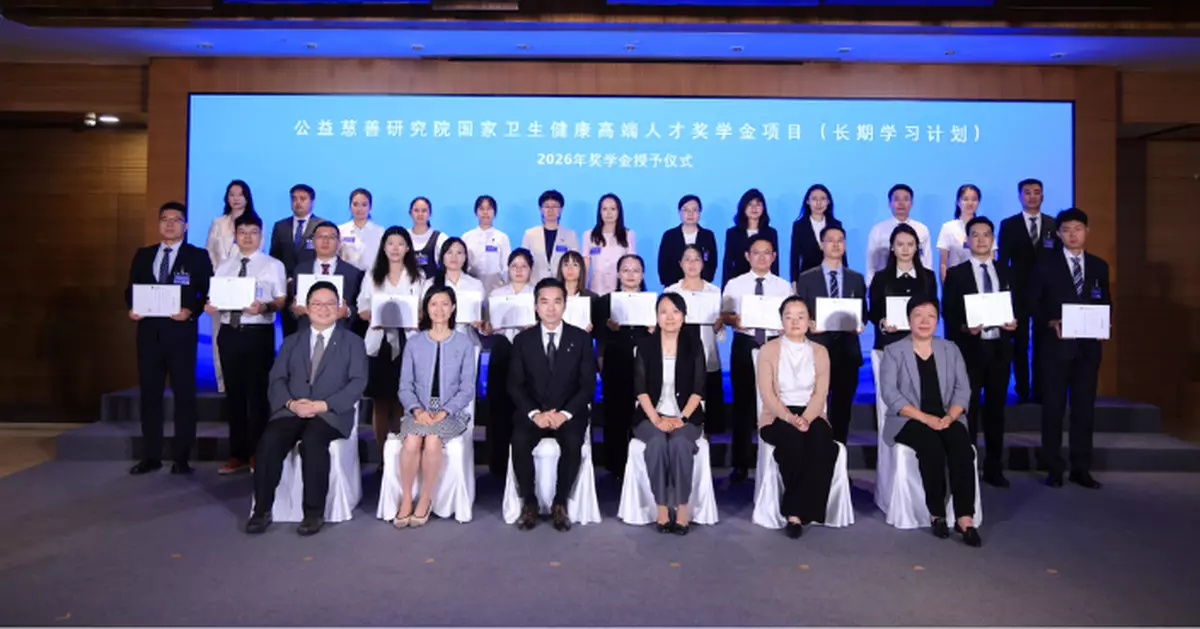
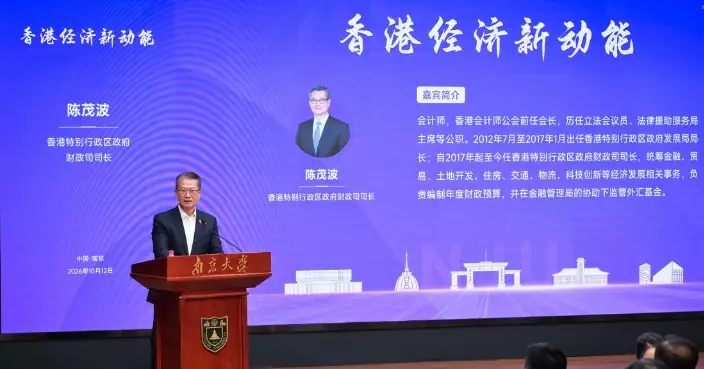
In collaboration with the National Health Commission (NHC) and funded by the Institute of Philanthropy (IoP), the third cohort of long-term programme scholarships and fellowships under the Institute of Philanthropy Medical and Health Scholarship-cum-Fellowship for Top Talent in the Mainland was officially announced at a presentation ceremony held on 21 August 2026 in Beijing. The event celebrated the selection of 30 top medical and health professionals from the Chinese Mainland, who underwent a rigorous two-tiered selection process conducted by expert panels from both the Chinese Mainland and Hong Kong. They will undertake master’s, doctoral, or post-doctoral studies at eight universities in Hong Kong and overseas starting from August 2026.
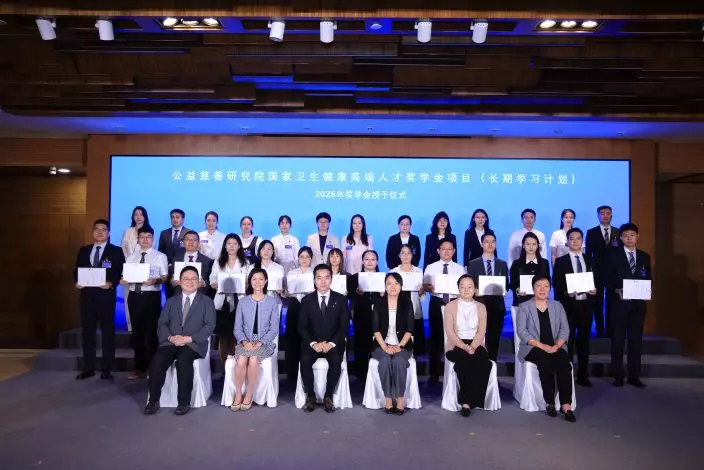
The third cohort of the IoP Medical and Health Scholarship-cum-Fellowship for Top Talent in the Mainland awarded a total of 30 long-term programme scholarships and fellowships, supporting top medical and health talent in the Chinese Mainland to undertake master’s, doctoral, or post-doctoral studies at eight universities in Hong Kong and overseas during the 2026/27 academic year.
For the 2026/27 academic year, the programme has further expanded its global footprint. The number of host universities has grown from three in the inaugural cohort to eight, with academic programmes increasing from seven to 16 across four priority areas of national medical and health talent development: medical research, public health (including global health), life sciences, and health administration/management. Notably, premier global institutions such as the London School of Hygiene & Tropical Medicine (LSHTM) and the National University of Singapore (NUS) have joined as host universities, welcoming awardees in fields such as public health and health economics.
Established in March 2024, the initiative is now in its third year of nurturing healthcare leadership for the nation. Since its launch, the programme has supported 89 scholars and fellows for long-term programmes and provided 147 scholarships to senior medical professionals and health system executives for five short-term professional development courses covering medical care, disease prevention and control, and health governance. Together, these efforts have established a multi-tiered development framework for national health professionals.
Scholars and fellows from the previous cohorts have begun applying their learning in clinical practice, research, healthcare leadership, and workforce development. Several have contributed to research on artificial intelligence applications in disease diagnosis and treatment, undertaken collaborative research with Hong Kong institutions, and participated in comparative studies on healthcare management practices in the Chinese Mainland and Hong Kong. In addition, a number of scholars and fellows have contributed to formulating development plans for their respective institutions, actively supporting national health priorities under the 15th Five-Year Plan. The initiative has also nominated four scholars and fellows from the previous cohorts to participate in prestigious international platforms,including the Prince Mahidol Award Conference (PMAC) 2026, fostering health leaders with global vision and strategic thinking.
Brian San, Secretary-General of IoP, viewed the third year of the initiative as a testament to the deepening collaboration and accumulated achievements in healthcare between the Chinese Mainland and Hong Kong. IoP is honoured to join hands with the NHC to leverage Hong Kong's unique advantage in bridging top international educational and research resources, while cultivating medical and health talent equipped with deep professional expertise, strategic vision, and global perspectives to support the high-quality development of the nation's healthcare sector.
Director-General of the Health Human Resources Development Centre of NHC (Programme Management Office, “PMO”), Mr. Fang Jianning, believes that the implementation of this initiative not only reflects the National Health Commission's profound commitment to strengthening the healthcare workforce but also underscores the deep dedication of the Institute of Philanthropy to social welfare, particularly the health and well-being of the people. He delegated Lu Qing, Division Director, representing the PMO, to deliver remarks at the ceremony and convey his encouragement to the awardees.
The presentation ceremony was jointly officiated by senior representatives from the NHC and IoP. Officiating guests from NHC included representatives of the Department of Personnel and the Office of Hong Kong, Macao & Taiwan Affairs, and of the PMO, alongside representatives from the Institute of Philanthropy. Together, representatives from both sides celebrated the achievements of the third cohort and reaffirmed their commitment to nurturing top-tier talent in the medical and health sectors.
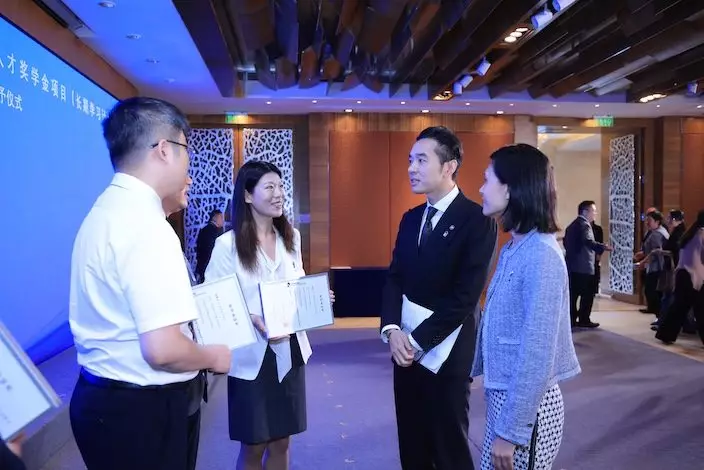
IoP representatives chatting and interacting with scholars/fellows.
The Institute of Philanthropy Medical and Health Scholarship-cum-Fellowship for Top Talent in the Mainland supports the development of high-calibre professionals in medical research, public health (including global health), life sciences, and health administration/management. The initiative demonstrates IoP’s support for the “Healthy China 2030 Blueprint” and the 15th Five-Year Plan for National Health, while contributing to efforts to strengthen healthcare capacity and advancing national health priorities.
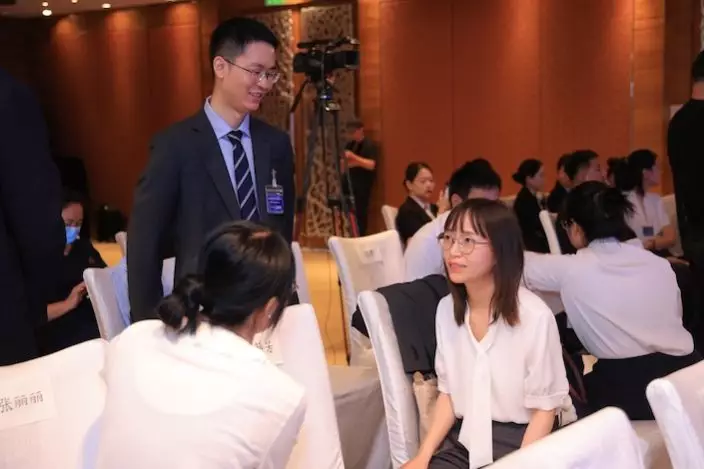
Scholars/fellows interacting and networking at the event.
As governments, investors, and philanthropies around the world seek new ways to finance solutions to increasingly complex social and environmental challenges, a new report highlights opportunities to further develop Hong Kong’s impact capital ecosystem. Launched by the Institute of Philanthropy (IoP), the Financial Services Development Council (FSDC), and the Hong Kong Academy for Wealth Legacy (HKAWL), Unlocking Impact Capital in Hong Kong: Learnings from Global Ecosystems was unveiled at IoP's annual flagship Foundations Circle event.
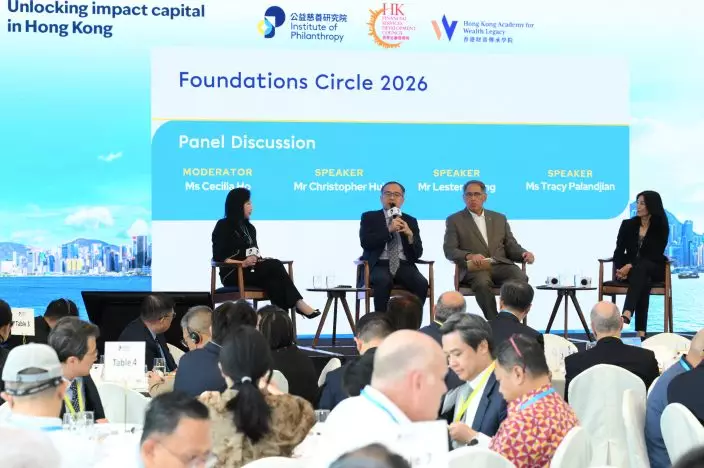
The report, Unlocking Impact Capital in Hong Kong: Learnings from Global Ecosystems, was launched at IoP's annual flagship Foundations Circle event through a panel discussion featuring The Hon Christopher Hui, Secretary for Financial Services and the Treasury, HKSAR Government (2nd left); Lester Huang, Chairman of the Institute of Philanthropy (2nd right); and Tracy Palandjian, Co-Founder and Chief Executive Officer of Social Finance (1st right). The session was moderated by Cecilia Ho, President of the Lee Hysan Foundation (1st left).
Drawing on lessons from leading ecosystems worldwide, the report highlights several strengths already present in Hong Kong, including deep capital markets, a strong philanthropic tradition, sophisticated professional services, and a growing family office ecosystem. Based on interviews with more than 50 leaders and their teams in Hong Kong and select cases across Europe, North Asia, and Southeast Asia, alongside polling of select Hong Kong family offices and wealth holders, many stakeholders suggested that Hong Kong's challenge is less about the availability of capital and more about creating the conditions that allow different forms of capital to work together effectively towards shared outcomes.
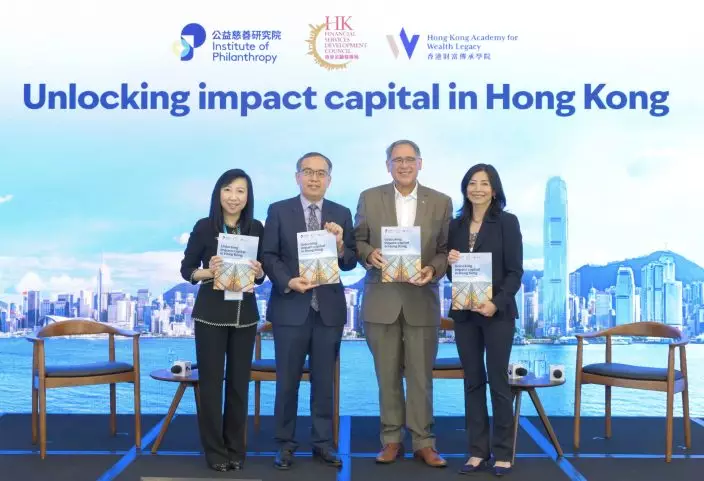
Standing with copies of the report, Unlocking Impact Capital in Hong Kong: Learnings from Global Ecosystems, are The Hon Christopher Hui, Secretary for Financial Services and the Treasury, HKSAR Government (2nd left); Lester Huang, Chairman of the Institute of Philanthropy (2nd right); Cecilia Ho, President of the Lee Hysan Foundation (1st left); and Tracy Palandjian, Co-Founder and Chief Executive Officer of Social Finance (1st right).
This perspective suggests that the development of impact capital in Hong Kong may depend less on attracting new pools of funding and more on strengthening connections between existing sources of capital, according to Lester Huang, Chairman of IoP. “The most important lesson from leading ecosystems is that impact can be scaled when different sectors align around a common purpose. Hong Kong has world-class capabilities across government, philanthropy, finance, and civil society. There is an opportunity to connect those capabilities more deliberately and create pathways that allow promising ideas to move from innovation to adoption and, ultimately, to scale.”
The report shares how some of the world's most developed impact capital ecosystems have emerged through different pathways. In one jurisdiction, government played a catalytic role in building market infrastructure. In another, philanthropy acted as an anchor for ecosystem development. Elsewhere, financial-sector development and philanthropic institution-building evolved in parallel. The lesson for Hong Kong is not which model to copy, but that successful ecosystems are intentionally built rather than left to emerge organically.
Benjamin Hung, Chairman of the FSDC, said: “The significance of impact capital goes beyond philanthropy. Around the world, we are seeing investors evolve to place greater value on long-term and sustainable outcomes. This presents a strategic opportunity for Hong Kong. As an international financial centre, we have the capabilities, connectivity and expertise to mobilise capital at scale. By linking financial excellence with impact objectives, Hong Kong can strengthen its competitiveness while contributing to sustainable and inclusive growth across the region.”
The report also highlights shifts taking place across wealth management, philanthropy, and family enterprise throughout Asia. Drawing on stakeholder interviews and directional feedback from family offices, it notes growing interest in deploying different forms of capital across a spectrum of financial and social objectives. Against this backdrop, Hong Kong's period of intergenerational wealth transfer may create space for broader conversations about purpose, legacy, and long-term value creation. Adrian Cheng, Chairman of HKAWL, said: “The next generation is asking a different question from previous generations. It is not how wealth should be preserved, but what role wealth should play in shaping the future. That creates an important moment for Hong Kong. We can become a place where families learn how to deploy wealth with
greater purpose, partnering with government, philanthropy, and communities to create lasting value.”
Rather than prescribing a single solution, the report highlights three areas for further exploration and ecosystem development: leadership and collaboration, organisational and advisory capabilities, and stronger mechanisms for sharing knowledge and evidence. Stakeholders interviewed during the research consistently pointed to these areas as important enablers of a more mature impact capital ecosystem.
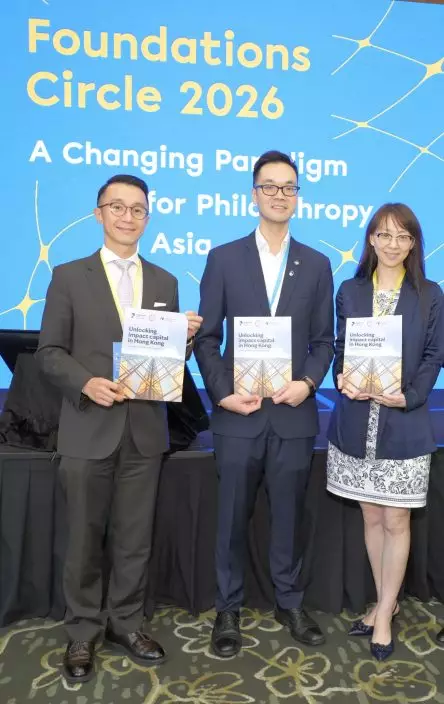
Rocky Tung, Executive Director of the Financial Services Development Council (left); Brian San, Secretary-General of the Institute of Philanthropy (middle); and Angel Chia, Executive Director of the Hong Kong Academy for Wealth Legacy (right).
The research suggests that the implications extend beyond impact capital itself. The broader question is whether Hong Kong can bring together its strengths in ways that address increasingly complex challenges. Over time, this could help position Hong Kong as a place where capital, capability, and collaboration are increasingly aligned in support of both economic prosperity and societal progress.
Download Unlocking Impact Capital in Hong Kong: Learnings from Global Ecosystems: https://www.iop.org.hk/en/unlocking-impact-capital-in-hong-kong/