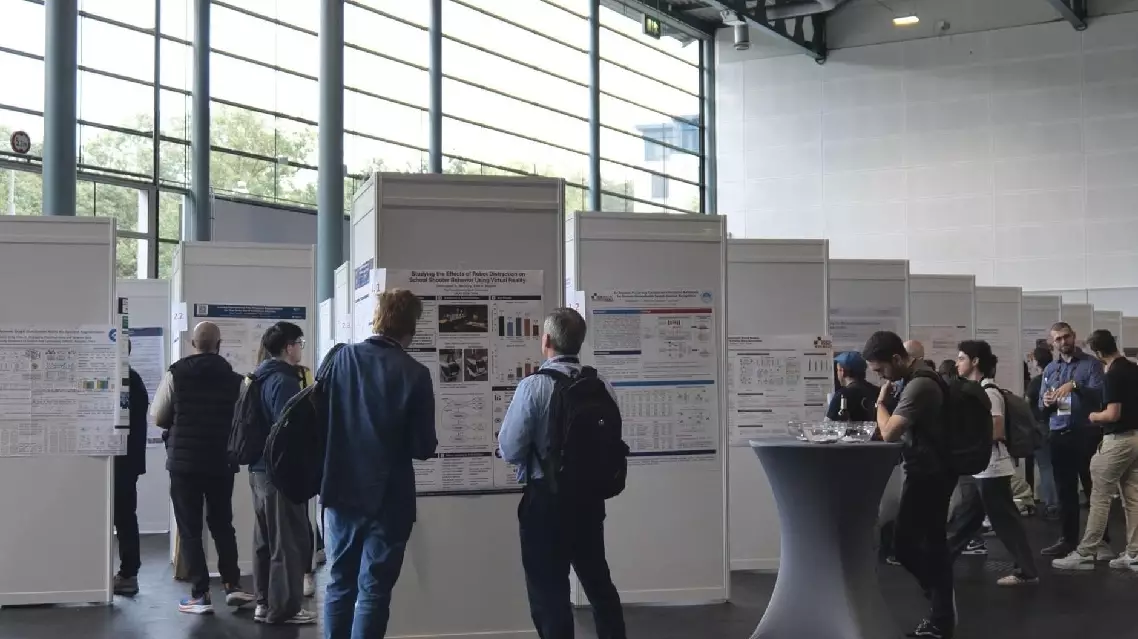
The 35th International Joint Conference on Artificial Intelligence and the European Conference on Artificial Intelligence (IJCAI-ECAI 2026) concluded on Friday in Bremen, Germany, with international experts speaking highly of the development of artificial intelligence (AI) in China.
Judging from the paper submissions and research topics of the eight-day conference, Chinese research teams have shown a high level of participation in multiple sub-sectors of AI.
Diego Calvanese, program chair of IJCAI-ECAI 2026, and a professor at the Free University of Bozen-Bolzano, said China is the country with the largest number of submissions at this conference, with extensive participation in fields such as machine learning, computer vision, and robotics.
"Clearly, China is one of the dominating countries in AI research. We know this both in the industrial setting where, for example, large language models coming from China are now becoming popular and quite strong," he said.
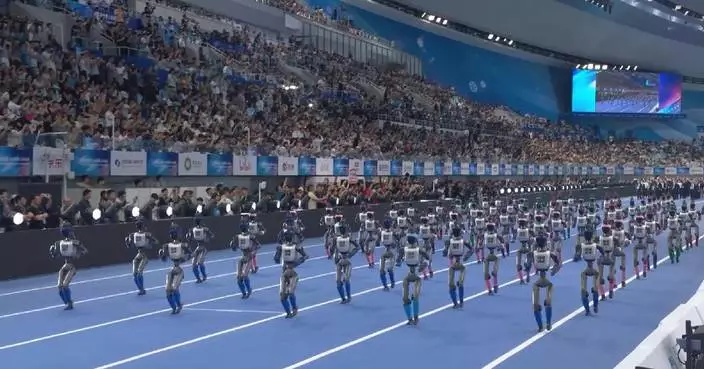
"So China's main strength is that it can do the whole pipeline, from very basic electronics required, they can optimize this faster than anybody else, over motors, over robot bodies, up to Large Language Models(LLMs). The whole pipeline, every step of the pipeline, they have top people and they work very, very well together," said Jan Peters, a professor at Technische Universitat Darmstadt.
At the World Artificial Intelligence Conference held in Shanghai in July, China proposed to promote the open and open-source development of artificial intelligence and enhance exchanges and cooperation.
Experts believe that in the context of increasingly complex basic models and large language models, open source can help researchers further understand the internal operating mechanisms of these systems.
"If these are black boxes where we just see the input-output behavior, it's not possible to really do research on the functioning of these models," said Diego Calvanese.
While promoting open innovation, China has also proposed to strengthen the governance of AI risks to ensure that the technology is safe, reliable and under human control.
Holger Hoos, president of European Association for Artificial Intelligence (EurAI), and a professor at RWTH Aachen University, said this concept shares common points with the long-term AI development in Europe. The latter focuses on safety, reliability and human-centered development directions.
"I think it is a very good direction. And as I explained earlier, one that around Europe we in principle are very close to. I think it's important that many AI researchers, AI developers, and companies that make AI tools and systems available, we have more of an emphasis in this direction. So it's very good that in China there is this emphasis," said Holger Hoos.
Int'l experts hail China's AI development