APIA, Samoa, Aug. 23, 2026 /PRNewswire/ -- HTX Research, the dedicated research arm of HTX, has released a new report titled The Industrialization of Intelligence and the Bubble Cycle: Token Economics, Capital Expenditure, and the Repricing of Risk-Reward Across U.S. AI Equities. Its central argument is that the AI industry and AI equities are not at the same point in their respective cycles — technological diffusion remains in its early stages while capital expenditure, valuations, and investor sentiment have moved well ahead of it.
The Variables Driving Equity Prices
Markets first priced the scarcity of GPUs, high-bandwidth memory, servers, and data-center capacity, and later the capability gains delivered by frontier models and coding agents. In 2026, the variables driving equity returns are shifting away from model parameter counts and the scale of capital expenditure toward token production costs, task-completion reliability, usage intensity, enterprise-workflow penetration, and the ability of enormous AI investments to generate durable free cash flow.
Behind that shift is a change in the magnitude of capital spending. J.P. Morgan Asset Management estimates that five U.S. hyperscalers will spend approximately $697 billion in 2026, with capital expenditure rising from roughly 33% of their operating cash flow in 2023 to an estimated 93%. Once capital expenditure consumes the overwhelming majority of operating cash flow, market attention necessarily moves from revenue growth to return on capital.
The Bubble Sits in the Financial Architecture, Not the Industry
Cloud revenue, coding-agent adoption, semiconductor sales, and enterprise demand are all growing in real terms, meaning AI technology itself is not a false narrative. Capital expenditure, external financing, data-center projects, private-model valuations, and a number of high-multiple second-tier equities, however, display increasingly speculative characteristics.
Headline price-to-earnings ratios also fail to represent true valuation levels: Alphabet's multiple is distorted by investment income, and Amazon's current accounting profit does not reflect a normalized valuation. What genuinely offers value is the closest alignment among normalized valuation, competitive moats, cash flow, and AI optionality.
At current prices and cycle positions, the report views Alphabet as offering the most compelling overall asymmetry, and applies the same framework across Microsoft, Meta, TSMC, NVIDIA, Amazon, Oracle, Micron, AMD, Arista, and Vertiv — distinguishing businesses with high fundamental win rates from those whose valuations already demand near-flawless execution.
AI Is Reshaping How Crypto Investors Allocate Capital
AI's role as a shared theme across global capital markets extends beyond U.S. equity pricing into the allocation behavior of crypto investors. As names including NVIDIA, Micron, TSMC, Broadcom, Meta, and Alphabet enter the everyday portfolios of crypto users alongside gold, crude oil, ETFs, and pre-IPO assets, a growing share of users now treat crypto and U.S. equities as different allocation directions within a single global risk-asset system.
HTX has been one of the earliest crypto exchanges to systematically pursue this direction. According to data disclosed in August 2026, cumulative trading volume in the platform's TradFi perpetuals section has exceeded $2.5 billion, with support for more than 170 TradFi-related assets spanning U.S. equities, ETFs, gold, silver, crude oil, AI semiconductors, memory, aerospace, and pre-IPO themes such as OpenAI and Anthropic.
What makes this model work is the platform's existing base of crypto users who have completed registration, verification, and funding. Holding stablecoins such as USDT, they can trade TradFi assets within the same account without opening a brokerage account or moving capital into a separate financial system — allocating toward gold, ETFs, or large-cap technology when risk appetite declines, and raising crypto and high-beta AI exposure when it recovers.
The Competitive Boundary for Trading Platforms Is Shifting
Competition among trading platforms will extend beyond spot markets, derivatives, liquidity, and listing speed toward a broader contest spanning multi-asset access, wealth management, and AI investment tools. Platforms with durable competitiveness will see their core capability evolve from execution alone toward global asset distribution.
This confirms a larger judgment in the report: AI is changing not only model capability and compute demand, but capital flows, allocation behavior, and how financial products are organized. HTX's early positioning in TradFi corresponds with HTX Research's sustained tracking of the AI theme and cross-market capital flows — identifying cycle positions, reading capital flows, and understanding how assets move in relation to one another sits at the core of research work, and also forms a source of first-mover advantage in business decisions. As AI drives global markets into a new phase of convergence, institutions capable of understanding both industrial cycles and capital flows are better positioned for the next round of competition.
| *The above content is not an investment advice and does not constitute any offer or solicitation to offer or recommendation of any investment product. |
*The above content is not an investment advice and does not constitute any offer or solicitation to offer or recommendation of any investment product.
About HTX Research
HTX Research is the dedicated research arm of HTX Group, responsible for conducting in-depth analyses, producing comprehensive reports, and delivering expert evaluations across a broad spectrum of topics, including cryptocurrency, blockchain technology, and emerging market trends. Committed to providing data-driven insights and strategic foresight, HTX Research plays a pivotal role in shaping industry perspectives and supporting informed decision-making within the digital asset space. Through rigorous research methodologies and cutting-edge analytics, HTX Research remains at the forefront of innovation, driving thought leadership and fostering a deeper understanding of evolving market dynamics. Visit us.
** This press release is distributed by PR Newswire through automated distribution system, for which the client assumes full responsibility. **

HTX Research Examines U.S. AI Equities: Technology Remains Early, While Capital Expenditure and Valuations Have Entered the Late Cycle
- Udon Kaden's two signature dishes — Signature Udon and Chilled Udon — launch in the U.S.
- Available at H Mart, Jagalchi, Mega Mart and other retail partners, and online at Kurlyglobal.com
- Chef Jung Ho Young will host in-store tastings at four California stores on August 22–23
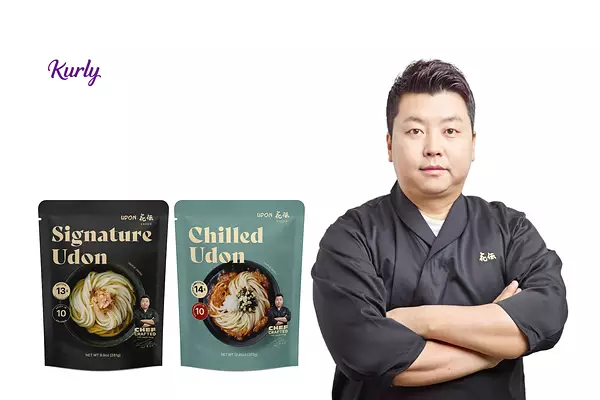
LOS ANGELES, Aug. 22, 2026 /PRNewswire/ -- Kurly, the premium Korean food company bringing the country's most-loved foods to American consumers, announced the U.S. launch of two frozen udon dishes from Udon Kaden, the beloved Seoul noodle house of chef Jung Ho Young. The launch expands Kurly's line of chef-restaurant frozen meals in the American market.
The two products recreate the flavors of Kaden's best-known menu items for the home kitchen: Signature Udon, a warm bowl built on a clear, deeply savory dashi, and Chilled Udon, its cold, no-broth counterpart.
Jung is one of Korea's most recognizable Japanese-cuisine chefs, familiar to audiences from Netflix's "Culinary Class Wars" Season 2 and the long-running "Chef & My Fridge." After earning his footing in Japanese restaurants in Korea, he trained at the Tsuji Culinary Institute in Osaka, then returned to open the izakaya Kaden and, later, Udon Kaden. He has spent more than 20 years cooking Japanese food.
Udon Kaden built its reputation on two things: noodles with a taut, bouncy bite, and a broth of kombu, anchovy and smoked mackerel flakes. The restaurant has drawn steady lines in Seoul for nearly a decade, and today operates locations in Seoul's Yeonhui-dong neighborhood and on Jeju Island.
Signature Udon pairs fresh-frozen udon noodles with a broth modeled on the restaurant's dashi, finished with bonito flakes. The noodles boil in 8 to 9 minutes while the broth heats separately in 1 to 2 — assemble, and the bowl is done. Chilled Udon takes the opposite path: a concentrated dashi-rich sauce, grated radish and toppings poured over cold noodles, trading the comfort of hot soup for a chewier bite and a denser hit of umami.
Both dishes arrive with a track record. In Korea, where the products launched first on Kurly's marketplace, Signature Udon (sold there as Original Udon) has drawn nearly 20,000 customer reviews, and the Udon Kaden line's combined product page has accumulated more than 50,000.
The launch extends a playbook Kurly has refined in Korea since 2017: working directly with chefs and restaurants to turn their signature menus into frozen meals. Kurly USA previously introduced Mokran, the Chinese-cuisine brand of chef Lee Yeon Bok, and is broadening the lineup with Udon Kaden and Yun Seoul, from chef Kim Do Yun.
To mark the launch, Chef Jung will host in-store tastings across California on August 22–23 — in Southern California at H Mart Buena Park and H Mart Irvine NorthPark, and in Northern California at Jagalchi in Daly City and Mega Mart in East Palo Alto.
"Udon Kaden is a defining example of what we do: a chef's recipe and a restaurant's identity, thoughtfully recreated as a frozen meal," said Ryan Chung, Head of Global Business at Kurly. "Starting with Asian grocery retailers, we will keep widening the places where American consumers can bring Korea's chefs and restaurant brands into their everyday cooking."
Signature Udon and Chilled Udon are available at H Mart and other participating retailers, and online at Kurlyglobal.com. Online delivery areas and stock may vary by address and time of order.
About Kurly
Kurly is a premium Korean food company that discovers and introduces the country's most trusted food brands, beloved restaurants, and chef collaborations. On its marketplace in Korea, Kurly pioneered the category of restaurant meals recreated for the home freezer, working with chefs and restaurants since 2017 to bring their signature menus into home kitchens — including Mokran by chef Lee Yeon Bok, which has sold more than 7 million units, Udon Kaden by chef Jung Ho Young, and Yun Seoul by chef Kim Do Yun. Kurly USA brings a curated selection of these proven products to the American market, alongside Korean beauty and lifestyle goods — from Mokran's jjajangmyeon and jjamppong to Yun Seoul's perilla-oil noodles.
LOS ANGELES, Aug. 22, 2026 /PRNewswire/ -- Kurly, the premium Korean food company bringing the country's most-loved foods to American consumers, announced the U.S. launch of two frozen udon dishes from Udon Kaden, the beloved Seoul noodle house of chef Jung Ho Young. The launch expands Kurly's line of chef-restaurant frozen meals in the American market.
The two products recreate the flavors of Kaden's best-known menu items for the home kitchen: Signature Udon, a warm bowl built on a clear, deeply savory dashi, and Chilled Udon, its cold, no-broth counterpart.
Jung is one of Korea's most recognizable Japanese-cuisine chefs, familiar to audiences from Netflix's "Culinary Class Wars" Season 2 and the long-running "Chef & My Fridge." After earning his footing in Japanese restaurants in Korea, he trained at the Tsuji Culinary Institute in Osaka, then returned to open the izakaya Kaden and, later, Udon Kaden. He has spent more than 20 years cooking Japanese food.
Udon Kaden built its reputation on two things: noodles with a taut, bouncy bite, and a broth of kombu, anchovy and smoked mackerel flakes. The restaurant has drawn steady lines in Seoul for nearly a decade, and today operates locations in Seoul's Yeonhui-dong neighborhood and on Jeju Island.
Signature Udon pairs fresh-frozen udon noodles with a broth modeled on the restaurant's dashi, finished with bonito flakes. The noodles boil in 8 to 9 minutes while the broth heats separately in 1 to 2 — assemble, and the bowl is done. Chilled Udon takes the opposite path: a concentrated dashi-rich sauce, grated radish and toppings poured over cold noodles, trading the comfort of hot soup for a chewier bite and a denser hit of umami.
Both dishes arrive with a track record. In Korea, where the products launched first on Kurly's marketplace, Signature Udon (sold there as Original Udon) has drawn nearly 20,000 customer reviews, and the Udon Kaden line's combined product page has accumulated more than 50,000.
The launch extends a playbook Kurly has refined in Korea since 2017: working directly with chefs and restaurants to turn their signature menus into frozen meals. Kurly USA previously introduced Mokran, the Chinese-cuisine brand of chef Lee Yeon Bok, and is broadening the lineup with Udon Kaden and Yun Seoul, from chef Kim Do Yun.
To mark the launch, Chef Jung will host in-store tastings across California on August 22–23 — in Southern California at H Mart Buena Park and H Mart Irvine NorthPark, and in Northern California at Jagalchi in Daly City and Mega Mart in East Palo Alto.
"Udon Kaden is a defining example of what we do: a chef's recipe and a restaurant's identity, thoughtfully recreated as a frozen meal," said Ryan Chung, Head of Global Business at Kurly. "Starting with Asian grocery retailers, we will keep widening the places where American consumers can bring Korea's chefs and restaurant brands into their everyday cooking."
Signature Udon and Chilled Udon are available at H Mart and other participating retailers, and online at Kurlyglobal.com. Online delivery areas and stock may vary by address and time of order.
About Kurly
Kurly is a premium Korean food company that discovers and introduces the country's most trusted food brands, beloved restaurants, and chef collaborations. On its marketplace in Korea, Kurly pioneered the category of restaurant meals recreated for the home freezer, working with chefs and restaurants since 2017 to bring their signature menus into home kitchens — including Mokran by chef Lee Yeon Bok, which has sold more than 7 million units, Udon Kaden by chef Jung Ho Young, and Yun Seoul by chef Kim Do Yun. Kurly USA brings a curated selection of these proven products to the American market, alongside Korean beauty and lifestyle goods — from Mokran's jjajangmyeon and jjamppong to Yun Seoul's perilla-oil noodles.
** This press release is distributed by PR Newswire through automated distribution system, for which the client assumes full responsibility. **
Kurly Expands Its Chef-Driven Food Collection with Udon Kaden's U.S. Retail Launch