WASHINGTON (AP) — House Democratic leader Hakeem Jeffries and President Donald Trump's son-in-law and outside adviser Jared Kushner met privately recently in New York, a signal that the White House is seeking ways to work with Democrats if they wrest majority control from Republicans in the midterm elections.
The meeting, first reported Sunday by The New York Times, touched on issues ranging from housing, immigration to the high costs of living. People in the United States are struggling under inflationary prices that Democrats blame on Republicans, alongside Trump, for failing to get under control.
Kushner suggested that Jeffries, who is in line to become House speaker if Democrats regain power in November, meet with White House chief of staff Susie Wiles as a follow-up.
Jeffries, in a statement Sunday, did not mention the private conversation but said the Republican administration needed to drop the GOP's “my-way-or-the-highway” approach that “has failed the American people.”
“To stop the madness, we have repeatedly made clear that an extremist approach will not work and will be met with forceful opposition," the New York congressman said. "The question is whether Republicans will join us.”
The meeting shows the depth of Republican Party angst over losing their congressional majority, particularly the House, and the need to make inroads with the opposing party as the White House seeks to stem any potential political fallout on the president.
If Democrats retake power, the White House can expect an aggressive oversight agenda into what Jeffries has called the “crooks” in the administration, with the threat of impeachment among the many tools at the party's disposal.
House Speaker Mike Johnson, a close ally of Trump, bristled Sunday when asked about the meeting. He minimized the role that Kushner, who he said “hedges his bets,” plays in the White House.
“I’m telling you what, you better not bet against the House Republicans,” Johnson, R-La., told Fox News Channel’s “The Sunday Briefing."
“I don’t know what that’s about," Johnson said. "I know Jared has interests in lots of other things going on. He’s not really directly involved in the admin, at least in the day-to-day in the White House.”
The White House did not respond to a request for comment. A representative for Kushner also did not respond.
Jeffries and Kushner are not strangers.
The New Yorkers allied during the first Trump administration on landmark legislation to allow sentencing flexibility for certain drug offenses as a way to curtail lengthy terms in the federal prison system.
While not necessarily close, the two have maintained a relationship despite the repeated attacks Trump has leveled against Jeffries and the Democratic leader's responses. In Trump's second term, Kushner has an oversize role despite having no formal position in the White House. He serves as an outside adviser and envoy, particularly shuttling to foreign diplomatic missions as the U.S. war against Iran drags into its sixth month.
Trump has only met with Jeffries once since the president returned to the White House, taunting the House leader and Senate Democratic leader Chuck Schumer of New York with red “Make America Great Again” 2028 caps on the desk in front of them in the Oval Office — a nod to Trump's toying with an unconstitutional third term in office.
After that fall meeting, Trump posted a fake image of Schumer with Jeffries wearing a sombrero with a handlebar mustache in what was widely viewed as a racist trope as he mocked the Democrats before what became the longest federal government shutdown in U.S. history.
Trump has been able to alternately ignore the Congress as he relies on the sheer force of executive power to implement his priorities or to pressure the Republicans in the House and Senate, when needed, to fall in line behind the White House, particularly to confirm controversial Cabinet nominees.
All that is likely to change if Democrats control either chamber, with lawmakers eager for Congress to flex their own power as a coequal branch of government more willing to hold the White House in check.
House Republicans are counting on Trump's popularity among their core voters as they struggle to hold onto majority control, with Johnson believing the GOP will defy history that tends to reward the challengers in midterms and punish the party in power.
The House GOP has a slim majority. Control will likely be won — or lost — in a handful of battleground districts as Democrats put forward candidates in what they hope will be something of a repeat of 2018, when they swept to power riding a wave of voter unrest during Trump's first term.
While the House is most at risk for Republicans this year, he narrowly split Senate is also increasingly in play. GOP strategists worry about an enthusiasm gap on their side as Democrats appear more eager to head to the polls.
At the same time, Democrats are nominating outsider candidates, some aligned with socialist agendas over establishment backed candidates, in a sign of voter unrest with the status quo.
__
Associated Press writer Michelle L. Price contributed to this report.
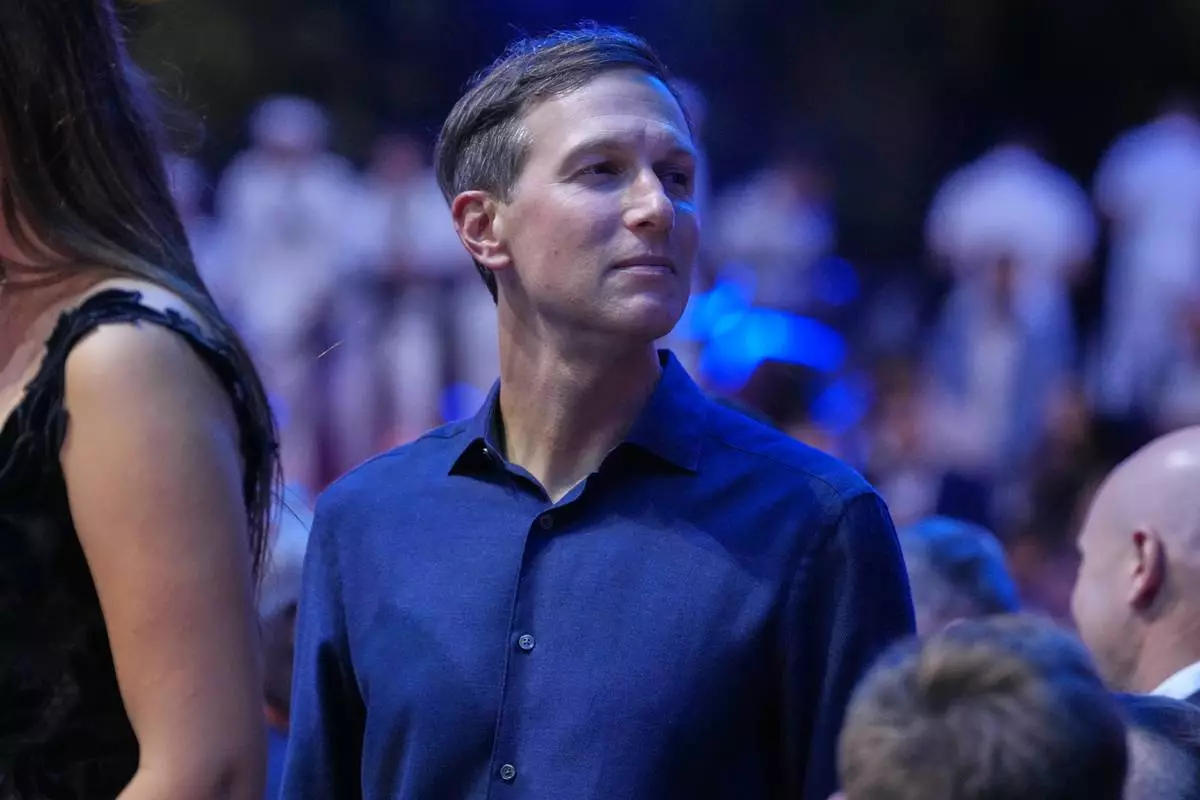
FILE - Jared Kushner waits to walk into the ring after the lightweight championship bout at UFC Freedom 250 on the South Lawn of the White House, June 15, 2026, in Washington. (AP Photo/Alex Brandon, File)