China's Ministry of Water Resources reported on Monday that 34 rivers across the country remain above warning levels as of 09:00, prompting authorities to maintain a yellow alert for flood.
Compared with Sunday, five more rivers were added onto the ministry's list for flood monitoring, as the flood season continues to pose widespread challenges across the country.
The affected waterways are located in several provincial-level regions, including the Guangxi Zhuang Autonomous Region in the south, Yunnan Province in the southwest and Zhejiang Province in the east, with water levels exceeding the warning thresholds by up to 7.01 meters in the most extreme cases.
According to the ministry's forecast, from Monday to Wednesday, heavy rainfall is expected to trigger a numbered flood on Guangxi's Yujiang River, a classification used for significant flood events requiring formal tracking and response.
Additional risks loom in the country's northeastern and eastern regions, with heightened cautions being maintained for the Heilongjiang River and the Wusuli River, both major waterways in northeast China, and the Taihu Lake, a major freshwater lake located in the Yangtze River Delta plain in east China.
An orange alert was issued for flash flood for the eastern areas of Fujian Province in east China, with a high probability of sudden flooding over the 24 hours through 08:00 on Tuesday.
China has a four-tier color-coded warning system for flood, with red representing the most severe, followed by orange, yellow and blue.
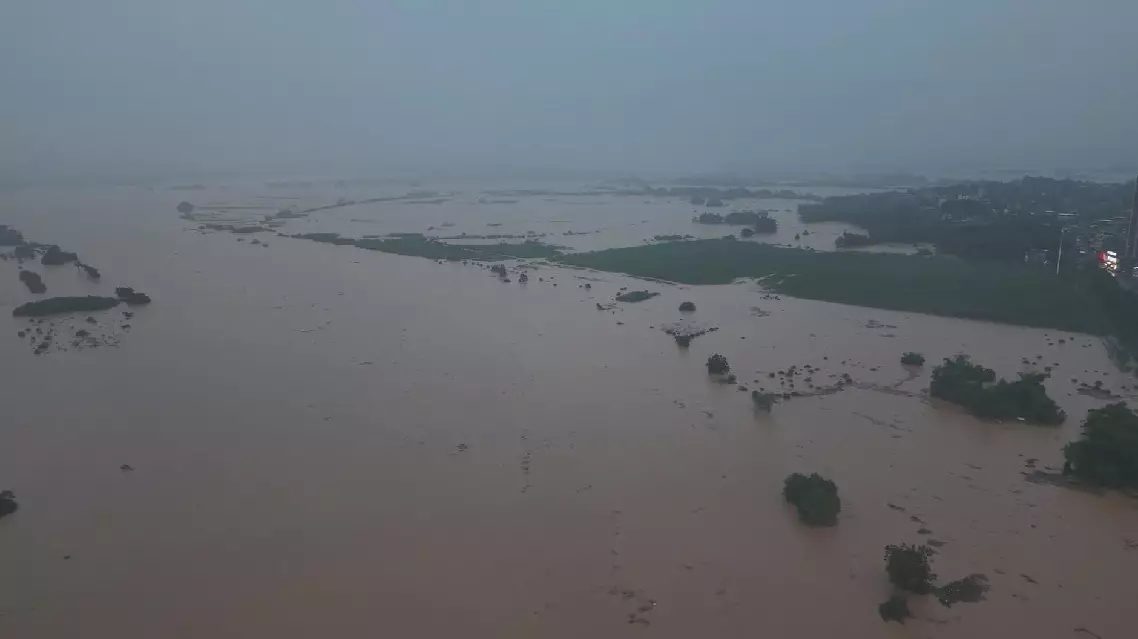
34 rivers remain above warning levels as China maintains flood alert
China's third peacekeeping quick reaction force in Abyei, a disputed region straddling the border between Sudan and South Sudan in northeastern Africa, recently conducted an emergency air rescue drill alongside a helicopter unit and a Level II hospital under the United Nations Interim Security Force for Abyei (UNISFA).
The drill simulated a helicopter crash outside the camp that left multiple people injured, testing troops on emergency response and air rescue. Upon receiving the order, the peacekeepers quickly assembled and boarded a helicopter to head for the site.
"After arriving at the mission airspace, we quickly landed by helicopter and, through multi-route coordination and grid-style search, rapidly located the incident site and the injured, secured the area, and worked with medical personnel to provide first aid and evacuate the wounded," said Liu Jimin, an officer with the quick reaction force.
The Chinese peacekeepers quickly secured the surrounding terrain, established a perimeter, set up controlled zones and checked for safety hazards to protect the rescue operation.
"Next, we will regularly conduct various combat readiness drills, stay fully prepared, hone our skills, continuously enhance our ability to carry out peacekeeping tasks, and do our utmost to safeguard peace and stability in the mission area," said Xiao Kun, another officer with the quick reaction force. In addition, 120 peacekeepers from the sixth Chinese peacekeeping helicopter contingent in Abyei were awarded UN medals of peace on Friday for their commitment to maintaining stability and peace in the mission area.
A medal parade ceremony was held at the Super Camp of UNISFA. Since deploying to Abyei in January, the helicopter unit has carried out missions including troop transport, aerial patrol, battlefield search and rescue, and cargo delivery.
To date, it has transported more than 11,300 personnel and logged over 160,000 kilometers in flight, earning praise from UNISFA as an "an indispensable key force".
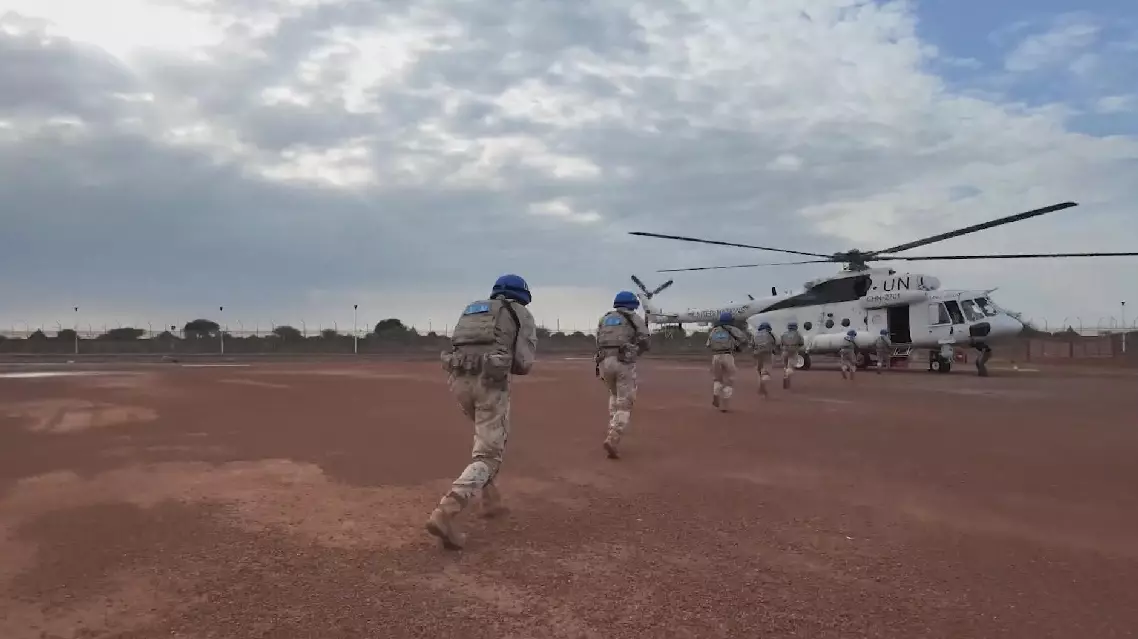
Chinese peacekeepers hold air rescue drill in Abyei