Skip to Content Facebook Feature Image

Colombia’s armed groups recruit children and train them in drone warfare, rights group says

News

Colombia’s armed groups recruit children and train them in drone warfare, rights group says
News

News

Colombia’s armed groups recruit children and train them in drone warfare, rights group says

2026-08-25 01:21 Last Updated At:01:30

BOGOTA, Colombia (AP) — Drug gangs and rebel groups in Colombia are increasingly recruiting children and using them to perform potentially lethal tasks that include piloting explosives-laden drones, Human Rights Watch said in a report published Monday.

The international watchdog said criminal organizations in the South American country often use social media to recruit children as they try to assert control over rural areas where they profit from the drug trade, extortion and illegal mining.

“Armed groups in Colombia are recruiting children with impunity,” said Juanita Goebertus, Americas director at Human Rights Watch. “Protection systems are failing, and social media platforms have become a more effective recruiting ground."

According to Colombia’s Human Rights Defenders' Office, at least 1,500 children have been recruited by armed groups since 2021, with 625 cases reported in 2024.

In 1999, during the peak of the conflict between Colombia’s military and the Revolutionary Armed Forces of Colombia, or FARC, an estimated 1,320 children were recruited into the fighting, according to a report by a national truth commission.

A 2016 peace deal between Colombia’s government and the FARC rebels reduced violence in many parts of the country and slowed the recruitment of children by armed groups.

But child recruitment is picking up again as smaller rebel groups and other criminal organizations fight over control of rural areas abandoned by FARC guerrillas following the peace deal, where law enforcement and social services continue to be weak.

In Colombia, rebel groups have long used children to perform tasks that include serving as messengers, gathering intelligence, cooking or engaging with the enemy — while girls are sometimes forced into sexual acts with commanders.

The Human Rights Watch report says children are now also being trained in drone warfare, as rebel groups increasingly use drones outfitted with explosives to strike at rival groups or launch attacks on police and army bases.

Human Rights Watch verified videos published on social media that show children using explosives-laden drones, and interviewed family protection officers who work with children who have escaped from armed groups or have been allowed to demobilize.

“Released children who report having operated drones say that armed groups describe the activity as a game rather than as participation in armed fighting,” the report said.

Colombia’s Human Rights Defenders’ office said in a separate report published Monday that armed groups conducted 121 attacks with drones in the first five months of this year, in which 21 people were killed and 145 were injured.

Human Rights Watch identified dozens of social media accounts that “glorify” life in rebel groups, echoing a concern previously voiced by the United Nations.

The watchdog group said in some cases, the algorithms of platforms like Meta and TikTok “appear to have actively promoted” such content that encourages children to join rebel groups.

Meta and TikTok replied to Human Rights Watch saying they prohibit content that promotes violence, and that they had taken down accounts flagged by the organization.

Human Rights Watch also said a FARC holdout group led by a commander known as Ivan Mordisco is involved in most cases of child recruitment and is recruiting heavily in Colombia's Cauca region.

Nearly half of all recruiting cases reported by Colombian authorities since 2021 involved Indigenous children, according to data analysis by Human Rights Watch, despite Indigenous people making up just 4% of the population.

The watchdog group also said girls made up 40% of all recruited children.

Human Rights Watch called on the Colombian government to devote more resources to prosecuting members of armed groups who recruit children, while stepping up efforts to prevent recruitment in rural areas.

There was no immediate government response to the report.

The organization also called on social media platforms to establish channels where users can easily report content that’s related to the recruitment of children, and preserve evidence that can be made available to prosecutors.

Follow AP’s coverage of Latin America and the Caribbean at https://apnews.com/hub/latin-america
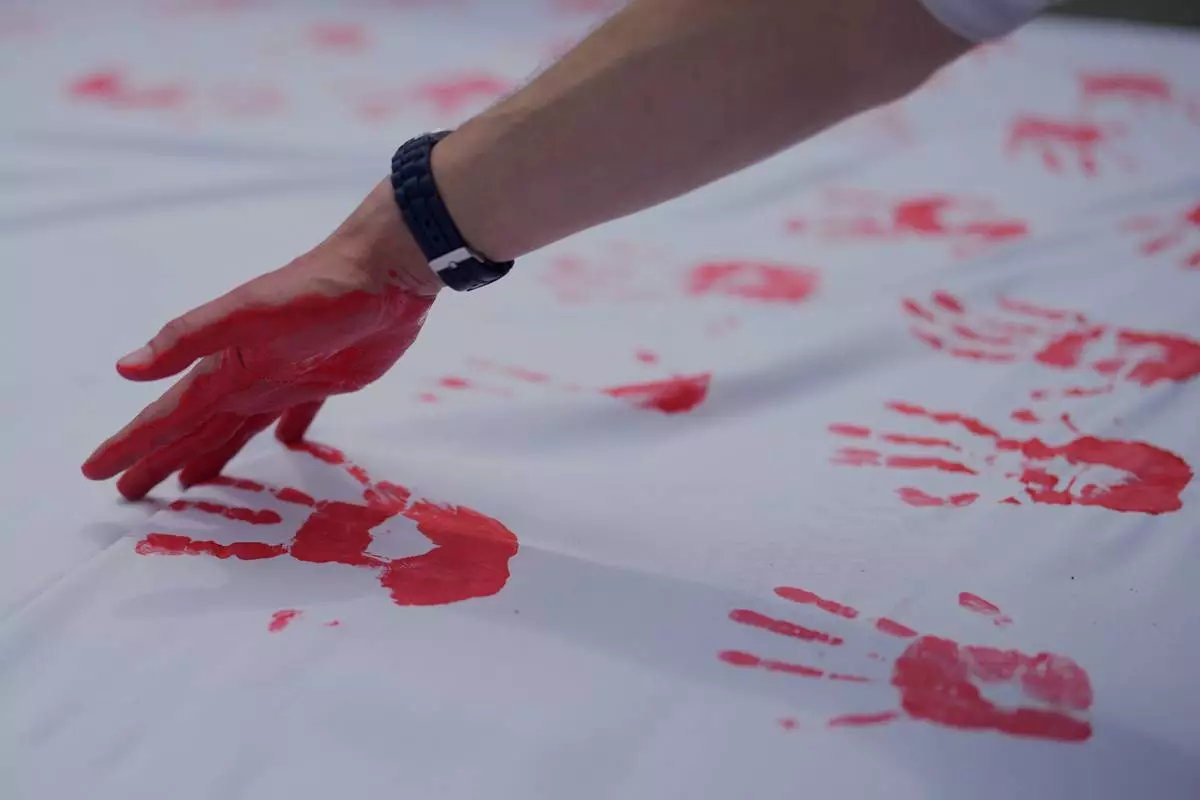
FILE - People cover a sheet in handprints at an event marking Red Hand Day, also known as the International Day against the Use of Child Soldiers, in Bogota, Colombia, where illegal armed groups recruit children, Feb. 12, 2026. (AP Photo/Fernando Vergara, File)

FILE - People cover a sheet in handprints at an event marking Red Hand Day, also known as the International Day against the Use of Child Soldiers, in Bogota, Colombia, where illegal armed groups recruit children, Feb. 12, 2026. (AP Photo/Fernando Vergara, File)
An arbitrator has ordered The Washington Post to reinstate a Black opinion writer fired over social media posts about violent white men following last year's killing of Charlie Kirk.

The ruling Thursday said the newspaper did not have sufficient cause to terminate Karen Attiah, who at the time was the last Black full-time member of the Post’s opinion desk. The arbitrator, Sarah Miller Espinosa, also ordered the Post to award Attiah full back pay and lost benefits.

Kirk, who rose from a teenage conservative campus activist to become a top podcaster and ally of President Donald Trump, was shot and killed Sept. 10 during a public appearance at Utah Valley University. He was 31.

Kirk launched Turning Point USA in 2012 and made provocative statements about race, gender and politics. He was critical of the Black Lives Matter movement on college campuses and called George Floyd, the Black man whose 2020 murder at the hands of Minneapolis police sparked protests, a “scumbag.”

His death elicited a torrent of comments about him, both pro and con, and some who spoke out against him in the days after the killing faced sanctions or dismissal at work.

After Kirk's killing, Attiah, the founding global opinion editor for the Post and the newspaper's only Black female opinion writer, made several posts to her Bluesky account.

One post read: “Refusing to tear my clothes and smear ashes on my face in performative mourning for a white man that espoused violence is … not the same as violence.”

“If anything, the rush to coddle violent white men is self-protective — that we know they are not used to feeling vulnerable and mortal — and will react violently out of fear. And we will all suffer,” read another post.

Attiah was emailed a termination letter on Sept. 11, accusing her of “gross misconduct.”

“Your public comments on social media regarding the death of Charlie Kirk violate the Post’s social media policies, harm the integrity of our organization, and potentially endanger the physical safety of our staff,” the letter read.

But Espinosa found that the newspaper, in a June 4 hearing, failed to establish that Attiah “engaged in gross misconduct” and that the Post “did not have good and sufficient cause to terminate” her employment, which violated the collective bargaining agreement with the newspaper's union.

“After wrongfully firing me last year, an independent arbitrator has ordered the @washingtonpost to reinstate me immediately, with back pay,” Attiah posted on Instagram on Monday. “It’s been a year-long fight, but this is a victory for journalists everywhere. More to come soon.”

The Democracy Defenders Fund, which, along with Washington-Baltimore News Guild, represented Attiah, said the ruling marks a landmark moment for press freedom, “confirming that corporate media institutions cannot use retaliatory discipline to silence journalists who address uncomfortable truths.”

The Post said in a statement that it respects the arbitration process, but declined to comment further.

At the time, Attiah’s firing was among dozens of others across various professions stemming from comments about Kirk’s assassination, igniting a debate over First Amendment rights as Trump vowed retribution for remarks he considers disparaging.

The National Association of Black Journalists, the nation’s largest professional advocacy organization for journalists of color, added at the time that Attiah’s firing had “raised an alarm about the erosion of Black voices across the media.”

During the organization's annual convention this month in Atlanta, the NABJ gave The Post a “Thumbs Down Award” because the newspaper has laid off Black journalists and eliminated race and culture beats.

“When the NABJ raises concerns about the treatment of Black journalists, we do so because the decisions news organizations make have real consequences for our members, our profession and the communities we serve,” NABJ President Errin Haines said Monday in a statement supporting Attiah.

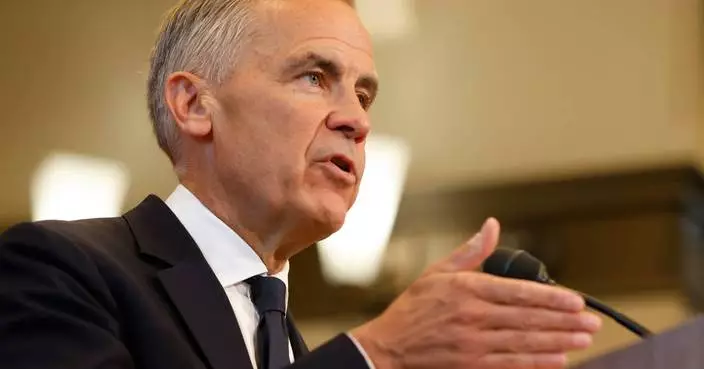
FILE - The One Franklin Square Building, home of The Washington Post newspaper, is seen June 21, 2024, in Washington. (AP Photo/Alex Brandon, File)

FILE - The One Franklin Square Building, home of The Washington Post newspaper, is seen June 21, 2024, in Washington. (AP Photo/Alex Brandon, File)

Recommended Articles