Skip to Content Facebook Feature Image

Earth is simmering in its hottest water temps on record, and that's bad for fish and us

News

Earth is simmering in its hottest water temps on record, and that's bad for fish and us
News

News

Earth is simmering in its hottest water temps on record, and that's bad for fish and us

2026-08-25 04:01 Last Updated At:04:10

The world's oceans simmered to their hottest temperatures on record over the weekend and are likely to warm even further in the next few months, putting stress on life in the water and on land too, the European climate service Copernicus announced Monday.

Spurred by a still growing but already supersized natural El Nino and human-caused climate change, the world's ocean temperatures hit 21.1 degrees Celsius (70 degrees Fahrenheit) on Friday and Saturday, narrowly edging out the average daily record set in March 2024, said Samantha Burgess, strategic climate lead for Copernicus.

More Images
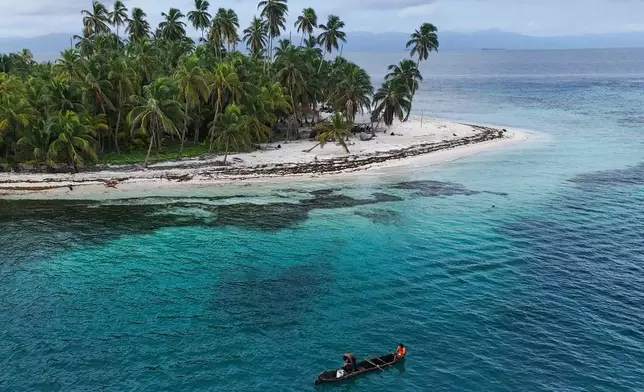
Locals fish in the Dutch Cays of Guna Yala on the Caribbean coast of Panama, Monday, Aug. 24, 2026. (AP Photo/Matias Delacroix)
Locals fish in the Dutch Cays of Guna Yala on the Caribbean coast of Panama, Monday, Aug. 24, 2026. (AP Photo/Matias Delacroix)

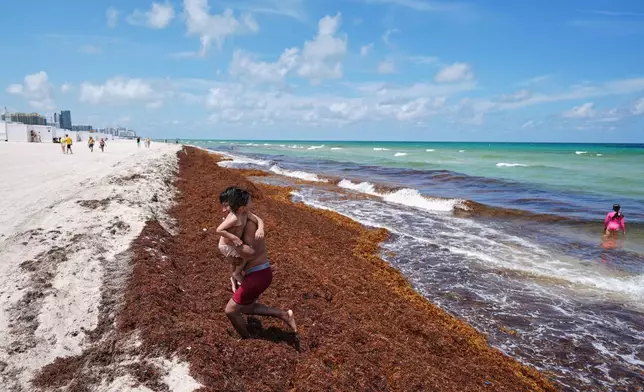
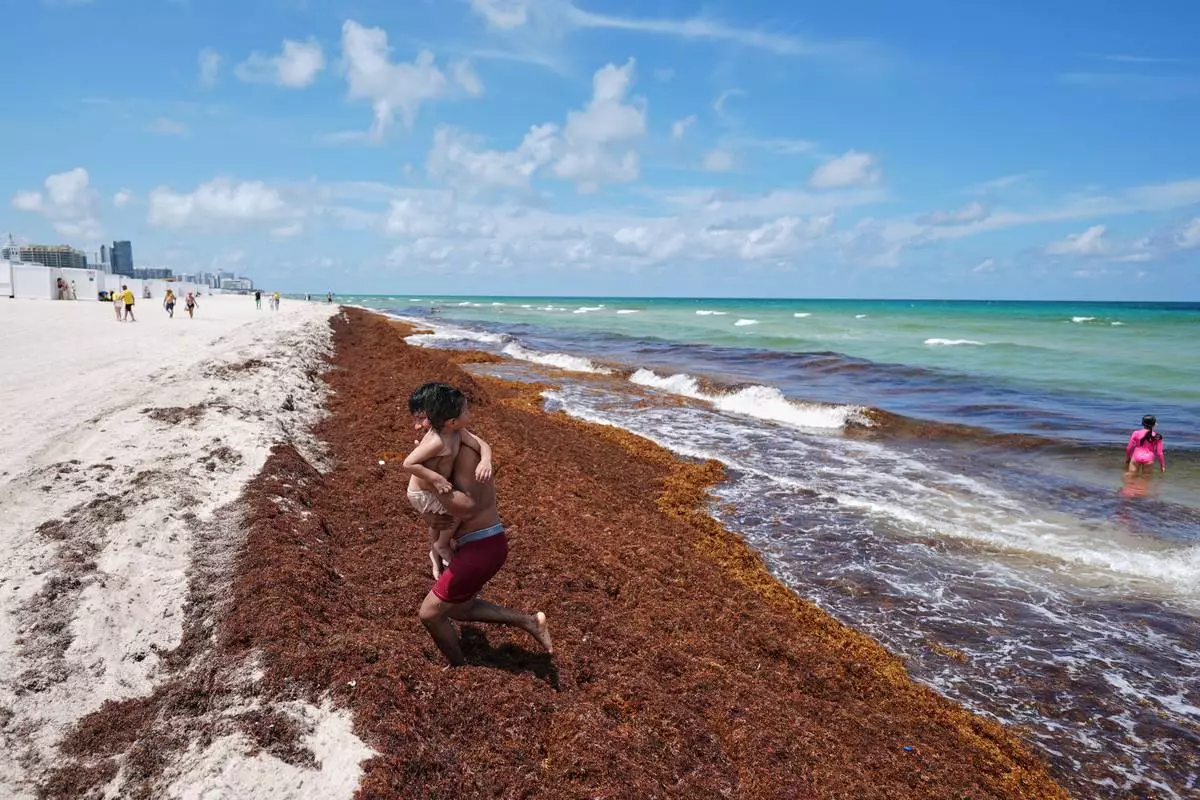
FILE - A man carries a child through sargassum seaweed after cooling off in the ocean in Miami Beach, Fla., June 11, 2026. (AP Photo/Rebecca Blackwell, File)
FILE - A man carries a child through sargassum seaweed after cooling off in the ocean in Miami Beach, Fla., June 11, 2026. (AP Photo/Rebecca Blackwell, File)

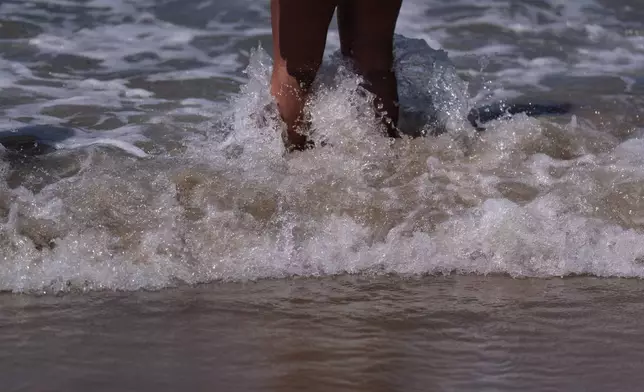
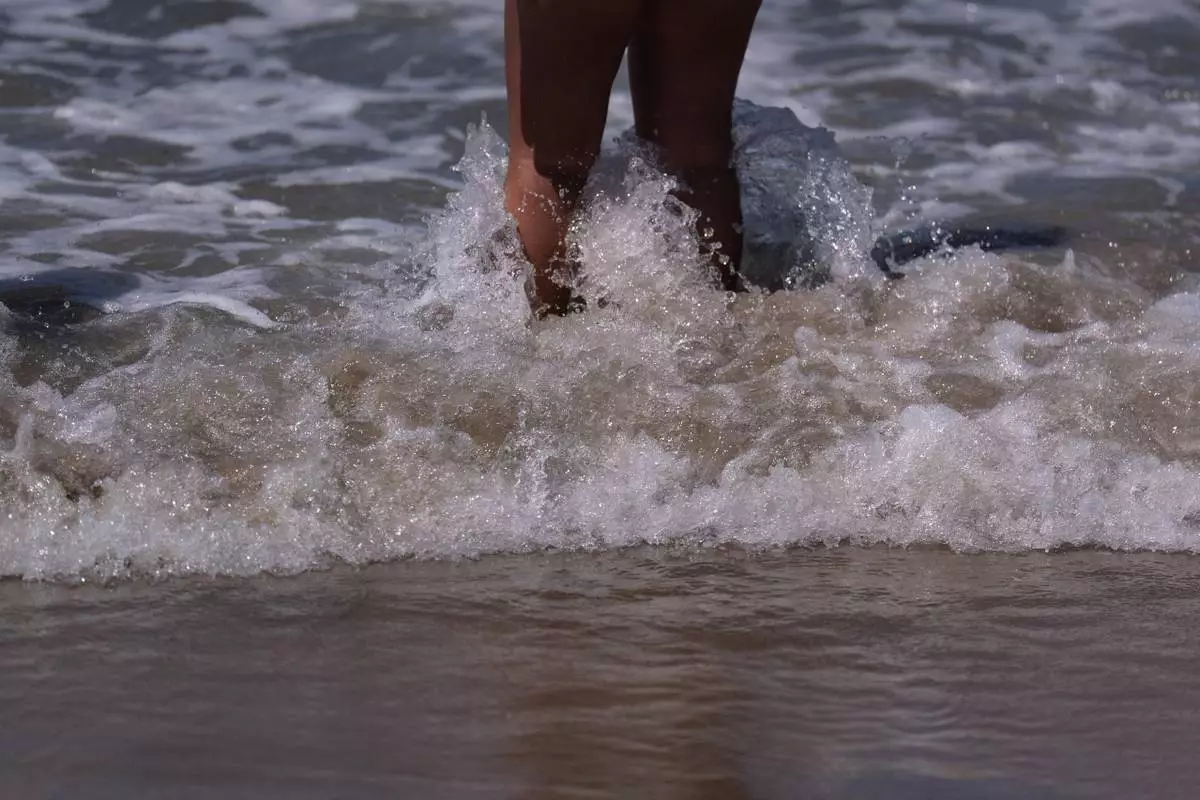
FILE - A beachgoer stands in shallow water at Bolsa Chica State Beach in Huntington Beach, Calif., July 24, 2026. (AP Photo/Jae C. Hong, File)
FILE - A beachgoer stands in shallow water at Bolsa Chica State Beach in Huntington Beach, Calif., July 24, 2026. (AP Photo/Jae C. Hong, File)

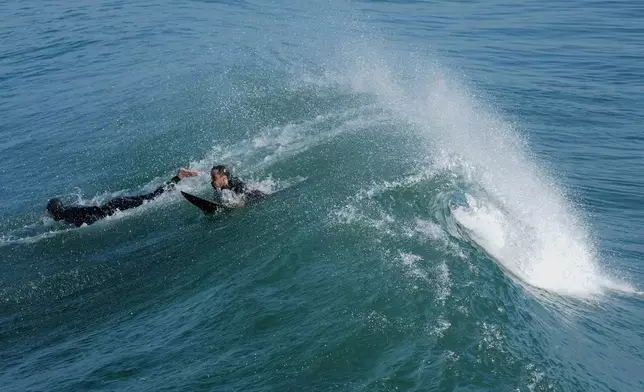
FILE - Surfers pass under a wave alongside the Imperial Beach pier March 11, 2026, in Imperial Beach, Calif. (AP Photo/Gregory Bull, File)
FILE - Surfers pass under a wave alongside the Imperial Beach pier March 11, 2026, in Imperial Beach, Calif. (AP Photo/Gregory Bull, File)

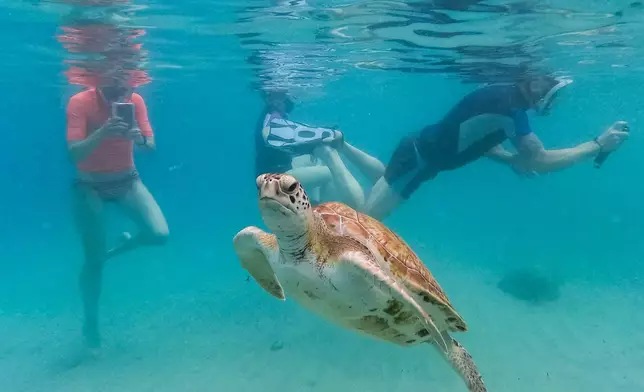
FILE - A sea turtle swims among tourists snorkeling at Piskado beach in Westpunt, Curacao, May 15, 2026 (AP Photo/Matias Delacroix, File)

FILE - A sea turtle swims among tourists snorkeling at Piskado beach in Westpunt, Curacao, May 15, 2026 (AP Photo/Matias Delacroix, File)

“This is yet another sign of our climate system under strain and the ocean under immense pressure,” Burgess said.

Jane Lubchenco, an oceanographer and former chief of the U.S. National Oceanic and Atmospheric Administration called the record “very troubling.”

“An ocean this warm destabilizes weather patterns and threatens food security, economic prosperity and marine life,” Lubchenco said in an email. “A warmer ocean is not our friend.”

When the ocean warms it becomes more acidic and carries less oxygen which hurts food industries that rely on the seas, Burgess said. It also changes ocean currents and weather patterns, giving more juice to storms to make them rainier and make storm surge bigger, Burgess said.

“When we have a warmer ocean such as we’ve had in Europe this summer, it amplifies the impact of heat waves because you don’t get the cooler nighttime temperatures with the sea breeze coming off the ocean when the ocean is very warm,” Burgess said.

Normally, because most of the Southern Hemisphere is ocean, the world's sea surface temperature peaks in March and April, as the southern summer draws to a close. But this year, the record was set in August, Burgess said. So the oceans will keep getting hotter until the current El Nino — a natural temporary warming of parts of the Pacific that then warps weather and raises temperatures globally — reaches its peak, which is expected sometime between November and January, she said.

El Nino is already as big as recent ones and is still growing with it expected to reach unprecedented levels at its peak. It's responsible for a good chunk of the heat in the oceans, and long-term warming from the burning of coal, oil and gas has warmed the waters by 0.8 degrees Celsius (1.4 degrees Fahrenheit), Burgess said.

“The thing that makes my heart sink is that this starts so early and it's so out-of-normal that you know when it hits its peak, it's going to be unprecedented,” said Boris Worm, a biology professor at Canada's Dalhousie University. “The ocean is not supposed to do this.”

“It's just that there is no normal anymore,” Worm said.

“It's frightening,” said University of North Carolina marine ecologist John Bruno. “We’re not even in October yet. You know, usually the Caribbean peaks at like late September, early October. And I think next year in the Southern Ocean, the Great Barrier Reef, yeah I’m really worried about what’s going to happen in the southern hemisphere in February, March.”

The amount of heat sensitive coral alive today is about one-fifth of 1990s levels, Bruno said. But lately scientists have found that some species of coral — more the “weedy” kinds not the long-lived iconic kind like staghorn — are adapting to the hotter water and it's not quite the wipe-out event once feared, he said.

Bruno and Worm warned of fisheries collapse and food shortages.

They both mentioned the largest fishery in the world, the Peruvian anchovy fishery. That usually collapses during El Nino and is especially likely with this heat, Worm said. And that alters the food web because larger fish, marine mammals and seabirds feed on them.

When the water gets hot, larger creatures can swim to cooler water, going halfway across an ocean, but “anchovies can't leave so they just don't reproduce or starve,” Worm said. And the seabirds and even humans who depend on them are affected.

With hotter water, “not everybody is hit equally, obviously, but the whole system collapses,” Worm said. “It’s like when you pull out the rug from underneath an economy. It’s, like, the whole thing collapses. Some sectors may do a little bit better, but overall, everybody suffers.”

Burgess said as the waters warm off Europe, people are seeing more jellyfish and, Bruno said, the same thing could be happening on the U.S. East Coast.

“Jellyfish are often opportunistic and they like warm waters,” Worm said. “So yes, I would expect them to do a little bit better.”

Another former NOAA chief, Rick Spinrad, said the ocean is the planet's thermostat, so “as long as we depend on a healthy ocean for our safety, prosperity and wellbeing, these record-breaking sea surface temperatures portend even greater challenges for us all.”

—-

The Associated Press’ climate and environmental coverage receives financial support from multiple private foundations. AP is solely responsible for all content. Find AP’s standards for working with philanthropies, a list of supporters and funded coverage areas at AP.org.
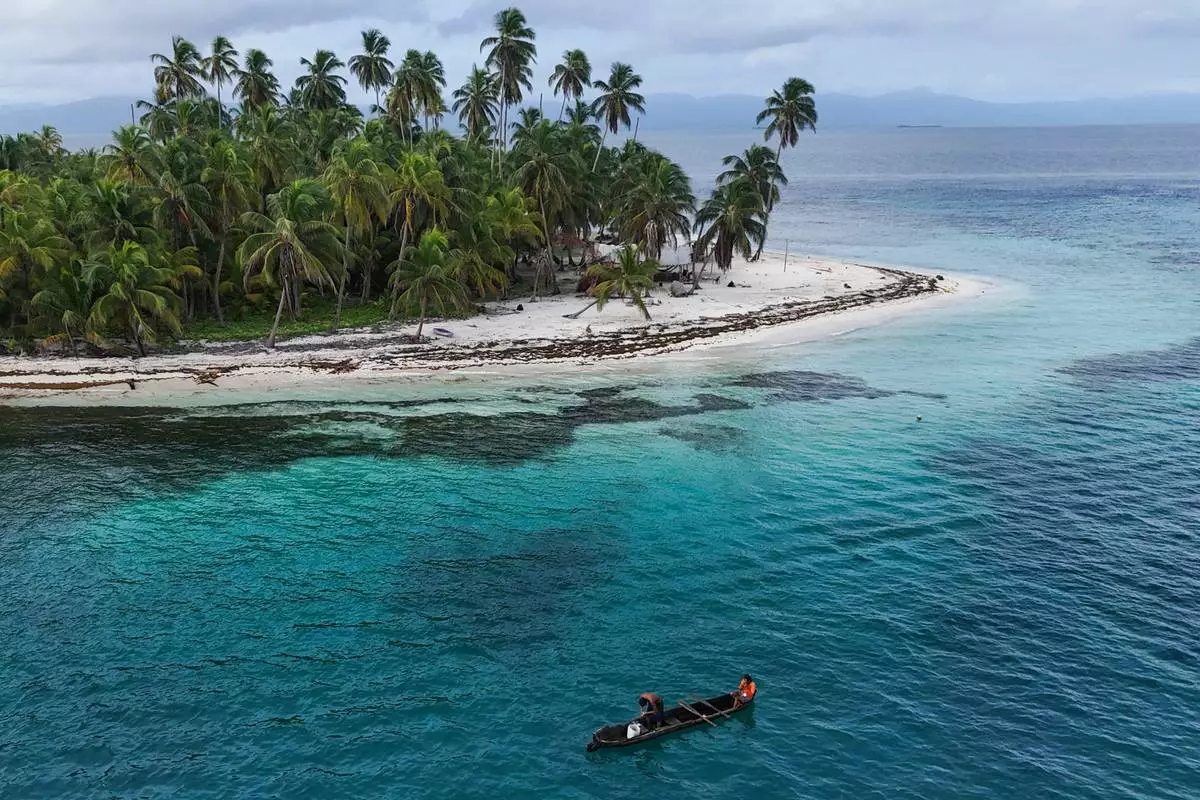
Locals fish in the Dutch Cays of Guna Yala on the Caribbean coast of Panama, Monday, Aug. 24, 2026. (AP Photo/Matias Delacroix)
Locals fish in the Dutch Cays of Guna Yala on the Caribbean coast of Panama, Monday, Aug. 24, 2026. (AP Photo/Matias Delacroix)

FILE - A man carries a child through sargassum seaweed after cooling off in the ocean in Miami Beach, Fla., June 11, 2026. (AP Photo/Rebecca Blackwell, File)
FILE - A man carries a child through sargassum seaweed after cooling off in the ocean in Miami Beach, Fla., June 11, 2026. (AP Photo/Rebecca Blackwell, File)

FILE - A beachgoer stands in shallow water at Bolsa Chica State Beach in Huntington Beach, Calif., July 24, 2026. (AP Photo/Jae C. Hong, File)

FILE - A beachgoer stands in shallow water at Bolsa Chica State Beach in Huntington Beach, Calif., July 24, 2026. (AP Photo/Jae C. Hong, File)

FILE - Surfers pass under a wave alongside the Imperial Beach pier March 11, 2026, in Imperial Beach, Calif. (AP Photo/Gregory Bull, File)

FILE - Surfers pass under a wave alongside the Imperial Beach pier March 11, 2026, in Imperial Beach, Calif. (AP Photo/Gregory Bull, File)

FILE - A sea turtle swims among tourists snorkeling at Piskado beach in Westpunt, Curacao, May 15, 2026 (AP Photo/Matias Delacroix, File)

FILE - A sea turtle swims among tourists snorkeling at Piskado beach in Westpunt, Curacao, May 15, 2026 (AP Photo/Matias Delacroix, File)
NEW YORK (AP) — U.S. stocks drifted to a mixed finish as the countdown ticks toward potentially market-moving events coming later in the week. The S&P 500 slipped 0.3% Monday and pulled further from its record set earlier this month. The Dow Jones Industrial Average added 0.3%, and the Nasdaq composite fell 0.8%. Yields eased in the bond market after oil prices dropped. Investors are waiting for Nvidia’s profit report coming Wednesday, which could shed light on how strong the AI boom remains. On Friday, Federal Reserve Chairman Kevin Warsh will give a speech as pressure rises on him to hike interest rates to get inflation under control.

THIS IS A BREAKING NEWS UPDATE. AP’s earlier story follows below.

NEW YORK (AP) — U.S. stocks are drifting Monday ahead of a week packed with potentially market-moving events. The areas of the bond market that the U.S. Treasury Department is trying to calm down, meanwhile, eased a bit.

The S&P 500 slipped 0.3% and pulled a bit further from its all-time high set earlier this month. The Dow Jones Industrial Average was up 59 points, or 0.1%, as of 1:42 p.m. Eastern time, and the Nasdaq composite was 0.6% lower.

Tech stocks led the way downward following big swings through the summer on worries that the frenzy around artificial-intelligence technology sent prices too high and that the huge demand for AI chips won’t be sustainable if they don’t produce enough profits.

Chip giant Nvidia has been a tremendous winner of the AI boom and become Wall Street’s largest and most influential stock because of it. It will deliver its latest quarterly earnings report on Wednesday, which could dictate the next big move for AI-related stocks.

Nvidia sank 2.3% and was the heaviest weight on the S&P 500, where the majority of stocks rose. Drops of 6% for Micron Technology and 2% for Broadcom also helped drag the index lower.

The other big factor moving stocks recently has been the bond market, where longer-term Treasury yields climbed through the summer on worries about high inflation, huge government debts and other factors. High yields make it more expensive for everyone to borrow, not just the government, and have already been pushing up mortgage rates and hurting the housing industry.

The U.S. Treasury Department announced a surprise move last week to increase the size of planned buybacks of Treasurys, which could help contain the rise in yields for 10- and 30-year Treasurys. But analysts warned the move may have only a limited effect because of how small the size of the buybacks are and how they do not fix the fundamental problems of too-high debt for the U.S. government and expensive oil prices because of the war with Iran.

On Monday, the yield of the 10-year Treasury eased to 4.70% from 4.74% late Friday and is back below where it was late Tuesday, before the U.S. Treasury Department made its surprise announcement.

Helping to bring yields down on Monday was a drop in oil prices. Brent crude fell 2.3% to $90.55 per barrel.

Last month it zigzagged between $72 and $102 as hopes rose and fell that the United States and Iran could reach a deal that would allow oil tankers to freely exit the Persian Gulf again. That was even though the United States announced new sanctions on Iran, which helped drag the value of Iran's currency to a record low.

Despite Monday's easing of yields, analysts warn the U.S. government’s attempts to influence the bond market could ultimately mean higher pressure on inflation. Inflation already is higher than nearly everyone would like and has been for years.

That raises the pressure on the Federal Reserve to raise the federal funds rate, which affects very short-term overnight loans. When the Fed raises that rate, it could help keep a lid on inflation by trying to slow the overall economy and undercutting prices for stocks and other investments.

The Fed’s new chairman, Kevin Warsh, is set to deliver a speech on Friday at an economic symposium in Jackson Hole, Wyoming. The mountain setting has been the backdrop for major Fed policy announcements in the past, but investors are unsure of what they may get from Warsh this time around.

Warsh has insisted that he wants to give financial markets fewer clues about what the Fed will do with interest rates, hoping that markets react more to incoming data about the economy and inflation than to what the Fed is signaling.

But with U.S. Treasury Secretary Scott Bessent announcing his move last week, Warsh now holds the ball, according to economists at Bank of America. Expectations are high among investors for Warsh to talk about inflation and how the Fed could potentially react, and a failure to deliver could lead to bond yields jumping, they said.

In stock markets abroad, indexes dipped around much of the world. South Korea’s Kospi fell 3.1%, and Hong Kong’s Hang Seng dropped 1.9% for two of the biggest moves.

Seoul has been home to some of the world’s sharpest swings this summer because it is dominated by two tech titans benefiting from the AI boom, Samsung Electronics and SK Hynix.

AP Business Writers Michelle Chapman and Elaine Kurtenbach contributed to this report.

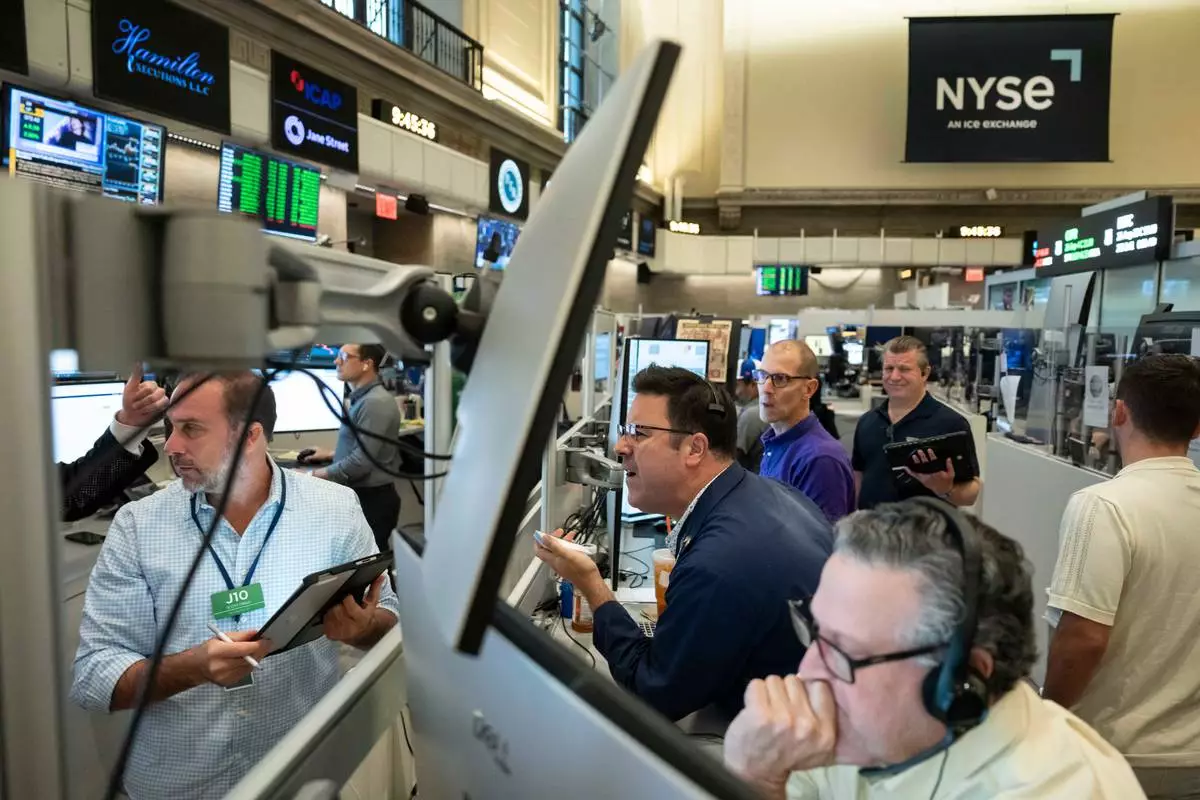
Options traders work on the floor of the New York Stock Exchange in New York, Friday, Aug. 21, 2026. (AP Photo/Yuki Iwamura)

Options traders work on the floor of the New York Stock Exchange in New York, Friday, Aug. 21, 2026. (AP Photo/Yuki Iwamura)

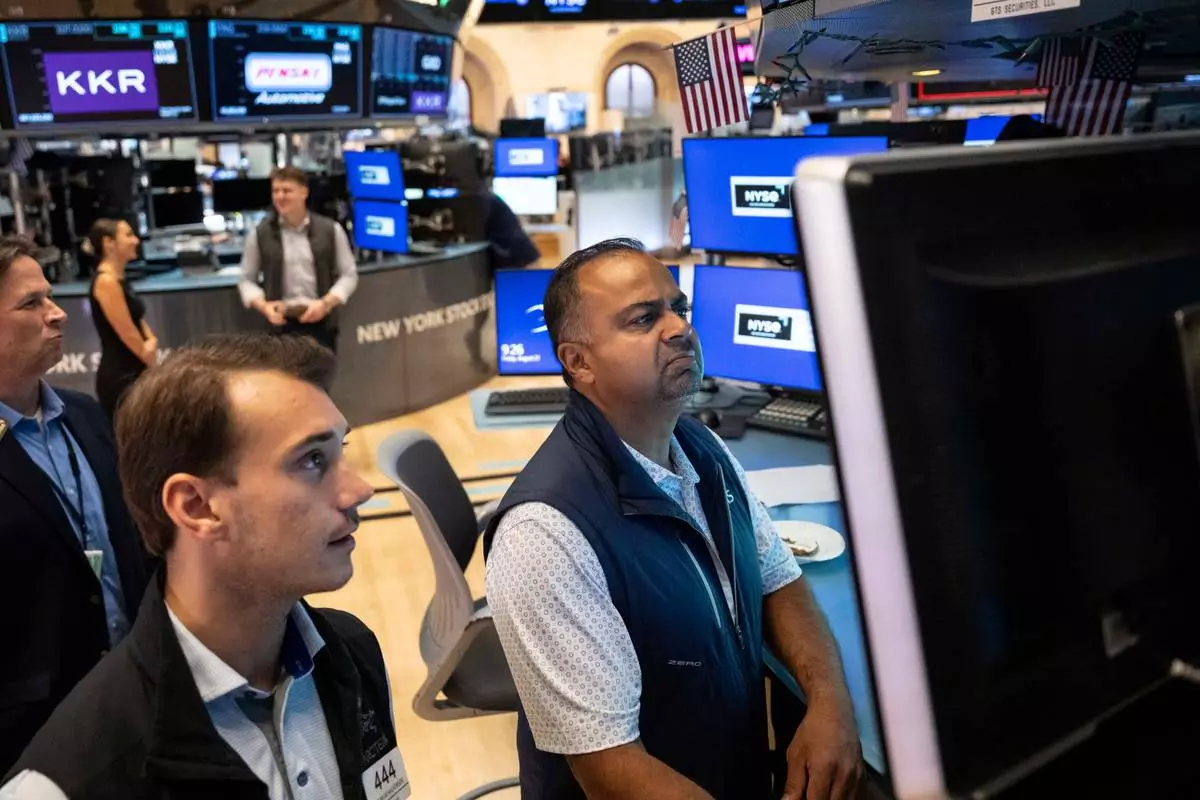
Specialists Dilip Patel, right, and Dylan Halvorsen work on the floor of the New York Stock Exchange in New York, Friday, Aug. 21, 2026. (AP Photo/Yuki Iwamura)

Specialists Dilip Patel, right, and Dylan Halvorsen work on the floor of the New York Stock Exchange in New York, Friday, Aug. 21, 2026. (AP Photo/Yuki Iwamura)

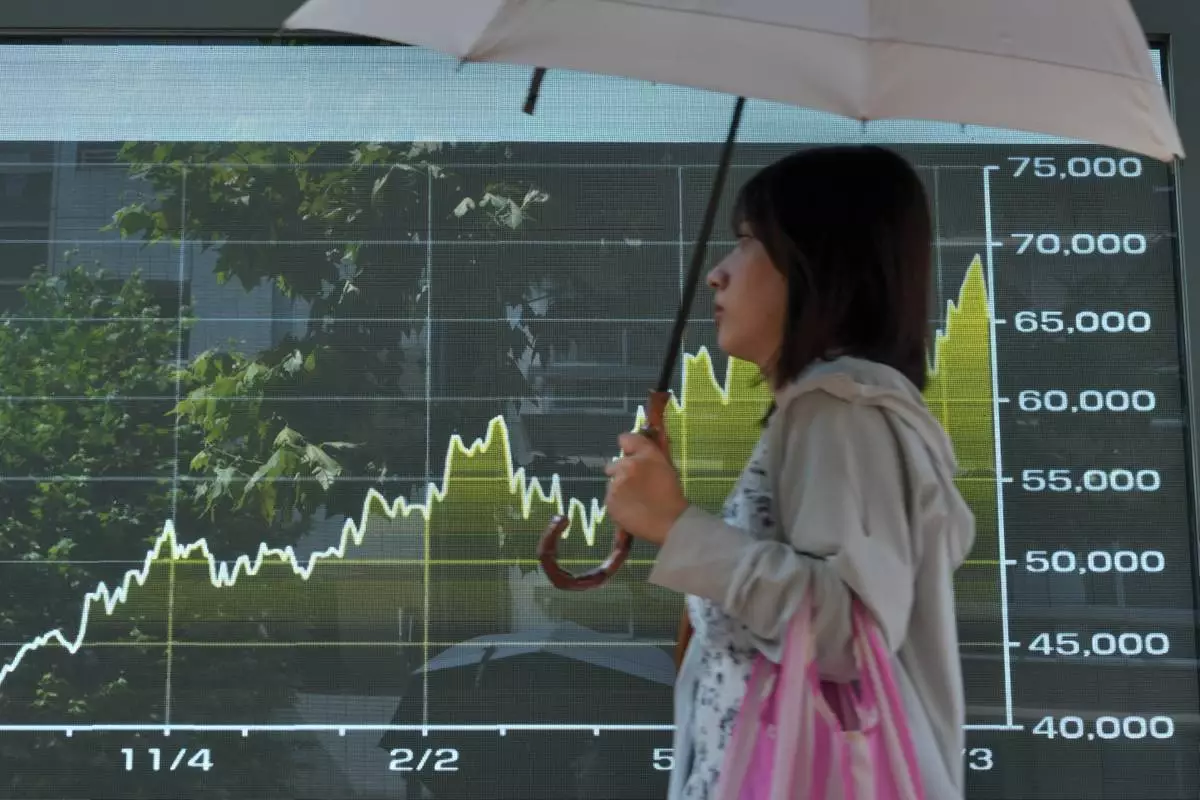
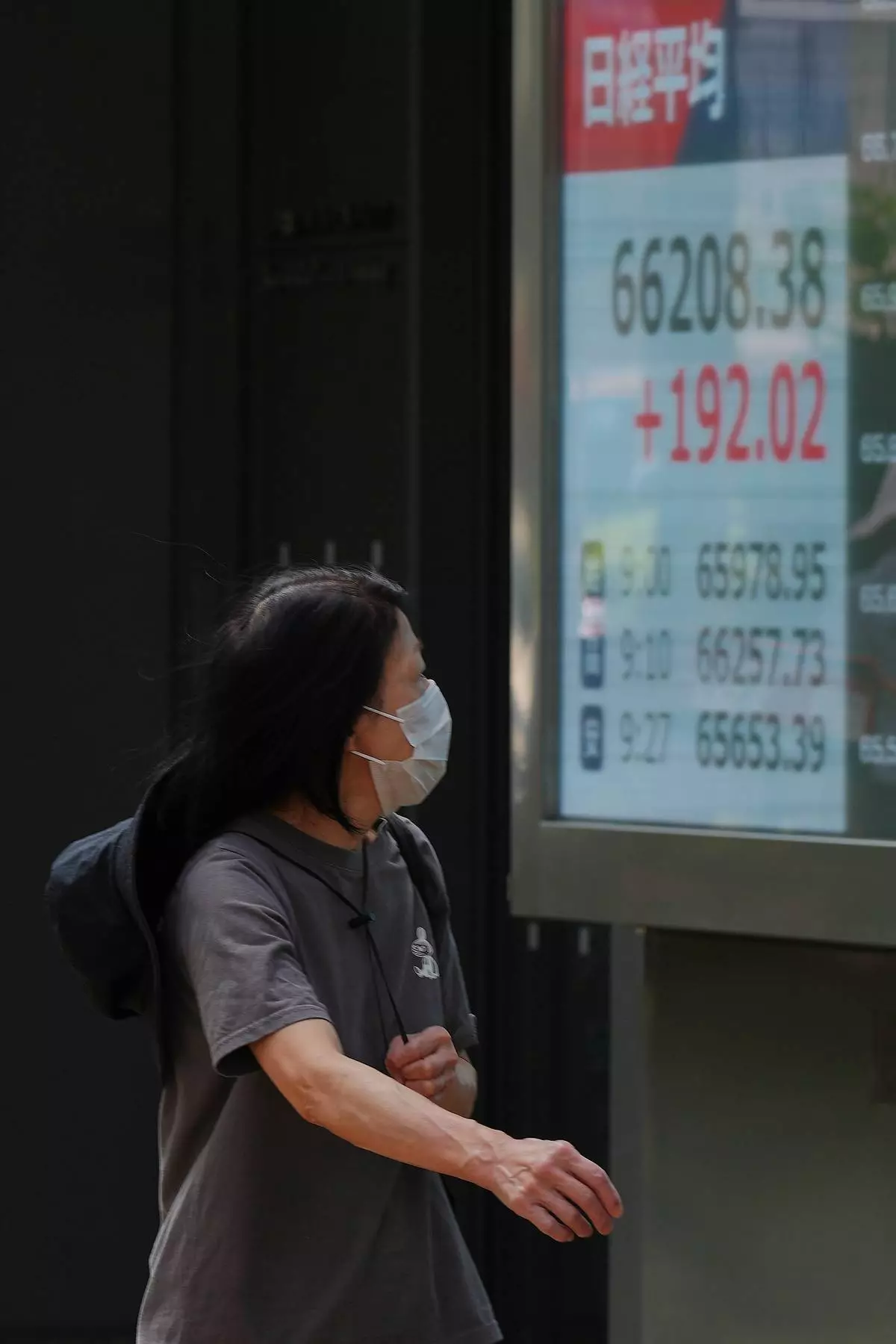
A person walks in front of an electronic stock board showing Japan's Nikkei index at a securities firm Thursday, Aug. 20, 2026, in Tokyo. (AP Photo/Eugene Hoshiko)

A person walks in front of an electronic stock board showing Japan's Nikkei index at a securities firm Thursday, Aug. 20, 2026, in Tokyo. (AP Photo/Eugene Hoshiko)

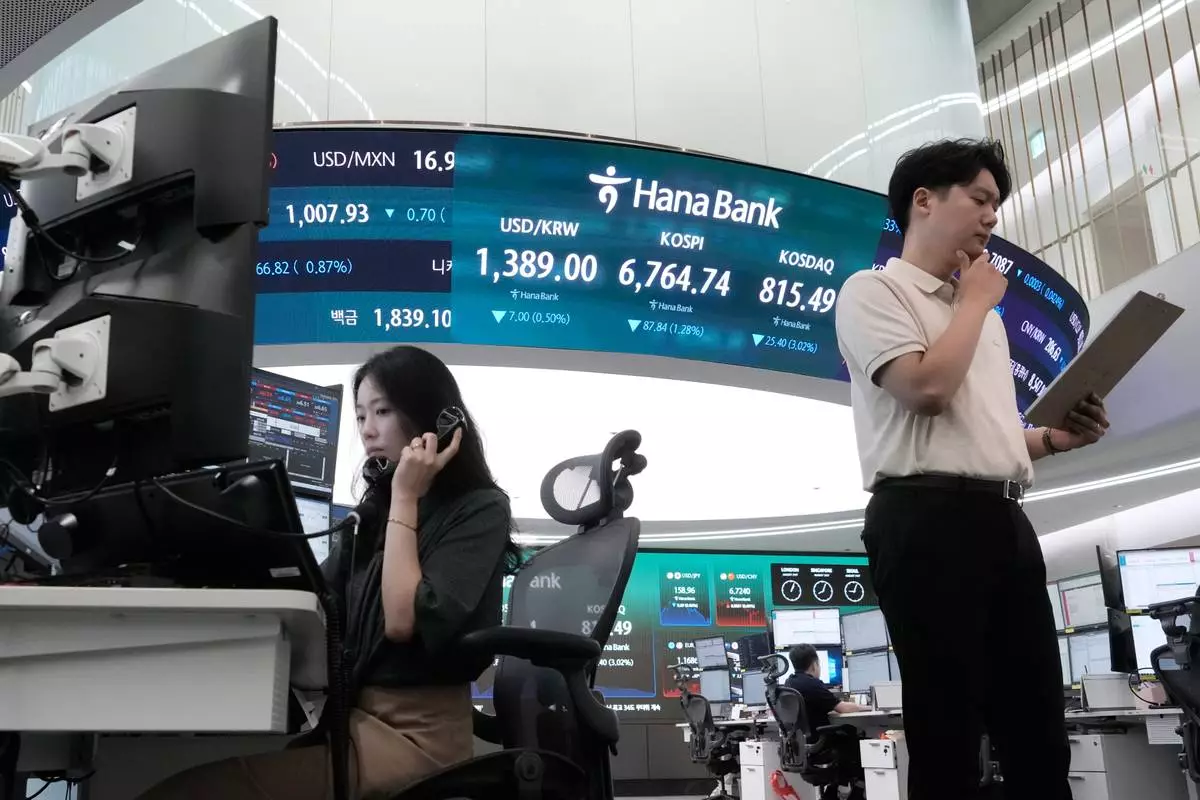
Currency traders work at the foreign exchange dealing room of the Hana Bank headquarters in Seoul, South Korea, Friday, Aug. 21, 2026. (AP Photo/Ahn Young-joon)

Currency traders work at the foreign exchange dealing room of the Hana Bank headquarters in Seoul, South Korea, Friday, Aug. 21, 2026. (AP Photo/Ahn Young-joon)

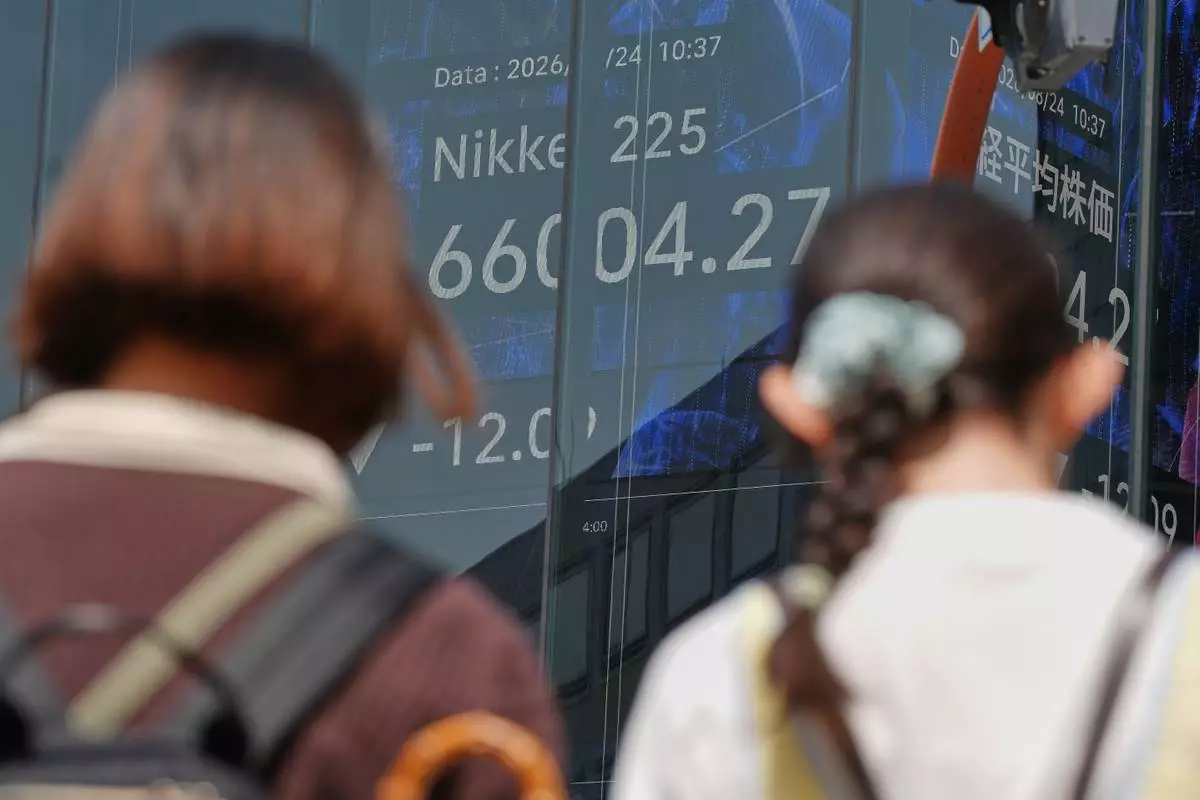
People stand in front of an electronic stock board showing Japan's Nikkei index at a securities firm Monday, Aug. 24, 2026, in Tokyo. (AP Photo/Eugene Hoshiko)

People stand in front of an electronic stock board showing Japan's Nikkei index at a securities firm Monday, Aug. 24, 2026, in Tokyo. (AP Photo/Eugene Hoshiko)

A person walks by an electronic stock board showing Japan's Nikkei index at a securities firm Monday, Aug. 24, 2026, in Tokyo. (AP Photo/Eugene Hoshiko)

A person walks by an electronic stock board showing Japan's Nikkei index at a securities firm Monday, Aug. 24, 2026, in Tokyo. (AP Photo/Eugene Hoshiko)

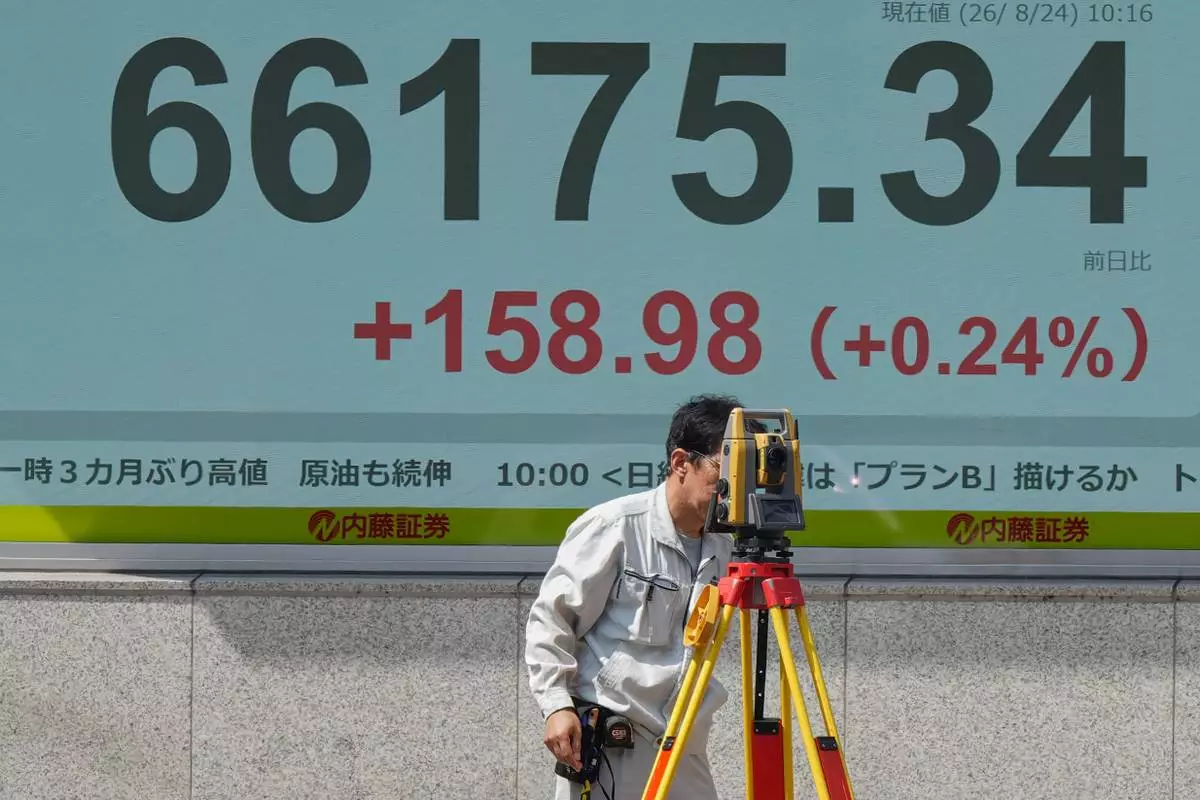
A surveyor works in front of a stock market chart Monday, Aug. 24, 2026 in Tokyo. (AP Photo/Eugene Hoshiko)

A surveyor works in front of a stock market chart Monday, Aug. 24, 2026 in Tokyo. (AP Photo/Eugene Hoshiko)

Recommended Articles