JUBA, South Sudan (AP) — Two United Nations peacekeepers were killed on Monday when armed men ambushed a patrol traveling to a remote area of South Sudan, according to the United Nations Mission in South Sudan.
Seven others were injured in the attack — three peacekeepers, two members of the South Sudanese police and two civilian staff of the mission, the mission known as UNMISS said in a statement. The two peacekeepers killed were from Ethiopia, U.N. spokesperson Stéphane Dujarric said.
The mission said it had deployed a “Quick Reaction Force” to secure the area and support the emergency response after the attack. The patrol was going to the area of Pajut in the state of Jonglei when it came under attack.
“Such deadly violence targeting UNMISS personnel who are serving to support peace in South Sudan is unacceptable,” Anita Kiki Gbeho, the head of UNMISS, said in the statement.
The killings bring the number of peacekeepers killed by militias since Jan. 1 to nine, Dujarric said.
He stressed that attacks against U.N. peacekeepers may constitute war crimes under international law.
Violence is rampant in South Sudan, where government troops have been combating fighters and militias loyal to opposition leader Riek Machar, who was suspended last year as vice president after he faced charges of treason and other offenses he says are politically motivated. Attacks against peacekeepers are rare.
A 2018 peace deal between President Salva Kiir and Machar, who is under house arrest, has collapsed, leading to fears of a return to full-blown civil war.
More than 450 incidents of violence against humanitarian workers and assets were reported between January and July, more than double the number recorded during the same period last year, according to U.N. figures.
The conflict escalated in December when opposition forces seized government outposts in Jonglei. The government has conducted a counteroffensive since January with aerial bombardments and ground assaults, despite an official commitment to the peace agreement.
The U.S. has urged talks between Kiir and Machar. Earlier this year it called for “urgent action to uphold peace and mitigate the risk of civil war through an immediate return to dialogue among the parties to the 2018 peace agreement.”
Edith M. Lederer contributed to this report from the United Nations

FILE - In this Sunday, June 18, 2017 file photo, peacekeepers from the United Nations Mission in South Sudan (UNMISS) provide security during a visit of UNCHR High Commissioner Filippo Grandi to the U.N. Protection of Civilians camp in Bentiu, South Sudan. (AP Photo/Sam Mednick, File)
The world's oceans simmered to their hottest temperatures on record over the weekend and are likely to warm even further in the next few months, putting stress on life in the water and on land too, the European climate service Copernicus announced Monday.
Spurred by a still growing but already supersized natural El Nino and human-caused climate change, the world's ocean temperatures hit 21.1 degrees Celsius (70 degrees Fahrenheit) on Friday and Saturday, narrowly edging out the average daily record set in March 2024, said Samantha Burgess, strategic climate lead for Copernicus.
“This is yet another sign of our climate system under strain and the ocean under immense pressure,” Burgess said.
Jane Lubchenco, an oceanographer and former chief of the U.S. National Oceanic and Atmospheric Administration called the record “very troubling.”
“An ocean this warm destabilizes weather patterns and threatens food security, economic prosperity and marine life,” Lubchenco said in an email. “A warmer ocean is not our friend.”
When the ocean warms it becomes more acidic and carries less oxygen which hurts food industries that rely on the seas, Burgess said. It also changes ocean currents and weather patterns, giving more juice to storms to make them rainier and make storm surge bigger, Burgess said.
“When we have a warmer ocean such as we’ve had in Europe this summer, it amplifies the impact of heat waves because you don’t get the cooler nighttime temperatures with the sea breeze coming off the ocean when the ocean is very warm,” Burgess said.
Normally, because most of the Southern Hemisphere is ocean, the world's sea surface temperature peaks in March and April, as the southern summer draws to a close. But this year, the record was set in August, Burgess said. So the oceans will keep getting hotter until the current El Nino — a natural temporary warming of parts of the Pacific that then warps weather and raises temperatures globally — reaches its peak, which is expected sometime between November and January, she said.
El Nino is already as big as recent ones and is still growing with it expected to reach unprecedented levels at its peak. It's responsible for a good chunk of the heat in the oceans, and long-term warming from the burning of coal, oil and gas has warmed the waters by 0.8 degrees Celsius (1.4 degrees Fahrenheit), Burgess said.
“The thing that makes my heart sink is that this starts so early and it's so out-of-normal that you know when it hits its peak, it's going to be unprecedented,” said Boris Worm, a biology professor at Canada's Dalhousie University. “The ocean is not supposed to do this.”
“It's just that there is no normal anymore,” Worm said.
“It's frightening,” said University of North Carolina marine ecologist John Bruno. “We’re not even in October yet. You know, usually the Caribbean peaks at like late September, early October. And I think next year in the Southern Ocean, the Great Barrier Reef, yeah I’m really worried about what’s going to happen in the southern hemisphere in February, March.”
The amount of heat sensitive coral alive today is about one-fifth of 1990s levels, Bruno said. But lately scientists have found that some species of coral — more the “weedy” kinds not the long-lived iconic kind like staghorn — are adapting to the hotter water and it's not quite the wipe-out event once feared, he said.
Bruno and Worm warned of fisheries collapse and food shortages.
They both mentioned the largest fishery in the world, the Peruvian anchovy fishery. That usually collapses during El Nino and is especially likely with this heat, Worm said. And that alters the food web because larger fish, marine mammals and seabirds feed on them.
When the water gets hot, larger creatures can swim to cooler water, going halfway across an ocean, but “anchovies can't leave so they just don't reproduce or starve,” Worm said. And the seabirds and even humans who depend on them are affected.
With hotter water, “not everybody is hit equally, obviously, but the whole system collapses,” Worm said. “It’s like when you pull out the rug from underneath an economy. It’s, like, the whole thing collapses. Some sectors may do a little bit better, but overall, everybody suffers.”
Burgess said as the waters warm off Europe, people are seeing more jellyfish and, Bruno said, the same thing could be happening on the U.S. East Coast.
“Jellyfish are often opportunistic and they like warm waters,” Worm said. “So yes, I would expect them to do a little bit better.”
Another former NOAA chief, Rick Spinrad, said the ocean is the planet's thermostat, so “as long as we depend on a healthy ocean for our safety, prosperity and wellbeing, these record-breaking sea surface temperatures portend even greater challenges for us all.”
—-
The Associated Press’ climate and environmental coverage receives financial support from multiple private foundations. AP is solely responsible for all content. Find AP’s standards for working with philanthropies, a list of supporters and funded coverage areas at AP.org.
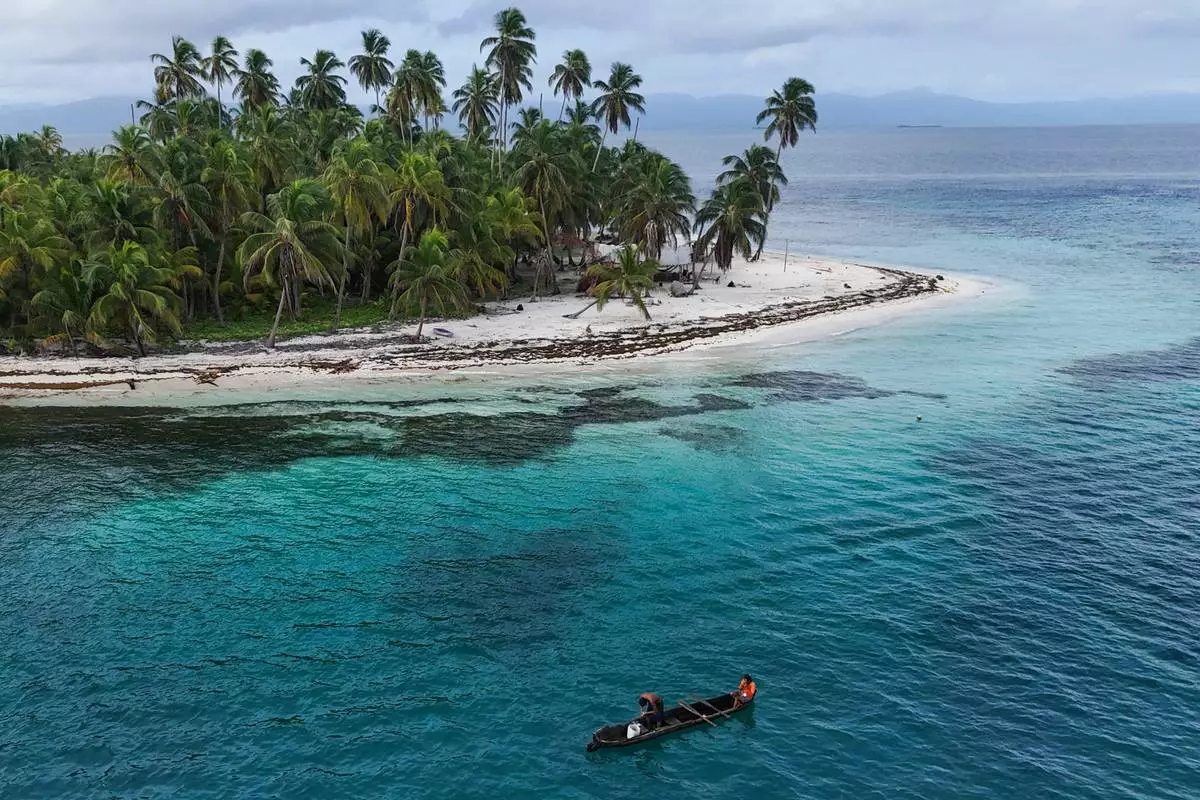
Locals fish in the Dutch Cays of Guna Yala on the Caribbean coast of Panama, Monday, Aug. 24, 2026. (AP Photo/Matias Delacroix)
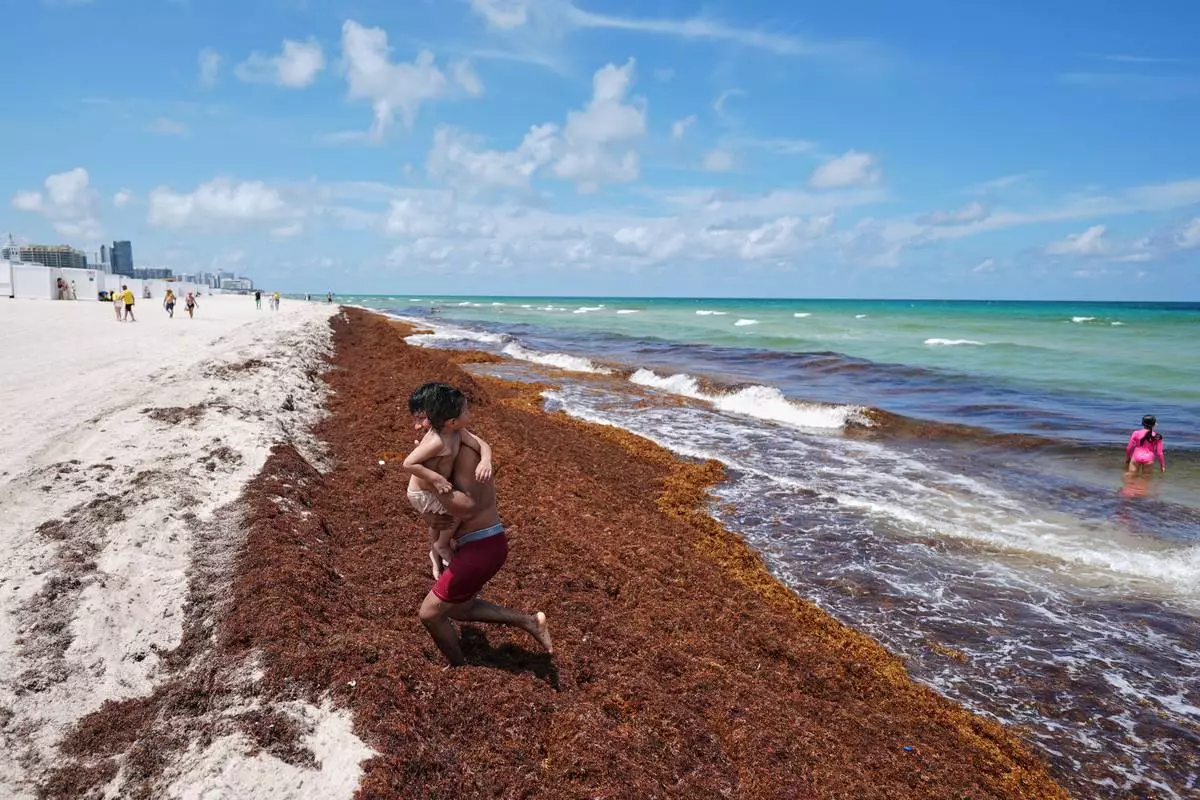
FILE - A man carries a child through sargassum seaweed after cooling off in the ocean in Miami Beach, Fla., June 11, 2026. (AP Photo/Rebecca Blackwell, File)
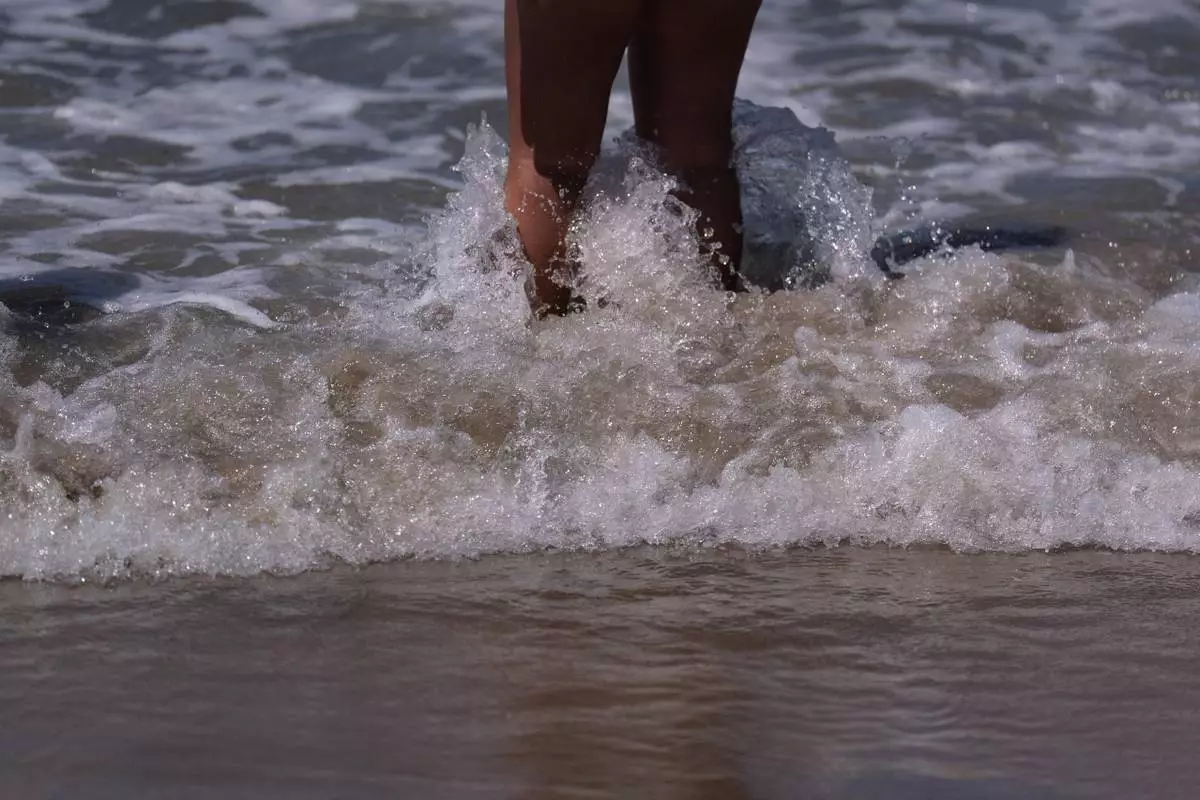
FILE - A beachgoer stands in shallow water at Bolsa Chica State Beach in Huntington Beach, Calif., July 24, 2026. (AP Photo/Jae C. Hong, File)

FILE - Surfers pass under a wave alongside the Imperial Beach pier March 11, 2026, in Imperial Beach, Calif. (AP Photo/Gregory Bull, File)
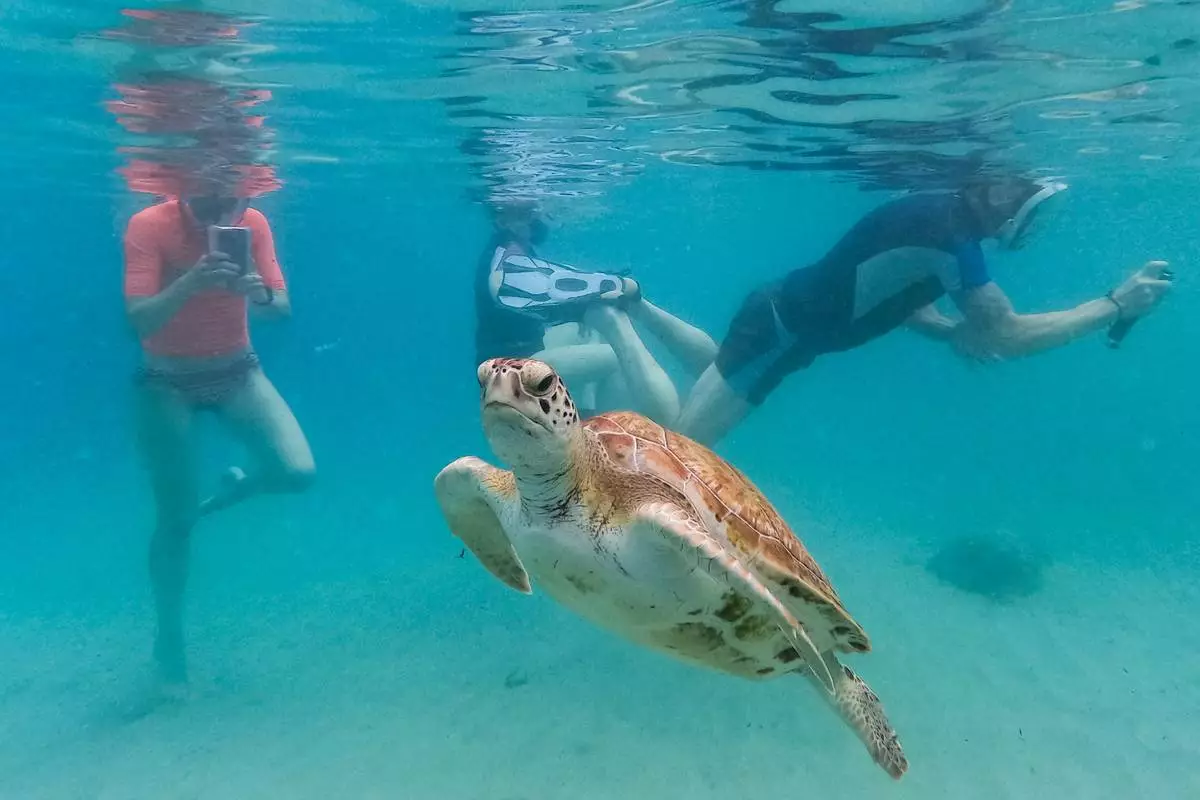
FILE - A sea turtle swims among tourists snorkeling at Piskado beach in Westpunt, Curacao, May 15, 2026 (AP Photo/Matias Delacroix, File)