Let the games begin.
A summer packed with legal battles over Brendan Sorsby's ban for gambling and the implementation of the NCAA's new eligibility rules is about to give way to the annual rite of autumn: packed football stadiums on Saturday afternoons, grill smoke rising from pregame tailgate parties and the chase for playoff spots and the national championship. Here's a primer for fans:
There are 17 games matching Football Championship Subdivision teams on Aug. 27-28, and there are eight in the Bowl Subdivision on Aug. 29.
The big Week Zero matchup pits beleaguered Bill Belichick and his North Carolina Tar Heels against TCU in the Aer Lingus College Football Classic in Dublin, Ireland.
The season begins in earnest on Labor Day weekend with a handful of Top 25 games: Lane Kiffin makes his LSU coaching debut against Clemson at home that Saturday night, Wisconsin plays Notre Dame at Lambeau Field in Green Bay on Sunday night and SMU visits Florida State on Monday night.
The best early season game is Ohio State at Texas on Sept. 12.
Those six words, said in that order, are something no one would have imagined a couple years ago when the Hoosiers led college football in all-time losses.
Enter Curt Cignetti, the late-blooming coach who has won 27 of 29 games since taking over and last season led the Hoosiers to the first 16-0 campaign in the modern era of the sport.
Heisman Trophy winner and No. 1 NFL draft pick Fernando Mendoza was the central figure in the championship run, and the Hoosiers scored at least 50 points in seven games.
TCU transfer Josh Hoover succeeds Mendoza at quarterback, and with Ohio State and Oregon loaded with talented returning players and transfers, the Hoosiers aren't even the favorite to win the Big Ten, let alone another national title.
ACC: No. 7 Miami is the overwhelming choice after it reached the national championship game and then upgraded at quarterback with the addition of QB Darian Mensah from Duke.
Big Ten: No. 1 Ohio State, led by returning QB Julian Sayin and WR Jeremiah Smith, is the pick in what could be a closely contested race to the conference championship game. No. 2 Oregon is right there with the Buckeyes, and everyone knows not to sleep on No. 6 Indiana.
Big 12: No. 12 Texas Tech is the favorite even though it will have to go with Will Hammond, coming off an ACL tear, rather than Sorsby at quarterback. Tech vs. No. 14 BYU in a second straight Big 12 title game is very possible.
SEC: Kirby Smart and his No. 3 Georgia Bulldogs are well-positioned to make a run at a third straight conference championship and fourth in five years. They wouldn't play Texas, their biggest threat, until the SEC title game but both schools face daunting schedules all season.
American: Navy, at 21-5, has its best two-year record in program history and can capitalize on coaching changes at schools at or near the top of the conference standings.
Conference USA: Liberty is expected to bounce back from an injury-plagued season in which it posted a losing record for the first time since it elevated to the FBS in 2018.
Mid-American: Western Michigan brings back almost all the key players from team that went 10-4 and won MAC title.
Mountain West: UNLV, with Auburn transfer Jackson Arnold at QB, assumes the favorite's role with the departure of Boise State for the Pac-12.
Pac-12: Boise State gets the nod because of the return of Maddux Madsen, who threw for 2,334 and 18 touchdowns, and 1,100-yard rusher Dylan Riley.
Sun Belt: James Madison is an established winner and picked to prevail in the East with 60 newcomers and Billy Napier back in the league as first-year coach. Troy is favored in the West.
This is the third, and possibly final, year of the 12-team playoff. Expansion could come as soon as the 2027 season depending on whether the Big Ten and Southeastern Conference can agree on how many teams would be in the field.
The Big Ten, along with the Atlantic Coast Conference, Big 12 and Notre Dame, want a 24-team playoff. The SEC is holding out for 16.
A 24-team playoff would require conferences to discontinue their championship games, and that's a sticking point for SEC Commissioner Greg Sankey.
Expansion talks are expected to continue in September, and a final decision would in theory have to be made by December. Athletic directors have said a deeper financial analysis is required to see if the revenue generated by an expanded playoff would offset the money conferences make from their championship games.
First-round games will be played at the stadium of the higher-seeded team on Dec. 18-19. Quarterfinals are Dec. 30 at the Fiesta Bowl and Jan. 1 at the Cotton, Rose and Peach bowls. Semifinals are Jan. 14 at the Orange Bowl and Jan. 15 at the Sugar Bowl.
The championship game is Jan. 25 at Allegiant Stadium in Las Vegas. It will be the latest end date for a college football season.
The five best conference champions will earn automatic bids. This will be the second year there are no guaranteed first-round byes for conference champions. The selection committee will seed all teams according to where they sit in the final CFP rankings, which will be announced Dec. 6.
After Labor Day, the AP releases its weekly Top 25 poll every Sunday. The CFP selection committee starts releasing its weekly rankings the first week of November.
Sign up for Top 25 poll alerts here, visit the Top 25 here and see AP’s full college football coverage here
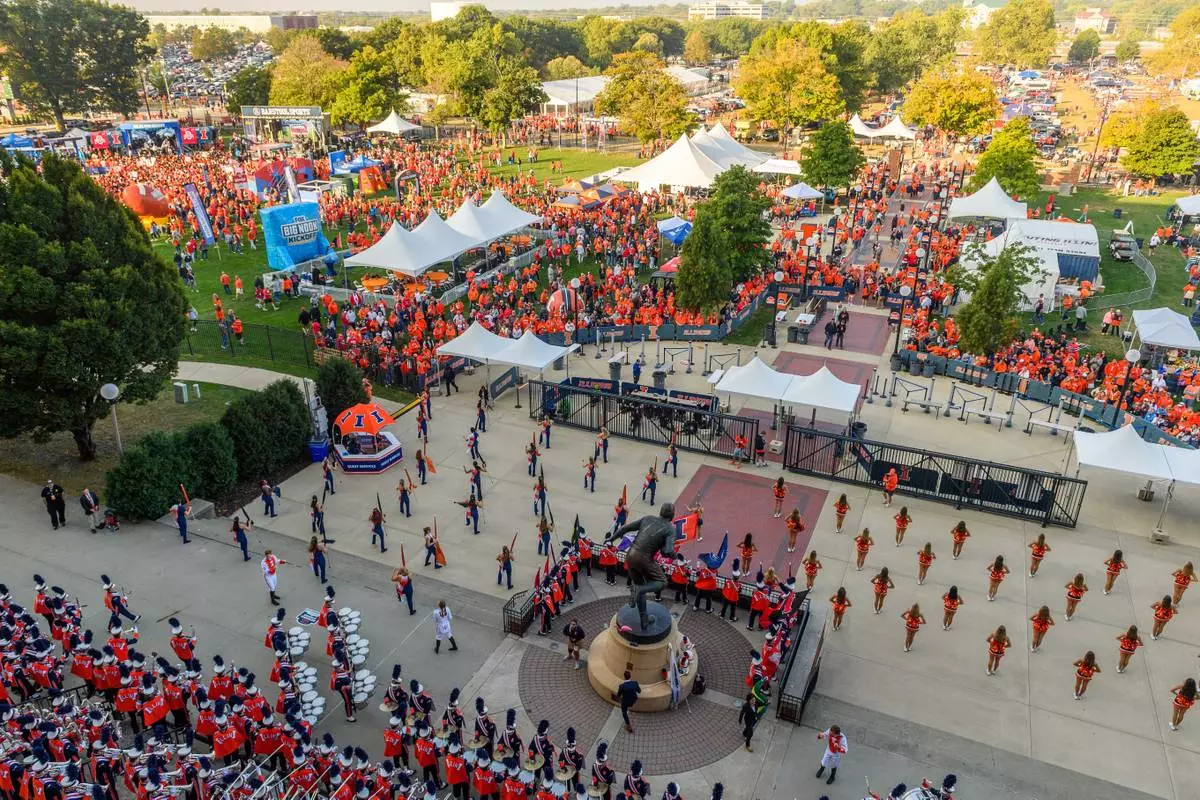
FILE - A general view of tailgating outside of Illinois' Gies Memorial Stadium prior to an NCAA college football game between Ohio State and Illinois, Oct. 11, 2025, in Champaign, Ill. (AP Photo/Craig Pessman, File)
Treasury Secretary Scott Bessent said Monday that new U.S. secondary sanctions in the pipeline aim to block all potential sources of revenue for Iran, telling nations to cut economic ties to Tehran or face U.S. retaliation. Tehran has withstood nearly five decades of punishing American sanctions. Ahead of the announcement, Iran’s currency hit a record low, dropping to 2.02 million to the U.S. dollar as trading opened on currency markets.
President Donald Trump threatened on Monday to impose a 50% tariff on Canadian automobiles, car parts and steel starting next year as the trade rift with Ottawa continued to deepen. The announcement comes after trade talks between the otherwise reliable trading partners collapsed last week. Long-planned U.S. tariffs on various Canadian goods went into effect after the talks broke off, and Canada has vowed to retaliate.
The Latest:
The Treasury announced sanctions Monday against nearly 60 Iran-linked entities over their roles in Iran’s nuclear and missile programs, malign cyber activities and oil shipments.
It is part of the administration’s economic campaign against Iran, including warnings to other countries not to do business with Iran in sectors such as shipping, technology and aviation.
The Treasury sanctioned Hong Kong-based Sweet Ocean Industrial Limited and its associated personnel and businesses, accusing them of helping Iran acquire sensitive goods such as laser optics equipment. The Treasury also sanctioned several other Hong Kong-based entities for having provided funds to Sweet Ocean and its network.
Separately, the Treasury sanctioned China-based Shenzhen Huamei, the Hong Kong branch of the Iran-based logistics company BRE Line and its director for their ties with BRE Line in support of Iran’s missile and nuclear programs.
A sanctioned company is cut off from the U.S. financial system.
At the end of a Back to School event near the Rose Garden, the president invited the crowd — which included dozens of children — to accompany him and see the White House ballroom being built nearby.
“If anybody would like to walk with me,” Trump said, calling it “a special way the kids could see construction.”
The president added: “I love the sound of construction.”
Trump has taken to calling the project a “ballroom slash military complex.” He noted that Chinese President Xi Jinping is visiting soon and recalled his own visit to China in May.
“We saw the Great Hall of China,” Trump said. “Well, now we’re going to have a great hall, too, in the United States.”
The president’s main public event Monday is a back-to-school event featuring Education Secretary Linda McMahon.
Many schoolchildren are in the audience during the outdoor event.
“What a nice setting this is,” Trump remarked.
The Trump administration on Monday formally removed Syria from the State Department’s “State Sponsor of Terrorism” blacklist, making permanent a series of sanctions removals that had been initially announced more than a month ago.
Secretary of State Marco Rubio had announced the recission of Syria from the list in early July, but there was a 45-day period for congressional review before it was formalized. That review period has now expired and sanctions related to the state sponsor designation have been almost completely removed, the State and Treasury departments said on Monday.
“Treasury is following through on President Trump’s promise to give the Syrian people a chance at greatness,” Bessent said in a statement. “Today’s action will help foster additional investment in Syria to promote political and economic stability.”
When asked that the U.S. could go soft on China to maintain the fragile trade truce between the world’s two largest economies, Bessent said “no one is above the reach of U.S. sanctions”
“If they facilitate transactions and are part of the ecosystem that turns Iranian oil into money, into repression, they will be targeted,” Bessent said.
Experts have said the U.S. is likely to carefully calibrate its actions on China, just a month before Chinese leader Xi Jinping is expected to visit the U.S. to keep the already-fraught relations from falling out.
The Trump administration is challenged to act big with Iran “without escalating tensions with Beijing,” said Wendy Cutler, vice president of the Asia Society Policy Institute.
Asked by a reporter Monday about issuing warnings to Tehran’s financial partners instead of promising an ‘economic D-Day’, the Treasury secretary said he wanted countries to shift away from Iran before it was too late.
“Why would I want to blow up the global financial system?” Bessent said. “We believe that it is important to level set and give people a cure period.”
He added, “But they should know that that will move very quickly and that we are serious. Secondary sanctions are a very powerful tool.”
The treasury secretary said Trump has been “making phone calls to world leaders with specific request to cease their interactions” with Iran and has already seen results.
The UAE announced last week that it was suspending all trade, commercial exchanges, and financial transactions with Iran until further notice.
“I am confident the president, as you all know, is quite persuasive,” Bessent said.
Bessent said that Treasury and State Department officials are following up with calls and visits with officials from countries and entities it wants to see take action and laying out “exactly what we expect and the timelines.”
Mohammad Bagher Qalibaf on Monday said Iran’s trading partners were not taking Washington’s “statements into account,” even as the country’s economy reels from months of war and mounting pressure.
“Americans know that no one buys their bombast,” Qalibaf said in a post on X, saying that the United States was “not in an economic position to further restrict its relations with other countries.”
His comments came as Washington prepared to expand secondary sanctions targeting countries and companies doing business with Iran, in an effort to isolate Tehran from the global dollar-based financial system.
Treasury Secretary Scott Bessent says new U.S. secondary sanctions in the pipeline aim to block all potential sources of revenue for Iran, telling nations to cut economic ties to Tehran or face U.S. retaliation.
Bessent added it’s “no longer acceptable to operate in the gray spaces” of Iran conflict as US threaten sanctions against Tehran’s trade partners.
The treasury secretary did not name what countries could face potential secondary sanctions from the United States, but China, Turkey and the United Arab Emirates are Iran’s largest trade partners.
“Let there be no ambiguity as to the position of the United States,” Bessent said at a Monday afternoon news conference. “An economic engagement of any kind with this murderous regime will expose those responsible to the full reach of American power.”
Asked about the Trump administration escalating a trade war with Canada when Maine depends so heavily on cross-border trade, the vice president said, “Canada is a state” but then added, “Sorry. Freudian slip.”
As the crowd laughed and hooted, Vance added, “That was actually an accident.”
He likened Canada to China in what he called unfair trade practices, saying that “Canada allows itself to be a backdoor for Chinese goods” that eventually are imported into the U.S.
Vance said negotiations between Canada and the U.S. were ongoing and that he thought there’d have been an agreement easing trade disputes by now — but Canada had made “unreasonable” demands.
Republican Sen. Susan Collins was not accompanying Vice President JD Vance during his manufacturing stop in Brewer, Maine on Monday.
But he still made sure that her presence was felt.
“Whenever I’m in Maine, I got to give Susan a little bit of crap,” Vance told the crowd as he began his remarks. “Because as you know, Susan is the most independent member of the United States Senate, and as the president of the United States Senate, she sometimes makes my job just a little bit harder.”
Vance said Collins, who is up for reelection in the Democratic-leaning state, has visited the vice president’s residence about a half-dozen times. In those meetings, Vance said, Collins is constantly pressing him about how certain policies affect her state.
Vance ended his brief aside on the senator by asking the crowd to give a shoutout to “our very independent friend, Susan Collins.”
“After wrongfully firing me last year, an independent arbitrator has ordered the @washingtonpost to reinstate me immediately, with back pay,” Karen Attiah posted on Instagram on Monday, calling it “a victory for journalists everywhere.”
The ruling found insufficient cause to terminate Karen Attiah, the last Black full-time member of the Post’s opinion desk at the time.
Kirk, a top conservative podcaster and Trump ally, made provocative statements about race, gender and politics, including calling George Floyd, whose 2020 murder at the hands of Minneapolis police sparked protests, a “scumbag.”
Kirk’s killing on Sept. 10 elicited a torrent of comments, and some who spoke out against him faced sanctions or dismissal at work. One post Attiah made said “Refusing to tear my clothes and smear ashes on my face in performative mourning for a white man that espoused violence is … not the same as violence.”
A Post statement said it respects the arbitration process and declined further comment.
Six people who were deported by the United States to Liberia last week resisted getting off the plane and instead were sent to Equatorial Guinea, a person on the plane and a lawyer in contact with them said Monday.
Under a series of often secret agreements, the Trump administration has deported thousands of people to two dozen countries that aren’t their own as it pushes ahead with its immigration crackdown, advocates say.
The four Cuban men, a Brazilian man and a Cameroonian woman are now being held with other migrants in worsening conditions in a hotel that lacks medical staff, said Meredyth Yoon, litigation director for Asian Americans Advancing Justice-Atlanta.
Equatorial Guinea’s all-powerful president, Teodoro Obiang Nguema Mbasogo, turned the hotel owned by his family into a prison for deported asylum seekers under an opaque $7.5 million deal with the Trump administration. His government did not immediately respond to a request seeking comment.
By Mark Banchereau
The U.S. plans to reopen a border crossing in Arizona to cattle from Mexico on Monday as part of a broader Trump administration effort to reduce record-high beef prices. Economists doubt grocery store shoppers will see any savings soon.
The U.S. Department of Agriculture said concerns about the New World screwworm’s spread lessened enough to allow the movement of cattle from Mexico.
Beef prices clearly are a concern for Trump, who announced Friday that he would allow up to 331,000 tons of ground beef imports, tariff-free, to be sold at below-market prices over the next 90 days.
But the phased reopening means it will take months for Mexican imports to regain their traditional 3% of the U.S. supply, according to Derrell Peel, a professor of agribusiness at Oklahoma State University.
The homeowner whose residence has been besieged by Israeli settlers said Monday that he still can’t move freely in the West Bank village of Qusra.
Loui Ridi traveled from Ohio to the Israeli-occupied West Bank a week ago to join relatives defending his home from Israeli settlers.
Israel’s military declared the area a closed zone to restore order in Qusra, made a nearby home into a drone base and required Palestinians to coordinate all their movements from the homes that had been under siege.
Ridi said settlers keep returning to the area above his home, without consequences, while his family spends hours coordinating moves to get food, water and other supplies.
Israel’s police has not announced any arrests of settlers, despite condemnation from Israeli rights groups and foreign officials, including U.S. Ambassador to Israel Mike Huckabee, who called the siege terrorism.
“They will only exacerbate tensions and escalate the situation, which is in no one’s interest,” Foreign Ministry spokesperson Lin Jian said in Beijing as the U.S. threatens sanctions on countries that trade with Iran.
China is calling on all parties to avoid measures “that could further intensify differences and conflicts and disrupt global economic development and financial stability,” he added.
China is considered the biggest buyer of Iranian oil, and was importing more than 80% of Iranian oil before the U.S.-Israeli war with Iran.
A crude oil tanker was attacked on Monday in the Red Sea off Saudi Arabia, igniting a fire on its main deck, the British military said.
The United Kingdom Maritime Trade Organization said there were no reports of casualties.
The tanker issued a distress alert and the Egyptian Navy was reported to have responded to conduct a rescue operation, according to Ambrey, a UK-based maritime risk and response company.
The military spokesman with Yemen’s Iran-backed Houthi rebels, Brig. Gen. Yahya Saree, said they targeted the tanker with a ballistic missile.
“President Trump decimated Iran’s economy to a point where the rial has never been weaker and inflation has rarely been higher,” U.S. Treasury Secretary Scott Bessent wrote Sunday in an opinion piece in the Financial Times. “The regime’s final refuge now lies in the self-deception of fearful nations that still believe accommodating aggression can secure a durable peace.”
Already last week, the United Arab Emirates announced that it was suspending all trade with Iran. The UAE has long been one of Iran’s largest trading partners and its biggest source of imports.
But Iranian Foreign Ministry spokesperson Esmail Baghaei told reporters in Tehran on Monday that “any escalation of this situation will undoubtedly bring about consequences … Our hands are not tied.”
Trump is commenting on Iran ahead of a Monday announcement about new and even stronger sanctions, including penalties against any countries that do business with the Islamic Republic.
Trump posted on social media that “IRAN IS COMPLETELY COLLAPSING!!!”
Still, economic pressure has not yet translated into political pressure to end the war. Iran retains a key strategic advantage: Its attacks and threats on ships in the Strait of Hormuz have nearly halted traffic in the vital waterway, damaging the world economy and heaping pressure on Trump ahead of congressional elections.
Trump threatened Monday to impose a 50% tariff on Canadian automobiles, car parts and steel starting next year as the trade rift with Ottawa deepens.
Trade talks between the otherwise allies and reliable trading partners collapsed last week. Long-planned U.S. tariffs on various Canadian goods went into effect after the talks broke off, and Canada has vowed to retaliate.
“Canada has been ripping off the United States of America for years,” Trump posted on social media Monday morning. Criticizing Canada’s “ridiculously high tariffs” on American farmers, Trump wrote: “Not sustainable, and NOT ANYMORE!”
Doug Ford said Monday in an interview with The Associated Press that the late President Ronald Reagan would be “throwing up on” Trump over his trade policies. He also threatened to cut off electricity and critical minerals to the United States if the Canada-U.S. trade fight worsens.
“I’ll cut them off,” Ford said of critical minerals. “You won’t get a grain of sand out of Ontario.”
Ford said “everything is on the table” after Prime Minister Mark Carney walked away from trade talks late Friday.
Ford enraged Trump last year by using Reagan’s anti-tariff words in a television ad.
The U.S. Southern Command announced the strike in a social media post early Monday, raising the death toll from boat bombings in Latin American waters to more than 210 people in more than 60 strikes.
“We are committed to imposing total systemic friction on narco-terrorists — disrupting their operations, dismantling their leadership, and eliminating cartel terror across the region,” said Gen. Francis Donovan.
Defense Secretary Pete Hegseth said the U.S. is extending its offensive to targets on land across multiple Latin American countries. He said Colombia, Guatemala and Honduras had agreed to allow the U.S. to carry out joint military operations against criminal groups on their soil. Guatemala denied this. Ecuador launched similar joint missions in March.
Jamieson Greer says Canada ultimately wanted more than Washington was willing to offer.
Greer said Monday during an interview on CNBC that Canada had maintained restrictions on U.S. wine, spirits, dairy and autos, prompting the U.S. to impose targeted tariffs covering about 5% of Canadian imports.
He said there was significant progress in negotiations, with the U.S. offering to halve steel and aluminum tariffs and substantially reduce auto tariffs.
He also dismissed concerns about a broader trade war.
Joshua Aviles has worked 12-hour shifts for more than 250 days on the USS Lincoln while the aircraft carrier is deployed in the Middle East. One reason he enlisted was the “military parole-in-place” policy, which allows spouses, children and parents of active-duty service members and veterans to obtain legal immigration status while in the United States.
His father Luis Manuel Aviles, a handyman in Key West, Florida, who came from Nicaragua 19 years ago, was arrested anyway on Saturday as the Trump administration withdraws immigration protections for military families to pursue its mass deportation agenda. Dozens of parents and spouses of active-duty U.S. troops have been detained, and at least six have been deported, the AP found in the first accounting of such detentions.
“Having a family member in the military is not a free pass to violate our nation’s laws,” the Department of Homeland Security said Sunday.
▶ Read more
Trump saw the value of his oil and gas stocks rise by as much as $15 million, surging during the Iran war, according to an analysis from Democrats on the Joint Economic Committee in Congress.
The committee said the president owned between $12.5 million and $45.6 million in oil and gas company stocks in 2025, according to his most recent disclosures. The portfolio is now worth between $17.2 and $61.1 million, which the analysis attributed largely to “the surge in oil and gas stocks driven by Trump’s war in Iran.”
The Democrats found those stocks rose by an average of 39% from Jan. 2 through Aug. 17 and that two of the large stocks Trump holds in this sector — Valero and Marathon — have more than doubled since the start of 2026.
The committee Democrats noted that Americans have now spent an additional $71.5 billion on gas since the start of the war.
Jamieson Greer is downplaying the impact of the collapse of the trade talks with Canada.
“I think this is a little bit of a tempest in a teapot,” Greer told reporters at the White House on Monday morning. “The tariffs went in place over the weekend, which we’ve warned about for a long time. They only cover about 5% of Canadian trade, only 6% of U.S. overall consumption.”
Greer said he is preparing potential responses for Trump to Canada’s threat to retaliate dollar-for-dollar, but he declined to elaborate on the options.
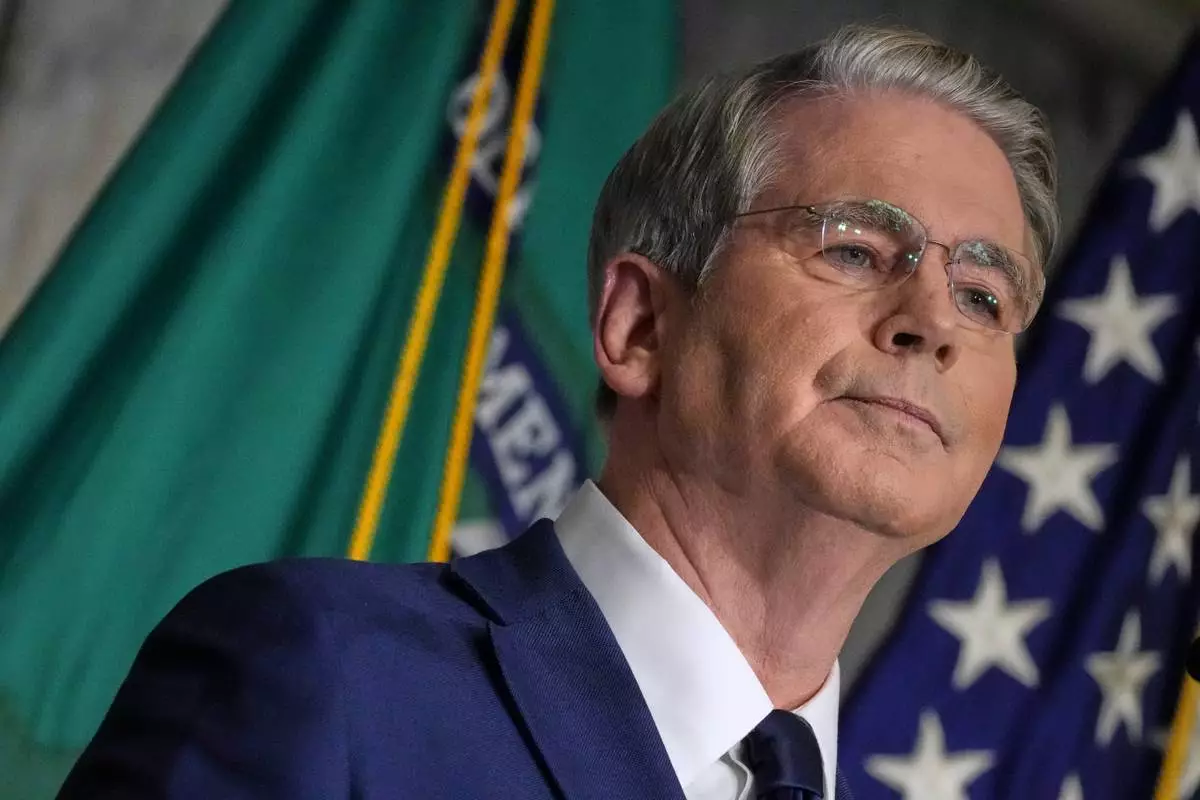
Treasury Secretary Scott Bessent speaks at a news conference, Monday, Aug. 24, 2026, at the Treasury Department in Washington. (AP Photo/Julia Demaree Nikhinson)
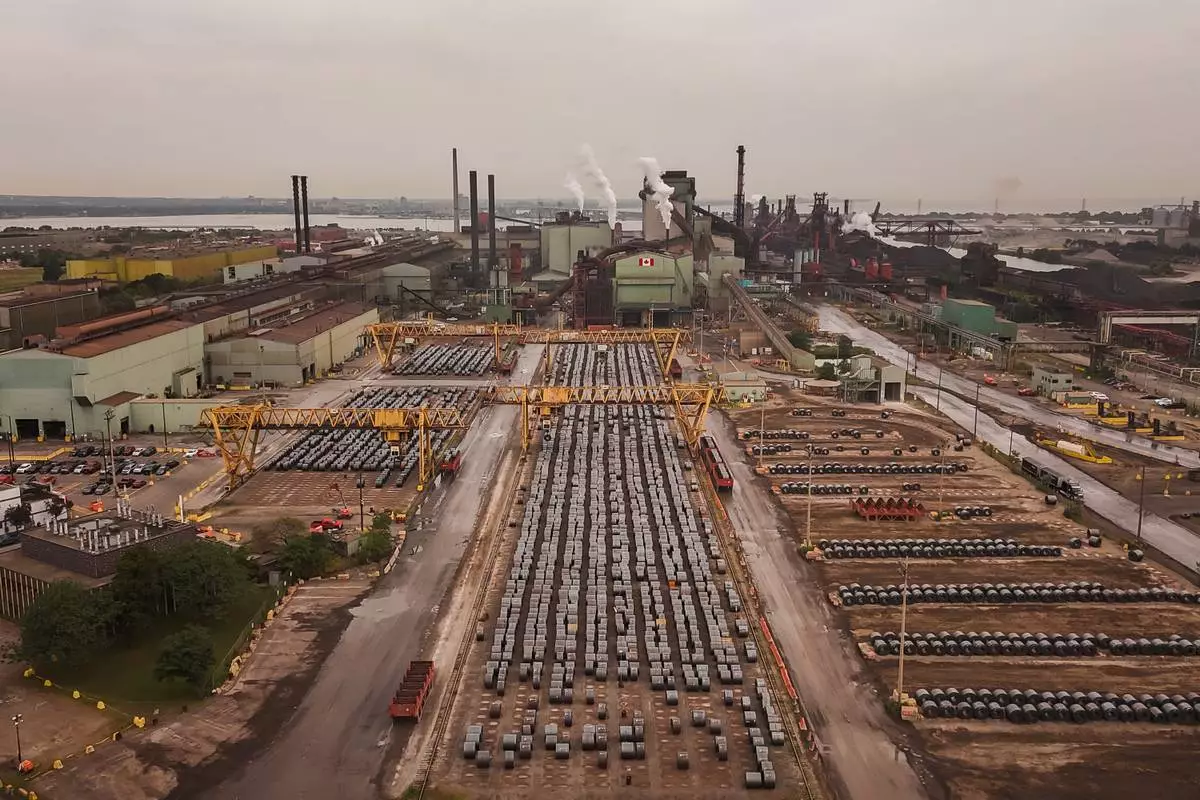
Rolled coils of steel sit in the yard at the ArcelorMittal Dofasco steel plant in Hamilton, Ont. on Thursday, Aug. 20, 2026. (Nick Iwanyshyn /The Canadian Press via AP)
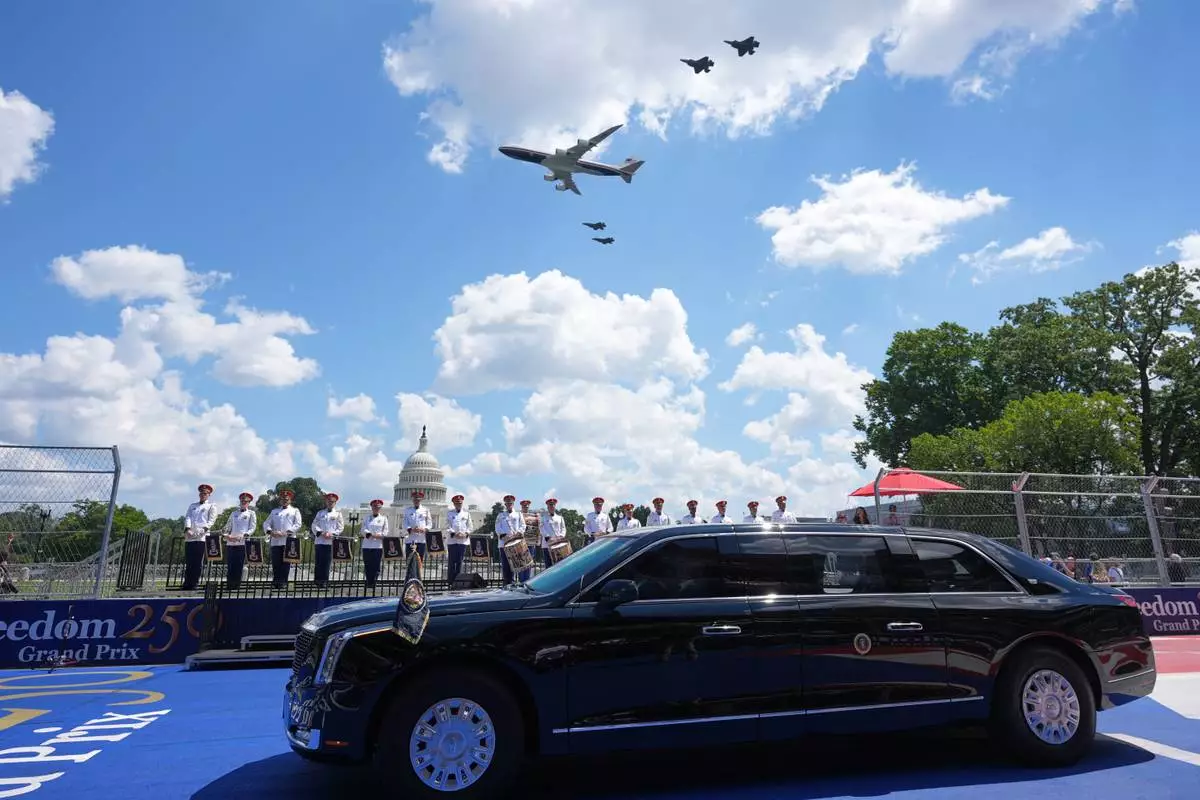
Air Force One and four F-35's pass over as President Donald Trump, in the presidential limousine known as "The Beast," does a lap around the track before the IndyCar Freedom 250 Grand Prix auto race in Washington, Sunday, Aug. 23, 2026. (AP Photo/Alex Brandon)
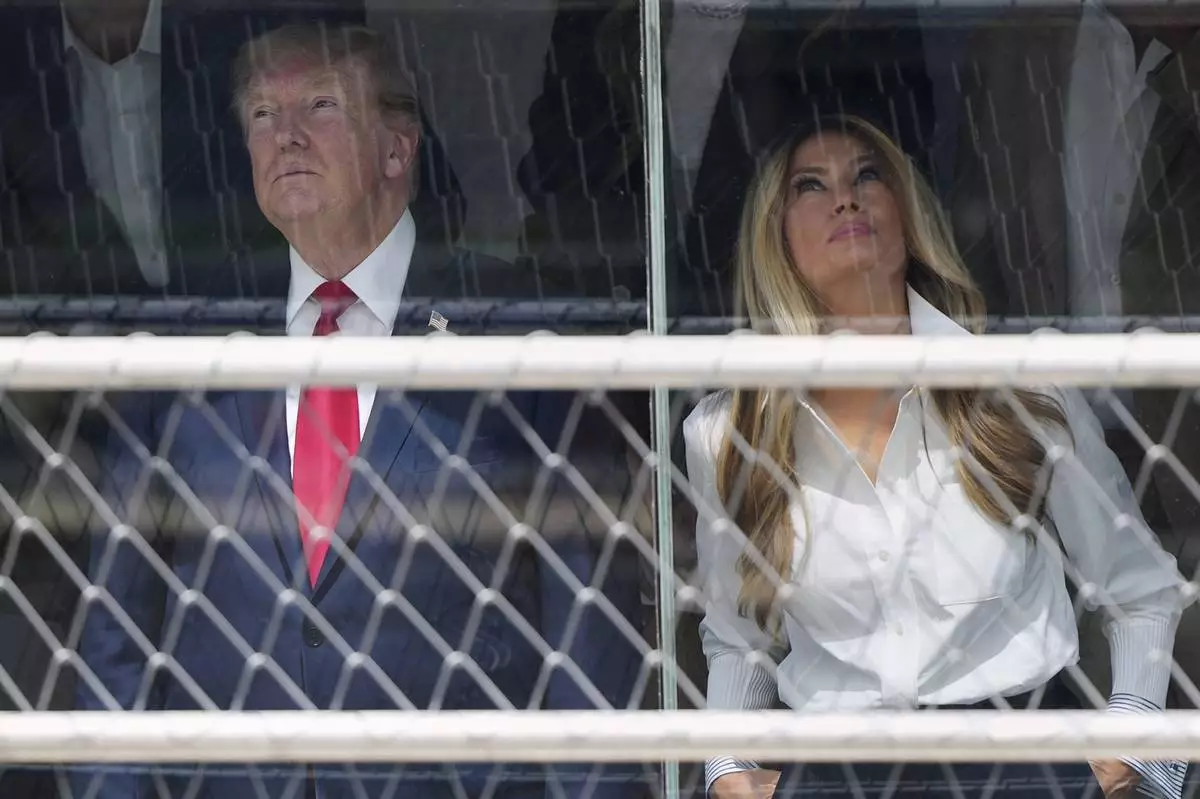
President Donald Trump, left, and first lady Melania Trump attend the IndyCar Freedom 250 Grand Prix auto race, Sunday, Aug. 23, 2026, in Washington. (AP Photo/Julia Demaree Nikhinson)
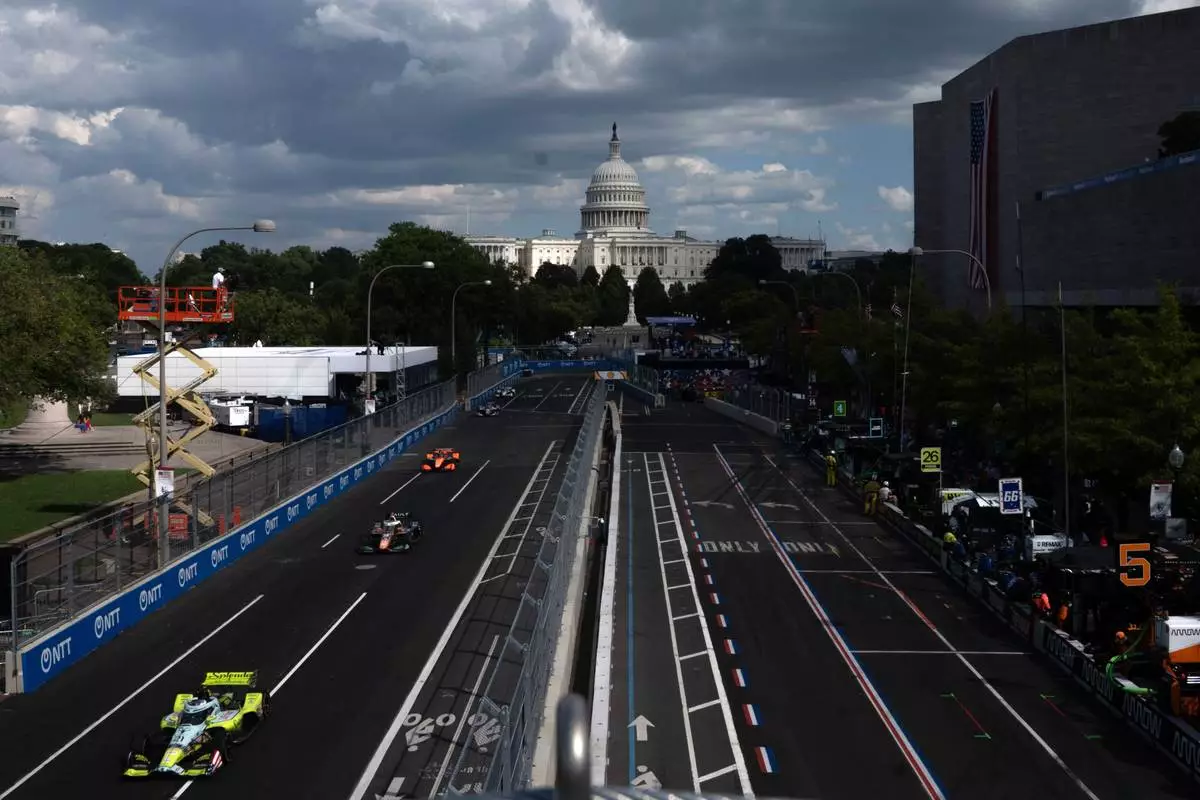
Christian Rasmussen (21), of Denmark, leads a pack of cars during the IndyCar Freedom 250 Grand Prix auto race in Washington, Sunday, Aug. 23, 2026. (AP Photo/Allison Robbert)
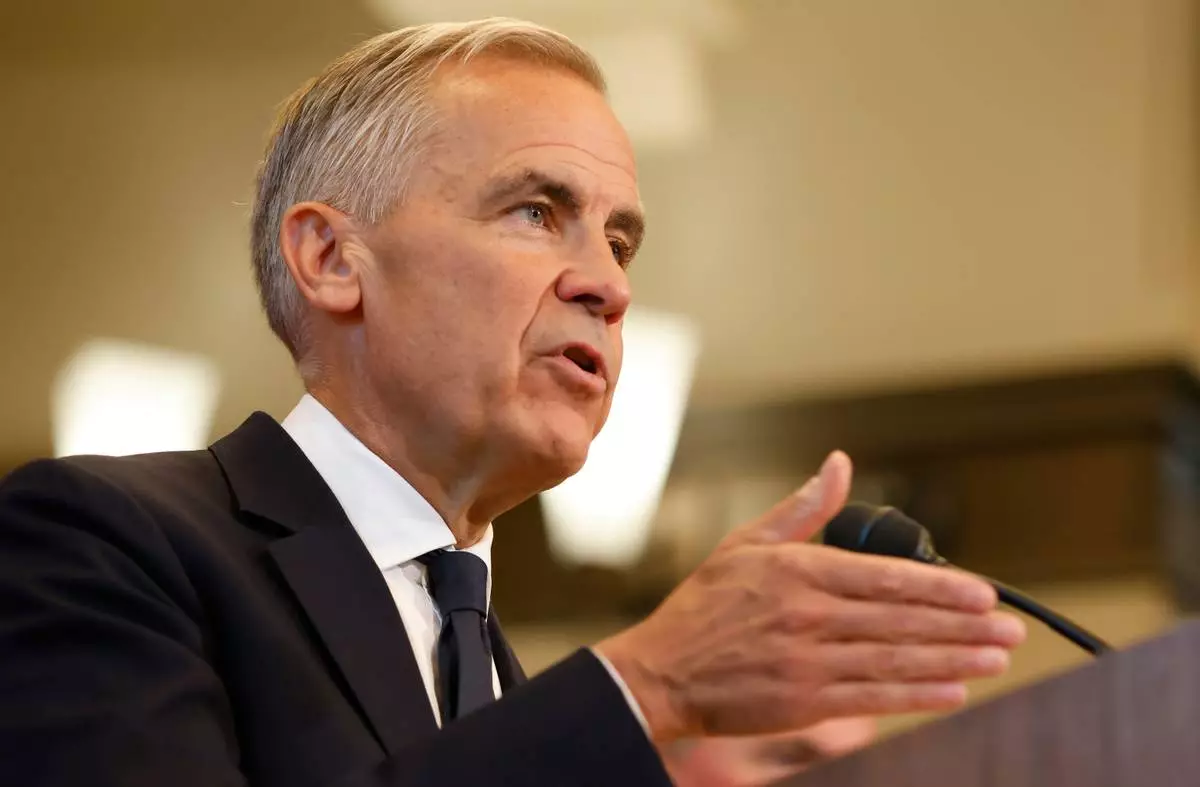
Prime Minister Mark Carney speaks about Canada's response to new U.S. tariffs during a news conference on Parliament Hill in Ottawa on Saturday, Aug. 22, 2026. (Patrick Doyle/The Canadian Press via AP)