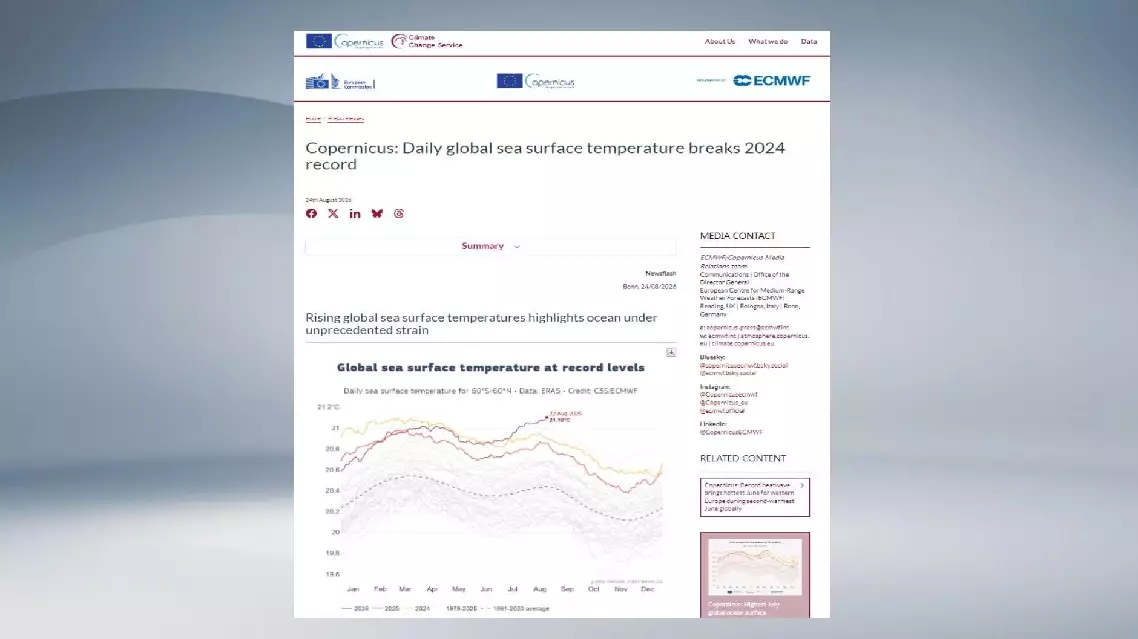
The daily global average sea surface temperature (SST) reached 21.1 degrees Celsius on Aug 22, surpassing the previous record of 21.09 degrees Celsius set in March 2024, the Copernicus Climate Change Service (C3S) said Monday.
The C3S said that this new record is particularly notable as global ocean temperatures are typically highest in March and April, following the austral summer. The previous August record was 20.98 degrees Celsius, set in 2023.
The C3S said global SSTs remain at historically high levels in 2026, with several months recording record or near-record temperatures.
"A strong El Nino is now developing in the tropical Pacific, adding further warmth to an ocean that has already been warming over many decades as a result of human-driven climate change," the C3S said.
The World Meteorological Organization expected El Nino to strengthen in the coming months, while the C3S seasonal forecasts suggest the event could reach levels not seen for several decades.
Samantha Burgess, strategic lead for climate at the European Center for Medium-Range Weather Forecasts (ECMWF), said the record was "another clear signal of an ocean under growing stress."
"As ocean temperatures continue to rise, the risks to marine ecosystems and coastal communities also increase," Burgess said, noting that the number of marine heatwave days globally has more than tripled since the early 1990s.
The C3S said long-term ocean warming contributes to sea-level rise through thermal expansion and increases the likelihood and intensity of marine heatwaves, putting pressure on ecosystems such as coral reefs and seagrass meadows, as well as fisheries and aquaculture.
Global daily sea surface temperature hits record high: EU climate monitor
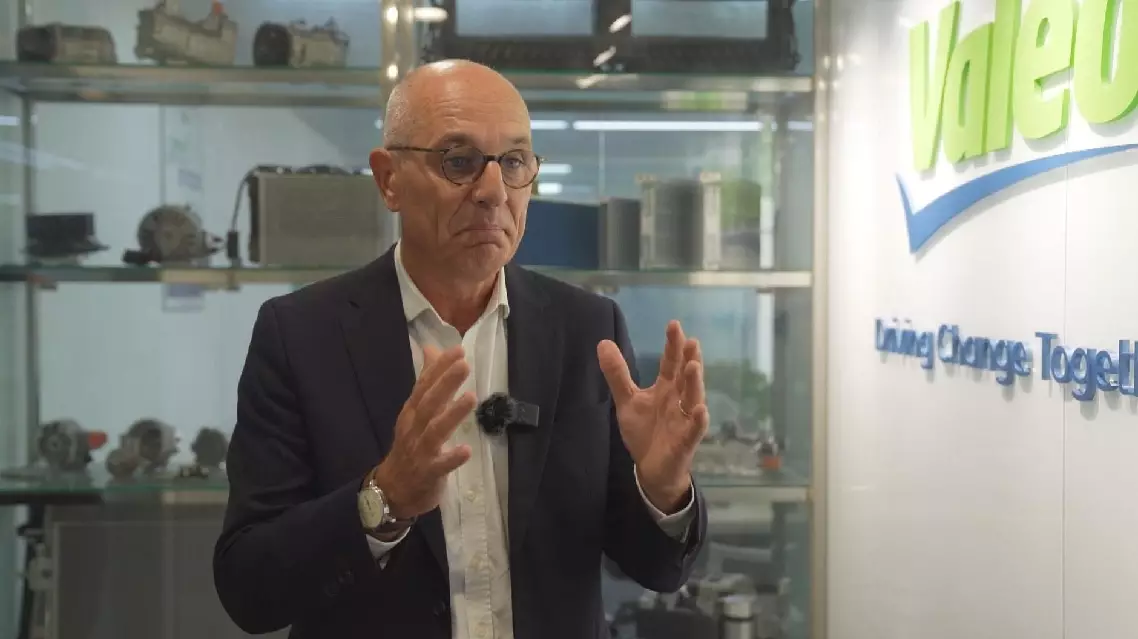
French auto parts supplier Valeo has doubled down on its commitment to China, viewing it as a "fitness center" for innovation, technology, and competitiveness, as CEO Christophe Perillat led a senior delegation to the country on a mission to secure business from Chinese electric vehicle makers.
Perillat, together with a team of senior executives, arrived in China Sunday for a deal-hunting trip. On the second day, they visited a research and development center of a Chinese automaker to experience the country's latest new-energy vehicle (NEV) technologies, including advancements in AI-powered mobility. "Looking at the last five years, we have invested 26 billion RMB in China, which is equivalent to the sales of one year. So you see we are extremely committed to China and we have massively invested in China. Looking at last year 2025 in China, among all the orders that we booked, more than 80 percent of these orders have been booked with Chinese OEMs (original equipment manufacturers)," he said. The CEO said global suppliers are now deeply embedded in China's innovation ecosystem, and that long-term investment in the country remains essential for staying competitive in the world's fastest-moving automotive market.
"So right to say that I call the Chinese auto market as the fitness center of the automotive industry. And the reason for that, that's the place where you find the highest level of innovation, the highest level of competitiveness and the highest speed. This is what it's like a fitness center where you run every single hour of every single day. Matching the demand of this market requires to be very fit, and when it comes to value, it means being even more Chinese," he said.
Chinese automakers are increasingly viewed as both "super buyers" and "super sellers" by global parts suppliers, who are drawing more foreign firms to deepen their presence in China's supply chain.
The French auto parts maker first entered China in 1994, and now employs over 18,000 people across 27 production plants and 13 research and development centers in the country.
Valeo CEO calls China 'fitness center' for global auto industry