A Chinese envoy said on Monday that dialogue and negotiation are the only viable way to resolve the Ukraine crisis, calling on the international community to build momentum for peace talks and create conditions for an early political settlement.
In their briefing at a United Nations Security Council meeting on Ukraine on Monday, UN Under-Secretary-General for Political and Peacebuilding Affairs Rosemary DiCarlo said July was the deadliest month since May 2022, while UN Under-Secretary-General for Humanitarian Affairs and Emergency Relief Coordinator Tom Fletcher said that at least 437 civilians were killed and more than 2,600 others injured that month.
Also at the meeting, Fu Cong, China's permanent representative to the United Nations, called for an end to the fighting and greater protection for civilians.
He warned that to allow the situation to further deteriorate and escalate only deepens human suffering, destabilizes the region, and threatens global stability.
"Fighting on the ground is escalating, and the humanitarian toll is mounting. For more than a month, the two sides have been locked in a new round of fierce fighting, resulting in numerous casualties, damage to a large number of civilian facilities such as energy, food, and material storage, and attacks on third-party ships and assets, which is deeply distressing and worrying," Fu said.
The Chinese envoy said China advocates joint efforts to de-escalate the situation, initiate a peace process, and seek fundamental solutions. "Dialogue and negotiation are the only viable way out of the Ukraine issue. Currently, dialogue efforts remain stalled as deep differences persist among key stakeholders. China calls on all relevant parties to continue demonstrating political will, strive to start and sustain talks, gradually build consensus, and work towards a comprehensive, durable and binding peace agreement," Fu said.
He said that China's position on the Ukraine issue remains objective, fair, and consistent, adding China promotes peace talks in its own way and supports all efforts conducive to a peaceful settlement of the crisis.
China stands ready to work with the international community and continue playing a constructive role in the political settlement of the conflict, Fu said.
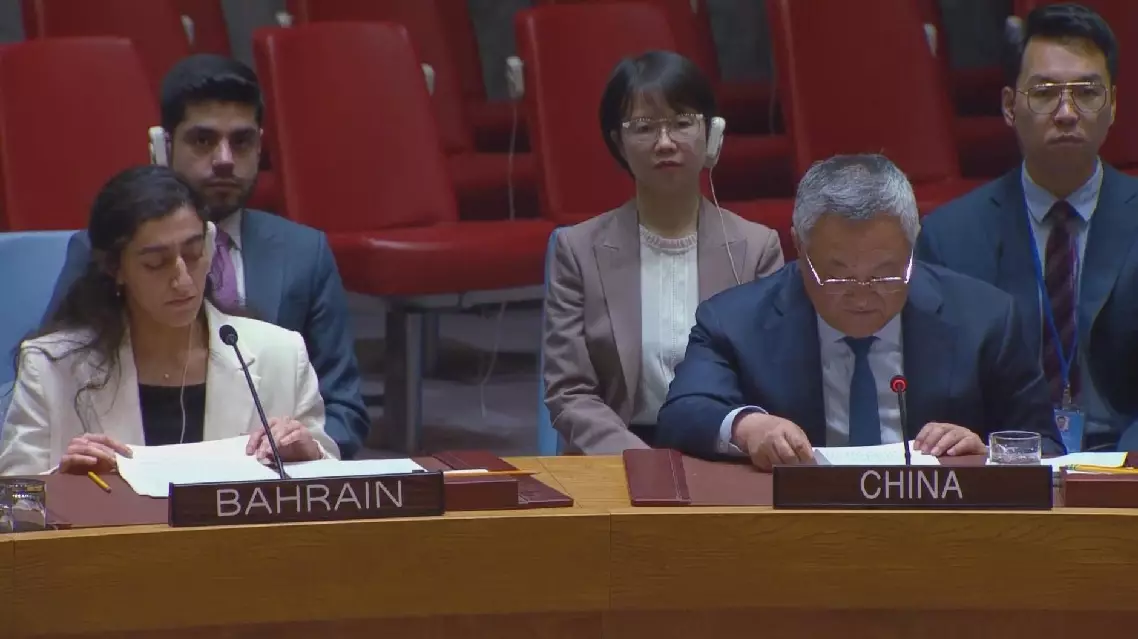
China emphasizes dialogue, negotiation as only viable path to resolve Ukraine crisis
Long celebrated as the "world's supermarket" for exporting small goods, China's small commodities hub, Yiwu, is rewriting its economic narrative by actively pursuing a dual strategy of "selling to the world" and "buying from the world".
The east China city has now been transformed into a premier shopping destination for imported goods from across the globe.
At the Yiwu Imported Commodities Mall, a staggering 150,000 types of products from over 100 countries and regions across the world are for sale.
The mall's shelves are stocked with goods such as Spanish ham, Malaysian durians, Nepalese wool felt, and African handicrafts.
Zhu Ke, who runs a store specializing in Malaysian products, has seen her customer base continuously expanding, thanks to the rapid growth of China's market and vastly improved customs clearance efficiency.
"People used to think the supply chain for edible bird's nests was long and complex, thus it was difficult to import. But now, it only takes as fast as three days to deliver the delicacy from our factory in Malaysia, through the Yiwu customs department, to our bonded warehouse, and finally to the customer. Malaysian Musang King durians can now go straight from the orchard to consumers' doorsteps in just 24 hours," said Zhu.
Edible bird's nests are bird nests created by swiftlets using solidified saliva, which are harvested for human consumption.
This rich variety of imported goods perfectly align with the increasingly diversified and personalized consumption demands of Chinese buyers. Therefore, the sales volume of merchants in the mall has been growing exponentially.
"The designs, styles, and colors of these imported products are unique and novel, which is why consumers, especially the younger generation, love them. Overall, our import business is on a steady upward trend," said Jin Jian, another mall merchant.
Shoppers echo this sentiment.
"I bought a Nepalese scarf, Russian chocolate, and honey," one customer said, hailing the diverse array of products in the mall.
Official data showed that in the first half of this year, Yiwu's total import and export value reached 486.42 billion yuan (about 72.33 billion U.S. dollars), a year-on-year increase of 19.9 percent. Notably, the import value hit 65.7 billion yuan, surging by an impressive 39.1 percent.
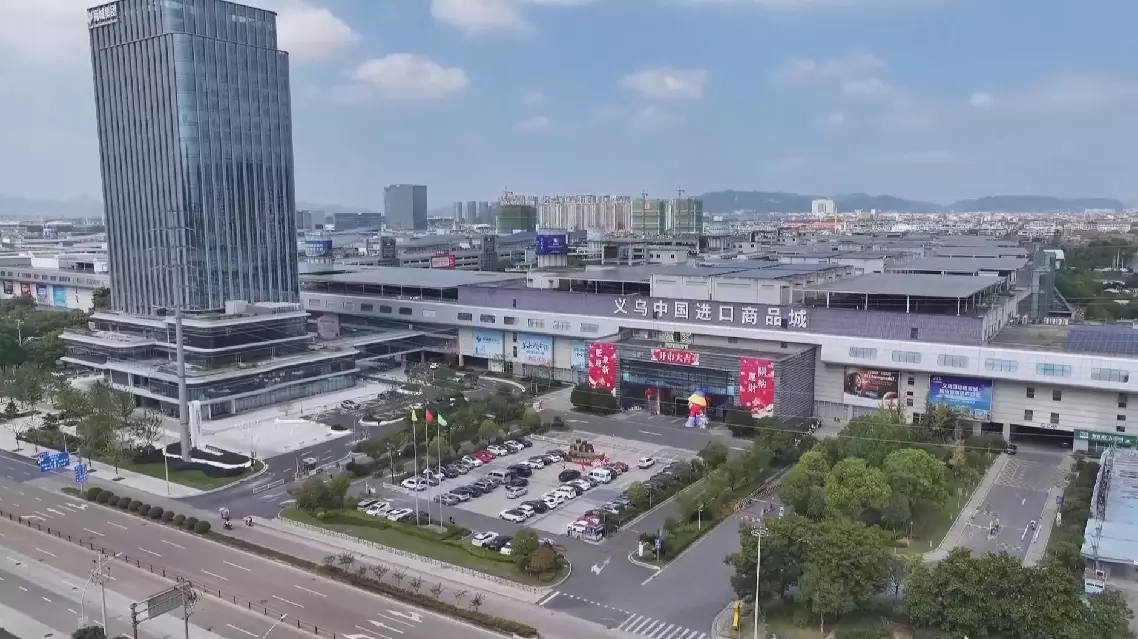
China's small commodities hub transformed into dynamic "global shopping cart" for imported goods