The 11th Asia-Pacific Economic Cooperation (APEC) Food Security Ministerial Meeting was held on Tuesday in Hangzhou, the provincial capital of east China's Zhejiang, focusing on advancing high-quality agricultural and rural development across the region.
As a flagship event of APEC "China Year" and one of the region's highest-level multilateral gatherings of 2026, the meeting gathered around 200 delegates from the 21 APEC economies, the APEC Secretariat, the UN Food and Agriculture Organization, and other international organizations.
Discussions focused on key issues including agricultural and rural development, digital transformation, and food security challenges.
Participants exchanged policy experiences on boosting farming productivity, smoothing intra-regional agricultural product trade, advancing rural revitalization, and scaling up artificial intelligence applications in agriculture, among other topics.
The meeting adopted a document on enhancing the resilience of regional food systems through innovation and digitalization, and a joint ministerial declaration. The two landmark documents are expected to serve as an institutional roadmap for future APEC agricultural initiatives.
China, a key APEC member with a population of over 1.4 billion, places great emphasis on food security. Official data cited at the event showed that the country's total grain output reached a record high of 710 million tonnes in 2025, with its per capita grain availability exceeding 500 kilograms, well above the global average.
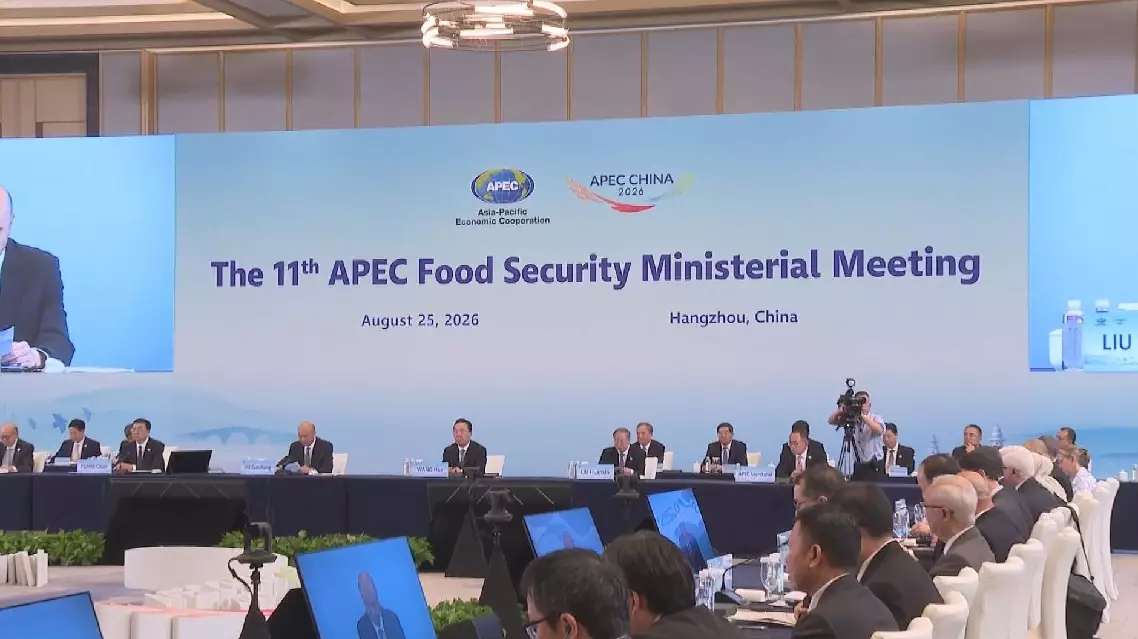
2026 APEC food security ministerial meeting highlights high-quality rural development
Long celebrated as the "world's supermarket" for exporting small goods, China's small commodities hub, Yiwu, is rewriting its economic narrative by actively pursuing a dual strategy of "selling to the world" and "buying from the world".
The east China city has now been transformed into a premier shopping destination for imported goods from across the globe.
At the Yiwu Imported Commodities Mall, a staggering 150,000 types of products from over 100 countries and regions across the world are for sale.
The mall's shelves are stocked with goods such as Spanish ham, Malaysian durians, Nepalese wool felt, and African handicrafts.
Zhu Ke, who runs a store specializing in Malaysian products, has seen her customer base continuously expanding, thanks to the rapid growth of China's market and vastly improved customs clearance efficiency.
"People used to think the supply chain for edible bird's nests was long and complex, thus it was difficult to import. But now, it only takes as fast as three days to deliver the delicacy from our factory in Malaysia, through the Yiwu customs department, to our bonded warehouse, and finally to the customer. Malaysian Musang King durians can now go straight from the orchard to consumers' doorsteps in just 24 hours," said Zhu.
Edible bird's nests are bird nests created by swiftlets using solidified saliva, which are harvested for human consumption.
This rich variety of imported goods perfectly align with the increasingly diversified and personalized consumption demands of Chinese buyers. Therefore, the sales volume of merchants in the mall has been growing exponentially.
"The designs, styles, and colors of these imported products are unique and novel, which is why consumers, especially the younger generation, love them. Overall, our import business is on a steady upward trend," said Jin Jian, another mall merchant.
Shoppers echo this sentiment.
"I bought a Nepalese scarf, Russian chocolate, and honey," one customer said, hailing the diverse array of products in the mall.
Official data showed that in the first half of this year, Yiwu's total import and export value reached 486.42 billion yuan (about 72.33 billion U.S. dollars), a year-on-year increase of 19.9 percent. Notably, the import value hit 65.7 billion yuan, surging by an impressive 39.1 percent.
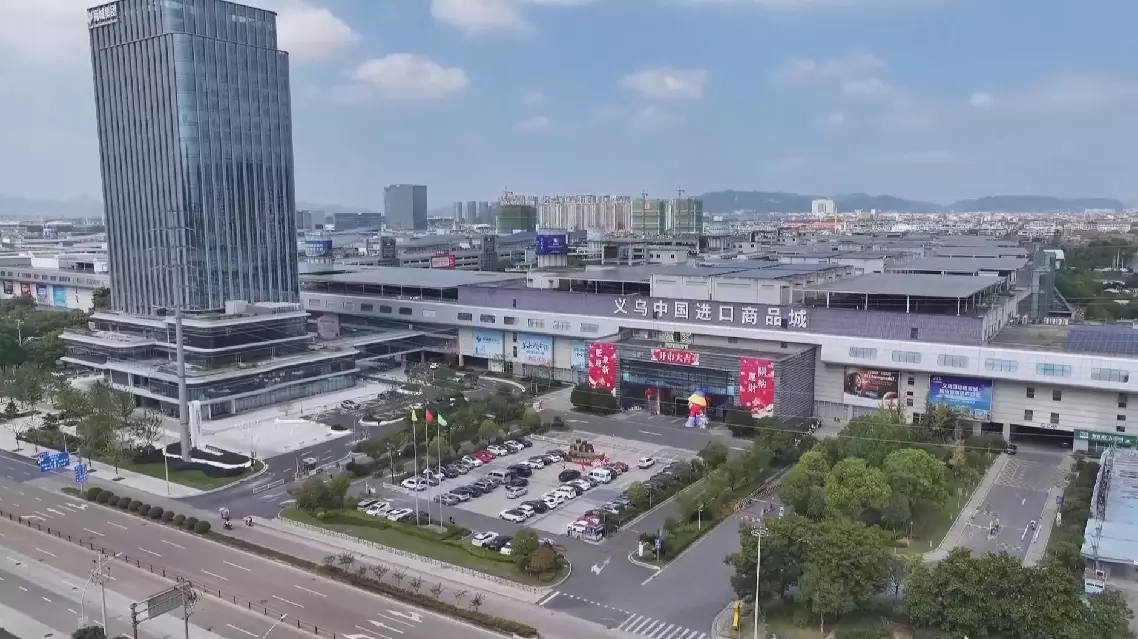
China's small commodities hub transformed into dynamic "global shopping cart" for imported goods