China's overall outbound direct investment (ODI) grew 2.8 percent year on year in the first seven months of this year, official data showed, reflecting steady momentum in the country's global economic engagement.
According to statistics released jointly by the Ministry of Commerce and the State Administration of Foreign Exchange, the country's total ODI reached 684.51 billion yuan (99.53 billion U.S. dollars) from January to July.
During the same period, Chinese domestic investors made non-financial direct investments in 7,742 overseas enterprises across 148 countries and regions.
The cumulative investment in this category totaled 528.43 billion yuan, or 76.84 billion dollars.

China's outbound direct investment up 2.8 pct in Jan-July period
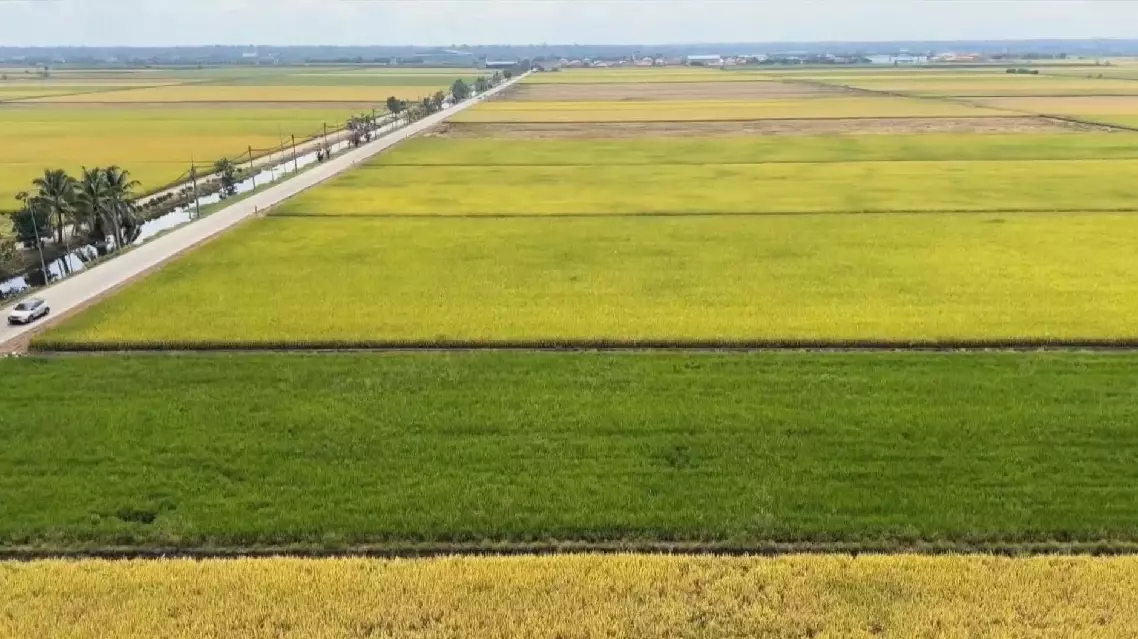
The Asia-Pacific Economic Cooperation (APEC) mechanism can help Malaysia expand the use of artificial intelligence (AI) in agriculture by fostering collaboration, setting common standards and developing joint solutions, a Malaysian agribusiness executive said.
Tan Han Wei, co-founder and Chief Technology Officer of Sustainable HRvest, told China Global Television Network (CGTN) that APEC can draw on the expertise of tech firms, universities and farm operators to craft practical answers.
"From Malaysia's industry perspective, APEC can help to move on the AI and digital agriculture from the pilot projects into wider adoptions. Climate change is creating more uncertainty through the extreme rainfall, so the pests and disease pressure and the supply chains disruptions. So for the value crops, the economic impact can be very significant. So we are applying technologies like IoT, the weather monitoring, the AI to help the farmers to understand the farm conditions and respond to risk," said Tan.
"APEC can support this through the stronger collaborations, common digital standards and also the joint developments on the AI solutions for the agricultures. It can also bring together with the technologies company, universities, investor and agricultural operators to scale proven solutions across the regions," he added.
Tan also highlighted how China's advances in smart agriculture and Malaysia's expertise in tropical agriculture can complement each other to boost food security
"We see a very strong opportunity for Malaysia and China because our strengths are more complementary. China has a very strong capabilities in AI, computer visions, drones and also robotics. While Malaysia has a very strong [capability] in tropical agriculture use cases, and premium value crops, and also the local exports, and also the experience. So, as to Sustainable HRvest, we see a very strong opportunity to work with a Chinese technologies partner and investors on the win-win model or leveraging," Tan said.
"So where both sides actually join in developing the AI solutions. for example, like pest and disease predictions, the yield forecasting, quality grading and also the traceability. So for durian particularly, China is also the major market. So for the opportunity goes beyond the technologies, we can connect like smart productions in Malaysia with demand, logistic and also the consumers in China. The objective is not just simply like transfer on the data and technologies from one side to another, but to build these solutions together," he added.
China is hosting APEC for the third time this year under the theme "Building an Asia-Pacific Community to Prosper Together."
Malaysia looks to APEC for AI standards in agriculture: expert