Heavy rainfall flooded thousands of tents sheltering displaced Palestinians across the Gaza Strip, soaking mattresses, clothing and personal belongings, as the first major rainstorm of the season exposed the vulnerability of temporary shelters and war-damaged infrastructure.
In Deir al-Balah, central Gaza, displacement camps were inundated as rainwater accumulated between tents and flowed into makeshift shelters. Residents said overflowing sewage had mixed with the floodwater, further worsening conditions.
Displaced families struggled to protect their belongings and keep floodwater out of their tents. Some used shovels and basic tools to build makeshift earthen barriers, while others attempted to drain the floodwater by hand.
One displaced Palestinian said sewage had entered the camp despite residents' efforts to prepare for the storm.
"We didn't sleep since it started raining. We were keeping an eye on the rainwater, but the rain drainage system for pumping floodwater towards the sea isn't working. Since this morning, we have been trying to repair the sewage pipelines, but nothing has worked. We are doing the work instead of the city service," he said.
For families living in the flooded shelters, the rainfall has left essential belongings unusable.
Another displaced resident said he had managed to evacuate his children but was unable to retrieve their clothes, mattresses or other possessions.
"I barely managed to get my children out. Now all our clothes, belongings and bedding are still inside. I couldn't get anything out. What are we supposed to do? Where can we go?" he said.
Gaza's Civil Defense said it had received more than 1,500 emergency calls from displaced people whose tents and shelters had been affected by flooding across the territory.
The agency said shortages of fuel, equipment and operational vehicles were hampering efforts to respond to the flooding and pump floodwater out of affected areas.
The flooding came amid warnings from the United Nations that damaged drainage and sewage systems, combined with shortages of fuel and spare parts, were undermining Gaza's ability to cope with heavy rainfall.
According to the United Nations Office for the Coordination of Humanitarian Affairs (OCHA), as of November 1, people in Gaza needed approximately 121,000 tents, 561,000 tarpaulins and 1.7 million mattresses to prepare for the cold and rainy season.
However, humanitarian shelter partners had only around 2,800 tents available inside the territory.
The OCHA said funding shortages, Israeli restrictions on the entry of essential materials and delays in obtaining Israeli approvals were hindering efforts to deliver urgently needed shelter supplies.
Umm Omar Arafat, a displaced Palestinian whose tent was flooded, said her family had lost the use of its clothes, mattresses and blankets.
"Our entire tent is flooded. The floodwater came in on the children, soaking our mattresses and clothes. The children now have no clothes left to wear. All their clothes are soaked, and as you can see, the mattresses and blankets are completely drenched," she said.
The storm has also affected residential buildings previously damaged during the war.
In Al-Nuseirat refugee camp, central Gaza, Civil Defense teams evacuated residents from a residential building before part of the structure collapsed amid strong winds and heavy rainfall. No injuries were reported in that incident.
Medical sources reported injuries in separate incidents involving the collapse of walls in war-damaged buildings.
Local authorities said shortages of fuel and functioning equipment were limiting their ability to address widespread flooding.
Most of Gaza's population of more than two million people has been displaced during the war that began in October 2023.
With large numbers of families still living in tents and other temporary shelters, the latest rainfall has highlighted the continuing risks posed by damaged infrastructure and inadequate shelter as the winter season approaches.
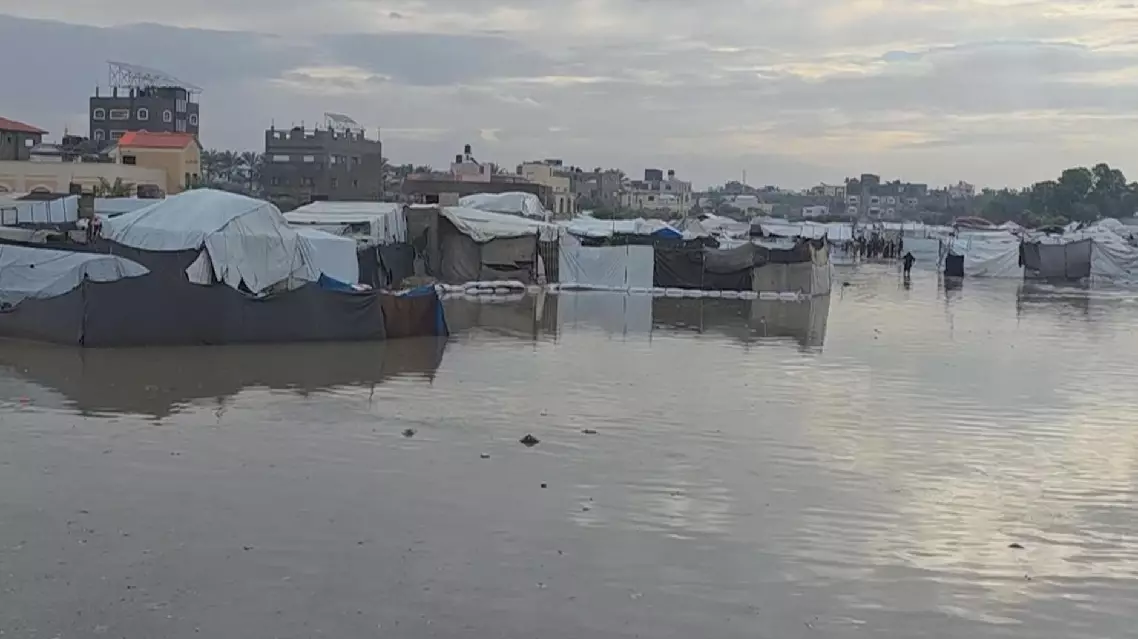
Heavy rain floods thousands of tents for displaced Palestinians in Gaza