Persistent drought, extreme heat and geopolitical conflict have sharply cut Iran's pistachio production this year, with supplies to China falling significantly.
China relies heavily on imports for its pistachios, mainly from the United States and Iran. Global pistachio output for the 2026/27 season is forecast at about 701,000 tonnes, down 36 percent from the previous season and below one million tonnes for the first time in four years, according to data released by the International Nut and Dried Fruit Council in June.
Rafsanjan in Kerman Province is the most densely planted pistachio area in Iran, with the country having roughly 600,000 hectares of pistachio orchards.
Pistachios in Iran usually flower during the April to May period, and are harvested in August through September.
The founding member of the Iran Pistachio Association (IPA) said that in the past two years, pistachios have suffered high temperatures to varying degrees during both the flowering and fruit-growth stages, damaging many trees and affecting the entire year's harvest.
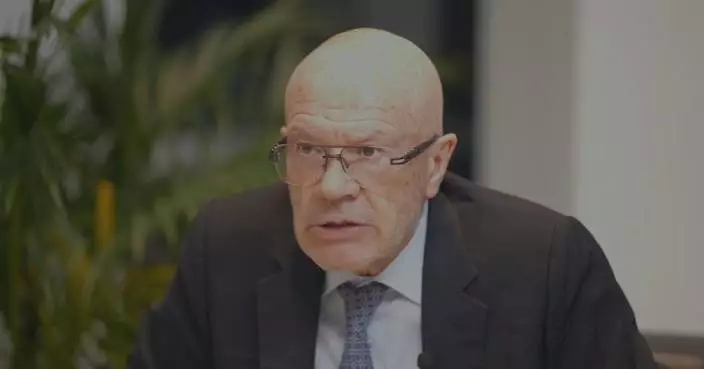
"The severe heat in April, it damaged last year's crop, but more than that, it damaged this year's crop. This is why Iran has only about 120,000 tons this year. We should have had about maybe 240,000, 250,000 tons," said Behrouz Agah, a founding member of the Iran Pistachio Association (IPA).
Pistachios have a short shelf life, so freshly harvested nuts are usually sent to nearby factories for hulling, washing and processing. Iranian pistachios are graded into different specifications according to size and appearance, ranging from 18 to 38 nuts per ounce.
Automatic color sorters are used mainly to grade pistachio quality; after grading, the nuts can be packaged and sold.
To cope with operating pressure from rising prices, some companies are no longer limited to traditional purchases of finished kernels and have begun adjusting their procurement strategies.
"Because of the supply chain situation for suppliers, we will buy in-shell nuts and then find new channels to extract the kernels. We will develop new channels with more advantageous prices and supply," said Yang Juan, purchasing manager of a Chinese food company.
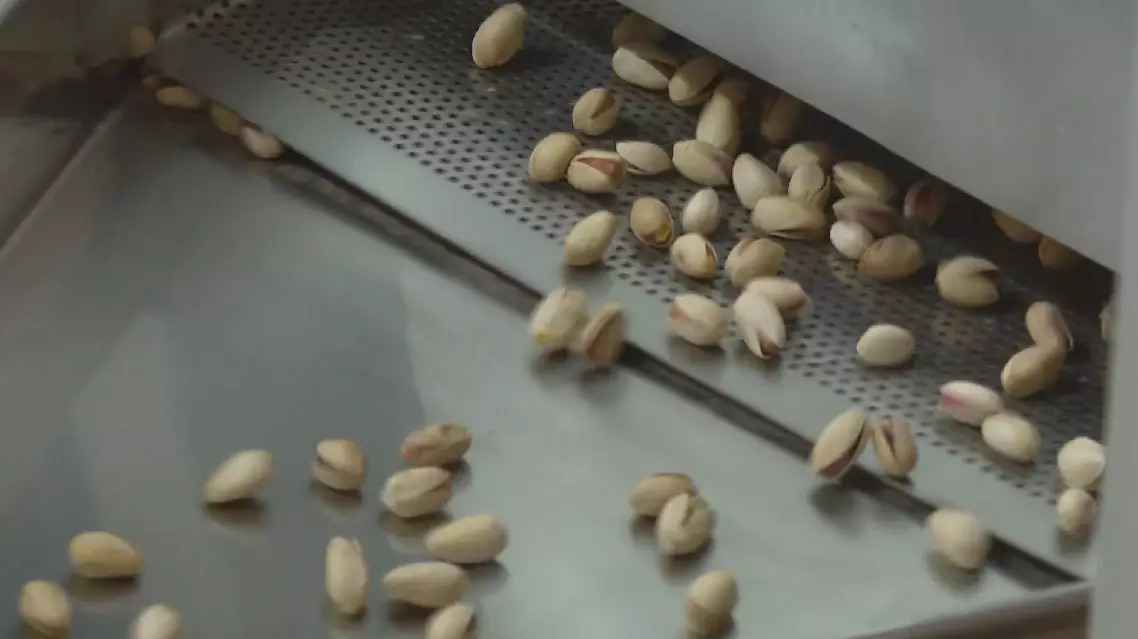
Iran's pistachio harvest halved by climate shocks, shrinking China's import supply
Power shortages continue to plague residents in Syria's northeastern province of Hasakah, where even the most ordinary electric light has become an unaffordable cost.
After more than a decade of war, many power plants, substations, as well as transmission and distribution facilities in Syria have been damaged, while aging equipment and insufficient fuel supplies have continued to hamper the recovery of the electricity system.
Since the beginning of 2026, power supply across Syria has improved somewhat, but recovery has been uneven across regions.
In Hasakah, the public grid has long failed to supply electricity normally, so many residents chose to rely on private generators. But with the rising of diesel prices, the cost of private electricity generation has also climbed.
"We used to rely on a generator, and it cost us only 3 U.S. dollars a month. It was still within our means. Now it's gone up to 45 U.S. dollars, and we simply can't afford it. As for the electricity supplied by the government, we haven't had any for three whole years. The power company recently repaired part of the grid, but the transformer here was stolen, so we're still completely without power," said local resident Sumaya.
Data released by Syria's energy sector in September showed that nationwide power generation had risen from about 915 megawatts to around 3,500 megawatts, but Hasakah Province currently receives only about 50 megawatts, far below the demand of roughly 500 megawatts.
Some better-off families in Hasakah have installed solar power systems, which cost about 800 U.S. dollars to 1,000 U.S. dollars per unit. But such a price remains out of reach for Sumaya's family, as nearly all of their meager savings have been used for her husband's medical treatment.
"My sister and I both dropped out of school. Now we work from 06:00 to 18:00 every day. When we get home, there's no electricity, so we have only this small flashlight for light. This has been our life since the power went out completely. The darkness of the long nights has become part of our lives. I have two wishes: first, my father recovers after his surgery. And second, our home can have electricity, so that every room can at least be lit for a while at night," Aya, a member of Sumaya's family.
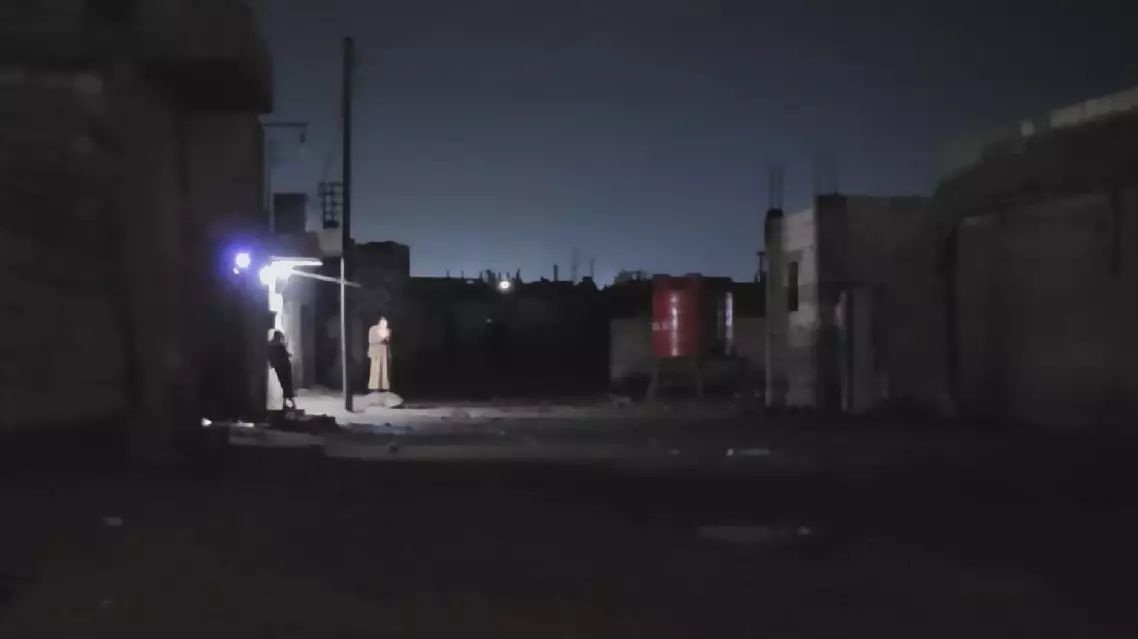
Power shortages continue to plague Syria's Hasakah Province