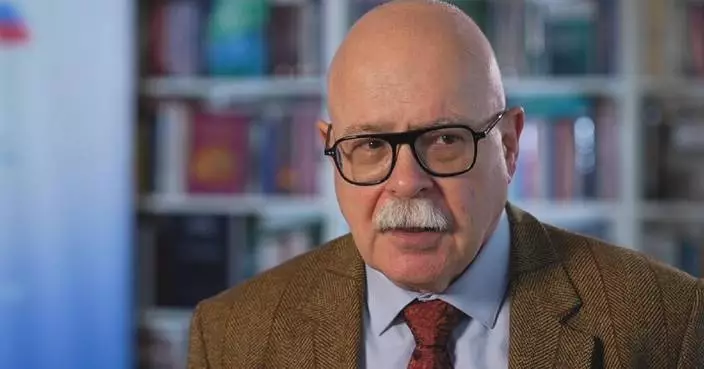
China's export success reflects the strength of its economy and development model, and Western countries should rethink their approach and learn from China's experience, according to renowned British scholar Martin Jacques.
In a recent interview with China Global Television Network, Jacques, a former senior fellow at the Department of Politics and International Studies, Cambridge University, argued that China's strong export performance stems from its robust economic development and institutional strengths, rather than an intention to create trouble for other countries.
"The reason why China's such a successful exporter is not because, you know, it's trying to make it difficult for these countries. It is because they have a very successful economy, they have a superior, I'll call it, a political-economic system. The West always used to brag, you know, free enterprise system and so on. Look, everything's cheaper, it's better and so on. They can't brag that anymore, because actually the Chinese are outcompeting them in area after area. This is very interesting," he said.
He went on to say that Western countries must abandon their old self-superior mindset and get to grips with a rapidly changing global landscape.
"So really what's required is they have to adapt and learn from the Chinese approach. I mean, at some point, sooner or later, they're going to stop that nonsense, and they're going to say, look, how did they do it, and ask the Chinese to help them if necessary. But that's such a turn from the present, you know, mental attitude, mindset that, you know, 'we're the best.' And the difficulty now is that basically the Europeans and the Americans, for that matter, don't understand the world they are living in. They did understand it. They don't now that it's changed so much," said the scholar.
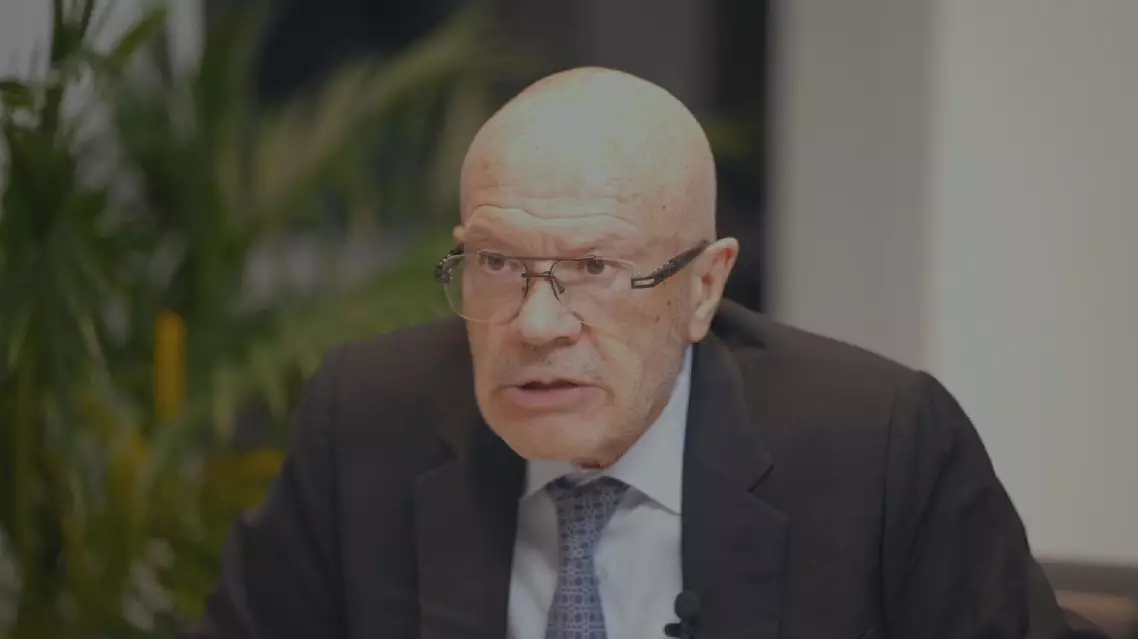
Western world needs to learn from Chinese approach: British scholar
Power shortages continue to plague residents in Syria's northeastern province of Hasakah, where even the most ordinary electric light has become an unaffordable cost.
After more than a decade of war, many power plants, substations, as well as transmission and distribution facilities in Syria have been damaged, while aging equipment and insufficient fuel supplies have continued to hamper the recovery of the electricity system.
Since the beginning of 2026, power supply across Syria has improved somewhat, but recovery has been uneven across regions.
In Hasakah, the public grid has long failed to supply electricity normally, so many residents chose to rely on private generators. But with the rising of diesel prices, the cost of private electricity generation has also climbed.
"We used to rely on a generator, and it cost us only 3 U.S. dollars a month. It was still within our means. Now it's gone up to 45 U.S. dollars, and we simply can't afford it. As for the electricity supplied by the government, we haven't had any for three whole years. The power company recently repaired part of the grid, but the transformer here was stolen, so we're still completely without power," said local resident Sumaya.
Data released by Syria's energy sector in September showed that nationwide power generation had risen from about 915 megawatts to around 3,500 megawatts, but Hasakah Province currently receives only about 50 megawatts, far below the demand of roughly 500 megawatts.
Some better-off families in Hasakah have installed solar power systems, which cost about 800 U.S. dollars to 1,000 U.S. dollars per unit. But such a price remains out of reach for Sumaya's family, as nearly all of their meager savings have been used for her husband's medical treatment.
"My sister and I both dropped out of school. Now we work from 06:00 to 18:00 every day. When we get home, there's no electricity, so we have only this small flashlight for light. This has been our life since the power went out completely. The darkness of the long nights has become part of our lives. I have two wishes: first, my father recovers after his surgery. And second, our home can have electricity, so that every room can at least be lit for a while at night," Aya, a member of Sumaya's family.
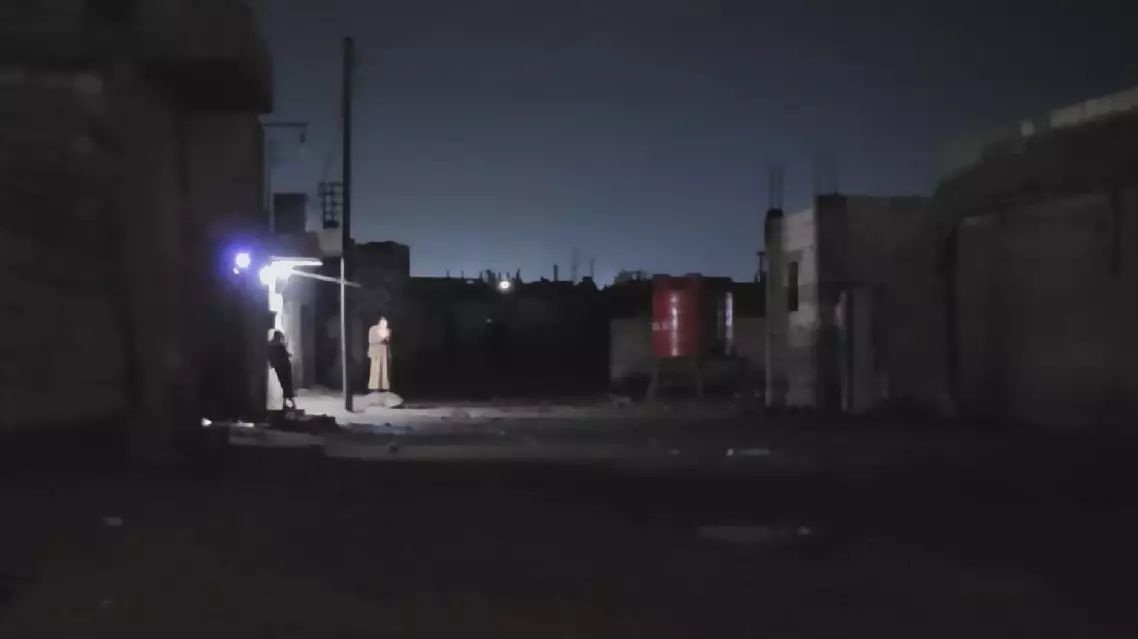
Power shortages continue to plague Syria's Hasakah Province