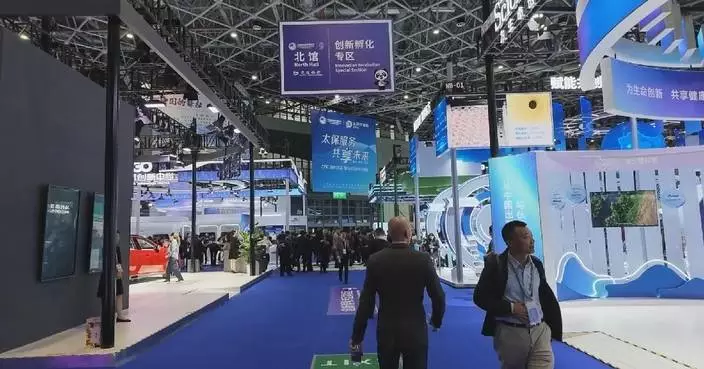
Streamlined trade measures and the ongoing 9th China International Import Expo (CIIE) are giving New Zealand beauty brands an expanding runway into China, where cosmetics have traditionally occupied a niche market. For Liam Corkery, general manager of New Zealand's high-end skincare brand BeauEver, this is his second CIIE. Last year his company had a relatively small presence, bringing just one brand. This year, two additional brands are joining the lineup.
"We are just now here as a bigger business, really committed to the market," he said.
This year, BeauEver chose the expo to launch a new product: a sunscreen specially formulated for high-UV environments. "We're going to take these products globally. But if we can launch here, we can start to get a bit of a customer following here, I think that China sets trends in a lot of areas, right? If we can have products that work in China, the rest of the world will love it," he said. The push comes as New Zealand expands its cosmetics exports to China.
As early as 2022, under the China-New Zealand Free Trade Agreement, the two countries agreed to facilitate cosmetics trade and explore alternatives to animal testing. Where sufficient safety evidence is available, animal testing requirements for New Zealand-made cosmetics entering the Chinese market are reduced.
In 2025, New Zealand introduced its GMP certification, a recognized industry standard that makes it easier for New Zealand beauty brands to enter China through general trade and expand into offline retail channels, rather than relying solely on cross-border e-commerce.
"That means we can start to do retail, and so we already have our own store in Hangzhou, in a mall, and so the plan is to look at extending that. We're also exploring showroom-type venues where we can tell our story," he said.
China is New Zealand's third-largest export market for cosmetics, accounting for 24 percent of the country's total cosmetics exports. The new protocols are expected to bring even more New Zealand beauty products to the Chinese market.
That is why, alongside his participation in the CIIE, Corkery has another mission this year: finding a location for his company's second store in China.
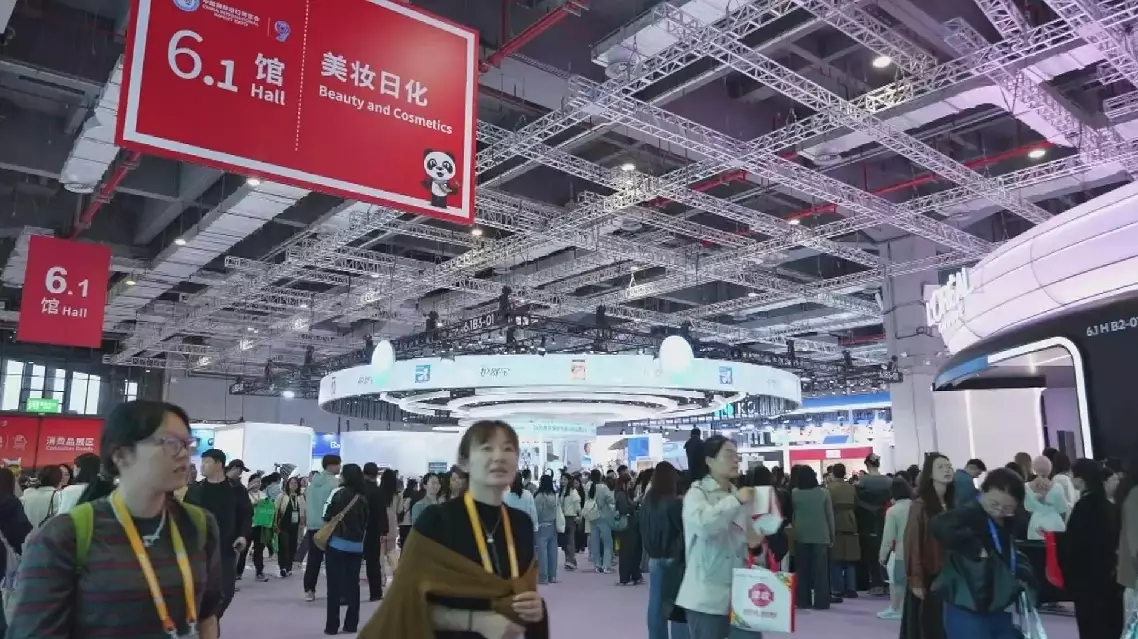
New Zealand beauty brands tap CIIE to expand China footprint under updated trade rules
Power shortages continue to plague residents in Syria's northeastern province of Hasakah, where even the most ordinary electric light has become an unaffordable cost.
After more than a decade of war, many power plants, substations, as well as transmission and distribution facilities in Syria have been damaged, while aging equipment and insufficient fuel supplies have continued to hamper the recovery of the electricity system.
Since the beginning of 2026, power supply across Syria has improved somewhat, but recovery has been uneven across regions.
In Hasakah, the public grid has long failed to supply electricity normally, so many residents chose to rely on private generators. But with the rising of diesel prices, the cost of private electricity generation has also climbed.
"We used to rely on a generator, and it cost us only 3 U.S. dollars a month. It was still within our means. Now it's gone up to 45 U.S. dollars, and we simply can't afford it. As for the electricity supplied by the government, we haven't had any for three whole years. The power company recently repaired part of the grid, but the transformer here was stolen, so we're still completely without power," said local resident Sumaya.
Data released by Syria's energy sector in September showed that nationwide power generation had risen from about 915 megawatts to around 3,500 megawatts, but Hasakah Province currently receives only about 50 megawatts, far below the demand of roughly 500 megawatts.
Some better-off families in Hasakah have installed solar power systems, which cost about 800 U.S. dollars to 1,000 U.S. dollars per unit. But such a price remains out of reach for Sumaya's family, as nearly all of their meager savings have been used for her husband's medical treatment.
"My sister and I both dropped out of school. Now we work from 06:00 to 18:00 every day. When we get home, there's no electricity, so we have only this small flashlight for light. This has been our life since the power went out completely. The darkness of the long nights has become part of our lives. I have two wishes: first, my father recovers after his surgery. And second, our home can have electricity, so that every room can at least be lit for a while at night," Aya, a member of Sumaya's family.
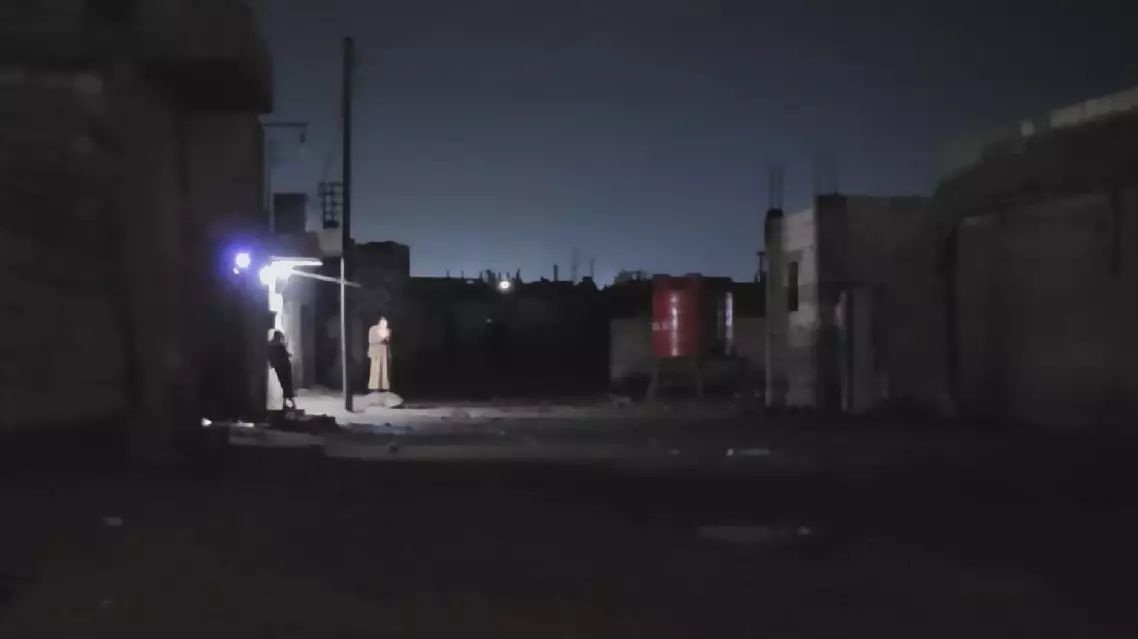
Power shortages continue to plague Syria's Hasakah Province